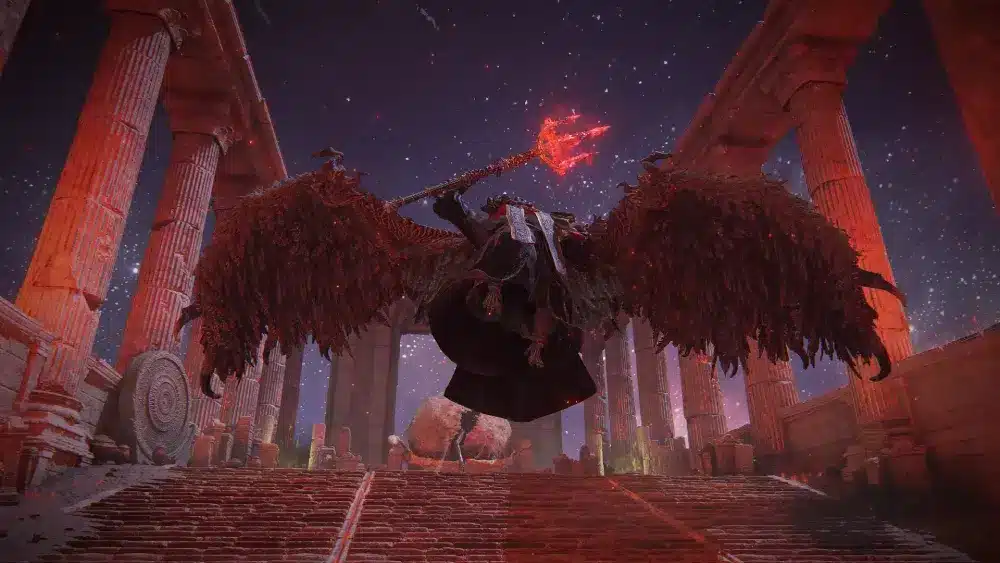
The Lands Between reward patient casters more than almost any other Souls-style game before it. Learning Elden Ring Spells properly changes how every fight plays out, from cave bosses to online invasions.
This guide breaks down sorceries, incantations, seals, and memorization so you stop wasting Flask charges on the wrong build. We also cover Elden Ring Spells that scale into the endgame, including the newest gravity casts and DLC additions.
So what exactly are spells in Elden Ring? They split into two families: sorceries, which use Intelligence and a Glintstone Staff, and incantations, which use Faith (or Arcane, in some cases) and a Sacred Seal. Both consume Focus Points (FP) and both need to be memorized at a Site of Grace before you can equip them in combat.
Whether you're theory-crafting a pure mage, hybrid Faith build, or just want a few gravity spells for crowd control, this article walks through every mechanic step by step.
Elden Ring Spells: How Sorceries and Incantations Actually Work
Before chasing rare tomes and scrolls, it helps to understand the two magic systems side by side. They share the same FP resource but behave very differently in practice.
Sorceries lean into precision, range, and burst damage. Incantations lean into utility, healing, buffs, and raw physical-adjacent power through faith-based miracles.
What Are Sorceries In Elden Ring
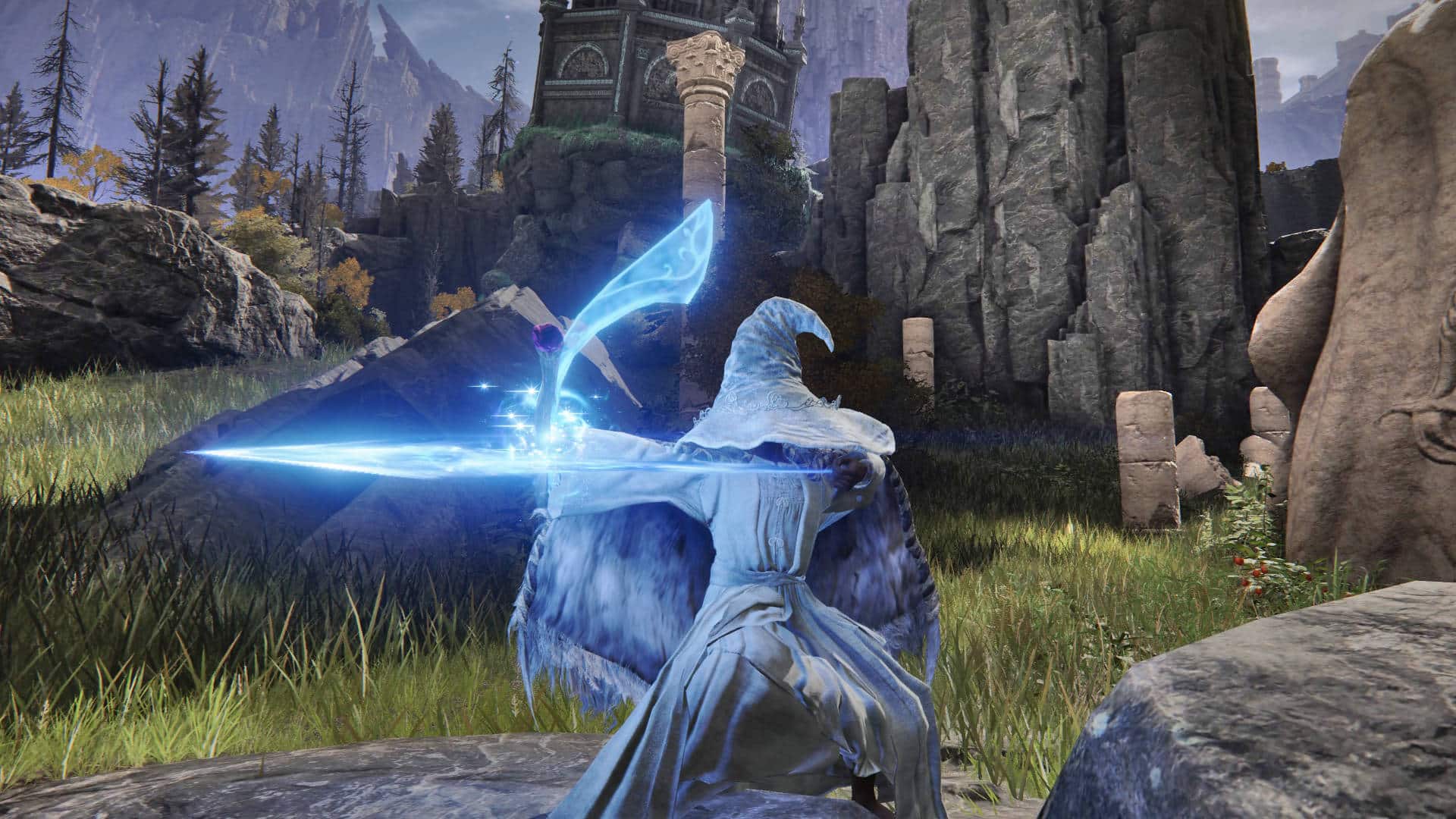
Sorceries are cast using a Glintstone Staff, and their damage scales primarily with your Intelligence stat. Most are learned from academics, sorcerers, or hidden library ruins scattered across the map.
Key traits of sorceries include:
- Long range and high precision, ideal for picking off enemies before they close the gap.
- Strong scaling with Intelligence, making them the backbone of any pure mage build.
- A wide spread of elemental types, including magic, gravity, fire (Carian flame variants), and frost.
- Access to legendary tier spells later in the game with massive FP costs and payoff.
What Are Incantations In Elden Ring
Incantations are cast using a Sacred Seal instead of a staff, and they typically scale with Faith. Some newer seals also scale partially with Arcane, opening up bleed and blood-loss hybrid builds.
Incantations generally fall into these categories:
- Healing and defensive miracles, such as Heal or Golden Vow, which keep a party alive.
- Offensive faith spells like fire breath attacks and lightning strikes with heavy stagger potential.
- Dragon Communion incantations, learned from dragon hearts rather than found as items.
- Two Fingers and Erdtree-aligned faith spells tied to the game's core lore questlines.
How To Use Spells In Elden Ring: Memorization, Seals, and FP Costs
Owning a spell scroll or tome is only half the process. You must actually memorize the spell at a Site of Grace before it appears in your equipped spell list.
This trips up a lot of new players, since simply picking up a sorcery does nothing on its own.
Memorizing Spells At Sites Of Grace
Follow this sequence any time you learn a new spell:
- Rest at any Site of Grace and open the memorization menu from the Grace options.
- Select the spell you want to memorize into one of your available Memory Slots.
- Equip a compatible Glintstone Staff or Sacred Seal in one of your weapon slots.
- Assign the memorized spell to your active spell slot before leaving the Grace.
Memory Slots start limited, so early planning matters. You gain more slots by collecting Memory Stones hidden throughout the open world and legacy dungeons.
Choosing The Right Seal Or Staff
Not every staff or seal behaves the same, and picking the wrong one wastes potential damage. Some scale purely with a stat, while others boost specific spell types like gravity or fire.
Consider these categories when gearing up:
- Astrologer's Staff and similar early staves, great for a balanced start with no scaling penalties.
- Carian Regal Scepter, which boosts specific Carian-affiliated sorceries at the cost of raw scaling.
- Meteorite Staff, purpose-built to amplify gravity and comet-type sorcery damage output.
- Finger Seal or Erdtree Seal for incantations, each favoring different faith spell families.
Casting also costs FP per use, and some spells (like Comet Azur) drain FP continuously while channeled. Managing your FP flask allocation is just as important as managing health flasks.
Where Do You Find Spells In Elden Ring?
Spell locations range from simple merchant purchases to elaborate questline rewards guarded by optional bosses. Knowing where to look saves hours of aimless exploration.
Merchants are the fastest early source, but the strongest spells almost always require combat or puzzle solving.
Early Game Spell Locations
New casters should prioritize these accessible sources first:
- Sorcerer Rogier in Roundtable Hold sells early staples like Glintstone Pebble and Meteorite.
- Miriel, Pastor of Vows offers a strong catalog of incantations once you free him from his shell form.
- Ruin-Strewn Precipice near Liurnia hides Rock Sling behind an environmental puzzle.
- Academy of Raya Lucaria rewards several Carian sorceries once you push through its legacy dungeon.
Late Game and Legacy Dungeon Spells
The strongest options are usually locked behind remembrances, dragon hearts, or hidden NPC questlines rather than shops. Consecrated Snowfield, Crumbling Farum Azula, and Volcano Manor all hide notable spell rewards.
Boss remembrances can be traded at Roundtable Hold for either a unique weapon or a signature spell, so choose based on your build rather than grabbing everything.
Best Spells Elden Ring: Top Sorceries and Incantations Ranked
Ranking the absolute Best Spells Elden Ring has to offer depends heavily on your build, but a handful consistently outperform the rest in both PvE clearing speed and PvP trading power.
The table below compares standout picks across FP cost, primary use case, and damage type so you can slot them into a build quickly.
| Spell | Type | Approx. FP Cost | Best Use |
|---|---|---|---|
| Comet Azur | Sorcery (Gravity) | Very High (channeled) | Sustained boss damage with a Staff of Loss |
| Ranni's Dark Moon | Sorcery (Magic) | High | Frostbite buildup plus strong single-target burst |
| Rock Sling | Sorcery (Gravity) | Low-Medium | Early to mid-game stagger and crowd control |
| Founding Rain of Stars | Incantation (Holy) | Very High | Wide AoE zoning against groups and invaders |
| Golden Vow | Incantation (Buff) | Medium | Party-wide damage and defense buff |
| Elden Stars | Incantation (Holy) | High | Late-game burst damage with tracking projectiles |
Top Damage Sorceries
Comet Azur remains the go-to for sustained magic damage, especially paired with the Staff of Loss, which removes its cast time entirely for as long as you hold FP.
Ranni's Dark Moon offers excellent burst and frostbite synergy, making it a favorite for both boss fights and duels.
Top Support and Utility Incantations
Golden Vow and similar buff incantations don't deal damage directly, but they multiply everything else your build does. Pairing a buff incantation with a hard-hitting sorcery is a classic hybrid strategy.
Healing incantations like Heal or Blessing's Boon reduce Flask dependency during long boss attempts, freeing up more charges for offense.
Gravity Spells Elden Ring: Rock Sling, Gravity Well, and Meteorite Explained
Gravity magic deserves its own spotlight since it behaves differently from standard magic damage. Gravity Spells Elden Ring players rely on tend to stagger enemies harder than raw damage numbers suggest.
Instead of pure elemental damage, gravity spells apply crushing force that interrupts enemy poise and animations, which matters enormously against armored foes.
How Gravity Spells Deal Damage
Gravity-type sorceries typically deal Magic damage packaged with a heavy poise-break effect. This makes them excellent against large, slow bosses that shrug off smaller hits.
Notable gravity casts include:
- Rock Sling, a fast, cheap projectile great for interrupting enemy attack windups.
- Meteorite, a wide burst spell useful for clearing smaller groups of enemies at once.
- Gravity Well, which pulls nearby enemies inward before a follow-up burst, ideal for grouping mobs.
- Comet Azur, technically a gravity-flavored sorcery with the highest sustained damage ceiling in the game.
Best Gravity Spell Combos
Gravity spells shine when paired with staggering melee weapons or a Colossal weapon build, since interrupting an enemy's combo opens a window for a critical riposte.
In PvP, Rock Sling's speed makes it a reliable poke to punish rolls, while heavier gravity casts work best as a follow-up once an opponent is already staggered.
Legendary Spells Elden Ring and the Shadow of the Erdtree Additions
Certain sorceries and incantations carry a special legendary marker in the memorization menu, denoting their outsized FP cost and payoff. Legendary Spells Elden Ring veterans chase are almost always tied to major boss remembrances or hidden questlines.
The Shadow of the Erdtree expansion added fresh casts, seals, and staves that shifted several build archetypes toward new hybrid playstyles.
Base Game Legendary Spells
The core legendary lineup includes some of the most recognizable names in the community:
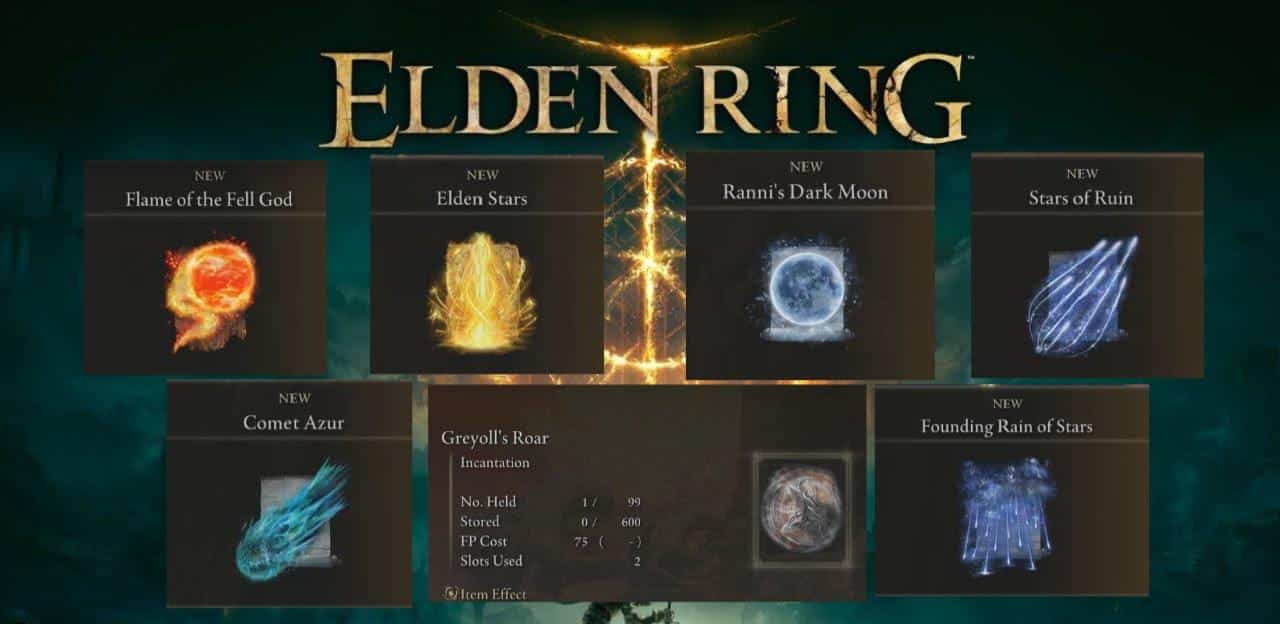
- Comet Azur, prized for melting bosses when paired with FP-negating gear.
- Ranni's Dark Moon, rewarded through the Ranni questline for frost and burst damage.
- Founding Rain of Stars, a devastating holy AoE incantation for crowd control.
- Elden Stars, a tracking projectile barrage that punishes players who try to run.
Shadow Of The Erdtree Spell Additions
The DLC expanded the roster with new Sacred Seals, staves, and additional legendary-tier casts tied to Shadow Realm bosses like Rellana and Midra. These additions lean into faster cast animations and new elemental combinations.
Several DLC spells also introduced tighter synergy between Faith and Arcane scaling, giving bleed-focused incantation builds a genuine identity for the first time.
Expert Advice For Elden Ring Spells Builds
Even experienced players leave damage on the table by ignoring small optimization details. These tips cover the habits that separate an average caster from a truly efficient one.
Pro Tips: Building A Better Caster
- Prioritize Mind early, since low FP pools force you back into melee constantly and waste your build's identity.
- Match your staff or seal scaling grade to your stat spread, because a poor scaling grade can quietly cut your damage in half.
- Carry a mix of short-cast and long-cast spells, so you always have an option regardless of enemy aggression.
- Use gravity spells to interrupt dangerous windups instead of only using them for damage, since the stagger effect often matters more than the number.
Common Mistakes Elden Ring Spells Players Make
- Picking the wrong seal or staff for their scaling: many players grab the first catalyst they find and never upgrade it, capping their damage far below its potential.
- Ignoring FP management entirely: running out of FP mid-boss forces a risky melee panic, so always track your remaining casts before committing to an attack.
- Wasting Memory Slots on redundant spells: memorizing three similar damage sorceries instead of mixing offense, utility, and mobility leaves you unprepared for varied encounters.
- Skipping Talismans that boost spellcasting: items that reduce cast time or FP cost are frequently overlooked, even though they meaningfully change how a fight plays out.
Play Elden Ring Spells Online Without Lag Using ExitLag
Casting in solo play is forgiving. Casting during a co-op boss session or an invasion is a different story entirely, since even small delays can turn a perfectly timed Comet Azur into a wasted cast.
That's where a stable connection actually changes outcomes, not just comfort.
Why Connection Quality Matters For Spellcasters
Time-sensitive spells rely on precise input windows, and any added latency pushes your cast a fraction of a second behind where it should land. In co-op, that delay can mean missing a stagger window your teammates were counting on.
In PvP invasions, it can mean eating a punish you should have dodged. ExitLag is not a VPN: it does not encrypt or mask your IP address.
Instead, ExitLag is a real-time multi-path connection optimizer built to reduce the routing issues that cause spikes and rubber-banding during online sessions.
How ExitLag Helps During Co-Op and Invasions
ExitLag works across more than 4,000 titles using a network of over 1,500 servers spanning more than 190 countries, backed by more than 30 million users worldwide.
Its core features are built specifically for moments like a Comet Azur channel or a coordinated boss pull:
- Real-time Optimization that continuously adjusts your route as conditions change mid-session.
- Multipath Technology that spreads your connection across multiple paths for added stability.
- PC Boost to free up local system resources during demanding online play.
- AI-powered routing that selects the most efficient path automatically, based on live network conditions.
The service also runs over 18 million weekly optimizations across its user base, which reflects how often small routing tweaks add up during long play sessions. You can grab it directly here: ExitLag Download.
Final Verdict: Mastering Elden Ring Spells For Every Build
Learning Elden Ring Spells properly is less about memorizing a single tier list and more about understanding how sorceries, incantations, seals, and FP management fit together. Once those fundamentals click, experimenting with gravity casts and legendary spells becomes far more rewarding.
Start with a clear stat priority, memorize a balanced spell loadout, and adjust your seal or staff as your build matures. Combined with a stable connection for co-op and invasions, your casting timing will finally match your intent in every fight.
Images used for illustration purposes only. All game assets, trademarks, and related media are property of FromSoftware and Bandai Namco.