
Elden Ring stats determine almost every important part of character progression, from maximum HP and stamina to weapon requirements, spellcasting, equipment load, and damage scaling. Understanding them makes it much easier to create an efficient build instead of spending valuable levels without a clear purpose.
The challenge is that elden ring stats do not always provide the same value at every level. As attributes rise, they eventually reach breakpoints where additional investment produces smaller returns, which is why players frequently discuss soft caps when planning builds.
So, what are Elden Ring stats? The base game uses eight primary attributes—Vigor, Mind, Endurance, Strength, Dexterity, Intelligence, Faith, and Arcane—to shape a Tarnished's combat capabilities. Each attribute affects specific resources, requirements, defenses, or damage scaling.
These attributes work together rather than independently. A Strength character may still need Vigor for survivability and Endurance for stamina and equipment load, while an Intelligence character usually needs enough Mind to support regular spellcasting.
Understanding elden ring stats explained also becomes important when comparing Elden Ring with Nightreign. Although both games share many familiar RPG concepts, Nightreign is a standalone game where players control predefined Nightfarers and gain levels during individual expeditions instead of permanently building a custom Tarnished.
FromSoftware has also continued maintaining the base game. The latest PC update published in May 2026 lists App Version 1.16.2 and Regulation Version 1.16.1, so old build advice should always be considered in the context of current patches.
Elden Ring Stats: What Does Each Attribute Do?
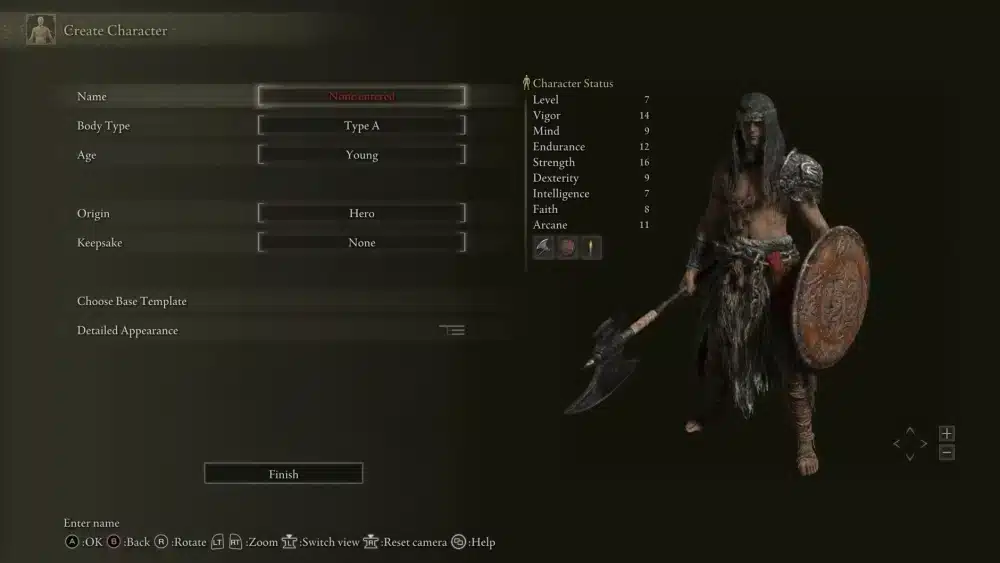
Every attribute has a primary purpose, although several influence secondary statistics as well.
Learning those roles is more useful than simply copying an endgame stat spread.
Vigor, Mind, and Endurance
Vigor primarily controls HP.
For most builds, increasing Vigor is one of the most effective ways to improve survivability. More HP gives you additional room to survive boss combos, mistakes, and high-damage attacks.
Mind primarily affects FP.
FP powers Sorceries, Incantations, weapon skills, Spirit Ash summons, and other abilities. Builds that frequently cast spells or use expensive skills generally require more Mind than characters relying primarily on basic attacks.
Endurance influences stamina and equipment load.
Stamina is consumed when attacking, dodging, sprinting, guarding, and performing other combat actions. Equipment load determines how much armor and weapon weight you can carry before moving into a heavier roll category.
These three elden ring stats support almost every build.
Even a character focused entirely on damage becomes difficult to play if they cannot survive a hit, cast enough abilities, or manage stamina effectively.
Strength, Dexterity, Intelligence, Faith, and Arcane
Strength is commonly associated with large weapons and heavy physical attacks.
Weapons with strong Strength scaling receive greater attack-rating benefits as the attribute increases. Strength also has a special interaction with two-handing, making it particularly valuable for certain weapon requirements and scaling setups.
Dexterity is another major physical damage attribute.
Many faster weapons, curved blades, thrusting weapons, katanas, and other equipment can benefit from Dexterity, although exact scaling depends on the specific weapon and affinity.
Intelligence is primarily associated with Sorceries and Intelligence-scaling equipment.
Faith is strongly connected to Incantations and Faith-scaling weapons.
Arcane is used for certain weapon and spell requirements and can influence scaling on appropriate equipment. It is also frequently associated with builds that make use of status effects such as Blood Loss when the chosen weapon or affinity supports Arcane scaling.
Here is a simplified overview of elden ring stats explained:
| Stat | Main Uses | Common Build Role |
| Vigor | HP and survivability | Nearly every build |
| Mind | FP | Sorcery, Incantation, skill-heavy builds |
| Endurance | Stamina and equip load | Melee, shields, heavy armor |
| Strength | Weapon requirements and scaling | Heavy melee |
| Dexterity | Weapon requirements and scaling | Fast/finesse melee |
| Intelligence | Sorceries and magic scaling | Intelligence builds |
| Faith | Incantations and Faith scaling | Faith builds |
| Arcane | Requirements, scaling, status-oriented builds | Arcane/Bleed setups |
The table provides a starting point rather than a complete formula.
Weapon upgrades, affinities, catalysts, Talismans, buffs, and individual equipment scaling can dramatically change how valuable each offensive attribute becomes.
Elden Ring Stats Explained: How Scaling Works
Scaling determines how much additional power equipment receives from your attributes.
This is why two weapons with similar base damage can perform very differently on two characters.
What weapon scaling letters mean
Weapons commonly display attribute scaling using letters.
The general order is:
- S
- A
- B
- C
- D
- E
S represents the strongest displayed scaling category, while E represents relatively weak scaling.
However, the letter is not a complete mathematical description.
Two weapons with the same displayed letter can still have different underlying scaling values.
Weapon upgrades can also improve scaling.
A weapon that starts with mediocre Strength scaling may become much more effective as it is upgraded or given an appropriate affinity.
Therefore, elden ring stats should always be considered together with the equipment you actually plan to use.
Raising Dexterity because your character is “a Dexterity build” provides little benefit if your chosen weapon barely scales with Dexterity.
Requirements vs. scaling
Minimum requirements and scaling are different concepts.
Suppose a weapon requires 20 Strength.
Reaching that requirement allows you to use the weapon properly under the relevant conditions.
That does not mean 20 Strength is the ideal final value.
If the weapon has excellent Strength scaling, investing beyond the requirement can continue increasing attack rating.
Conversely, a weapon may require a moderate amount of one attribute without scaling strongly from additional investment in that same stat.
This distinction is one of the most important elements of elden ring stats explained.
Always ask two questions:
- What do I need to equip the weapon?
- Which attributes actually improve its damage efficiently?
The answer to those questions can produce very different stat distributions.
Elden Ring Stat Caps: What Are Soft Caps?
Players frequently refer to soft caps when discussing character optimization.
The term describes diminishing returns rather than a strict maximum.
Soft caps vs. hard caps
A soft cap is a point where additional levels in an attribute begin providing less benefit than they did before.
For example, several early Vigor levels can provide substantial HP growth.
Eventually, each additional point produces a smaller increase.
The game still allows you to raise the stat further, but the efficiency changes.
The hard limit for individual attributes is 99.
However, reaching 99 does not mean every build should attempt to maximize every important attribute.
In most cases, elden ring stat caps are useful precisely because they help players identify when additional points may be better spent elsewhere.
Why soft caps matter for efficient builds
Imagine you have ten levels available.
Putting all ten into your main damage attribute might increase attack rating.
But if that stat has already moved into a region of diminishing returns, increasing Vigor, Mind, or Endurance could provide more practical value.
This becomes especially important at common multiplayer or build-planning level targets.
Efficient builds attempt to gain as much useful performance as possible from a limited number of levels.
Soft caps help answer questions such as:
- Should I keep raising Vigor?
- Is additional Strength still efficient?
- Do I need more Mind?
- Would Endurance improve my equipment setup more?
- Have I already invested enough Intelligence for my current catalyst?
Treat elden ring stat caps as guidelines for efficiency rather than commandments.
Your build requirements always matter.
Elden Ring Stat Caps by Attribute
Community build planning commonly refers to several important breakpoint ranges.
The exact value you receive from an additional point can depend on the derived stat or equipment being calculated.
Vigor, Mind, and Endurance breakpoints
Vigor is often discussed around major breakpoints near 40 and 60.
The reason is diminishing HP growth.
A low-Vigor character generally gains significant practical survivability by investing toward these ranges, while pushing far beyond the later breakpoint provides progressively less HP per level.
Mind follows its own FP growth curve.
Spellcasters should not automatically maximize it. Instead, consider how much FP you consume between Flask uses and whether additional Mind actually changes how many spells or skills you can perform.
Endurance is more complicated because it influences both stamina and equipment load.
The value of an extra Endurance level may therefore depend on whether that point allows you to:
- Avoid heavy rolling.
- Equip stronger armor.
- Carry another weapon.
- Use a larger shield.
- Gain enough stamina for another attack or dodge.
This is why elden ring stats are best evaluated practically rather than only through abstract percentages.
Damage-stat breakpoints
Damage attributes have multiple scaling curves depending on the weapon, affinity, and spellcasting tool.
Community discussions often use approximate breakpoints such as 20, 50, 60, or 80 for different offensive scaling situations.
However, these should not be treated as universal values.
A Strength weapon can respond differently from a Dexterity weapon.
A Sorcery catalyst can have different Intelligence scaling behavior from an Intelligence-scaling sword.
Faith and Arcane equipment can follow different curves again.
A practical way to think about elden ring stat caps is:
| Attribute Type | Commonly Discussed Breakpoints | Why They Matter |
| Vigor | Around 40 and 60 | HP gains diminish |
| Mind | Multiple FP efficiency ranges | Depends on casting needs |
| Endurance | Stamina/equip-load dependent | Build-specific |
| Strength | Multiple weapon scaling ranges | Depends on weapon/affinity |
| Dexterity | Multiple weapon scaling ranges | Depends on weapon/affinity |
| Intelligence | Often build and catalyst dependent | Sorcery/weapon scaling |
| Faith | Often build and seal dependent | Incantation/weapon scaling |
| Arcane | Equipment/status dependent | Varies heavily by setup |
These are practical community-style planning ranges, not officially named FromSoftware “soft cap” tiers.
Use a calculator or current weapon data when optimizing a specific setup.
Elden Ring Stat Calculator: What Does It Help With?
Leveling becomes increasingly expensive as your character progresses.
A calculator lets you test ideas before spending Runes or committing to a respec.
Comparing builds before spending levels
An elden ring stat calculator can help estimate how different attribute distributions affect a build.
Depending on the tool, calculations can include:
- Character level.
- Attribute totals.
- Weapon attack rating.
- Equip load.
- Spell scaling.
- Starting-class efficiency.
- Weapon requirements.
- Derived defensive statistics.
This is particularly helpful when comparing two close options.
For example, should a level-150 character use 70 Strength and more Endurance, or push Strength closer to 80 while wearing lighter armor?
A calculator allows you to compare the numbers without repeatedly respeccing.
It can also reveal that two distributions which look dramatically different on paper produce only a small damage difference.
What calculators cannot fully predict
An elden ring stat calculator does not automatically tell you which build will perform better in real combat.
Attack rating is only part of the equation.
Actual results can depend on:
- Enemy defense.
- Damage type.
- Weapon upgrade level.
- Buffs.
- Talismans.
- Status buildup.
- Ashes of War.
- Attack speed.
- Range.
- Stamina efficiency.
- Player execution.
A weapon with slightly lower theoretical attack rating can still be more effective because its moveset suits the encounter.
Similarly, extra Vigor may improve your success rate more than a small increase in damage.
Calculators are comparison tools, not automatic build generators.
Elden Ring Stat Calculator: How to Use One Correctly
Start with the parts of the build that are non-negotiable.
Then distribute the remaining points.
Start with your weapon and level target
Choose your intended weapon, catalyst, or spell family first.
Check the minimum requirements.
Next, determine a realistic target character level.
From there, establish enough Vigor for your preferred level of survivability.
Only after those requirements are satisfied should you optimize offensive scaling.
This prevents an elden ring stat calculator from encouraging a glass-cannon distribution simply because it produces the highest attack rating.
Compare multiple distributions
Use this workflow:
- Select the correct starting class.
- Set your target character level.
- Meet minimum weapon and spell requirements.
- Choose a Vigor target.
- Add the main offensive attribute.
- Add Mind for FP needs.
- Add Endurance for stamina and equipment load.
- Compare several remaining-point distributions.
- Review attack rating or spell scaling.
- Choose the version that supports your actual playstyle.
Do not optimize for one number alone.
A build is a complete system.
The best elden ring stats distribution is the one that supports the weapon, survivability, resources, and combat style you intend to use.
Elden Ring Stats for Early-, Mid-, and Late-Game Builds
Stat priorities evolve throughout a playthrough.
A new Tarnished does not need to optimize like an endgame PvP character.
Early-game priorities
During the early game, survivability and requirements often matter more than reaching advanced damage breakpoints.
You generally want enough offensive attributes to use your chosen weapon.
After that, investing in Vigor can provide a large quality-of-life improvement.
This approach is especially helpful for newer players.
Adding a few points of attack power will not matter if every boss attack defeats you immediately.
Useful early priorities include:
- Meeting weapon requirements.
- Increasing Vigor.
- Maintaining comfortable stamina.
- Adding enough Mind for your actual FP consumption.
- Avoiding unnecessary investment in multiple damage stats.
Keeping elden ring stats focused makes progression smoother.
Mid- and late-game optimization
Later, your weapon and playstyle become clearer.
This is when scaling becomes more important.
A Strength build can increasingly prioritize Strength.
A caster may push Intelligence or Faith toward a useful scaling breakpoint.
Hybrid builds can begin supporting two offensive attributes once enough levels are available.
Late-game optimization also gives you more room to consider:
- Heavier armor.
- Secondary weapons.
- Additional spell requirements.
- Hybrid scaling.
- PvP level targets.
- Status-oriented setups.
At this stage, elden ring stat caps become much more useful because each additional point carries a meaningful opportunity cost.
Elden Ring Nightreign Stats: How Are They Different?
Nightreign uses familiar RPG language but a very different progression philosophy.
You are not creating a permanent custom Tarnished.
Nightreign uses preset Nightfarers
Bandai Namco describes Nightreign as a standalone adventure built around uniquely skilled heroes called Nightfarers.
Each character has distinct abilities and a particular playstyle. Their skills can also create powerful synergies when combined with teammates.
That means elden ring nightreign stats are tied much more closely to the identity of the selected Nightfarer.
The official companion guide specifically describes each Nightfarer through their stats, skills, and playstyle while providing example builds involving skills, weapons, equipment bonuses, and Relics.
You are choosing a hero with predefined tendencies rather than manually designing every attribute from the beginning.
Expedition leveling resets each run
The official Nightreign gameplay guide states that Nightfarers enter Limveld at level 1.
Players defeat enemies, collect Runes, and use Sites of Grace to increase their level during an expedition.
This fundamentally changes elden ring nightreign stats planning.
In the base game, leveling is persistent.
You might spend dozens of hours gradually developing a character from level 20 to level 150.
Nightreign asks you to grow rapidly during a run.
The changing world also affects decisions because loot, enemies, and bosses can shift between sessions.
That makes adaptability more important than following one permanent stat spreadsheet.
Elden Ring Nightreign Stat Scaling: How Growth Works
Nightreign still has stat differences, but players interact with them differently.
Nightfarer identity influences how effective particular equipment choices become.
Nightfarer-specific growth
The official gameplay guide describes each Nightfarer through specialized strengths.
Wylder is presented as balanced and easy to handle.
Raider favors enormous weapons.
Recluse specializes in cursed magic.
Ironeye is an archer built around precision.
Other Nightfarers have similarly distinct combat identities.
Therefore, elden ring nightreign stat scaling should be interpreted through character tendencies.
A weapon that is excellent for one Nightfarer may provide less value to another.
Instead of manually deciding to add one Strength point and then one Dexterity point after every level, the game handles progression around the hero you selected.
The strategic decision moves toward choosing equipment that fits the character.
Weapons and Relics still influence power
Nightfarers are predefined, but builds still matter.
The official companion guide emphasizes combinations involving skills, weapons, equipment buffs, and Relics. It also includes detailed weapon statistics and explanations of potential bonuses.
During a run, this means evaluating what you actually find.
A theoretically ideal weapon cannot help if it does not appear during the expedition.
Players need to adapt.
Factors can include:
- Nightfarer strengths.
- Weapon category.
- Weapon bonuses.
- Relic effects.
- Team composition.
- Boss weaknesses.
- Expedition route.
- Available upgrades.
Understanding elden ring nightreign stat scaling is therefore less about building a permanent level-150 spread and more about recognizing which temporary upgrades generate the strongest synergy for your Nightfarer.
Elden Ring Nightreign Stats vs. Base Elden Ring Stats
The two games share DNA, but their stat systems support different gameplay loops.
Main differences
Here is the practical comparison:
| System | Elden Ring | Elden Ring Nightreign |
| Character structure | Custom Tarnished | Preset Nightfarers |
| Attribute planning | Manual long-term allocation | Character-driven growth |
| Leveling | Persistent | Begins at level 1 each expedition |
| Build style | Long-term specialization | Run-based adaptation |
| Equipment planning | Persistent collection | Expedition loot and bonuses |
| Main focus | RPG character development | Hero synergy and rapid preparation |
| World structure | Persistent open world | Changing Limveld sessions |
| Multiplayer emphasis | Optional online features | 3-player co-op central to design |
Bandai Namco explicitly describes Nightreign as a standalone adventure and highlights its three-player cooperative structure.
Why builds cannot be copied directly
A traditional Strength/Faith Elden Ring build cannot simply be transferred into Nightreign.
The base game lets you deliberately allocate levels toward Strength and Faith over long-term progression.
Nightreign instead starts each expedition at level 1 with a predefined Nightfarer.
You then work with the equipment and upgrades available during that session.
As a result, elden ring nightreign stats guides need to focus on Nightfarer compatibility rather than custom-class optimization.
The terminology may look familiar.
The decision-making process is different.
How Balance Patches Affect Elden Ring Stats
Build information can become outdated.
This is especially important when reading old calculators, guides, or spreadsheets.
Base Elden Ring updates still matter
FromSoftware released Elden Ring version 1.16.1 in August 2025 with bug fixes, including a correction involving improperly applying elemental attack power or status ailments to certain weapons.
A later PC update arrived in May 2026.
That update lists App Version 1.16.2 while keeping Regulation Version 1.16.1 and addresses PC software and stability issues.
This distinction matters.
Not every update changes elden ring stats or balance.
Some patches primarily address technical problems.
Therefore, when evaluating an older build, check whether the relevant regulation values actually changed rather than assuming every new app version invalidates the build.
Nightreign requires separate patch tracking
Nightreign is a different game and has its own balance environment.
Updates can affect Nightfarer abilities, combat values, weapons, enemies, and other systems independently of base Elden Ring.
That means a current elden ring nightreign stat scaling guide needs Nightreign-specific patch context.
Never assume an Elden Ring weapon calculation automatically applies to Nightreign simply because a familiar weapon name appears in both games.
The underlying progression structure is different.
Common Elden Ring Stat Mistakes
Most inefficient builds fail for simple reasons.
Players either chase damage too aggressively or distribute points without a clear goal.
Overinvesting in damage too early
One of the most common mistakes is ignoring Vigor.
New players see Strength, Dexterity, Intelligence, or Faith directly improving offensive potential and naturally want to increase them.
However, a small attack-rating gain may not compensate for extremely low HP.
This becomes especially noticeable during later boss encounters.
A balanced distribution of elden ring stats usually performs better for normal progression than maximizing one offensive stat while neglecting survivability.
Other frequent mistakes include:
- Ignoring minimum equipment requirements.
- Raising several offensive attributes simultaneously without a hybrid build.
- Confusing a scaling letter with guaranteed high damage.
- Forgetting the Strength interaction from two-handing.
- Treating community soft caps as absolute restrictions.
- Adding Mind without considering actual FP usage.
- Increasing Endurance without checking whether it changes equipment load or stamina needs.
- Copying PvP distributions into PvE without understanding their purpose.
Each problem can be fixed by defining the build's goal first.
Spreading points too thin
A character with moderate Strength, Dexterity, Intelligence, Faith, and Arcane may technically use many things.
The problem is that none of them may perform especially well.
During normal progression, specialization is often more efficient.
Choose the main damage system.
Then add supporting elden ring stats around it.
A Strength build could prioritize Vigor, Endurance, and Strength.
A Sorcery character might focus on Vigor, Mind, and Intelligence.
A hybrid build becomes more realistic when the character has enough levels to support two offensive attributes without abandoning survivability.
This does not mean experimentation is wrong.
Elden Ring offers respec options specifically because players may want to change direction.
How ExitLag Helps With Elden Ring and Nightreign Online Play
Optimizing stats improves your character.
Online performance is a separate issue.
Elden Ring online gameplay
Elden Ring includes multiplayer alongside its single-player experience.
Co-op and competitive interactions require communication between players over the network.
For PC users, unstable routing, packet loss, or large latency variations can affect the consistency of online sessions.
ExitLag focuses on optimizing network routes for supported PC and Mobile games.
Its Real-Time Optimization technology evaluates connection paths, while Multipath Connection can use multiple routes to improve stability.
This does not increase Vigor, Strength, or any other elden ring stats.
Instead, it targets the network side of supported online gaming.
Nightreign emphasizes cooperative play
Nightreign places even greater emphasis on multiplayer.
Bandai Namco describes three-player co-op as a central feature while also listing single-player support.
Team synergy is built directly into Nightfarer design.
The official gameplay guide repeatedly highlights how heroes become more effective when their abilities complement their teammates.
For supported PC play, ExitLag can help optimize routing and reduce network-related instability while your team focuses on leveling, looting, preparing for nighttime bosses, and eventually challenging the Nightlord.
ExitLag supports PC and Mobile rather than consoles.
PlayStation and Xbox players should therefore not interpret it as a console optimization product.
Elden Ring Stats: Best Way to Build Your Character
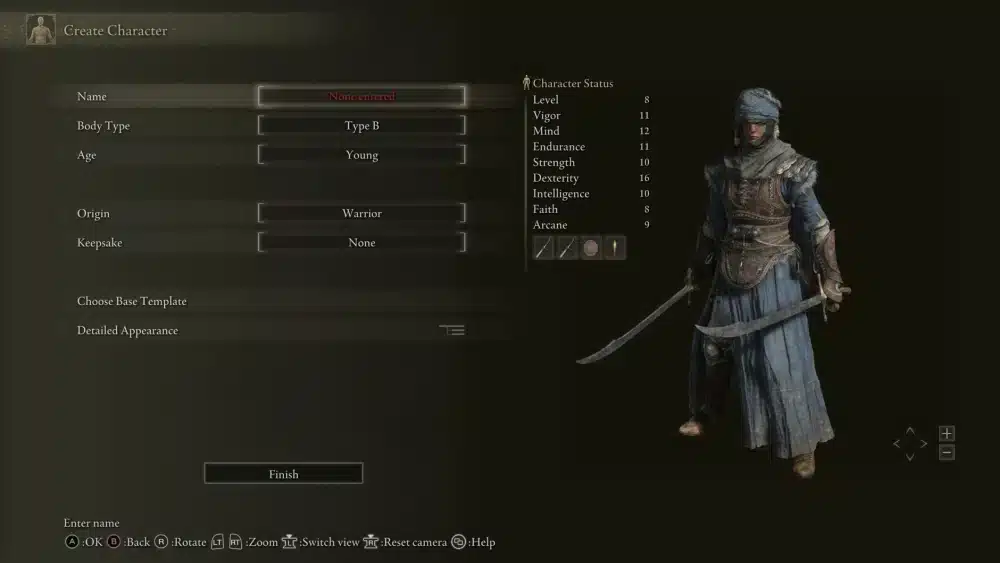
There is no universal perfect stat distribution.
The best build depends on your equipment, intended level, preferred combat style, and whether you are focusing on PvE, multiplayer, or experimentation.
Use soft caps as guidelines
Elden ring stat caps are valuable because they identify diminishing returns.
They help prevent players from putting ten more levels into an attribute for a small improvement when another stat could provide much greater practical value.
However, they should not prevent you from meeting equipment requirements.
If a spell you want requires slightly more Intelligence than your preferred breakpoint, meeting that requirement can still be worthwhile.
Likewise, extra Endurance can make sense if one level changes your roll category.
The number itself is not the goal.
The build is.
Build around a clear objective
A reliable process looks like this:
- Choose a weapon, spell family, or combat identity.
- Meet the relevant equipment requirements.
- Raise Vigor to a comfortable level.
- Invest in the main scaling attribute.
- Add Mind according to FP consumption.
- Add Endurance for stamina and equipment load.
- Check secondary requirements.
- Use an elden ring stat calculator to compare remaining levels.
- Review current patch information before relying on old optimization data.
This approach works because every level has a purpose.
Instead of asking whether Strength is better than Dexterity in isolation, you ask which one better supports your weapon.
Instead of maximizing Mind, you ask how much FP your build actually needs.
Nightreign requires a different mindset. Elden ring nightreign stats are attached to predefined Nightfarers, with players starting each expedition at level 1 and adapting through the gear, bonuses, Relics, and opportunities available during that session.
For base Elden Ring, long-term planning remains the key. Use soft caps to identify diminishing returns, calculators to compare distributions, and current equipment data to understand scaling.
A strong build is not simply the one displaying the largest attack-rating number.
It is the one that gives you enough survivability, resources, equipment flexibility, and damage to execute your chosen playstyle consistently.
For PC players using Elden Ring's online systems or Nightreign's cooperative expeditions, ExitLag can complement that preparation by optimizing network routing in supported play. Build optimization and network optimization solve different problems, but both contribute to a more consistent experience.
Ultimately, elden ring stats become much easier to understand once every point is connected to a clear purpose. Learn the role of each attribute, treat soft caps as efficiency guidelines, verify scaling against your actual equipment, and use calculators before committing expensive levels. With that approach, elden ring stats stop looking like a wall of numbers and become one of the most useful tools for building exactly the character you want.
All game images used in this blog belong to FromSoftware. They are used for informational/educational purposes only and do not imply endorsement or affiliation with the rights holders.