
Every few months, a new wave of players asks the same question in chat: how old is this game actually? The confusion is understandable, since Fortnite has such a long, layered history behind it.
How Old Is Fortnite depends entirely on which version of the game you are counting from. There is the original paid mode, and there is the free Battle Royale mode everyone actually plays today.
The short answer: Fortnite Battle Royale launched on September 26, 2017, making the game roughly nine years old today. However, the very first version of Fortnite, called Save the World, arrived slightly earlier that same year, on July 25, 2017.
That two-month gap between the two launches is exactly why so many players get tripped up. Furthermore, an even older reveal trailer from 2011 adds another layer of confusion to the timeline. Let's untangle all of it properly.
How Old Is Fortnite Right Now?
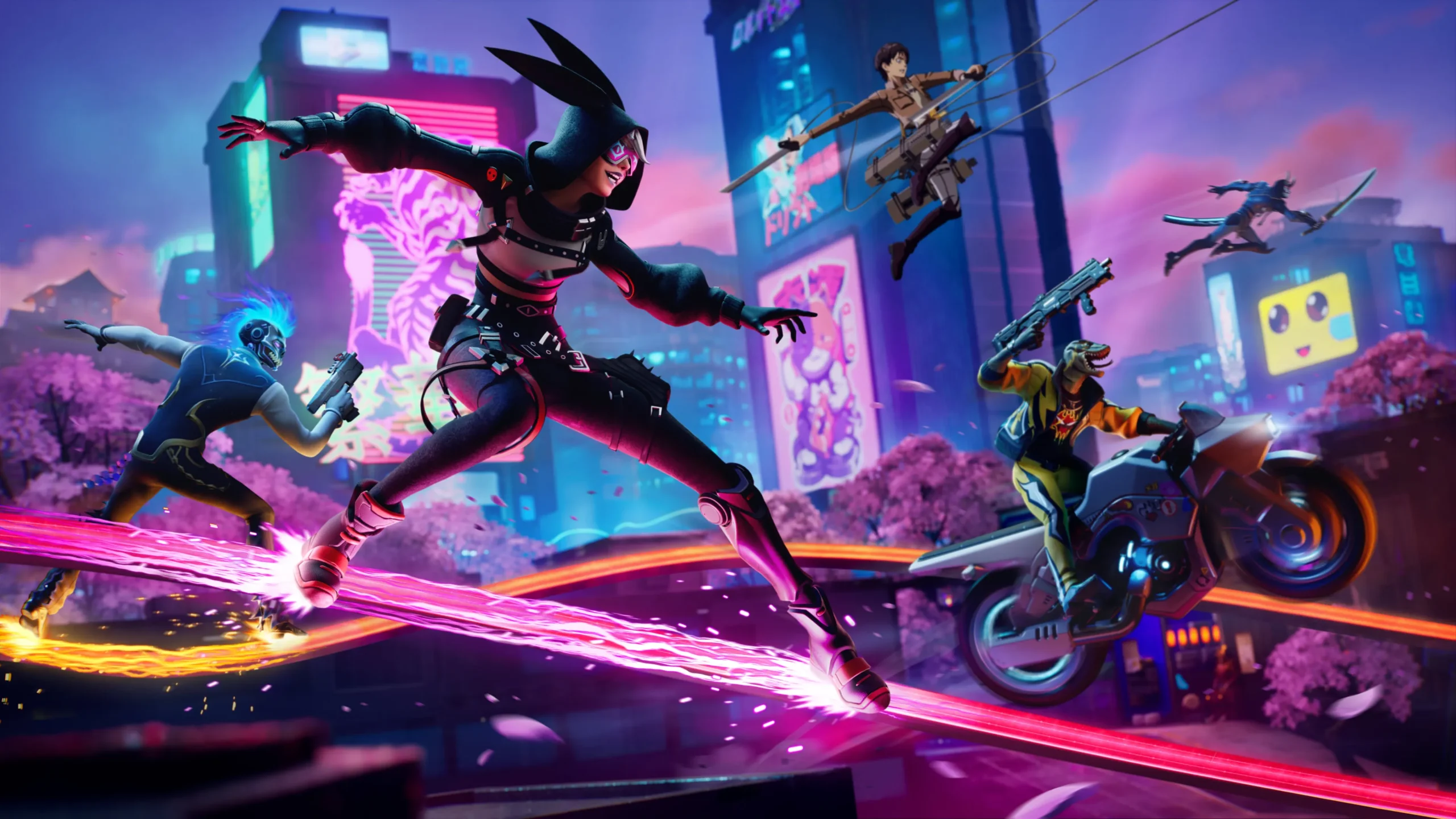
As of today, Fortnite Battle Royale is closing in on its ninth birthday. The mode that made the game a global phenomenon launched in late September 2017 on PC, PlayStation, and Xbox.
Meanwhile, the original Save the World campaign is technically a little older. Consequently, the "true" age of Fortnite shifts depending on which mode a player means when they ask the question.
The Two Different Launch Dates
Most competitive shooters have one clean release date. Fortnite does not, and that is the root of nearly every debate about its age.
- Save the World: Launched July 25, 2017, as a paid early access survival game.
- Battle Royale: Launched September 26, 2017, as a free-to-play spinoff mode.
- Creative Mode: Added later, in December 2018, as a sandbox building space.
- Chapter Era: Ongoing since 2018, restructuring the map and story every few seasons.
Why The Answer Depends On Which Mode You Mean
If someone asks a Fortnite veteran how old is Fortnite actually, the honest answer needs a follow-up question first. Do they mean the franchise, or the Battle Royale mode specifically?
Most casual players only ever touch Battle Royale. Therefore, when people casually discuss the game's age, they are almost always referring to the September 2017 launch date.
Did Fortnite Come Out In 2011?
This is one of the most common misconceptions floating around online. Did Fortnite Come Out In 2011? No, it did not, though the confusion makes sense once you know the backstory.
Epic Games first showed a concept trailer for Fortnite at a gaming awards show back in 2011. At that stage, however, the game was little more than an early idea and a short cinematic teaser.
What Actually Happened At The 2011 Reveal
The 2011 reveal was essentially a proof of concept. It showed a zombie-survival premise with base building, which is recognizable as an early version of the Save the World campaign.
- The trailer featured no playable footage of the final game.
- The art style and mechanics changed significantly before launch.
- Epic Games spent roughly six years in development after the reveal.
- The Battle Royale mode did not even exist as a concept yet.
The Six-Year Gap Between Announcement And Launch
Six years is a long development cycle by any standard. Nevertheless, that gap explains why some older articles and forum posts still list 2011 as a "release year" when it was only ever a first look.
As a result, anyone repeating the 2011 release claim today is spreading an outdated myth. The real playable launch did not happen until the summer of 2017.
Why Is Fortnite 12 Years Old? Debunking The Myth
Some players insist the game is older than it actually is, often citing a specific number. Why Is Fortnite 12 Years Old is a phrase that pops up occasionally, and it stems from a couple of overlapping mix-ups.
First, some people miscount the years between the 2011 reveal trailer and the present day, treating that reveal as a launch. Second, others confuse the game's PEGI age rating of 12 with its actual age in years.
Where The 12-Year Myth Comes From
These two separate numbers, the reveal year and the age rating, get blended together in casual conversation. Consequently, "12" becomes an easy but incorrect shorthand for the game's age.
- A player sees the 2011 announcement date somewhere online.
- They calculate years from 2011 instead of the actual 2017 launch.
- Someone else confuses the PEGI 12 content rating with the game's age.
- The two mistakes combine into a commonly repeated wrong answer.
The PEGI Rating Confusion
The PEGI 12 label refers to content suitability, not the number of years since release. It flags the cartoonish violence level as appropriate for players aged twelve and up.
That rating has never changed since launch, even as the game itself has aged past it. In fact, Fortnite is now several years older than the age rating printed on its box.
Did Fortnite Start In 2017?
Yes, and this is the one date worth remembering above all others. Did Fortnite Start In 2017? Absolutely, both major modes of the game went live during that single calendar year.
Save the World kicked things off in July, giving players a paid cooperative shooter with tower-defense elements. Then, just two months later, Battle Royale changed everything.
Save The World: The Original 2017 Launch
Save the World was never meant to be a free game at launch. It required purchasing a Founder's Pack, with prices ranging from around forty dollars up to premium bundles well above a hundred.
Epic Games originally planned a full free-to-play transition for this mode. However, those plans shifted over time as Battle Royale became the clear priority for the studio.
Battle Royale: The Mode That Changed Everything
Within two weeks of its September 2017 launch, Battle Royale had already reached ten million players. That kind of growth curve was almost unheard of for a shooter at the time.
Here is a quick comparison of how the two original modes stack up against each other:
| Mode | Launch Date | Access Type | Core Gameplay |
|---|---|---|---|
| Save the World | July 25, 2017 | Paid, Founder's Packs | Co-op survival, base building |
| Battle Royale | September 26, 2017 | Free-to-play | 100-player last-one-standing |
| Creative Mode | December 2018 | Free-to-play | Sandbox island building |
| Chapter Seasons | Ongoing since 2018 | Free-to-play | Rotating map, story, and modes |
How Old Is Fortnite Actually, Season By Season?
Beyond the initial launch, Fortnite has been restructured multiple times through its Chapter system. Understanding this structure helps explain how old is Fortnite actually feels different from how old it technically is.
Chapter 1 ran from launch through late 2018 into 2019, establishing the original island. Since then, Epic Games has rebuilt the map and mechanics with each new Chapter.
Fortnite's Chapter Timeline Explained
The Chapter system resets expectations for new and returning players alike. As a result, the game constantly feels fresher than its actual age would suggest.
- Chapter 1 introduced the original map and core Battle Royale loop.
- Chapter 2 brought swimming, fishing, and a fully rebuilt island.
- Chapter 3 through Chapter 6 layered in new movement mechanics and crossovers.
- Chapter 7 is the current era, featuring ongoing seasonal storylines and collaborations.
How The Game Has Evolved Since Launch
Weapons, movement systems, and building mechanics have all shifted dramatically over time. Moreover, entire genres within Fortnite, like racing and music modes, did not exist during the earliest seasons.
This constant reinvention is part of why the franchise still attracts new players today. Even veteran players sometimes forget just how different early Fortnite looked compared to the current version.
Pro Tips: Tracking Fortnite's Age And History
- Check the in-game timeline: The game's own museum-style archives show past seasons and cosmetics chronologically, which is more reliable than random forum claims.
- Separate the franchise from the mode: Always clarify whether you mean Save the World, Battle Royale, or the franchise as a whole before quoting an age.
- Ignore reveal trailers as launch dates: A teaser trailer is not a release. Use the actual playable launch date instead.
- Follow official Epic Games announcements: Anniversary posts from the developer are the most accurate way to confirm milestone years.
Common Mistakes Fortnite Players Make
- Counting from the 2011 trailer: Many players assume the reveal year is the release year. Fix: always use September 2017 for Battle Royale and July 2017 for Save the World.
- Confusing the PEGI rating with the game's age: The number 12 on the box is a content rating, not a birthday. Fix: check official launch dates instead of the rating label.
- Ignoring the two-mode split: Treating Fortnite as having one single launch date leads to constant disagreements. Fix: specify which mode you are referencing every time.
- Assuming Chapter numbers equal years: Chapters do not map cleanly to calendar years since some run longer than others. Fix: rely on actual dates, not Chapter counts, for age calculations.
Play Fortnite With A Smoother, More Stable Connection
Knowing exactly how old is Fortnite is fun trivia, but what actually matters during a match is how your connection performs. Battle Royale lobbies with a hundred players demand a stable, low-latency route to the game servers.
Even a small amount of packet loss can cause rubber-banding, delayed builds, or desync during a final circle fight. That is exactly the kind of problem a dedicated connection optimizer is built to solve.
Why Connection Stability Matters In Fortnite
ExitLag is not a VPN. Instead, it is a game connection optimizer that scans multiple network paths in real time and routes your traffic through the fastest, most stable option available.
This matters enormously in a battle royale format, where a single spike in latency can mean losing a build fight or missing a shot. A more consistent route keeps inputs feeling responsive from the first drop to the final zone.
- Real-time optimization: Reduces delay and packet loss so builds and shots register faster.
- Multipath technology: Sends data through multiple routes at once, keeping you connected even if one path fails.
- Multi-Internet support: Combines up to four connections, so a dropped line does not end your match.
- Traffic Shaper: Prioritizes game traffic over background downloads and updates during play.
Getting Started With ExitLag
ExitLag works alongside Fortnite without touching game files, injecting code, or interfering with anti-cheat systems, which keeps it safe to use. It supports thousands of titles across PC and mobile, with servers spread across more than 190 countries.
Players on PC can grab the ExitLag Download to start optimizing their route to Fortnite's servers right away. Mobile players who jump into matches on the go can also use ExitLag for Android or ExitLag for iOS to reduce lag on cellular and Wi-Fi networks alike.
Final Verdict: How Old Is Fortnite Today?
So, How Old Is Fortnite in the simplest possible terms? Battle Royale is approaching nine years old, counting from its September 2017 launch, while Save the World is a couple of months older still.
The 2011 reveal trailer was never a release, and the "12 years old" claim is simply a mix-up between that reveal and the PEGI content rating. Both myths collapse once the actual dates are laid out clearly.
Quick Recap Of The Timeline
- 2011: Concept trailer shown, years before any playable release.
- July 2017: Save the World launches as a paid early access title.
- September 2017: Battle Royale launches for free, becoming a global hit.
- 2018 to today: Ongoing Chapters continuously rebuild the map and mechanics.
What This Means For New And Returning Players
Whether you are jumping back in after years away or trying Fortnite for the first time, the current Chapter looks nothing like the original 2017 island. That constant reinvention is arguably why the game has stayed relevant for nearly a decade.
Next time someone asks how old is Fortnite, you will have the real dates, the real myths, and the real answer ready to go.
All game images used in this blog post belong to Epic Games. They are used for informational and educational purposes only and do not imply endorsement or affiliation with the rights holders.