
Overwatch hero rankings shift with every major balance patch and season update. In Season 3: Into the Tiger's Den, the meta continues to evolve following the massive Reign of Talon launch that added ten new heroes, with the newest arrival being the DPS hero Shion. Understanding which heroes are strong right now, which have fallen off, and which villains and original cast members remain relevant helps both new and returning players make informed picks.
This guide covers the current Overwatch tier list across all three roles, explains the Season 3 meta, breaks down the best DPS characters, tanks, and healers, and provides context for where the original cast and villain characters sit in competitive play.
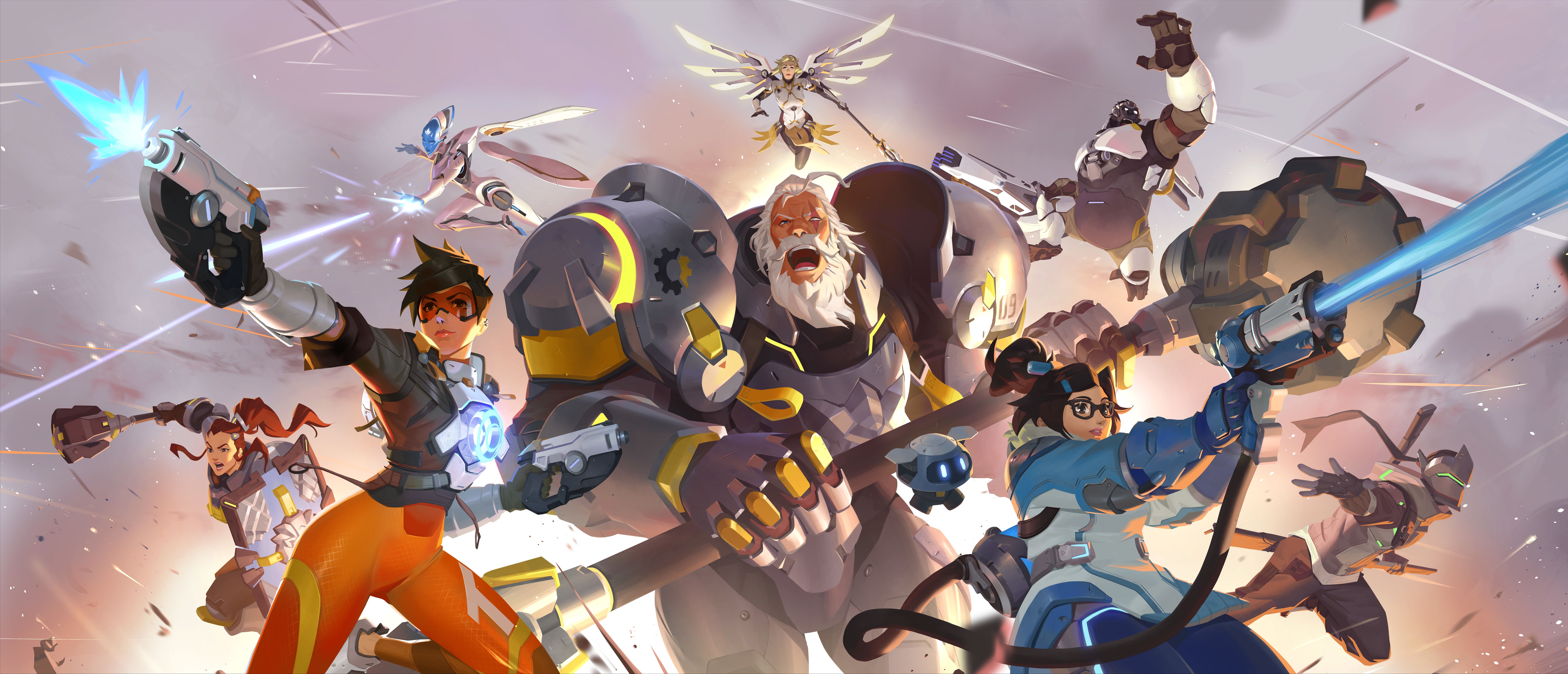
Overwatch Tier Rankings Explained
S Tier: Meta-defining heroes. Strong in nearly every map, composition, and skill bracket. These heroes do not require specific team compositions to be effective.
A Tier: High-value picks that perform consistently well and fill important roles. Slightly more situational than S tier but reliable in most scenarios.
B Tier: Solid in the right composition or against specific enemies. Require more coordination or specific conditions to reach their ceiling.
C Tier: Viable but limited. Work in niche matchups or require very high mechanical skill to deliver value comparable to higher-tier picks.
D Tier: Situationally useful at best. Consistently outperformed by alternatives in most scenarios.
Overwatch Tank Tier List (Season 3, 2026)
S Tier Tanks
D.Va: The most flexible tank in the current Season 3 meta. Defense Matrix counters projectile-heavy compositions and aerial threats. Her Booster mobility lets her fill both dive and poke compositions. No other tank offers the same range of viable team comp fits.
Sigma: Dominant for multiple seasons and has maintained S-tier status into Season 3. His Stalwart passive eliminates vulnerability to displacement abilities, making him nearly impossible to peel off a position he commits to. Accretion provides hard CC and his shield offers flexible positioning. The current barrier-heavy meta suits him perfectly.
Zarya: The Bruiser sub-role passive grants movement speed when health drops to critical, transforming her from a stationary battery into a mobile threat. Her Graviton Surge ultimate remains one of the highest-impact fight-ending tools in the game. Strong with Vendetta and Tracer.
A Tier Tanks
Winston: Effective in dive compositions paired with mobile DPS. Barrier provides cover and his jump lets him reach high-ground targets and mobile enemies. Weaker against the current poke meta's long-range damage.
Ramattra: Received base kit improvements this season making his rotation feel smoother. Nemesis Form's reach makes him dangerous in enclosed maps. His A-tier ranking reflects solid but not overwhelming performance.
Wrecking Ball: High mechanical ceiling that rewards players who have mastered his paths and cooldown management. Capable of forcing his own tempo but easily shut down by CC-heavy compositions.
Junker Queen: Hybrid tank-DPS that provides self-sustain through wound mechanics. Better in Brawl compositions than Dive or Poke.
B and Below Tanks
- Domina: Dropped from A to B after teams learned to exploit her positioning requirements and break her Barrier Array
- Reinhardt: Struggles with the mobility demands of the current meta
- Roadhog: Nerfs to hook cooldown and reload timing have reduced his solo carry potential significantly
Best DPS Overwatch Characters (Season 3, 2026)
S Tier DPS
Tracer: The queen of Dive compositions. The Flanker sub-role passive (increased health pack healing) gives her autonomous survivability that lets her harass enemy supports without needing her own healer to cover her. A 10% pick rate with a 52%+ win rate across the board confirms she is a genuine meta pick, not just a comfort choice.
Sojourn: The Railgun remains the meta-defining hitscan tool. Consistent and oppressive at all ranges. Strong mobility, the Sharpshooter passive keeping Power Slide available, and the ability to nearly one-shot squishies at full charge make her universally viable. In skilled hands she is one of the highest individual carry-potential heroes in the game.
Vendetta: The new Talon DPS who overthrew Doomfist narratively and justified her S-tier ranking with gameplay performance. Her lifesteal makes her sustainable in close-range trades, she holds the highest win rate in the DPS role, and Zarya bubble synergy makes her nearly unkillable. She received a damage nerf (130 to 120 on overhead swings) but remains dominant.
Emre: A high-impact hybrid hero who performs best in compositions that can protect him during his channeled abilities. Currently one of the stronger new hero additions.
A Tier DPS
Ashe: Outclasses Widowmaker in versatility. Dynamite provides exceptional value against grouped Brawl compositions and B.O.B. provides a reliable tank-adjacent presence. A comfort pick for aim-focused players who want more utility than a pure sniper.
Bastion: No longer a niche pick. Raw damage output is the only consistent counter to the Sigma/Domina barrier meta. Hard-countered by D.Va's Matrix so requires tracking enemy tank cooldowns.
Symmetra: Evolved into an A-tier threat in the barrier-heavy meta. Beam scaling against Sigma and Domina is particularly effective.
Genji: Back with a 10% pick rate and 52%+ win rate after a period of underperformance. The Flanker passive gives him independence from support.
Sierra: The newest DPS addition in Season 2. Still being evaluated as players develop and counter strategies.
Shion: Just added in Season 3. Full tier placement still forming.
B and Below DPS
- Cassidy: Reliable but outperformed by Sojourn and Ashe in the current mid-range meta
- Reaper: Remains effective in close-range pressure but limited by the mobile meta's ability to kite him
- Widowmaker: Situationally excellent but too matchup-dependent for consistent high-tier placement
- Torbjörn: Can work but turret value is inconsistent against mobile dive compositions
- Soldier: 76: Serviceable but lacks the burst potential of Sojourn or the utility of Ashe
All Overwatch Healers: Support Tier List (Season 3, 2026)
S Tier Supports
Kiriko: Consistently meta across every season update. The Medic passive converts healing done to allies into self-healing, making her the most independently survivable duelist in the role. Suzu's invulnerability frame is reserved exclusively for denying enemy ultimates in S-tier play.
Lúcio: The Tactician passive retains 25% ultimate charge after using his ultimate. Speed Boost enables Stalwart tanks like Sigma and Zarya to reach targets they could not reach otherwise. Crossfade between speed and healing provides flexible support across all compositions.
Ana: High healing ceiling combined with Biotic Grenade's anti-heal makes her the highest-skill-ceiling support in the game. Sleep Dart remains one of the most impactful CCs available to any hero. A-tier mechanics with S-tier potential in skilled hands.
A Tier Supports
Jetpack Cat (JPC): The most talked-about hero of Season 1 and 2. Permanent flight and the Catnapper ability (aerial repositioning for allies, like an airborne Bastion) broke positioning conventions. Perk costs were reduced this season. Still highly effective but more predictable after extended time in the meta.
Illari: Reestablished herself as a top support after a damage buff this season. Features some of the highest win rates across all ranks due to strong solo healing output and Captive Sun's fight-altering ultimate.
Zenyatta: High win rate in Diamond+ play despite moderate pick rate. Discord Orb remains one of the best damage amplification tools in the game. Requires protection but delivers outsized value when positioned safely.
B and Below Supports
- Mercy: Stable pick with straightforward mechanics but limited fight-altering potential compared to A and S tier options
- Moira: Strong healing output with damage upside, best on smaller enclosed maps
- Brigitte: Effective in Brawl compositions but struggles in the current Dive and Poke meta
- Lifeweaver: Received buffs this season improving healing output but remains lower than optimal utility compared to S-tier options
- Baptiste: Solid but has lost ground to more mobile and synergy-rich options
OG Overwatch Characters: Original Cast Rankings in 2026
Original Launch Heroes Still Meta-Relevant
Tracer (S Tier): The most successful original hero in competitive play. Her design as the game's mascot is backed up by consistently high competitive performance.
Soldier: 76 (B Tier): The original generalist. Still viable but outclassed by specialists. The character who new players associate with "basic gunplay" but who rarely represents the optimal meta pick at high ranks.
Reinhardt (D Tier): The quintessential frontline tank whose playstyle has struggled to adapt to the mobile meta's demands.
Mercy (B Tier): The original main support. Foundational to many players' introduction to the support role but outperformed competitively by Ana, Kiriko, and Lúcio.
Widowmaker (B Tier): High mechanical ceiling but the mobile meta limits the number of open sightlines she can effectively exploit.
D.Va (S Tier): One of the few original heroes maintaining full S-tier relevance. Her versatility has allowed her to adapt to every meta shift since launch.
Winston (A Tier): Consistent but meta-dependent. Stronger when Dive is viable.
Genji (A Tier): Strong comeback after previously falling out of the top tier.
Hanzo (B Tier): Situationally powerful but inconsistent.
Pharah (B Tier): Effective against non-hitscan compositions, punished heavily against them.
Overwatch Villains: Where the Antagonists Rank
Several playable heroes are canonically villains in the Overwatch story:
Widowmaker: The assassin who killed Mondatta. A Talon agent in lore, a sniper in gameplay. B tier.
Reaper (Gabriel Reyes): One of Overwatch's founders turned enemy. B tier due to the mobile meta limiting his close-range effectiveness.
Moira: The scientist who developed Reaper's wraith technology. Works for both Blackwatch and Talon depending on the lore timeline. B tier.
Sigma: Canonically a victim of Talon manipulation who now serves them. S tier.
Doomfist: Former Talon leader before Vendetta's hostile takeover. Currently playable as a tank. A tier.
Sombra: The hacker operating in ambiguous allegiance territory, serving Talon's intelligence interests. B tier.
Vendetta: The new S-tier villain-hero who killed Doomfist's leadership. Season 2 and beyond has her as the central narrative antagonist and a dominant competitive pick simultaneously.
Pro Tips: Climbing with Overwatch Hero Rankings
- Play the meta at your rank, not the pro meta: Heroes like Vendetta and Tracer dominate at high ranks where players can maximize their potential. At Gold and Platinum, simpler heroes with consistent value often outperform mechanically demanding S-tier picks.
- Counter-pick within your champion pool: Switching to a counter requires knowing how to play that hero. A mediocre Symmetra does not beat a good Sigma just because the matchup says she should. Develop a pool of two to three heroes per role you can competently execute before expanding.
- Check overbuff.com for win rates at your specific rank: Tier lists reflect high-rank performance. Many heroes perform differently at various skill tiers, and win rate data filtered to your rank bracket gives more relevant information.
- Track when new heroes stabilize before investing time in them: New heroes always start with inflated win rates (players who main them in week one are highly dedicated) before settling at their accurate performance level after two to four weeks of broader play.
Common Mistakes with Overwatch Hero Selection
- Copying a pro player's hero pick without their mechanical skill level: Vendetta at S tier assumes you can consistently connect her overhead swings and manage her lifesteal window. Fix: Test new hero pickups extensively in Quick Play before applying them in ranked.
- Playing a hero only because they are currently S tier: The best hero for your rank is often the one you have the most game-time on. Fix: Use tier lists as a guide to which heroes are worth investing time into rather than as a directive to instantly switch.
- Ignoring the support role because it is less flashy: The highest individual skill expression in 2026 Overwatch is arguably in the support role with heroes like Ana, Zenyatta, and Kiriko. Fix: Develop at least passing competence in one support hero as an alternative role to avoid being forced into an unfamiliar pick.
Play Overwatch at Your Best with ExitLag
Hero rankings define the meta. Your connection quality defines whether your execution actually shows up on the server. Vendetta's lifesteal only works if your hits register on time. Ana's Sleep Dart is only useful if the game processes it before the target moves past.
ExitLag is a connection optimizer used by over 30 million players across 4,000+ game titles including Overwatch. It analyzes multiple network routes in real time and selects the fastest, most stable path between your device and Blizzard's servers.
Features that directly benefit competitive Overwatch players:
- Real-Time Optimization: Continuously selects the lowest-latency route to Overwatch servers, ensuring your abilities register the moment you execute them.
- Multipath Technology: Routes game data through multiple simultaneous paths so no single connection failure interrupts a ranked match.
- Traffic Shaper: Prioritizes Overwatch traffic over all background applications so nothing creates ping spikes during fights.
- Multi-Internet: Supports up to four simultaneous connections, eliminating disconnections from competitive sessions.
Download ExitLag and try it free.
All hero names, game images, and trademarks mentioned in this article belong to Blizzard Entertainment. They are used for informational and educational purposes only and do not imply endorsement or affiliation with the rights holders.