Climbing the competitive ladder in tactical shooters requires more than just raw gunplay or fast reflexes. Every single match pushes you closer to or further from your ultimate seasonal goals. Understanding how the game structures its competitive tiers helps you map out a realistic path to improvement.
The Rainbow Six Siege Ranks system divides millions of active players across distinct skill brackets. Whether you find yourself hard-stuck in the lower divisions or pushing toward elite tournament play, tracking your progress is essential. Knowing where you stand compared to the wider player base gives you a clear target for your next gaming session.
If you want to escape your current bracket, you must understand how Matchmaking Rating operates behind the scenes. Let us break down every single tier, division structure, and distribution percentage so you can start dominating your matches today.
Understanding The Rainbow Six Siege Ranks And Division Structure
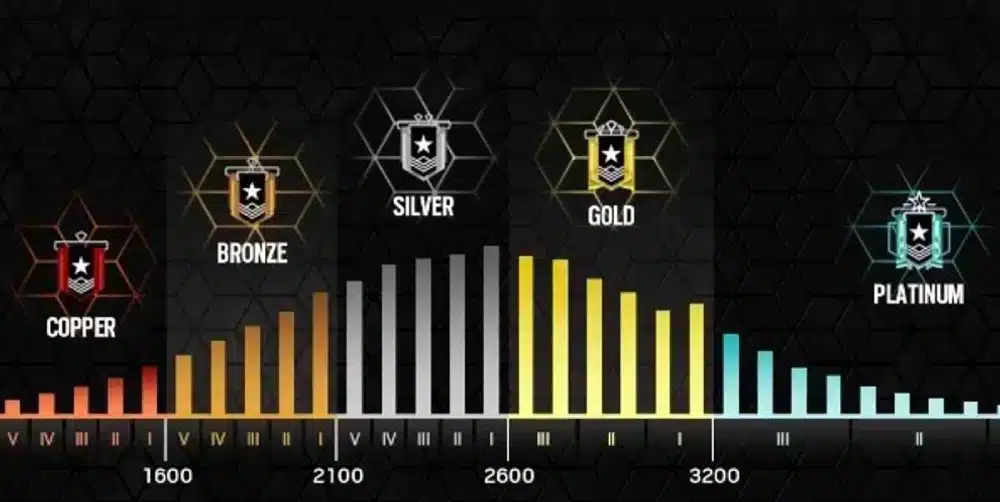
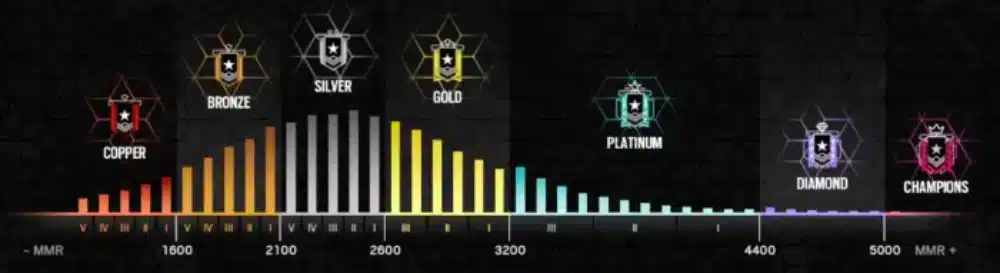
The competitive ecosystem is built on eight distinct major tiers that dictate your skill level. From humble beginnings in Copper all the way to the prestigious pinnacle of Champion, mastering these categories takes dedication.
Every major tier is split into five smaller sub-tiers known as divisions, running from Division V down at the bottom up to Division I right before the next tier. Furthermore, each of those divisions contains specific Ranked Point thresholds, creating a deeply detailed progression path.
- Copper to Diamond Ranks: Each major rank features five distinct divisions (V through I) that you must clear sequentially.
- Champion Tier: The ultimate rank in the game representing the absolute peak of competitive play.
- Ranked Points (RP): The visible currency you earn or lose based on match outcomes.
How Matchmaking Rating Drives Your Tom Clancy Rainbow Six Siege Ranks
Your visible badge is only half the story when evaluating your competitive standing. Behind the scenes, a hidden numerical value called Skill determines who you play against.
Your Tom Clancy Rainbow Six Siege Ranks reflect your seasonal progress, but your hidden rating dictates match difficulty. Winning matches increases your visible RP, while losses subtract points based on your relative team strength.
Exploring The Ranked In Rainbow Six Siege Distribution Across Tiers
Knowing where the average player sits helps you contextualize your personal achievements. Most of the active player base clusters tightly around the center of the competitive bell curve.
- Copper and Bronze: These brackets house beginners and players learning core map layouts, operator gadgets, and basic recoil control.
- Silver and Gold: The most populated zones in the entire game, holding the vast majority of casual and semi-competitive competitors.
- Platinum and Emerald: High-level territory where advanced vertical play, droning discipline, and rotation consistency become mandatory.
- Diamond and Champion: Representing the absolute top percentage of players globally, commanding near-flawless tactical execution.
| Rank Tier | Divisions | Approximate RP Range | Player Distribution Share |
| Copper | V to I | 0 – 1,599 | ~5% |
| Bronze | V to I | 1,600 – 2,099 | ~12% |
| Silver | V to I | 2,100 – 2,599 | ~17% |
| Gold | V to I | 2,600 – 3,100 | ~20% |
| Platinum | V to I | 3,200 – 4,099 | ~18% |
How Do Playlists And Seasons Influence Rainbow Six Siege Ranked Play?
Choosing how you queue dramatically impacts your overall experience and how fast you climb. Each match demands complete concentration and absolute team synchronization.
Why Playing In A Coordinated Squad Matters Most
Queueing solo puts every single victory or defeat entirely on the mercy of random matchmaking. There are no reliable teammates to hold crossfires or deny hard breaches after an unexpected opening pick.
- Communicating with a dedicated duo or trio creates unmatched synergy for climbing through the Rainbow Siege Six Ranks.
- Assigning specific roles like entry fragger, hard support, and flank watch prevents overlapping utility waste.
How To Track Your Ranks On Rainbow Six Siege Accurately
Relying solely on the in-game promotion and demotion animations can feel opaque during long grinding sessions. Fortunately, external tracking tools give you deep visibility into your progress.
- PC players frequently utilize stat websites to view exact match histories and win rates in real time.
- Online player databases allow you to look up any username across platforms to check seasonal performance trends.
- Keeping track of your session gains helps you identify fatigue before losing streaks ruin your hard-earned tier progress.
Is ExitLag Safe To Use?
When competing in high-stakes tactical shooters, microsecond delays can mean the difference between winning a crucial gunfight and losing the round. Many players wonder whether connection optimization software is safe to run alongside strict anti-cheat systems. ExitLag is completely safe, as it does not modify game files, inject code, or interact with anti-cheat engines in any way.
It operates strictly as a game connection optimizer that analyzes multiple network paths in real time and selects the absolute fastest route between your PC and the game servers. By utilizing advanced Multipath Technology, ExitLag transmits your game data packets simultaneously across several independent routes. If one intermediate network node experiences sudden congestion or lag spikes, the remaining paths maintain your connection instantly without rubberbanding.
Furthermore, the built-in Traffic Shaper prioritizes your gaming data over background downloads, ensuring your inputs register the exact millisecond you press them. Enjoy seamless competitive matches today by getting theExitLag Download for your gaming rig.
Pro Tips: Ranks In Rainbow Six Siege
- Master crosshair placement early: Keeping your sights locked at head height around every corner eliminates the need to flick during sudden gunfights.
- Never push without drone intel: Sacrificing an attack drone to clear a room prevents blind deaths and guarantees map control for your team.
- Expand your operator pool: Learning at least two attack and two defense mains ensures you can adapt to banned operators or team compositional needs.
- Review your own match replays: Watching your losses from a spectator perspective exposes glaring positioning mistakes you never notice while playing.
Common Mistakes Rainbow Six Siege Ranked Ranks Players Make
- Refusing to use a microphone for callouts: Playing in silence starves your teammates of vital enemy location data. Fix: Always make short, calm, and precise voice callouts whenever you spot an opponent.
- Queueing while tilted after a loss streak: Emotional decision-making leads to rushed peeks, toxic chat behavior, and catastrophic RP drops. Fix: Take a ten-minute break after two consecutive losses to reset your focus.
- Reinforcing random interior walls: Bad reinforcements break crucial site rotations and trap defenders in dead ends. Fix: Leave primary rotation lanes open and study standard defensive setup guides for each map.
All game images used in this blog post belong to Ubisoft. They are used for informational and educational purposes only and do not imply endorsement or affiliation with the rights holders.