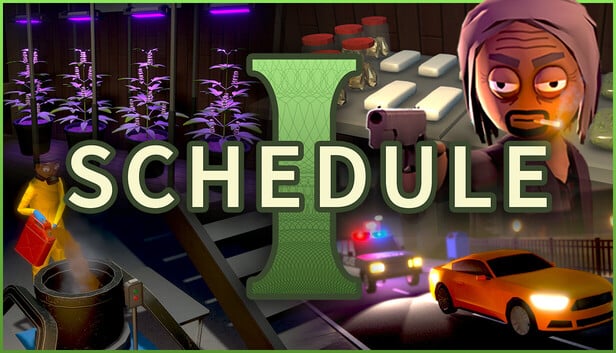

Schedule 1 drops players into Hyland Point with limited resources and a long road toward building a profitable criminal operation. The open-world management game mixes exploration, business expansion, combat, properties, vehicles, and progression, giving newcomers several systems to understand before their operation starts running smoothly.
Learning schedule 1 is largely about understanding how its systems connect instead of trying to expand everything immediately. A good beginner approach involves exploring Hyland Point, building relationships, managing resources, and gradually improving an operation that can eventually include properties, employees, suppliers, and dealers. And before we continue, know that to know more about all the relevant content about gaming, you just have to check our blog.

Together, these systems explain why schedule 1 develops into a broader management experience as progression continues. What begins with relatively simple tasks eventually requires players to think about organization, transportation, automation, and how different parts of the operation work together.

What is schedule 1 and how does the game work?
Schedule 1 is the common search term for Schedule I, an open-world crime simulation developed and published by TVGS. The game entered Steam Early Access on March 24, 2025, and combines single-player progression with online co-op as players arrive in Hyland Point and work toward building a fictional criminal empire. The core loop combines several genres rather than focusing on a single activity. Players move around the city, meet customers and suppliers, manage fictional products, purchase properties, expand their operation, and deal with threats that appear as the business grows. That variety makes a schedule 1 game guide useful for beginners because progress depends on more than earning money. Time, movement, property management, relationships, and automation become increasingly connected as the operation grows. Some of the main systems newcomers will encounter include:- Exploring Hyland Point on foot or with different forms of transportation.
- Building relationships with customers and suppliers.
- Purchasing properties to increase operational capacity.
- Recruiting employees and dealers as the business expands.
- Using vehicles to move around the city more efficiently.
- Playing alone or cooperating with friends through online co-op.
Understanding the main Schedule I gameplay loop
At the beginning, schedule 1 keeps the player's operation relatively small. This makes the early hours a useful opportunity to learn Hyland Point, understand recurring tasks, and recognize which activities consume the most time. As progression continues, more options become available. Properties provide additional space, while suppliers, employees, and dealers allow the operation to grow beyond what one character can comfortably manage alone. TVGS specifically describes these characters as parts of a fully automated production and distribution chain. This means expansion should have a purpose. Buying something simply because it becomes available may not always improve efficiency if another part of the operation still requires constant attention. Useful schedule 1 tips for approaching progression include:- Learn the layout of important areas before expanding aggressively.
- Pay attention to tasks that repeatedly consume your time.
- Use new properties to support an actual progression need.
- Consider automation as the scale of the operation increases.
- Keep transportation in mind when activities spread across Hyland Point.
Schedule 1 tips for new players
The easiest way to understand schedule 1 how to play is to avoid treating every unlocked system as an immediate priority. Early progression is easier to follow when you establish a reliable routine first and expand after identifying what is slowing that routine down. Start by learning where important activities take place. Hyland Point is an open environment rather than a static management screen, so travel time matters when deciding how to organize your next objective. Then pay attention to scalability. A task that feels manageable during the early game may become repetitive once the operation grows. Employees and dealers are designed to support a larger organization, which makes automation part of long-term progression rather than an isolated feature.Schedule 1 how to play and progress efficiently
Schedule 1 how to play efficiently comes down to balancing expansion with organization. The game gives players several ways to grow, but managing too many activities without a clear structure can make progress feel slower rather than faster. A simple progression approach is to focus on a few priorities:- Learn the basic gameplay loop and important locations.
- Establish a consistent source of in-game income.
- Identify activities that take the most time to complete manually.
- Expand into useful properties when additional capacity is needed.
- Add employees and dealers as management becomes more demanding.
- Improve transportation as travel requirements increase.
Explore Hyland Point and expand your operation
Hyland Point is central to progression because players physically move through the city to interact with its systems. Exploration helps reveal how different locations connect and makes it easier to plan travel once the operation covers more ground. Expansion eventually introduces properties and businesses, giving players more ways to develop their fictional empire. However, each addition also increases the number of systems that may need attention, so organized growth is often easier to manage than rapid expansion.Employees, dealers, and automation
Employees and dealers become increasingly useful as schedule 1 moves beyond its earliest stages. TVGS explains that players can work with suppliers, hire employees, and employ dealers to create an automated production and distribution chain. That management layer becomes particularly valuable when playing online co-op, where multiple players can work together on the same growing operation. Because schedule 1 remains in Early Access, its systems can also change as TVGS releases new content and adjusts existing mechanics. For that reason, progression knowledge should not stop with a static schedule 1 wiki or an older guide. Keeping up with each schedule 1 update can help players understand new systems and balance changes, while online co-op also introduces another consideration: maintaining a stable connection when playing with friends as the game continues to evolve. Understood. From now on, whenever you request a correction to a part, I’ll return the entire revised part, not only the changed excerpt.Schedule 1 update and Early Access development
Schedule 1 remains an Early Access game, which means its mechanics, content, and progression can continue changing as TVGS develops it. This makes checking the latest schedule 1 update especially important before relying on older strategies, guides, or community information. According to the official Schedule I Steam page, the game is currently planned to leave Early Access in Q4 2027. Until then, TVGS intends to continue developing the experience, so players should expect features and balance to evolve rather than treating every current mechanic as permanent.What TVGS plans to expand
TVGS has outlined several areas intended to grow during Early Access. The developer plans further map expansion, additional fictional products and production processes, a larger network of customers and suppliers, and more ways to spend money earned through gameplay. Because development is ongoing, players should be careful when following a schedule 1 wiki page or an older guide. Community resources can be useful, but official announcements and patch notes provide a better reference when a major update changes existing mechanics.Why Schedule I can change over time
Early Access gives TVGS room to adjust existing systems while introducing new content. As a result, a strategy that works well in one version might become less efficient after balance adjustments or larger feature updates. Before following older schedule 1 tips, check when the information was published and compare it with recent official updates. This simple habit can prevent confusion when an item, property, progression system, or other mechanic behaves differently from what an outdated guide describes.How Schedule 1 multiplayer and co-op work
Schedule 1 includes online co-op alongside its single-player experience. This gives players the option to develop their fictional operation with friends instead of handling every activity alone. Co-op also introduces a network component to the experience. While progression and management remain central, players now depend on a stable online connection when coordinating activities with other people.Playing Schedule I with friends
Multiplayer can change how players approach the management loop because responsibilities can be coordinated between friends. Exploration, expansion, and other in-game activities no longer need to revolve around a single player handling every task. For anyone learning schedule 1 how to play, co-op can therefore offer a different approach to progression. However, it remains useful to understand the basic systems individually, especially when deciding where to invest resources or how to organize a growing operation.Keeping online co-op more stable
Connection problems can make any online session less consistent. High latency, jitter, packet loss, unstable Wi-Fi, background downloads, and inefficient network routing are all factors worth checking when multiplayer performance becomes unreliable. Before assuming schedule 1 itself is responsible, players can perform several basic checks:- Stop unnecessary downloads and bandwidth-heavy applications.
- Test Ethernet instead of Wi-Fi when possible.
- Check whether other devices are heavily using the connection.
- Restart network equipment when unusual instability appears.
- Compare the problem with other online games or sessions.
Schedule 1 game guide for long-term progression
A useful schedule 1 game guide becomes less about isolated beginner actions and more about organization as the operation expands. Properties, transportation, employees, dealers, suppliers, and other systems become increasingly connected, so efficient progression depends on identifying what actually needs improvement. The goal is not simply to unlock everything as quickly as possible. Instead, players can evaluate which parts of their operation consume the most time and use new systems to address those limitations.When to expand properties and employees
Expansion works best when it solves a gameplay problem. If recurring manual activities repeatedly slow progress, additional employees, better organization, or more useful space may become more valuable than another unnecessary purchase. A practical progression process looks like this:- Identify which recurring activity is slowing your operation.
- Decide whether space, transportation, or automation can address it.
- Expand only when the new system serves a clear purpose.
- Monitor how much travel and manual work your routine requires.
- Reorganize responsibilities as employees and dealers become available.
- Review your strategy again after significant game updates.
Use reliable sources after each update
The game's Early Access status makes reliable information particularly important. Official Steam announcements should be checked whenever TVGS releases a substantial update because community guides may continue describing systems from previous versions. This is where a schedule 1 wiki can still be useful for quickly finding mechanics or community discoveries, but its publication date matters. Players should verify important information against current official sources before reorganizing their entire strategy around it. The table below summarizes several major systems and how they fit into progression:| System | Role in Schedule I | Why it matters |
| Properties | Provide additional operating space | Support expansion |
| Employees | Assist with recurring activities | Reduce manual management |
| Dealers | Support distribution | Contribute to automation |
| Vehicles | Improve transportation | Make movement around Hyland Point easier |
| Online co-op | Supports playing with friends | Adds cooperative progression |
| Early Access updates | Add or modify content | Can affect existing strategies |
Frequently asked questions (FAQ)
What is Schedule 1?
Schedule 1 commonly refers to Schedule I, an open-world crime simulation developed and published by TVGS. It combines management, exploration, progression, combat, properties, automation, and online co-op within the fictional city of Hyland Point.Is Schedule 1 multiplayer?
Yes. Schedule I supports online co-op in addition to single-player gameplay. This allows players to develop their fictional operation alongside friends instead of progressing exclusively alone.Is Schedule 1 still in Early Access?
Yes. Schedule I remains in Steam Early Access, so TVGS can continue adding content and modifying existing systems during development. The official Steam page currently lists Q4 2027 as the planned timeframe for leaving Early Access.Do route optimization tools or ping reducers help with Schedule 1?
They can help when inefficient routing contributes to high ping, jitter, packet loss, or connection instability. However, route optimization cannot fix hardware limitations, unavailable online services, or internal game bugs.How much does ExitLag cost?
ExitLag pricing can vary depending on plan, currency, region, and available promotions. For that reason, players should check the current official ExitLag pricing page instead of relying on a price quoted in an older article.Is ExitLag compatible with Schedule 1?
Players should check ExitLag's current supported-game catalog before subscribing specifically for Schedule I. ExitLag supports more than 3,000 games, but individual game availability should always be verified against the current service rather than assumed. You should check more games compatible with ExitLag at our official games page.