
Steam vs other gaming platforms is a conversation every PC gamer has at some point. Should you stick with the platform that has been there since 2003, or split your library across multiple storefronts chasing free games and exclusive launches? The answer depends on what you actually value: raw catalog size, pricing deals, ownership rights, community features, or a mix of all of them.
Steam's dominance is not a matter of reputation alone. The platform controls roughly 74% of PC digital game distribution globally, with over 132 million monthly active users and a new concurrent peak of 41.81 million users set in January 2026. Every other PC storefront competes against those numbers from a position of significant structural disadvantage.
But market share does not automatically mean best experience for every use case. The platform landscape in 2026 is more segmented than ever, with different stores serving different gamer philosophies. Understanding where Steam leads, where alternatives fill genuine gaps, and what actually matters for your gaming setup is the point of this guide.

Steam vs Other Gaming Platforms: The Core Differences
Library Size and Game Discovery
Steam's catalog spans tens of thousands of titles and grows by thousands of new entries every year. From major AAA releases to ultra-niche indie experiments, simulation games, retro classics, and VR software, the breadth is unmatched on any single PC storefront.
The discovery system behind that catalog is one of Steam's most underrated advantages. Wishlists alert you when prices drop on specific games. The tag system lets you drill into genres as specific as "cozy farming sim" or "turn-based roguelike." User reviews, playtime data, and a curated "Similar Games" algorithm mean you can spend hours finding things you did not know you wanted.
Other platforms have smaller catalogs by design. Some prioritize curation over volume. Others focus on a specific publisher's titles or a particular ownership philosophy. None of them match Steam's raw breadth when you need to find something specific.
DRM and Digital Ownership
One of the clearest philosophical differences between PC gaming platforms is how they handle digital rights management (DRM) and what game ownership actually means.
Steam uses its own DRM system. When you purchase a game on Steam, your access to it is tied to your Steam account and requires the Steam client to play. If Steam's servers were ever to shut down (an extremely unlikely scenario given the company's scale and revenue), access to DRM-protected titles would be at risk.
Some alternative platforms operate on a DRM-free model. Every purchase comes with a standalone offline installer that you can download, archive, and run years later without any account verification, launcher, or internet connection. For players who care deeply about permanent ownership and game preservation, this model represents a meaningfully different relationship with purchased software.
The trade-off is real on both sides. Steam's DRM enables seamless cloud saves, Workshop mod integration, and remote play features that DRM-free files cannot support. DRM-free gives you a file you actually own unconditionally.
Are There Exclusive Games on Steam vs Other Platforms?
How Steam Handles Exclusivity
Steam does not participate in exclusive deals from the publisher's side. Valve's position is that developers should choose Steam on merit: its audience, infrastructure, and community tools, rather than through contractual obligations. Every game in Steam's standard distribution process can simultaneously appear on any other platform.
This means genuine "Steam exclusives" are almost entirely the result of developer choice rather than Valve policy. When a game is only on Steam, it is because the developer decided to launch only there, not because Valve demanded it.
Timed Exclusives on Other Platforms
Several other PC storefronts have used timed exclusivity as a strategy to build their player bases. From approximately 2019 through 2023, this was most visible in the industry: developers received upfront payments in exchange for delaying their Steam release by six to twelve months.
Notable examples from that period included Borderlands 3, Metro Exodus, and Alan Wake 2, all of which launched as timed exclusives before eventually releasing on Steam. The strategy generated developer funding but consistent user backlash, with many Steam reviews for eventual Steam releases specifically noting the exclusivity period negatively.
By 2025 and 2026, timed exclusivity has substantially wound down. The vast majority of new PC titles now launch simultaneously across multiple storefronts on day one. The exclusivity conversation has shifted from "when does this come to Steam?" to "which store offers the better deal at launch?"
Publisher-specific platforms are a separate category. Certain storefronts exist specifically to distribute one publisher's games and will never carry titles from other companies. These are effectively mandatory if you want to play that publisher's releases: the platform is the exclusive, not the game.
Which Platform Offers the Best Deals on Games?
Steam's Sale Cadence
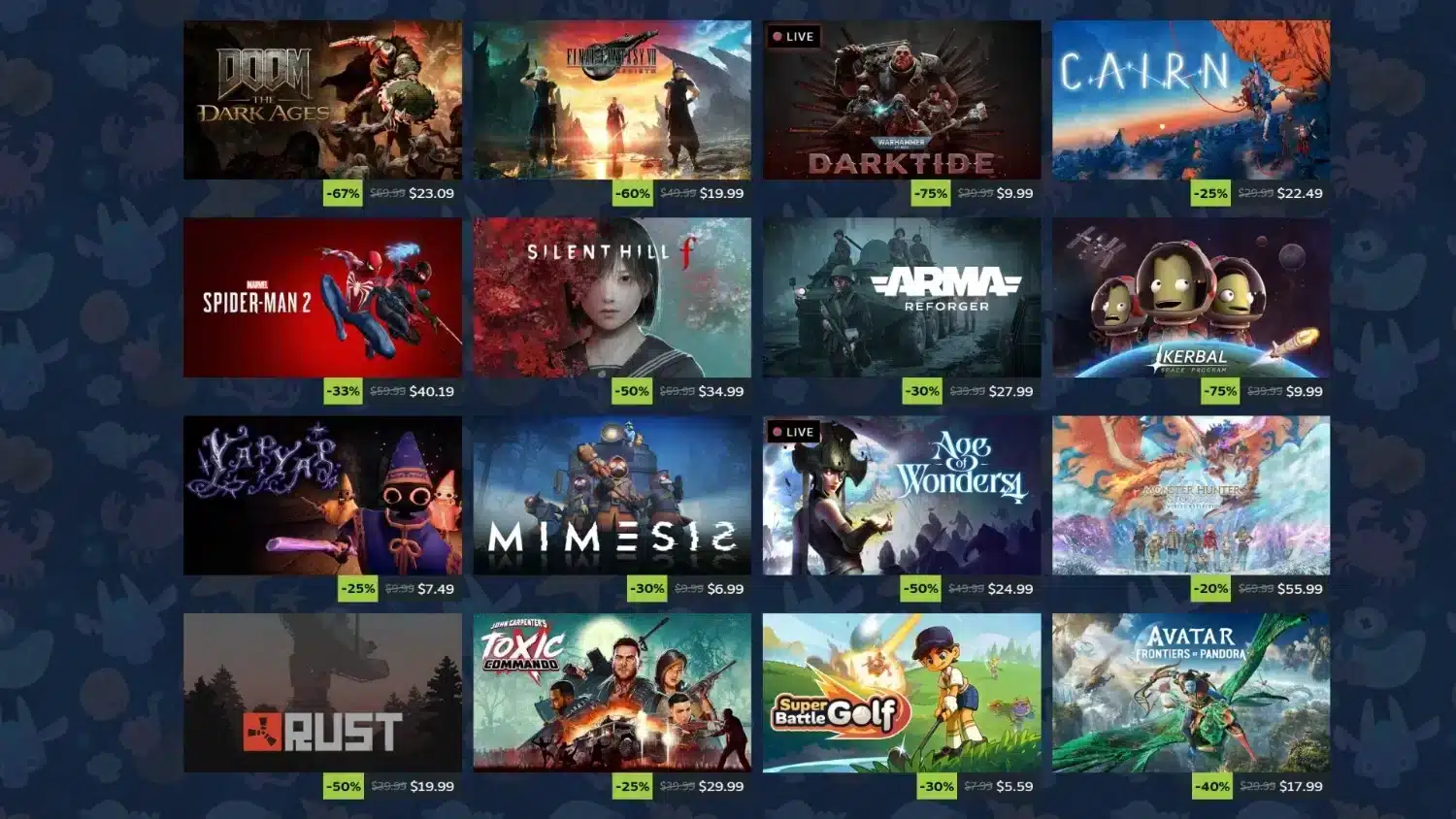
Steam runs the most predictable and deepest sale cycle on any PC gaming platform. The major sale events follow a consistent annual pattern:
- Summer Sale: Late June, typically running 10 to 14 days
- Autumn Sale: November, timed around the US Thanksgiving period
- Winter Sale: Late December through early January
- Spring Sale: March or April
During these events, older titles routinely reach 75 to 90% off their base prices. Recent releases see 20 to 30% discounts. The AAA average retail price has reached $70 for new releases in 2026, which makes Steam's sale discounts the most significant budget tool available for PC gamers who are willing to wait.
Steam also runs publisher sales, Flash sales outside the major events, and game-specific promotions. The wishlist system is the most reliable way to capture these: add a game, enable email notifications, and Steam alerts you when the price drops below a threshold you set.
Free Game Programs
Some alternative platforms run structured free game programs that give away one or more full commercial titles on a weekly basis. These are claimed permanently once added to your library, with no subscription required to keep them. Over a year of consistent claiming, this represents hundreds of dollars in potential game value at no cost.
Steam does not have an equivalent structured free game giveaway program. It offers free-to-play titles and free demo or prologue versions, but not regular commercial game giveaways. For budget-conscious players, this makes maintaining an account on free-game platforms worthwhile even if it is not your primary storefront.
Refund Policies Compared
| Platform Type | Refund Window | Playtime Limit | Speed |
| Steam | 14 days from purchase | Under 2 hours played | Automated, fast |
| DRM-free storefronts | 30 days from purchase | Under 2 hours typically | Manual, slightly slower |
| Publisher platforms | Varies by title | 2 hours or shorter | Varies |
| Subscription services | N/A (access-based) | N/A | N/A |
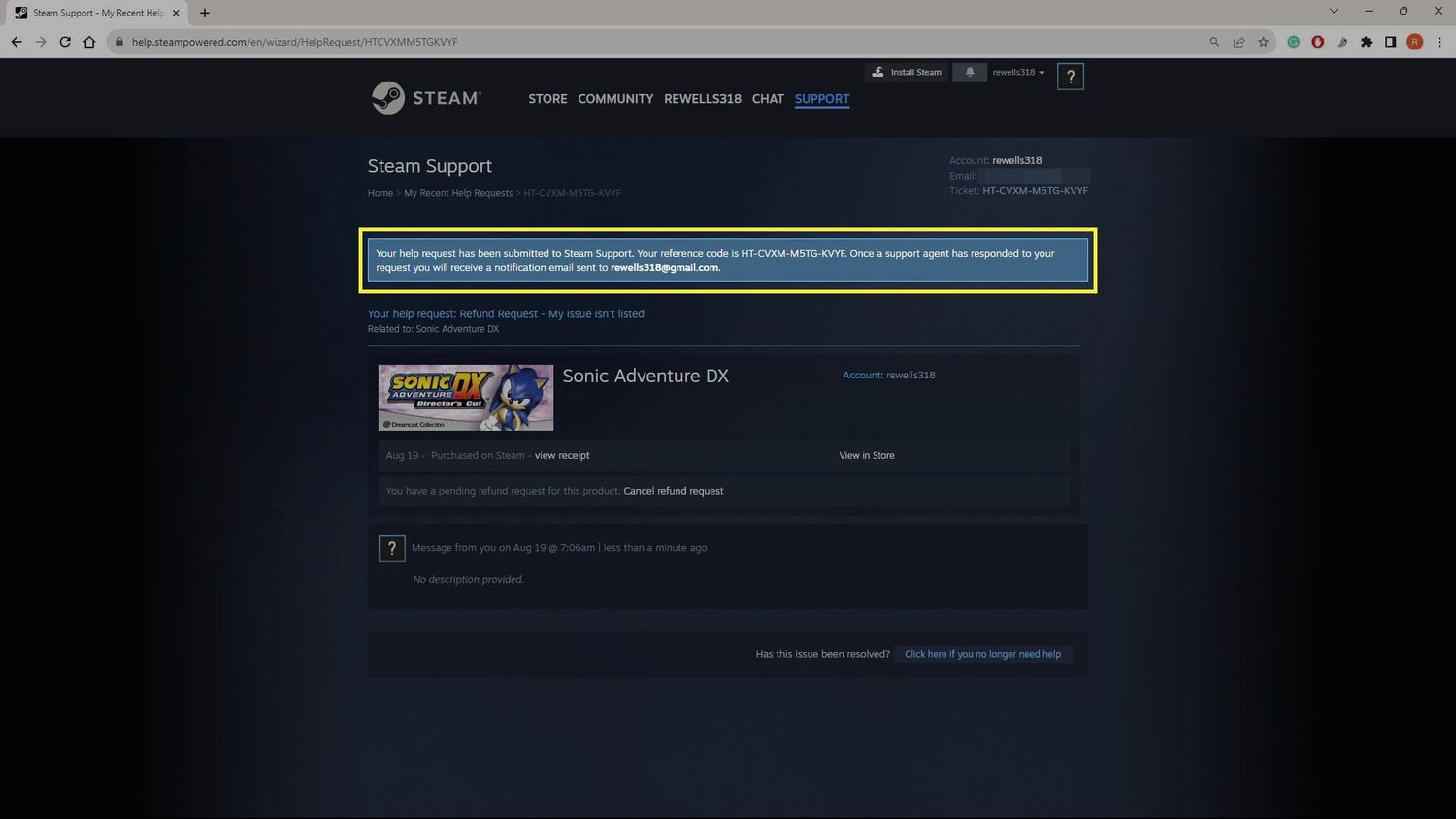
Steam's 14-day window with automated processing is the industry benchmark for speed and reliability. The DRM-free alternative platforms often offer a longer 30-day window, which benefits players who take time to get into slower-starting games. Publisher-specific platforms vary significantly.
How Does the User Experience Compare?
Steam's Feature Ecosystem
Steam's 23-year development runway has produced an ecosystem that no competitor has fully matched. Beyond basic purchase and download, the client includes:
- Steam Workshop: Millions of community-created mods, maps, and custom content accessible with one click. Games like Stardew Valley, Baldur's Gate 3, and Total War titles have Workshop libraries that fundamentally extend how long those games remain interesting.
- Remote Play: Stream your Steam games to phones, tablets, TVs, and other computers without additional software.
- Cloud Saves: Automatic save synchronization across all your devices for supported titles.
- Family Sharing: Share your library with up to five family members at no extra cost.
- Achievement system: Unified across all Steam games with profile integration.
- Community hubs: Forums, guides, artwork, and screenshots for every game in the catalog.
No other PC storefront has replicated all of these features in a single client. Some do specific things well (free games, DRM-free files, or subscription access), but Steam's breadth makes it the default launcher for most PC gamers who are not specifically seeking one of those alternatives.
Other Platforms' Strengths
Different platform types genuinely win in specific categories:
- DRM-free platforms win on permanent ownership. You get a file. You keep the file. No account needed. For classic games and long-term preservation, this is the only model that guarantees perpetual access.
- Subscription-based services win on access economics. A single monthly fee unlocks a large rotating library. For players who play many different games per month, this often costs less than purchasing individually.
- Publisher-specific platforms win on day-one access to that publisher's titles. If you play primarily games from one major developer, their own platform may offer loyalty rewards, special editions, or bundles unavailable elsewhere.
- Free game platforms win on acquisition cost for casual gamers who play whatever is available. Building a large library over time at zero cost is a real and legitimate value proposition.
Launcher and Interface Quality
Steam's interface is functional and deeply featured but has accumulated complexity over two decades of layered development. New users sometimes find the library and store discovery overwhelming.
Most alternative platforms launched with cleaner, more minimal interfaces. Several prioritize a browsable store experience over the social and community layer. The trade-off is typically less feature depth in exchange for faster navigation.
One major platform publicly acknowledged in early 2026 that its launcher requires a "ground-up rebuild," which is a notable admission about the current state of its client experience. For gamers who prioritize a polished daily-use interface, this remains an open differentiation point.
Steam vs Other Gaming Platforms: Feature Comparison
| Feature | Steam | DRM-Free Platforms | Subscription Services | Publisher Platforms |
| Catalog size | Very large | Medium (curated) | Medium (rotating) | Small (publisher-specific) |
| Game ownership | Account-tied DRM | True offline files | Access-based (no ownership) | Account-tied DRM |
| Mod support | Extensive (Workshop) | Limited | Limited | Varies |
| Sale depth | Up to 90% off | Up to 75-80% off | N/A | Varies |
| Free games | Limited | No | Included in sub | Varies |
| Cloud saves | Yes | Limited | Varies | Varies |
| Refund policy | 14 days / 2 hours | 30 days / 2 hours | N/A | Varies |
| Community features | Extensive | Basic | Basic | Basic |
| Linux/Steam Deck | Full native support | Manual install | Varies | Limited |
Pro Tips: Getting the Most Out of PC Gaming Platforms
- Use Steam's wishlist as your primary deal-tracking tool: Adding a game to your wishlist and enabling price notifications costs nothing and reliably catches both major sale discounts and smaller mid-year promotions. Checking your wishlist before any major purchase prevents paying full price for a game that sold for 60% less three months earlier.
- Claim free games on alternative platforms even if you do not play them immediately: Free games claimed during their giveaway window stay in your library permanently with no subscription required. Building this library over time creates a backup catalog of games to explore during slow release periods without spending anything.
- Check DRM-free availability for classic games you want to own permanently: If you are building a long-term collection of games you care about keeping regardless of platform policy changes, checking whether DRM-free versions exist is worthwhile. The same title at the same price on a DRM-free platform is objectively a stronger ownership position.
- Match your platform to your play style, not your loyalty: Steam is the right primary platform for most PC gamers because of its breadth and ecosystem. That does not mean it is the only platform worth using. Building a sensible multi-platform setup, claiming free games where they exist and buying permanence-critical titles DRM-free, costs nothing and loses nothing.
Common Mistakes When Choosing PC Gaming Platforms
- Buying full-price games that will be deeply discounted in a few months: New release pricing on all platforms drops significantly within the first year for most titles. Paying $70 at launch for a game that will sell for $20 during the next major sale is a common and avoidable mistake. Fix: Add games you want to your wishlist with price alerts and wait for a sale unless day-one access matters to you specifically.
- Ignoring DRM implications when building a long-term library: Most players never think about DRM until a server shuts down or a publisher removes a title. Fix: For games you care about owning permanently, verify whether a DRM-free version exists before purchasing the DRM version. The practical difference matters most for older titles where server support is uncertain.
- Installing every available launcher to chase every deal without evaluating actual use: Having five launchers installed to capture different free games and exclusive launches becomes overwhelming quickly when most of the claimed titles never get played. Fix: Evaluate which platforms you actually use. Maintain one primary launcher for active purchases, and limit secondary launchers to those offering clear value you cannot get elsewhere.
Play Your Steam Library at Its Best with ExitLag
Whether you are running a multiplayer game through Steam, downloading from another platform, or streaming via cloud gaming, your connection quality determines whether the actual playing experience matches the quality of what you bought.
ExitLag is a connection optimizer used by over 30 million players across 4,000+ game titles available on Steam and other PC gaming platforms. It analyzes multiple network routes in real time and selects the fastest, most stable path between your device and game servers, reducing the latency that affects online multiplayer, co-op, and competitive play.
Features that benefit PC gamers regardless of which platform they use:
- Real-Time Optimization: Continuously selects the lowest-latency available route to game servers, reducing the input delay that affects competitive play on any title.
- Multipath Technology: Routes game data through multiple simultaneous paths so a single connection failure never interrupts an active session.
- Traffic Shaper: Prioritizes game traffic over background downloads, including simultaneous updates across multiple launchers.
- Multi-Internet: Supports up to four simultaneous internet connections, eliminating disconnections from online sessions during critical moments.
Download ExitLag and start your free trial.
All images used in this blog post belong to their respective owners and are used for informational and educational purposes only. They do not imply endorsement or affiliation with the rights holders.