The Roadmap for 7 Days to Die is a plan from the developers (The Fun Pimps) showing what major content updates are scheduled after the full launch of version 1.0.
The purpose of the roadmap is to help players understand when major systems and gameplay features will be added.
7 Days to Die 1.0 Release Schedule
Before we dive into “what’s next,” let’s look at the official 1.0 launch timeline.
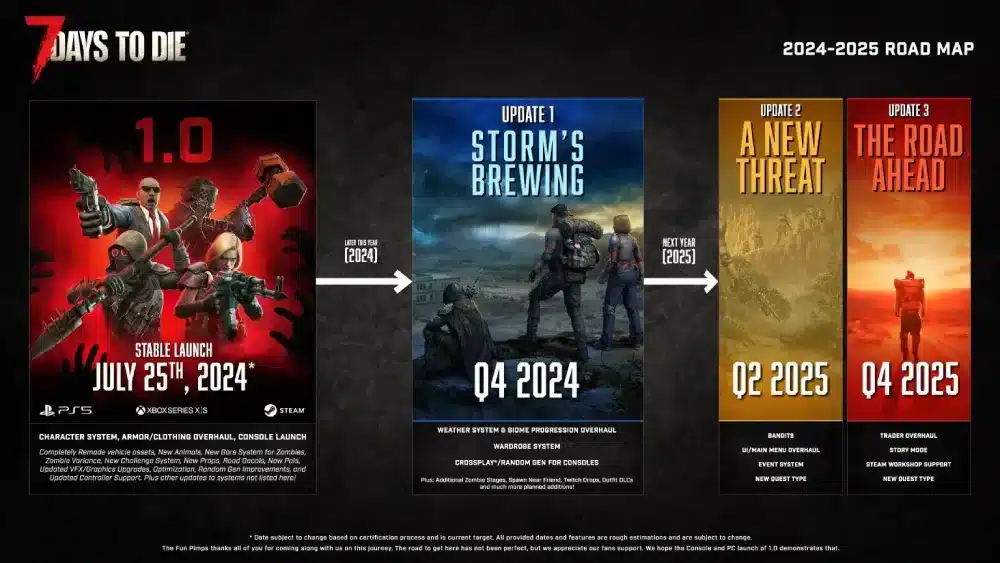
Here’s the official roadmap schedule for the transition out of early access:
1.0 Release Timeline
- June 21, 2024 — 1.0 Experimental (Streamer Weekend)
- June 24, 2024 — 1.0 Public Experimental on Steam
- June 28, 2024 — Tentative Console 1.0 Wishlist Launch
- July 15, 2024 — Legacy Console Versions Removed
- July 25, 2024 — Official 1.0 Stable Launch (PC & Consoles)
This marks when 7 Days to Die officially left early access and became version 1.0.
What Features Came With 7 Days to Die 1.0
The version 1.0 launch was a major milestone, adding more than just a version number change. These are some of the most important new systems and improvements:
Key Changes in 1.0
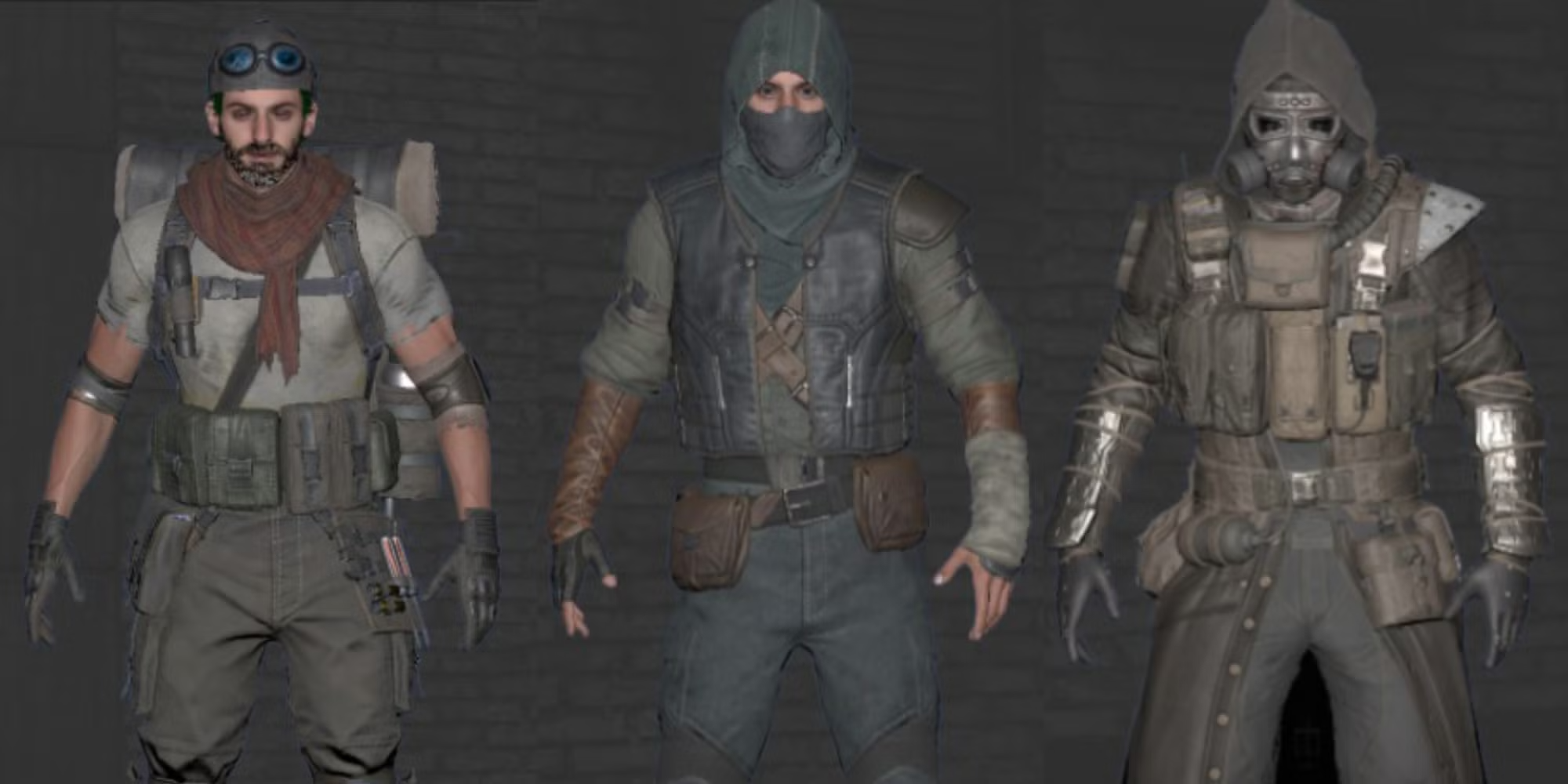
- New Character System
Completely updated models with customizable faces, hair, outfits, and more. - Armor & Clothing Overhaul
All armor gear revamped with new sets and functionality. - Improved Zombies & New Variants
More varied look and feel among zombie enemies. - New Challenge System
Tracks tasks and rewards to guide players through progression. - Updated Vehicles & Animal Models
New vehicle seating, mods, and animal designs. - Expanded World Generation
Larger cities, better biomes, and more Points of Interest (POIs). - Better Graphics & Performance
Lighting upgrades and performance optimizations across platforms.
These changes set the foundation for post-1.0 updates that will fill out the roadmap.
What’s Next on the Roadmap
The official post-launch roadmap identifies three major content updates coming after 1.0. Each one targets a broad pack of new systems and mechanics that will shape the future of the game.
Update #1 Storm’s Brewing
What’s Included Here’s what this update added and how it shapes gameplay going forward:
- Dynamic Weather & Elemental Storms Real storm systems with biome-specific effects that can harm players and change strategies.
- Biome Progression & Hazards Biomes now have elemental damage (heat, cold, radiation, smoke) that affects survival planning.
- Wardrobe System & Cosmetics Clothing visuals are separate from armor stats, plus Twitch Drops and DLC outfits.
- Crossplay on Dedicated Servers PC and consoles can now play together through dedicated server support.
- Expanded World & POIs New wilderness POIs and reworked town layouts to keep exploration fresh.
- New Zombies & Perk Overhaul Special enemies (e.g., Plague Spitter / Frost Claw), new perk trees, and combat progression.
Impact for 2026:
Storm’s Brewing serves as the current baseline version going into 2026 meaning all future roadmap updates build on these systems rather than replacing them.
Update #2 A New Threat
The second major planned update, A New Threat, was scheduled for mid-2025 and as of early 2026 is still expected but has not fully shipped yet as originally scoped.
Core Features
- Bandits – Hostile human NPCs with dynamic AI behavior.
- UI & Main Menu Revamp – Refreshed interface for inventory, navigation, and menus.
- Event System – World events that dynamically change survival conditions.
- New Quest Categories – Quest types that aren’t linked only to traders and POIs.
Update #3 The Road Ahead
The third roadmap major The Road Ahead was planned for late 2025 but, like the prior update, is bleeding into 2026 development due to pacing and complexity.
Expected Addition:
- Trader Overhaul & Economy Expansion – More dynamic trader interactions and economic depth.
- New Story Mode Content – Narrative layers woven into survival progression.
- Steam Workshop Mod Support – Easier mod distribution and community content.
- Additional Quest Types – More varied long-term objectives.
How Roadmap Updates Affect Your Game
Will You Need to Restart Your World?
Major updates like these often affect world generation and saved data. Historically, similar updates required a new world to see all changes.
So while minor patches can be applied without restarting, major milestone updates may require fresh saves to fully unlock new POIs and mechanics.
Roadmap Timing & Realistic Expectations
The roadmap features official windows, but developers have emphasized these dates are subject to change.
Software development challenges especially for a project running for over a decade mean timelines can and do shift.
How the 7 Days to Die Update Roadmap Changes Gameplay
The 7 Days to Die Update Roadmap is not just a list of features. It reshapes how players approach survival, progression, and long-term worlds.
After the 1.0 release, the game shifted from experimental systems to more structured design. Updates are now focused on depth, replayability, and long-term engagement instead of foundational mechanics.
This means every future update will impact how you build, fight, and survive.
Roadmap Updates Overview: What Each Phase Adds to the Game
| Roadmap Phase | Update Name | Main Focus | Key Gameplay Changes | Player Impact |
| 1.0 Launch | Version 1.0 | Core systems stabilization | Character overhaul, armor rework, improved zombies, world generation | Stronger progression and polished survival loop |
| Post-Launch Update | Storm’s Brewing | Environmental systems | Dynamic weather, biome progression, wardrobe system, crossplay | Increased difficulty and strategic movement |
| Major Content Update | A New Threat | Combat evolution | Bandits, event system, UI overhaul, new quest types | Less predictable encounters and higher risk |
| Expansion Update | The Road Ahead | Endgame depth | Story mode, trader overhaul, Steam Workshop support | Long-term goals and replayability |
| Ongoing Updates | Live Support | Stability and balance | Performance fixes, content tuning, multiplayer optimization |
Biome Progression and Environmental Difficulty
One of the most important changes coming through the 7 Days to Die Update Roadmap is biome-based progression.
Instead of all areas feeling equal, each biome now represents a different survival tier.
How Biomes Will Work Going Forward
- Forest remains the safest starting zone
- Desert introduces harsher survival conditions
- Snow biomes increase stamina and food pressure
- Wasteland becomes true endgame territory
This forces players to move, not camp forever in one base.
Why This Matters for Long-Term Worlds
In earlier versions, players could stay in one area indefinitely. The roadmap changes that mindset.
Now, progression depends on:
- Gear readiness
- Weapon quality
- Resource management
- Player experience
Moving into harder biomes becomes a calculated risk instead of a cosmetic choice.
Weather, Storms, and Survival Pressure
The Storm’s Brewing update introduced dynamic weather as a real gameplay system.
Storms are no longer visual effects. They directly affect survival.
Weather Impacts You’ll Need to Manage
- Reduced visibility during storms
- Temperature fluctuations
- Increased threat levels in certain conditions
- Environmental damage risks
This turns weather into another enemy.
Players must plan travel, base locations, and supply runs around environmental threats.
Bandits and Human Enemies Explained
One of the most anticipated roadmap features is the introduction of bandits.
Zombies are predictable. Humans are not.
What Bandits Add to the Game
- Ranged combat threats
- Ambush scenarios
- Territory control
- Dynamic AI behavior
Bandits force players to rethink base defenses and combat strategies.
You can no longer rely only on traps and melee weapons.
Strategic Impact of Human AI
Bandits change:
- How you approach POIs
- How you store loot
- How you travel across the map
They also open the door to more narrative-driven content in future updates.
Quests, Events, and World Activity
The 7 Days to Die Roadmap expands quests beyond trader missions.
Future updates introduce:
- World events
- Random encounters
- Non-trader-based objectives
This makes the world feel alive even when you are not actively questing.
Why This Improves Replayability
Dynamic events mean no two playthroughs feel the same.
You might:
- Encounter a bandit raid mid-travel
- Be forced to shelter from a storm
- Discover event-based loot zones
The sandbox becomes reactive instead of static.
Trader Overhaul and Economy Changes
Traders are being redesigned to play a more meaningful role in progression.
The roadmap shows traders becoming:
- Less predictable
- More specialized
- More tied to world events
What to Expect From the Trader Update
- Unique trader inventories
- Location-based advantages
- Expanded quest chains
- Economy balancing
This reduces exploit farming and encourages exploration.
Story Mode and Narrative Direction
For the first time, 7 Days to Die is moving toward structured storytelling.
Story mode does not replace sandbox survival. It layers on top of it.
How Story Mode Will Work
- Optional narrative paths
- Lore-driven objectives
- Environmental storytelling
- Endgame goals
Players who want pure sandbox can ignore it.
Players who want direction finally have it.
Modding, Steam Workshop, and Community Content
Steam Workshop support is a major milestone on the roadmap.
This opens the door for:
- Easier mod installation
- Community maps
- Custom game modes
- Long-term replay value
Modding has always been a strength of the game. Workshop integration removes barriers for new players.
Multiplayer, Crossplay, and Performance Stability
Crossplay support is one of the most impactful roadmap additions.
It allows:
- PC and console players to play together
- Larger multiplayer communities
- Longer server lifespans
However, multiplayer stability becomes even more important.
Why Connection Quality Matters More Than Ever
As worlds become more complex, network strain increases.
Lag during:
- Horde nights
- Bandit encounters
- Storm events
can ruin survival runs.
How ExitLag Improves 7 Days to Die Performance
This is where ExitLag becomes essential.
7 Days to Die relies heavily on server stability, especially in multiplayer worlds with mods and large bases.
ExitLag helps by:
- Reducing ping
- Stabilizing packet routes
- Preventing lag spikes
- Improving server responsiveness
Whether you are surviving a Blood Moon, defending against bandits, or exploring new biomes, ExitLag ensures your actions register instantly.
For multiplayer-focused players, ExitLag becomes a competitive advantage.
How to Prepare for Future Roadmap Updates
If you want to stay ahead of the roadmap, preparation matters.
Smart Preparation Tips
- Avoid over-investing in single-biome bases
- Stockpile versatile gear
- Learn ranged combat early
- Keep backup worlds before major updates
- Optimize multiplayer performance
The roadmap rewards adaptable players.
Frequently Asked Questions About the Roadmap
Yes. All roadmap updates are included for existing owners of the game.
Major updates may require new worlds to access all features.
No. The roadmap confirms long-term development through 2025 and beyond.
Final Thoughts on the 7 Days to Die Roadmap
The 7 Days to Die update roadmap proves that version 1.0 was not the end. It was the beginning.
With:
- Dynamic weather
- Bandits
- Story mode
- Crossplay
- Modding support
The game is evolving into one of the deepest survival sandboxes available.
Players who adapt, plan ahead, and optimize performance will get the most from every update.
Got questions or want to connect with other players? Join the conversation at the ExitLag Forum!