
Ahab Limbus Company is one of the most important antagonists connected to Ishmael's story, transforming the hunt for the Pallid Whale into a conflict about obsession, responsibility, purpose, and revenge. As captain of the Pequod, Ahab's influence extends far beyond a single boss encounter.
Understanding Ahab Limbus Company also means understanding Ishmael. The former Pequod captain once represented confidence and purpose to her crew, but the catastrophic voyage changed that relationship completely, leaving Ishmael consumed by hatred for the person she blamed for everything that happened.
So, who is Ahab Limbus Company? Ahab is the former captain of the Pequod and a central antagonist of Canto V, The Evil Defining. Her relentless pursuit of the Pallid Whale shapes the tragedy surrounding Ishmael, Queequeg, and the Pequod crew.
Major Canto V spoilers follow. Ahab's motivations, boss encounters, E.G.O, and fate are closely connected to the climax of Ishmael's Canto, so explaining the character properly requires discussing key story events.
Beyond the direct narrative, captain ahab limbus company is also Project Moon's reinterpretation of one of literature's most recognizable obsessed captains. Familiar names and ideas from Moby-Dick are rebuilt around the City, Fixers, the Great Lake, Whales, and the unusual rules of Limbus Company's universe.
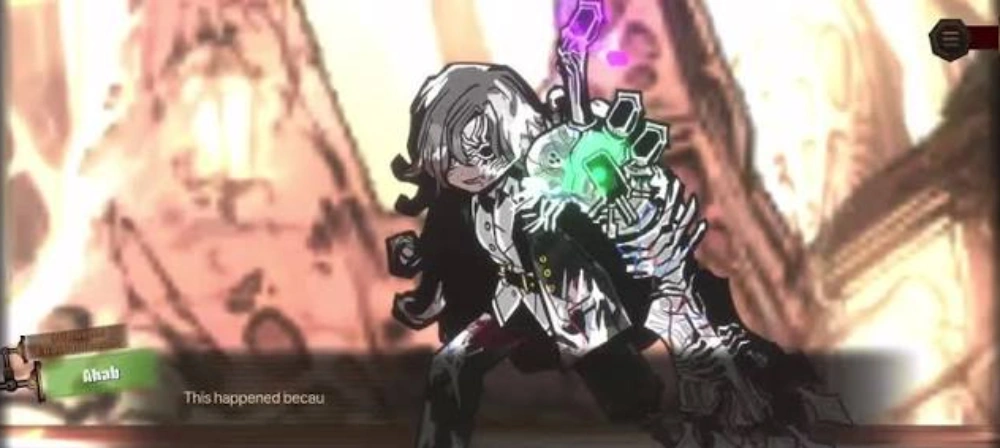 Ahab is the captain who once commanded the Pequod and the crew that Ishmael joined before becoming one of Limbus Company's Sinners.
However, describing her only as "Ishmael's old captain" misses what makes her so important.
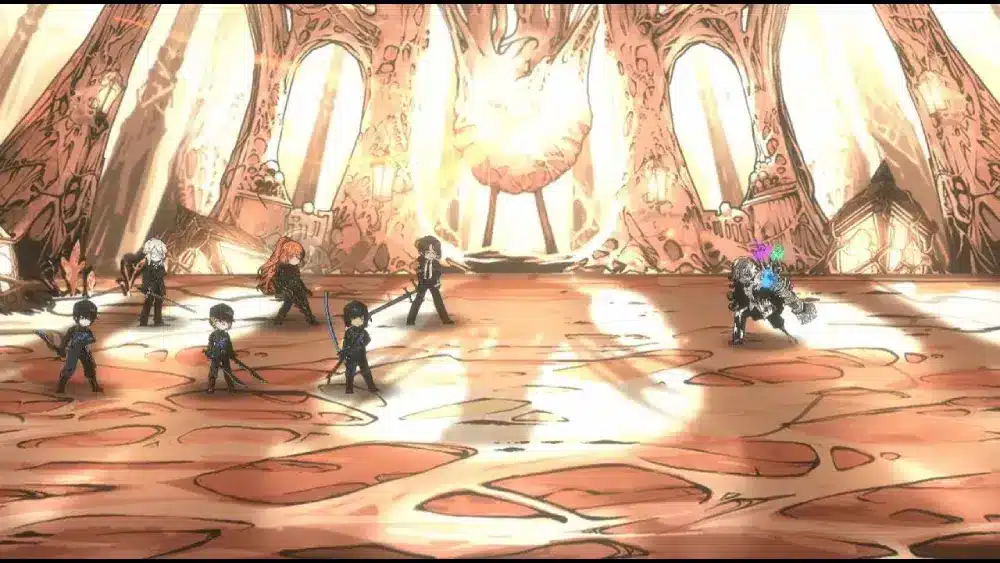 Yes. Ahab survives the events of Canto V.
This immediately leaves open the possibility that her narrative importance extends beyond Ishmael's Canto.
The distinction matters whenever players search for captain ahab limbus company expecting to find a playable version of the antagonist.
The Pequod Captain Ishmael provides something different.
Ahab Limbus Company: Who Is Captain Ahab?
Ahab is the captain who once commanded the Pequod and the crew that Ishmael joined before becoming one of Limbus Company's Sinners.
However, describing her only as "Ishmael's old captain" misses what makes her so important.
Captain of the Pequod
Ahab commanded the Pequod during its voyage across the Great Lake. Her crew included figures such as Queequeg, Starbuck, Stubb, Pip, and Ishmael. They followed a captain whose extraordinary confidence could turn a dangerous objective into something that felt inevitable. Ahab's greatest target was the Pallid Whale. The Whale was not simply another creature she intended to hunt. It became the central enemy around which she organized her purpose and, eventually, the purpose of those who followed her. That distinction is essential to understanding limbus company ahab. Ahab does not merely issue orders. She convinces others that her objective should become their objective as well.Ahab's obsession with the Pallid Whale
The Pallid Whale becomes the defining object of Ahab's obsession. She refuses to allow uncertainty to weaken her conviction. Instead, she constructs a worldview where the Whale must be responsible and where hunting it provides a clear direction for everyone aboard the Pequod. This gives Ahab tremendous psychological influence. Her crew can believe that their suffering serves something larger because their captain appears absolutely certain about where they are going and why. Several characteristics define her leadership:- Absolute conviction in her objective
- Exceptional ability to influence others
- Obsession with the Pallid Whale
- Refusal to abandon her chosen path
- Ability to transform personal purpose into collective purpose
Captain Ahab Limbus Company and the Moby-Dick Connection
The literary inspiration behind captain ahab limbus company is impossible to miss. Project Moon borrows names, relationships, and central ideas from Herman Melville's Moby-Dick, then reconstructs them inside the distinctive setting of the City.How Limbus Company reinterprets Captain Ahab
The most obvious connection is the hunt. In both stories, Captain Ahab becomes defined by an obsessive pursuit of a whale. The Pequod, Ishmael, Queequeg, Starbuck, Stubb, and other recognizable names further establish the relationship. However, Limbus Company is not simply retelling the novel. Instead, it uses these familiar elements to explore its own characters and themes. The parallels include:- A captain named Ahab
- A ship named Pequod
- Ishmael as a survivor
- Queequeg as an important companion
- Starbuck and Stubb as crewmates
- An obsessive whale hunt
- A disastrous voyage
What Project Moon changes
Ahab is reimagined as a woman within Limbus Company's universe. The ocean is also replaced by the bizarre and dangerous Great Lake, where the rules of ordinary maritime travel no longer apply. Whales themselves become something very different. The Pallid Whale is connected to concepts such as Pallidification, while the broader Great Lake setting introduces its own monsters, rules, dangers, and social structures. Project Moon also integrates its established worldbuilding. Fixers, Associations, E.G.O, Distortion-related concepts, and the brutal economy of the City all influence how the story operates. Therefore, Ahab Limbus Company feels recognizable without becoming a straightforward adaptation.Limbus Company Ahab and Ishmael's Relationship
The relationship between Ahab and Ishmael is the emotional core of Canto V. Ishmael's hatred becomes much more meaningful once players understand that she did not always see Ahab as a monster.Why Ishmael joined Ahab
Before the Pequod, Ishmael lived a dramatically different life. She worked a desk job in U Corp.'s Nest, following a predictable routine that left her dissatisfied. Ahab offered something that routine could not provide: direction. The captain appeared certain about herself, her destination, and her purpose. For someone searching for a path, that certainty was extraordinarily attractive. Ishmael joined the crew. This decision eventually connected her to Queequeg and the other members of the Pequod, giving her experiences and relationships that fundamentally changed her life. It also meant that when the voyage ended disastrously, Ishmael's relationship with her former captain became intensely personal.Why Ishmael hates Ahab
After the disaster involving the Pequod, Ishmael directs her anger toward Ahab. She sees the captain's obsession as responsible for what happened to the crew. That hatred gradually becomes another kind of obsession. This parallel is crucial. Ahab defines herself through her pursuit of the Pallid Whale. Ishmael, meanwhile, risks defining herself through her pursuit of Ahab. Their targets differ, but the danger is similar. Both can allow a single objective to consume everything else. For Ishmael, revenge promises a simple answer:- Find Ahab.
- Confront Ahab.
- Kill Ahab.
- End the journey.
What Happened to the Pequod?
The fate of the Pequod is central to the mystery surrounding limbus company ahab. For Ishmael, the voyage became a source of trauma and a reason to believe that her former captain had destroyed the lives of those around her.The Pallid Whale disaster
Ahab's pursuit ultimately brings the Pequod into catastrophe. The hunt for the Pallid Whale does not produce the glorious conclusion that an ordinary heroic expedition might promise. Instead, the crew is devastated. Ishmael survives and carries the memory of what happened forward, including her connection to Queequeg and her rage toward Ahab. However, Ahab's story does not end with the destruction of the voyage. Neither does the story of every Pequod crewmember. That revelation becomes particularly important once the Sinners enter the Pallid Whale and discover what has been happening inside.Pequod Town
Inside the Whale, the Sinners encounter Pequod Town. Ahab has survived. More importantly, she continues functioning as a captain and leader, maintaining influence over survivors and preparing for what she sees as another opportunity to complete her objective. This environment demonstrates why captain ahab limbus company is more threatening than a physically powerful antagonist alone. Her greatest weapon is not simply a harpoon. It is conviction. Ahab can tell people why they are suffering, what their suffering means, who is responsible for it, and what they must do next. For people trapped in an almost incomprehensible nightmare, that certainty can be enormously persuasive.Why Ahab Is One of Limbus Company's Most Important Antagonists
Ahab stands apart because the conflict with her is intensely psychological. The player can disagree with her actions while still understanding why people follow her.Ahab's charisma and manipulation
Ahab's confidence is overwhelming. She behaves as though her interpretation of events is not one possible explanation but the explanation. That certainty allows her to shape the people around her. She gives the crew an enemy, a direction, and a purpose. At the same time, this worldview helps her distance herself from responsibility for the consequences of following that purpose. Ahab's leadership can therefore be understood through a repeating process:- Establish a clear enemy.
- Give followers a purpose centered on that enemy.
- Reinforce absolute certainty.
- Transform individual sacrifice into part of the mission.
- Continue pursuing the objective regardless of the cost.
Ahab and Ishmael as mirrors
Canto V repeatedly positions Ishmael against the very obsession she condemns. Ishmael despises Ahab because the captain sacrificed so much to her fixation on the Whale. Yet Ishmael is also prepared to organize her own future around killing Ahab. This creates one of Canto V's central questions: What happens after revenge? If Ishmael's entire purpose becomes killing Ahab, then Ahab still determines the direction of Ishmael's life. The confrontation is therefore about more than defeating an antagonist. Ishmael needs to decide whether her future will remain defined by her former captain or whether she can choose a destination for herself.Ahab Limbus Company Boss Fight Explained
The confrontation with Ahab brings the narrative themes of Canto V directly into combat. The encounter is tied to the Pequod crew and ultimately develops into the GasHarpoon confrontation.Fighting Ahab and the Pequod crew
The Sinners encounter Ahab alongside members of her crew, reinforcing the idea that the captain does not operate as an isolated individual. This is important both mechanically and narratively. Ahab's identity is connected to the people who follow her. Likewise, Ishmael's involvement gives the battle greater emotional weight than an ordinary dungeon boss. When approaching these encounters, players should pay attention to:- Enemy skill descriptions
- Status effects
- Clash values
- Targeting
- The relationship between Ahab and her allies
- The order in which threats should be managed
What makes the Ahab battle unique
The encounter works because gameplay reinforces characterization. Ahab's relationship with her crew is not something confined to dialogue scenes. The battle itself emphasizes the captain's dependence on and control over the people surrounding her. This makes the fight a culmination of ideas established throughout Canto V. The player is not merely fighting limbus company ahab as an enemy unit. The player is confronting the system of purpose, loyalty, sacrifice, and obsession that Ahab built around herself. That theme becomes even stronger during the final phase of the conflict.What Is Ahab's GasHarpoon E.G.O?
GasHarpoon represents the culmination of Ahab's obsessive determination during Canto V. It also visually and mechanically develops the relationship between Ahab and the people who followed her.How Ahab manifests E.G.O
During the climax, Ahab manifests E.G.O. The resulting GasHarpoon form incorporates her relationship with the remaining Pequod crew into the confrontation, turning the battle into a striking representation of how Ahab views those who follow her. Her crew has effectively become part of her purpose. This is not merely a dramatic transformation designed to create a stronger boss. It reinforces everything Canto V has established about Ahab. She does not see the mission as something that should be abandoned because people have suffered. Instead, their sacrifices can become further justification for continuing.What GasHarpoon represents
GasHarpoon can be interpreted as the ultimate expression of Ahab's worldview. Her obsession remains absolute, and the people around her are absorbed into the purpose she has defined. Several ideas converge in the E.G.O:- Ahab's obsession with the Pallid Whale
- Her absolute confidence
- Her authority over the Pequod
- The sacrifice of her followers
- Her refusal to surrender her chosen purpose
Does Ishmael Kill Ahab in Limbus Company?
No. Ishmael does not ultimately kill Ahab at the climax of Canto V. That decision is one of the most important moments in Ishmael's development.The Canto V ending
Ishmael reaches the person she spent so long pursuing. She finally has the opportunity to make revenge the conclusion of her journey. Instead, she chooses differently. Ishmael drives her harpoon into the heart of the Pallid Whale rather than using it to complete her revenge against Ahab. This choice breaks the pattern that has been controlling her. If Ishmael killed Ahab purely because revenge had become her reason for continuing, she would still be following a destination determined by her former captain. By choosing another target, she begins defining her own direction.Why Ishmael's decision matters
Ishmael does not need to forgive Ahab for this decision to matter. Nor does rejecting revenge erase what happened to the Pequod. The important change is that Ahab no longer gets to define Ishmael's purpose. After the Canto, Ishmael's relationship with Dante also develops. She recognizes Dante as her captain while retaining the possibility that she may eventually pursue a voyage of her own. That distinction matters. Ahab demanded that others participate in her purpose. Ishmael begins learning that following someone does not require surrendering the ability to choose where your own journey ultimately leads.Is Ahab Still Alive in Limbus Company?
Yes. Ahab survives the events of Canto V.
This immediately leaves open the possibility that her narrative importance extends beyond Ishmael's Canto.
Ahab's fate after Canto V
The ending does not provide a conventional permanent defeat for captain ahab limbus company. Ahab survives. This is important because Canto V resolves Ishmael's obsession without requiring Ahab's death. The distinction strengthens Ishmael's character arc. If Ahab simply died because Ishmael successfully completed her revenge, Ishmael's development would have followed the goal established at the beginning. Instead, Ishmael changes while Ahab remains alive. Her growth comes from choosing differently, not from having her target conveniently removed.Ahab's later affiliation
Ahab's continued existence also connects her to the broader plot surrounding Hermann. This places her beyond the isolated story of the Pequod and potentially connects her with conflicts affecting the larger Limbus Company narrative. However, confirmed information and speculation should remain separate. Ahab being alive and connected to Hermann's side provides room for future developments. It does not mean every theory about her next appearance or ultimate fate is confirmed. Until Project Moon develops those threads further, her future role should remain an open question.The Pequod Captain Ishmael and Ahab
One of the easiest points of confusion around limbus company ahab involves The Pequod Captain Ishmael. The playable Identity is connected to Ahab conceptually, but it is not the main-story Ahab becoming playable.Is Captain Ishmael actually Ahab?
No. The Pequod Captain Ishmael is an Identity of Ishmael representing a Mirror World possibility in which Ishmael occupies the captain's position. This distinction is fundamental to Limbus Company's Identity system. The character you deploy remains Ishmael, but the Identity explores another possibility for that character. Therefore:- Main-story Ahab is Ahab.
- The Pequod Captain is Ishmael.
- The Identity draws heavily from Ahab's role.
- They are not literally the same character.
Pequod Captain Ishmael gameplay
The Pequod Captain Ishmael is a 000 Identity built around offensive and team-oriented mechanics. Her design reflects the idea of a captain directing allies, giving the Identity a thematic connection to Ahab's leadership role. The Identity interacts with mechanics including Bleed, Poise, and ally support, while its skill affinities include Envy, Pride, and Wrath. Its appeal therefore extends beyond lore. Players can use the Identity in team compositions that take advantage of its mechanics while simultaneously exploring a Mirror World version of Ishmael shaped by the captain's role. That combination makes it one of the most interesting character/gameplay intersections related to Ahab Limbus Company.Ahab vs. The Pequod Captain Ishmael
The easiest way to distinguish them is to compare their roles directly.| Feature | Ahab | The Pequod Captain Ishmael |
| Character | Ahab | Ishmael |
| Main role | Canto V antagonist | Playable Identity |
| Pequod position | Captain | Mirror World Captain |
| Playable Identity | No | Yes |
| Rarity | Not applicable | 000 |
| Primary relevance | Story and boss encounters | Combat and team building |
| Connection to Ishmael | Former captain | Alternate Ishmael possibility |
| Ahab influence | Original character | Identity strongly reflecting her role |
Why the Identity matters to Ahab's story
Mirror Worlds allow Limbus Company to explore characters under different circumstances. Giving Ishmael a Pequod Captain Identity is therefore thematically significant. The role invites players to consider what Ishmael could look like when placed in the captain's position rather than simply remaining the survivor who opposed Ahab. This makes the Identity especially meaningful after experiencing Canto V.Building around Pequod Captain Ishmael
Players interested primarily in gameplay should build a team around what the Identity actually provides rather than using her solely because of the Ahab connection. Consider:- Relevant status synergy
- Pride-focused interactions
- Poise support
- Bleed compatibility
- Ally composition
- Skill affinities required for E.G.O resources
FAQ
Ahab's role includes several major reveals, so players often have questions after completing Canto V. Here are direct answers to the most common ones.Who is Ahab in Limbus Company?
Ahab is the former captain of the Pequod and one of the central antagonists of Canto V, The Evil Defining. She previously commanded Ishmael, Queequeg, and other members of the Pequod during the hunt for the Pallid Whale. Her obsession with killing the Whale eventually becomes central to the disaster surrounding the crew.Is Ahab evil?
Ahab commits destructive and manipulative actions, but Canto V is more interesting when her characterization is examined beyond a simple label. She is capable of inspiring people because her certainty provides purpose. At the same time, that purpose revolves around her obsession, and the people who trust her can become resources sacrificed in pursuit of it. That combination of charisma, conviction, manipulation, and destructive obsession is what makes Ahab Limbus Company such an effective antagonist.Is Ahab dead in Limbus Company?
No. Ahab survives Canto V. Ishmael has the opportunity to complete her revenge but ultimately directs her harpoon toward the Pallid Whale instead. Ahab's survival allows her to remain connected to the wider story beyond the immediate conclusion of Ishmael's Canto.Why does Ishmael hate Ahab?
Ishmael holds Ahab responsible for the disastrous Pequod voyage and what happened to the people she cared about. Her hatred becomes a defining motivation before and during Canto V. However, the story gradually demonstrates that Ishmael's fixation on killing Ahab risks becoming another version of the obsession that Ishmael despises in her former captain.Is Captain Ishmael Ahab?
No. The Pequod Captain Ishmael is an alternate Identity of Ishmael. She occupies a captain-like role associated with the Pequod in a Mirror World, which intentionally creates strong parallels with Ahab. Nevertheless, the playable unit is still Ishmael rather than Ahab herself.What Canto does Ahab appear in?
Ahab plays a major role in Canto V, The Evil Defining. The Canto centers heavily on Ishmael's past, the Great Lake, the Pequod, Queequeg, and the hunt for the Pallid Whale. Players who have not completed Canto V should expect major spoilers when researching Ahab.What is GasHarpoon?
GasHarpoon is Ahab's manifested E.G.O during the climax of Canto V. Its presentation connects Ahab's power with the remaining members of her crew and reinforces the story's themes of obsession, sacrifice, and control. It is therefore both a boss form and an important piece of characterization.How ExitLag Fits Limbus Company Online Play
Limbus Company is a turn-based game, so connection optimization should not be confused with increasing clash power, improving Coin flips, changing damage, or making combat animations resolve faster. However, the game still relies on online services for account and server communication. Players on supported PC or Mobile connections who experience routing-related instability can use ExitLag to optimize how their network traffic reaches supported game services.Connection stability and Limbus Company
Network problems are different from combat strategy. If an Identity repeatedly loses clashes because of its Coin values or an unfavorable matchup, changing network routing will not alter those mechanics. ExitLag instead focuses on the connection itself. Its technologies include Real-Time Optimization and Multipath Connection, which are designed to find efficient routes and improve network stability where routing conditions are contributing to connectivity problems.When network optimization can help
Connection optimization is most relevant when the problem actually comes from the network path between the player and online services. ExitLag can help optimize supported PC and Mobile connections through:- Real-Time Optimization
- Multipath Connection
- Automatic route selection
- Connection stability features
- Routing designed for gaming traffic