
When players search for Assassin's Creed Egypt, they’re usually referring to Assassin’s Creed Origins, the 2017 entry that revolutionized the franchise by taking it deep into the heart of ancient Egypt. This game didn’t just change the setting — it reshaped the entire Assassin’s Creed experience.
Assassin's Creed Egypt stands out not just for its historical location but for how it blends open-world design, RPG mechanics, and a powerful origin story into one immersive experience. Ubisoft chose Egypt for a reason: it’s a land of myth, empire, revolution — and the perfect stage to explore the beginnings of the Brotherhood.
If you're still wondering what makes Assassin's Creed Egypt so special, this guide will walk you through the history, world-building, characters, and gameplay that continue to make Origins a must-play title — even in 2025.
Assassin’s Creed Origins: A Game Set in Ancient Egypt
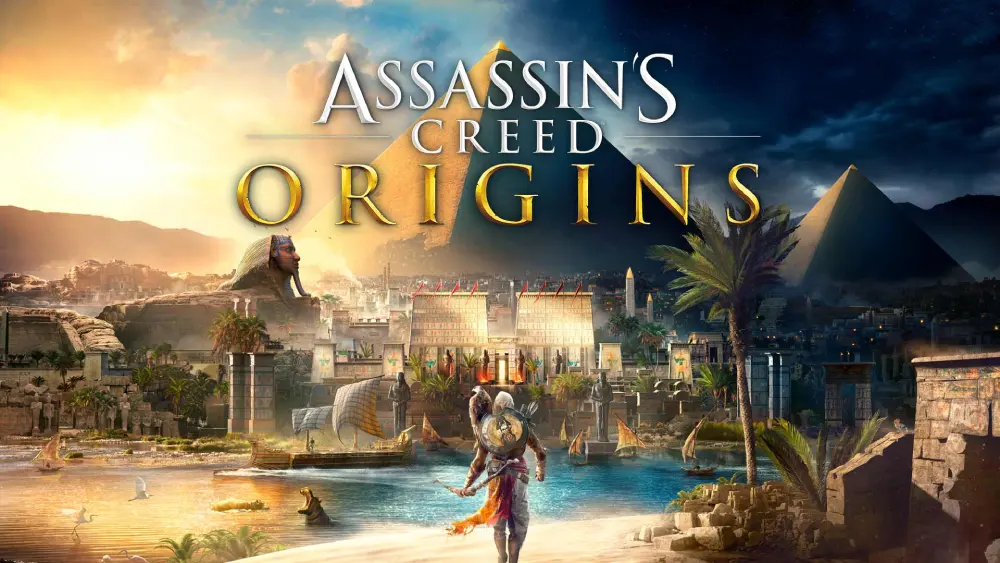
Released in October 2017, Assassin’s Creed Origins marked a turning point for the franchise. After years of annual releases, Ubisoft paused the series to rethink its approach — and the result was a bold leap into action-RPG territory.
What changed with Origins?
- Full shift to open-world exploration
- Introduction of loot-based gear systems
- Skill tree customization
- Revamped combat with light/heavy attacks and dodges
- A deeper, emotionally driven narrative
But more than mechanics, what truly defined Origins was the world it created — a living, breathing version of ancient Egypt, rich in historical and cultural detail.
The Egyptian Setting: A Landmark in Game Design
What makes Origins a standout is how accurately and beautifully it portrays Egypt. It’s not just a backdrop — it’s a character in itself.
Check also: Assassin’s Creed Shadows Naoe: Evolution of Female Protagonists
Key regions you can explore
- Alexandria: A cosmopolitan hub of science, philosophy, and politics
- Memphis: Center of worship and ancient tradition
- Siwa: The hometown of Bayek, the game’s protagonist
- Faiyum Oasis: Lush farmland and political intrigue
- The Giza Plateau: Home of the Great Pyramids and hidden tombs
- The Nile Delta and desert: Wide open landscapes for exploration and travel
Each region feels distinct, with its own architecture, culture, and challenges. From golden dunes to the marble halls of Cleopatra’s palace, Ubisoft spared no detail in crafting a realistic and awe-inspiring Egypt.
The Discovery Tour mode
For those curious about the real history behind the game, Discovery Tour is an educational, combat-free mode that turns Origins into a historical documentary.
- Features guided tours on religion, architecture, daily life
- Developed with input from historians and Egyptologists
- Used in classrooms around the world as an educational tool
It’s one of the few games that lets you learn real-world history while exploring a AAA environment.
Visual and Audio Design
Every inch of Assassin's Creed Egypt is designed to immerse. From the scorching sun bouncing off temple walls to the whisper of sand underfoot, the visual and audio elements are deeply atmospheric.
Highlights include:
- Dynamic day-night cycle with realistic lighting
- Authentic soundtrack using ancient instruments
- Environmental storytelling through ruins, murals, and tombs
- Detailed NPC behavior and market chatter that reflect real-world Egyptian life
Combined, these elements make the game not just immersive — but transportive.
Read this: The Journey of Assassin’s Creed Shadows Main Character
Combat, Exploration, and Freedom
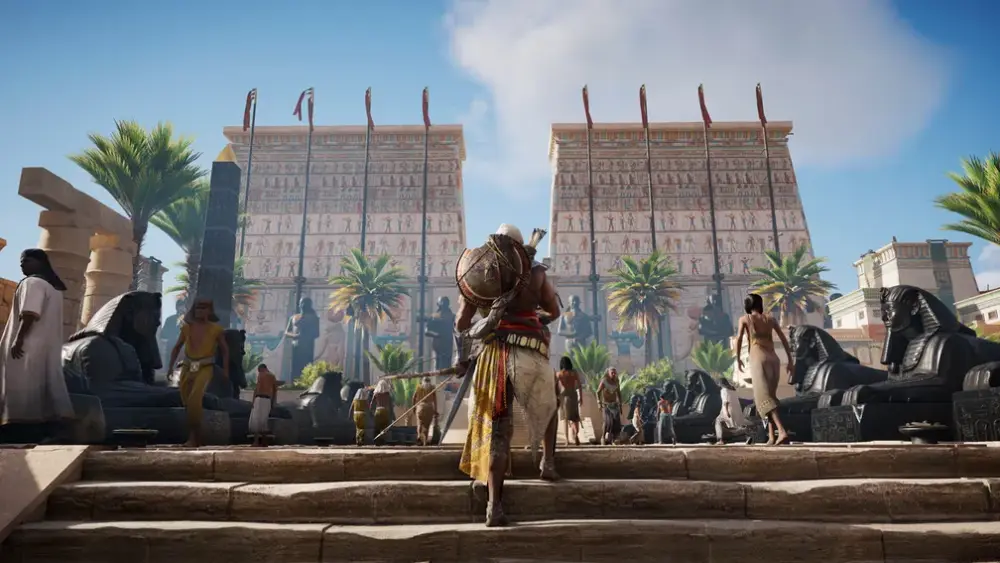
Unlike previous titles in the series, Origins shifted to a more RPG-style gameplay loop that emphasized player choice.
Combat overhaul
- No more instant kill animations — timing and skill now matter
- Enemies have levels and varied attack styles
- Boss fights are tougher and more tactical
- New weapon types: dual blades, scepters, bows, and more
Exploration tools
- Use Senu, your eagle companion, to scout areas
- Unlock fast travel points by climbing viewpoints
- Discover hidden loot, puzzles, and secret tombs
Exploration is rewarded with XP, story content, and powerful loot — making every corner of Egypt feel worth visiting.
Story, Characters, and the Fall of Ptolemaic Egypt
When people search for Assassin's Creed Egypt, they’re usually drawn by the setting—but what keeps them playing is the story. In Assassin’s Creed Origins, the narrative follows Bayek of Siwa, a Medjay torn between duty and vengeance, during the final days of Egypt’s independence under Ptolemaic rule.
The Assassin's Creed Egypt experience is more than just deserts and temples. It unfolds in 49 BC, during a time of civil war, Roman influence, and the rise of Cleopatra. Bayek’s journey starts with personal loss but soon intersects with the greater power struggles of the ancient world.
By exploring the roots of the Assassin Brotherhood, players of Assassin's Creed Egypt witness how politics, religion, and empire shape the game's plot. These elements give Origins its depth and distinguish it from previous titles.
Bayek, Aya, and the Beginning of the Creed
Yet about Assassin's Creed Egypt, Bayek and his wife, Aya, are central to the narrative. Both are driven by revenge, but their evolution becomes the foundation of what will later become the Assassin Brotherhood.
Bayek embodies the role of protector—his loyalty to Egypt, to his people, and to his values fuels his transformation. Aya, on the other hand, grows into a fierce strategist. Her path diverges politically, as she aligns more with the Roman Empire through Cleopatra, while Bayek remains loyal to Egypt itself.
Together, they realize that to fight for justice, secrecy is essential. This realization gives birth to the Hidden Ones, the proto-Assassin group that lays the groundwork for the series’ modern conflict.
The Role of Cleopatra and Julius Caesar
About the Assassin's Creed Egypt, Cleopatra is more than a backdrop character—she plays a major role in the shaping of alliances and betrayals. Her partnership with Julius Caesar marks the intersection between Egypt and Rome, and between the personal and political.
These figures are not romanticized but presented in all their complexity. As the player navigates the chaos of shifting loyalties, they must choose whom to trust—and sometimes, whether loyalty even matters.
This historical conflict provides a dense, layered world where the player’s mission feels both urgent and deeply personal.
Check also: Assassin’s Creed Shadows Black Samurai: The Significance of Him
Egypt as a Living Character
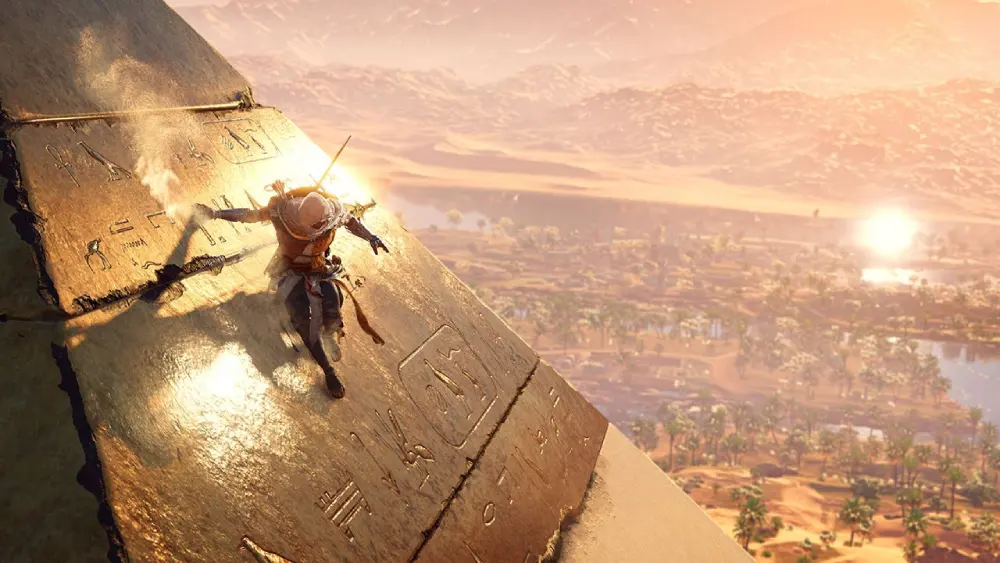
The setting itself deserves recognition. Egypt isn’t just a backdrop in Assassin’s Creed Origins—it breathes, shifts, and challenges players with every region.
You’ll traverse cities like Alexandria, Memphis, and Siwa, climb the Great Pyramids, sail across the Nile, and uncover tombs buried beneath the sands. Each region has its own flora, fauna, and architecture, making every journey across the map feel distinct.
Sandstorms roll in unexpectedly. Markets buzz with life. Wildlife hunts or flees based on your actions. These immersive elements make Egypt feel alive in a way few open-world games have matched.
Gameplay Systems That Redefined the Franchise
The release of Assassin's Creed Egypt marked a turning point in the franchise. It introduced deeper RPG elements, including:
- A full skill tree divided into Hunter, Warrior, and Seer branches
- A loot-based gear system with levels, rarity tiers, and crafting
- Real-time combat requiring dodging, timing, and positioning
You can switch between ranged and melee weapons, upgrade tools like smoke bombs and fire arrows, and choose stealth or full-on combat in every encounter.
The eagle companion, Senu, revolutionized recon mechanics. Using Senu, you can scout camps, mark enemies, and even locate hidden treasures—all from a bird’s-eye view.
Read also: The Best Assassin’s Creed Game: A Subjective Debate
Discovery Tour and Educational Integration
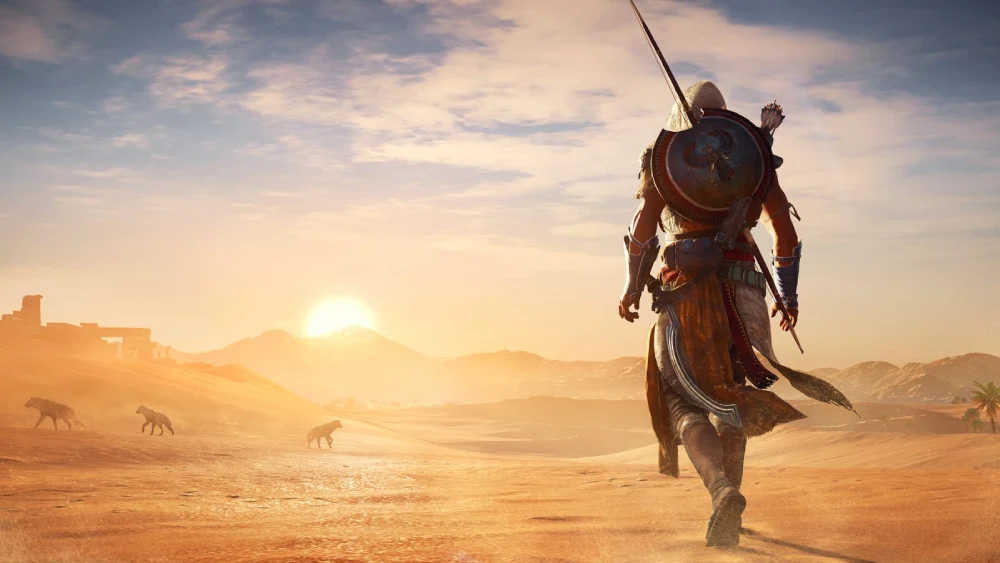
One of the most innovative features was the introduction of Discovery Tour mode. This combat-free experience lets players explore ancient Egypt as an educational tool.
Each tour is curated by historians and covers topics like pyramid construction, religion, agriculture, and daily life. Players walk through virtual museums embedded in the world—an ideal mix of gaming and learning.
This mode turned Assassin's Creed Egypt into more than entertainment—it became a cultural bridge between modern technology and ancient history.
FAQ — Assassin's Creed Egypt (Origins)
What Assassin’s Creed is set in Egypt?
The game set in ancient Egypt is Assassin’s Creed Origins. Often referred to as Assassin's Creed Egypt, it explores the birth of the Brotherhood and immerses players in the historical setting of the Ptolemaic dynasty.
Can you explore the pyramids in AC Origins?
Yes. Players can climb the pyramids of Giza, enter tombs, and uncover hidden chambers—making the pyramids a key part of the open-world experience in Assassin's Creed Egypt.
Is Assassin's Creed Egypt historically accurate?
While the game takes creative liberties with characters and events, many landmarks, cities, and cultural elements in Assassin's Creed Egypt are based on real historical research, especially through the optional Discovery Tour mode.
When was AC Origins released?
Assassin’s Creed Origins was released in October 2017. Since then, it has remained popular for its innovative gameplay and deep storytelling.
Is AC Origins worth playing in 2025?
Definitely. Assassin's Creed Egypt continues to be praised for its immersive setting, RPG elements, and engaging combat system—making it a top choice even years after its launch.
Conclusion: Assassin's Creed Egypt Stands the Test of Time
Assassin's Creed Egypt (Origins) continues to impress long after release. Its historical depth, compelling story, and strategic gameplay offer one of the most unforgettable experiences in the franchise. And with a stable connection powered by ExitLag, your journey through ancient Egypt is even more epic. Download ExitLag now!