
Assassins Creed Rogue offers one of the most unusual perspectives in the entire Assassin’s Creed franchise. Instead of following an Assassin fighting the Templar Order, the game puts players in control of Shay Patrick Cormac, a former Assassin who eventually turns against his own Brotherhood.
In Assassins Creed Rogue, Shay’s transformation changes more than the story. Players hunt Assassins, defend themselves against techniques normally used by protagonists, explore the North Atlantic aboard the Morrigan, and experience naval combat inspired by Assassin’s Creed IV: Black Flag.
What makes Assassins Creed Rogue especially important is how its story connects different chapters of the franchise. Set primarily during the Seven Years’ War, Rogue bridges elements of Black Flag and Assassin’s Creed III while its ending creates a direct connection to Assassin’s Creed Unity.
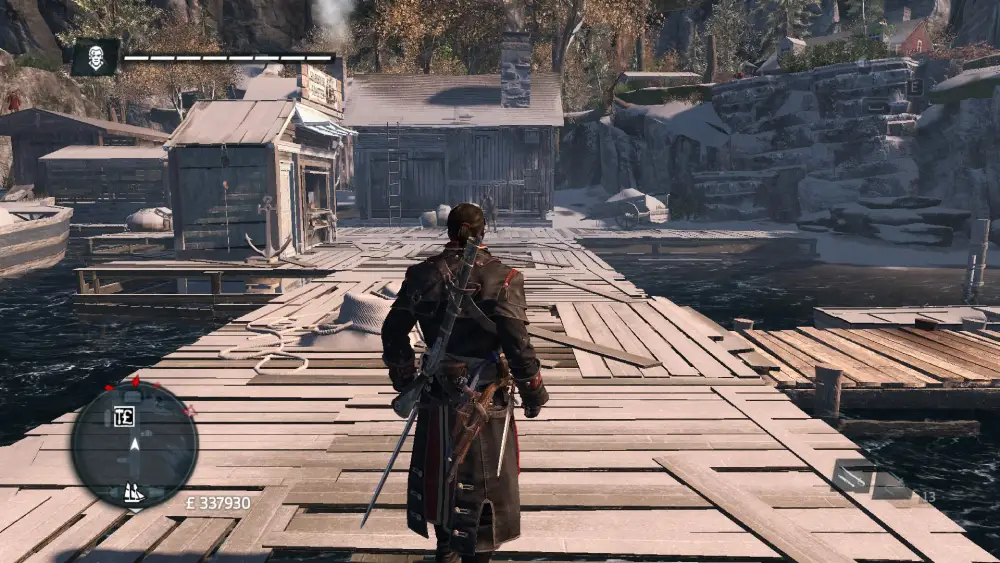
What Is Assassin’s Creed Rogue?
Assassin’s Creed Rogue is an action-adventure game developed by Ubisoft Sofia and originally released in November 2014. It launched during the same period as Assassin’s Creed Unity, but while Unity targeted the newer console generation, Rogue initially arrived for PlayStation 3 and Xbox 360 before reaching PC in 2015.
Its central idea immediately distinguishes it from other entries: you play as an Assassin who abandons the Brotherhood and joins the Templars.
The game combines several familiar Assassin’s Creed systems:
- Open-world exploration;
- Stealth and assassinations;
- Naval combat;
- Ship upgrades;
- Parkour;
- Historical locations;
- Side activities;
- Collectibles;
- Templar-versus-Assassin conflict.
Mechanically, AC Rogue shares considerable DNA with Black Flag, but its protagonist and setting give those familiar systems a very different narrative context.
Who Is Shay Patrick Cormac?
Shay Patrick Cormac is the protagonist of Assassins Creed Rogue. Born in New York to Irish immigrants, Shay becomes a member of the Colonial Brotherhood of Assassins before eventually questioning its leadership, methods, and pursuit of powerful Isu artifacts.
At the beginning, Shay is impulsive, sarcastic, and still developing as an Assassin. His relationship with the Brotherhood deteriorates dramatically after a mission produces catastrophic consequences, forcing him to reconsider whether the people he trusted are actually protecting innocent lives.
Is Shay an Assassin or a Templar?
He is both at different stages of the story.
Shay begins as an Assassin but later becomes aligned with the Templar Order. This transition is the defining element of Creed Rogue, because players experience the philosophical conflict between the two organizations from an unusually personal perspective.
| Shay’s journey | Allegiance |
| Early story | Assassin Brotherhood |
| Growing doubts | Questions the Assassins |
| Breaking point | Leaves the Brotherhood |
| Later story | Templar Order |
| Primary objective | Stop former Assassin allies |
Rather than introducing a character who has always believed in Templar ideology, the game shows how an Assassin can gradually become convinced that his former allies are dangerous.
Why Does Shay Leave the Assassins?
Shay’s decision is closely connected to an artifact-hunting mission in Lisbon. The Assassins are searching for Pieces of Eden and send Shay to retrieve an artifact from a precursor site beneath the city.
Removing the artifact triggers a devastating earthquake.
The sequence is based around the historical 1755 Lisbon earthquake, although Rogue integrates the disaster into its fictional conflict surrounding precursor technology.
After witnessing the destruction, Shay concludes that the Assassins’ pursuit of these sites could cause similar catastrophes elsewhere. His attempts to challenge Achilles Davenport and the Brotherhood lead to a confrontation that ultimately separates him from the Assassins.
The Lisbon Earthquake and Shay’s Turning Point
The Lisbon sequence is arguably the most important moment in Assassin’s Creed Rogue because it transforms Shay’s doubts into outright opposition.
He enters the mission believing he is serving the Brotherhood, but escapes through a collapsing city filled with destruction caused by the artifact he was ordered to retrieve.
From Shay’s perspective, the lesson is devastating: if the Assassins continue pursuing similar precursor sites, more innocent people could die.
Why is Lisbon important?
The mission changes:
- Shay’s opinion of the Brotherhood;
- His relationship with Achilles;
- His understanding of precursor artifacts;
- His willingness to follow Assassin orders;
- The direction of the entire story.
This gives Shay a motivation that goes beyond simply changing factions. He believes stopping his former Brotherhood is necessary to prevent another disaster.
Assassins vs. Templars in AC Rogue
The Assassin–Templar conflict is usually presented through Assassin protagonists. AC Rogue deliberately reverses that perspective.
As Shay moves toward the Templars, familiar Assassin mechanics are reframed as threats. Assassins can hide, stalk targets, use environmental opportunities, and attempt to surprise Shay in ways similar to how players approached enemies in earlier games.
This reversal creates an interesting question: what does Assassin methodology look like when you are the target?
Does Rogue say the Templars are good?
Not exactly.
The game gives the Templar perspective significantly more attention than most entries, but the broader Assassin’s Creed franchise continues to portray both organizations through competing ideas about freedom, control, stability, and human behavior.
Rogue’s story works best as Shay’s perspective on a specific conflict rather than proof that every Assassin is wrong or every Templar is right.
When Does Assassin’s Creed Rogue Take Place?
The main events of Assassins Creed Rogue take place during the 18th century, primarily around the Seven Years’ War. Ubisoft places Shay’s journey in the period between 1752 and 1760.
That position makes Rogue particularly interesting within the North American storyline.
| Game | Main historical period | Relationship to Rogue |
| Assassin’s Creed IV: Black Flag | 1715–1722 | Earlier generation |
| Assassin’s Creed Rogue | 1752–1760 | Shay’s main story |
| Assassin’s Creed III | 1754–1783 | Timeline overlaps |
| Assassin’s Creed Unity | From 1789 | Rogue directly connects to it |
Characters and organizations from surrounding games help turn Rogue into a bridge between several Assassin’s Creed stories.
Is Assassin’s Creed Rogue Before Assassin’s Creed III?
Most of Rogue’s central story begins before the primary events involving Connor in Assassin’s Creed III, although their historical periods overlap.
This matters because AC Creed Rogue shows important events involving the Colonial Brotherhood before the organization seen later in Assassin’s Creed III.
Players familiar with Achilles Davenport from AC III will therefore see a very different period of his life in Rogue.
Should you play Rogue before AC III?
If you are playing strictly by historical chronology, Rogue overlaps with and helps explain circumstances surrounding Assassin’s Creed III.
However, release order provides a different experience because Rogue assumes familiarity with characters and concepts introduced in earlier games.
For story connections, playing Black Flag, Rogue, AC III, and Unity provides particularly interesting context, although there is no single mandatory order.
How Rogue Connects to Black Flag
The connection between Rogue and Black Flag goes beyond naval gameplay.
Haytham Kenway, son of Black Flag protagonist Edward Kenway, appears in Rogue as an important Templar figure. Adéwalé, who served as Edward’s quartermaster before becoming an Assassin, also plays a significant role.
These returning characters establish continuity across generations.
Black Flag influences on Rogue gameplay
Rogue also inherits several systems popularized by Black Flag:
- Naval exploration;
- Ship upgrades;
- Naval battles;
- Boarding enemy vessels;
- Sea activities;
- Open-world locations;
- Ship-based travel.
However, Rogue modifies the formula for colder environments and introduces new naval mechanics.
How Rogue Connects to Assassin’s Creed III
The connection with Assassin’s Creed III is especially important because both games involve the Colonial Brotherhood and several shared characters.
Achilles Davenport is one of the most significant examples.
In Assassin’s Creed III, players know Achilles as Connor’s older mentor. Assassin’s Creed Rogue Assassin storylines show an earlier version of Achilles when the Colonial Brotherhood was considerably stronger.
This context changes how players can interpret his later role.
Characters connecting Rogue and AC III
Important connections include:
- Achilles Davenport;
- Haytham Kenway;
- The Colonial Assassins;
- The Colonial Templars;
- North American locations;
- Events surrounding the Seven Years’ War.
Rogue therefore helps fill the historical gap between Black Flag’s Caribbean era and Connor’s American Revolution storyline.
How Assassin’s Creed Rogue Connects to Unity
The final connection is one of the most memorable elements of the game.
Without revealing every detail for players who want to experience it themselves, Rogue’s ending takes Shay to Versailles in 1776. His mission there directly intersects with the family history of Arno Dorian, protagonist of Assassin’s Creed Unity.
This creates a remarkably direct transition between the two games.
If you play Rogue immediately before Unity, the connection becomes particularly noticeable because one story effectively helps establish the circumstances surrounding the next protagonist.
Assassin’s Creed Rogue Gameplay
Gameplay in Assassins Creed Rogue combines land-based Assassin’s Creed mechanics with extensive naval exploration.
Players can move between cities, settlements, wilderness areas, frozen seas, islands, forts, and other locations while developing both Shay and his ship.
The basic gameplay loop includes:
- Complete story missions;
- Explore new regions;
- Capture strategic locations;
- Upgrade Shay;
- Upgrade the Morrigan;
- Complete naval activities;
- Find collectibles;
- Hunt Assassins;
- Complete side objectives;
- Progress through Shay’s Templar journey.
This structure makes Rogue feel familiar to Black Flag players while introducing enough changes to give Shay his own identity.
The Morrigan: Shay’s Ship
The Morrigan is Shay’s ship and one of the most important gameplay systems in AC Rogue.
Compared with Black Flag’s Jackdaw, the Morrigan is smaller and designed to navigate the rivers and colder waters featured throughout Rogue’s world.
Players can progressively upgrade the ship’s:
- Hull;
- Cannons;
- Mortars;
- Puckle guns;
- Burning oil;
- Ram;
- Storage capacity.
Improving the Morrigan becomes increasingly important as stronger enemy vessels begin appearing.
How Naval Combat Works
Naval combat follows the foundation established by Black Flag but introduces several modifications.
Players maneuver the Morrigan, position its weapons, damage enemy vessels, and board ships after weakening them sufficiently. Successful naval battles provide resources that can be used for additional upgrades.
Main Morrigan weapons
| Weapon | Best use |
| Broadside cannons | Standard side attacks |
| Puckle guns | Rapid targeted fire |
| Mortar | Long-range attacks |
| Ram | Direct collision damage |
| Burning oil | Damaging pursuing ships |
| Heavy shot | Powerful close-range damage |
Learning when to use each weapon becomes increasingly important against larger vessels.
Enemies Can Board the Morrigan
One interesting reversal introduced in Rogue is that enemy forces can attempt to board your ship.
In Black Flag, boarding was primarily something Edward initiated after disabling an enemy vessel. Rogue makes naval encounters less predictable by allowing opponents to use similar tactics against Shay.
This mirrors the game’s larger theme: mechanics previously associated with the player can now be used against the protagonist.
The North Atlantic
The North Atlantic gives Assassin’s Creed Rogue one of the most distinctive environments in the franchise.
Instead of Black Flag’s tropical Caribbean, Shay navigates cold seas filled with icebergs, frozen landscapes, settlements, caves, and dangerous waters.
The environmental change is not purely visual. Ice and cold water affect exploration, while naval navigation requires attention to frozen obstacles.
Can Shay swim in freezing water?
Yes, but freezing water is dangerous.
Unlike the warm Caribbean environment experienced by Edward Kenway, the North Atlantic can punish Shay for remaining in extremely cold water for too long.
This helps reinforce the harsher setting and makes falling overboard more consequential.
River Valley
River Valley combines inland waterways, forests, settlements, and wilderness exploration.
It allows the Morrigan to remain relevant even when Shay moves away from the open ocean, connecting naval travel with land-based exploration.
Activities throughout River Valley can include:
- Settlements;
- Collectibles;
- Hunting;
- Supply locations;
- Enemy positions;
- Renovation opportunities;
- Side missions.
This environment helps differentiate Rogue from both Black Flag and the urban-focused Unity.
New York in Assassin’s Creed Rogue
New York returns as a major urban environment, but Creed Rogue presents the city during an earlier historical period than Assassin’s Creed III.
Shay can climb buildings, move across rooftops, renovate locations, collect items, and fight enemies throughout the city.
The environment provides a useful contrast with the North Atlantic. Instead of spending the entire game navigating frozen wilderness, players alternate between naval exploration and traditional Assassin’s Creed urban traversal.
What Weapons Does Shay Use?
Shay has access to a versatile arsenal that reflects both his Assassin training and his later Templar resources.
Weapons include:
- Swords;
- Daggers;
- Pistols;
- Air rifle;
- Grenades;
- Rope dart;
- Hidden blades.
This creates an interesting contradiction: leaving the Brotherhood does not make Shay forget everything he learned as an Assassin.
Instead, he uses many familiar techniques against his former allies.
The Air Rifle
The air rifle is one of Shay’s distinctive tools.
It can fire different types of ammunition, giving players options for approaching enemies without immediately entering direct combat.
Depending on ammunition and situation, the weapon supports stealth, distraction, and tactical control.
This makes it especially useful for players who want to approach encounters strategically instead of relying entirely on sword combat.
Assassin Interceptions
Assassin Interception missions reverse one of the franchise’s most familiar mission structures.
Instead of accepting an assassination contract, Shay learns that Assassins are planning to kill a target. His objective is to identify the attackers and prevent the assassination.
This works particularly well thematically because Shay understands how Assassins operate.
How Assassin Interceptions work
Generally, the process involves:
- Discover an Assassin plan;
- Identify the intended victim;
- Search the surrounding area;
- Find hidden Assassins;
- Eliminate attackers;
- Protect the target.
These missions reinforce the central role reversal without requiring completely new gameplay mechanics.
Assassins Can Hunt Shay
In most Assassin’s Creed games, the player is the predator. Rogue occasionally turns Shay into the prey.
Enemy Assassins can hide in the environment and attempt surprise attacks, requiring players to pay attention to audio and visual indicators.
This makes familiar Assassin tactics feel surprisingly dangerous when used from the opposite perspective.
Renovations and Income
Rogue includes an economic system that rewards players for restoring properties and expanding Shay’s influence.
Renovations can increase periodic income, giving players more money to spend on upgrades and equipment.
This creates a useful progression loop:
Explore → renovate → earn income → purchase upgrades → explore stronger areas.
Players interested in completing everything can generate substantial passive income by investing in renovations early.
Morrigan Upgrades: What Should You Buy First?
The best upgrade order depends somewhat on playstyle, but survivability and reliable damage are generally more valuable early than specialized equipment.
A practical priority is:
- Hull armor;
- Broadside cannons;
- Mortar;
- Heavy shot;
- Puckle guns;
- Ram;
- Storage upgrades.
Hull upgrades are particularly valuable because stronger naval encounters become difficult if the Morrigan cannot survive sustained damage.
Legendary Battles
Players looking for challenging naval content can take on Legendary Battles.
These encounters feature powerful ships and demanding combat situations designed to test a well-upgraded Morrigan.
Do not rush into them with an underdeveloped vessel.
Before attempting the hardest naval challenges, invest heavily in:
- Hull strength;
- Broadside damage;
- Mortar;
- Heavy shot;
- Puckle guns;
- Defensive maneuvering.
These battles are among the clearest tests of naval mastery in the game.
How Long Is Assassin’s Creed Rogue?
AC Rogue is shorter than many major Assassin’s Creed releases.
A player focusing mainly on the story can generally complete the campaign in roughly 10–12 hours, while exploring side activities can push the experience considerably further.
| Playstyle | Approximate time |
| Main story | 10–12 hours |
| Story + side content | 20–25 hours |
| Completionist | 35+ hours |
Actual time varies significantly depending on exploration, difficulty, naval activities, collectibles, and completion goals.
Why Is Assassin’s Creed Rogue So Short?
Rogue was developed under unusual circumstances. It launched in 2014 alongside Assassin’s Creed Unity, with Rogue primarily serving players on PlayStation 3 and Xbox 360 while Unity represented the franchise’s transition toward PlayStation 4 and Xbox One.
That context helps explain its more compact scope.
However, shorter does not necessarily mean incomplete. The campaign focuses heavily on Shay’s transformation and his role in dismantling the Colonial Assassin Brotherhood rather than attempting to match the scale of later open-world entries.
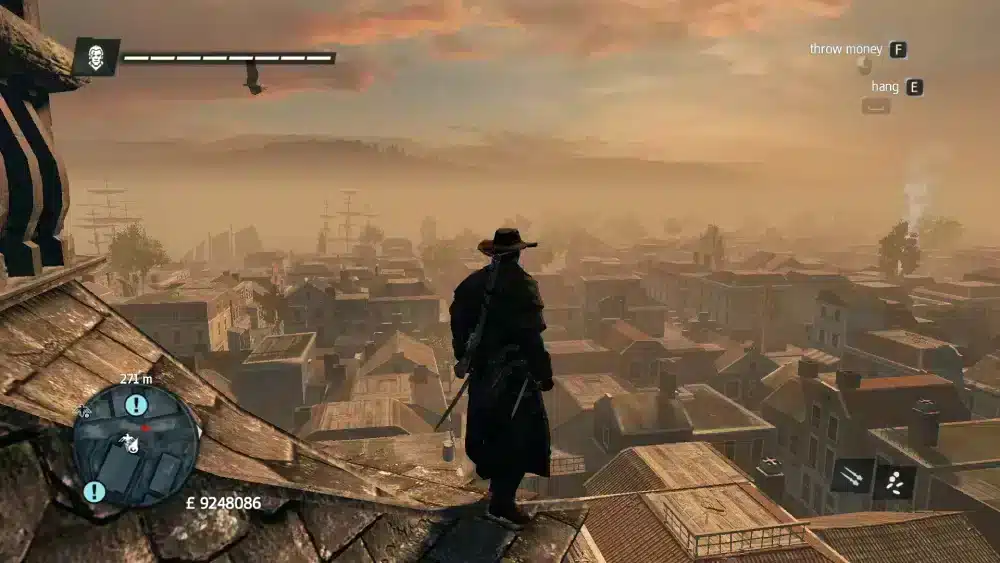
Assassin’s Creed Rogue vs. Black Flag
The similarities between Rogue and Black Flag are impossible to ignore, especially in naval gameplay.
However, their settings, protagonists, and narrative perspectives are substantially different.
| Assassin’s Creed Rogue | Assassin’s Creed IV: Black Flag |
| Shay Patrick Cormac | Edward Kenway |
| Assassin turned Templar | Pirate drawn toward Assassins |
| North Atlantic | Caribbean |
| Morrigan | Jackdaw |
| Cold environments | Tropical environments |
| Seven Years’ War | Golden Age of Piracy |
| Assassin hunting | Pirate/Assassin conflict |
Players who enjoyed Black Flag’s naval systems will find Rogue immediately familiar, but the colder environment and reversed narrative perspective give it a distinct identity.
Assassin’s Creed Rogue vs. Unity
Rogue and Unity launched during the same month in 2014 but represent very different approaches.
Unity emphasizes dense urban environments, redesigned parkour, crowds, stealth, and Paris during the French Revolution. Rogue instead builds upon the open-world and naval framework of Black Flag.
| Rogue | Unity |
| Shay Cormac | Arno Dorian |
| Seven Years’ War | French Revolution |
| Naval gameplay | Urban-focused gameplay |
| Multiple open regions | Dense Paris |
| Templar protagonist | Assassin protagonist |
| Black Flag-style systems | Redesigned parkour/combat |
The games are also narratively connected, making them particularly interesting to play consecutively.
What Is Assassin’s Creed Rogue Remastered?
Assassin’s Creed Rogue Remastered brought Shay’s story to newer consoles in 2018.
Ubisoft released the remaster for PlayStation 4 and Xbox One, offering improved visual presentation and higher-resolution support on enhanced console hardware.
The Remastered edition also includes additional content originally associated with DLC and bonus packs.
Rogue vs. Rogue Remastered
| Original Rogue | Rogue Remastered |
| Originally released in 2014 | Released in 2018 |
| PS3/Xbox 360 generation | PS4/Xbox One generation |
| PC version also available | Console-focused remaster |
| Original visual presentation | Improved graphical fidelity |
| Bonus content varied | Additional content included |
The underlying campaign remains Shay’s original story rather than a remake or rewritten version.
Is Rogue Remastered 4K?
Ubisoft promoted 4K support on PlayStation 4 Pro and Xbox One X, while the standard PS4 and Xbox One versions target 1080p presentation.
The remaster also improves elements such as texture rendering, shadows, and environmental detail compared with the original console release.
For modern console players, Remastered is therefore generally the most convenient version of Shay’s adventure.
Does Assassin’s Creed Rogue Have Multiplayer?
Unlike Black Flag and several earlier Assassin’s Creed titles, Rogue does not include the franchise’s traditional competitive multiplayer mode.
The experience is focused on its single-player campaign and open-world activities.
This distinction is important because Rogue arrived during a period when Ubisoft was changing how online features were integrated into Assassin’s Creed. Unity, released simultaneously, instead emphasized cooperative missions.
Is Assassin’s Creed Rogue Open World?
Yes. Assassins Creed Rogue uses an open-world structure spread across multiple regions rather than one uninterrupted landmass.
Players can explore:
- North Atlantic;
- River Valley;
- New York;
- Settlements;
- Islands;
- Naval locations;
- Forts;
- Wilderness areas.
Progression through the story unlocks access to additional activities and opportunities throughout these regions.
Does Assassin’s Creed Rogue Have Side Missions?
Yes. Players can spend substantial time outside the main campaign. Activities include:
- Assassin Interceptions;
- Naval battles;
- Fort captures;
- Settlements;
- Renovations;
- Collectibles;
- Hunting;
- Legendary Battles;
- Exploration challenges.
This side content explains why completion time can become much longer than the relatively compact main story.
Historical Figures in Assassin’s Creed Rogue
Like other entries in the franchise, Rogue places fictional Assassin–Templar events alongside real historical people.
Benjamin Franklin is among the recognizable figures appearing in the game, continuing Assassin’s Creed’s tradition of connecting fictional conspiracies to historical events and personalities.
The Seven Years’ War provides a particularly useful setting because competing European powers, colonial territories, and military conflicts naturally complement the franchise’s hidden-war narrative.
Is Assassin’s Creed Rogue Historically Accurate?
Rogue mixes historical events with extensive fiction.
Locations, wars, political conflicts, historical figures, and disasters can be based on real history, but Assassins, Templars, Pieces of Eden, precursor sites, and many character actions belong to Assassin’s Creed’s fictional universe.
The Lisbon earthquake illustrates this approach perfectly.
The disaster was real. Shay causing it by removing an Isu artifact is fiction.
Understanding that distinction is important when using Assassin’s Creed as a starting point for learning about history.
Why Shay Is a Controversial Protagonist
Shay remains one of the franchise’s most debated protagonists because his story challenges assumptions players developed over previous games.
For years, players primarily experienced the conflict through Assassin characters. Rogue suddenly asks them to hunt the same organization.
Some players appreciate this perspective because it adds nuance to the Assassin–Templar conflict. Others argue that the Colonial Assassins are portrayed unusually recklessly to justify Shay’s transition.
Either way, that debate is evidence of the character’s lasting impact.
Is Shay Cormac a Villain?
Calling Shay simply a villain misses much of what Assassins Creed Rogue attempts to explore.
From his perspective, he changes sides because he believes the Assassins’ actions can kill innocent people. He does not wake up one day and decide that becoming an antagonist sounds appealing.
His story instead explores a recurring franchise question:
What happens when loyalty to an organization conflicts with your personal understanding of right and wrong?
Shay chooses his own judgment over his original Creed, regardless of the consequences.
Does Shay Meet Haytham Kenway?
Yes. Haytham Kenway becomes an important figure in Shay’s Templar journey.
Players who experienced Assassin’s Creed III already know Haytham as a highly influential Templar and the father of Connor Kenway. Rogue provides additional context for his activities in colonial North America.
This is another reason the game works effectively as connective tissue between Black Flag and Assassin’s Creed III.
Does Shay Meet Adéwalé?
Yes. Adéwalé appears in Rogue, creating another direct connection with Black Flag and its Freedom Cry expansion.
His presence carries additional weight because players familiar with Edward Kenway’s story know Adéwalé as an experienced Assassin with a long history.
For Shay, however, he represents the organization that must be stopped.
That difference in perspective gives encounters with returning characters much more emotional significance.
Does Shay Appear in Other Assassin’s Creed Games?
Shay is most strongly associated with Rogue, and his direct playable story remains centered on this game.
However, the consequences of his actions extend into other parts of the franchise, most notably through the ending’s connection to Assassin’s Creed Unity.
His family legacy has also generated substantial fan discussion, but players should distinguish official lore from theories about possible descendants or connections.
Is Assassin’s Creed Rogue Canon?
Yes. Assassin’s Creed Rogue is part of the main Assassin’s Creed continuity.
Its events are particularly important because they help explain:
- The decline of the Colonial Assassin Brotherhood;
- Achilles Davenport’s later situation;
- Haytham Kenway’s influence;
- Connections between Black Flag and AC III;
- An important event connected to Arno Dorian.
Skipping Rogue does not make the surrounding games impossible to understand, but playing it provides considerably more context.
What Order Should You Play Assassin’s Creed Rogue?
There are several reasonable approaches.
For players interested primarily in the connected North American storyline, one useful order based largely on release and narrative context is:
- Assassin’s Creed III;
- Assassin’s Creed IV: Black Flag;
- Assassin’s Creed Rogue;
- Assassin’s Creed Unity.
If you prefer historical chronology, the order becomes more complicated because Rogue and AC III overlap, while character histories stretch across several decades.
For first-time players, release order generally avoids revealing connections before the games originally intended.
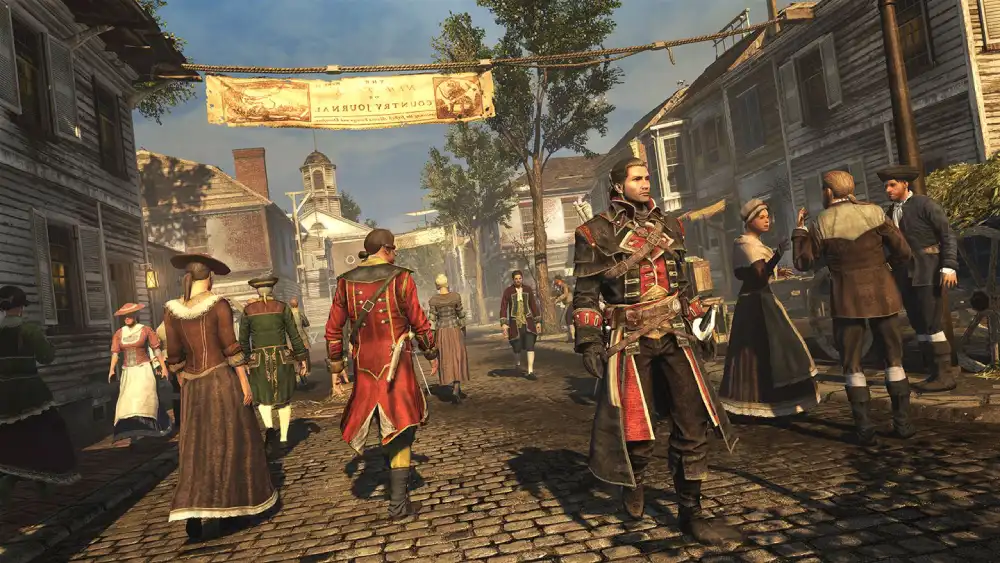
Is Assassin’s Creed Rogue Worth Playing Today?
Yes, particularly for players interested in the older Assassin’s Creed formula.
AC Rogue offers naval gameplay similar to Black Flag, a relatively compact campaign, several explorable environments, and one of the franchise’s most unusual protagonists.
It is particularly worth considering if you enjoy:
- Black Flag;
- Naval combat;
- Classic Assassin’s Creed gameplay;
- Templar lore;
- Shay Cormac;
- North American Assassin’s Creed stories;
- Shorter open-world campaigns.
Its mechanics naturally show their age compared with newer entries, but the unusual story remains its strongest reason to play.
Tips for Starting Assassin’s Creed Rogue
New players can make Shay’s journey easier by investing in useful upgrades and learning how Rogue reverses familiar Assassin mechanics.
Keep these tips in mind:
- Upgrade the Morrigan early;
- Prioritize hull strength before difficult naval battles;
- Renovate buildings to improve income;
- Listen for enemy Assassins;
- Use the air rifle for tactical encounters;
- Complete side activities for resources;
- Do not rush Legendary Battles;
- Explore River Valley and the North Atlantic;
- Upgrade Shay’s equipment as difficulty increases;
- Remember that naval positioning matters as much as firepower.
The campaign is relatively short, so exploring side content along the way can create a better overall experience than rushing exclusively through story missions.
Assassin’s Creed Rogue and ExitLag
Assassins Creed Rogue is primarily a single-player experience, so it is important to distinguish the game’s performance from the network problems ExitLag is designed to address.
ExitLag does not increase Rogue’s FPS, improve texture streaming, reduce GPU load, or make the Morrigan move faster. Issues such as low frame rates, graphical stuttering, or hardware limitations require local performance troubleshooting rather than network-route optimization.
However, the wider Ubisoft ecosystem includes games and services with online connectivity, and network conditions can matter significantly in supported online titles.
When does ExitLag help?
ExitLag is designed for supported online games where the connection route between the player and game infrastructure can affect the experience.
Network-related problems can include:
- High latency;
- Packet loss;
- Routing instability;
- Latency spikes;
- Connection fluctuations;
- Unexpected disconnections.
For supported online games, ExitLag analyzes network routes and works to select more efficient paths. That is fundamentally different from attempting to improve the local performance of a single-player game such as Rogue.
FAQ
Assassins Creed Rogue occupies an unusual place in the franchise because of Shay’s allegiance, its overlapping timeline, and its strong connections to several other games. These five questions cover some of the most common doubts.
Is Shay an Assassin or a Templar in Assassin’s Creed Rogue?
Shay begins the story as a member of the Assassin Brotherhood but eventually abandons it and joins the Templar Order. His transformation from Assassin to Templar is the central narrative of Rogue.
Why did Shay leave the Assassins?
Shay loses faith in the Brotherhood after his mission involving an Isu artifact contributes to the catastrophic Lisbon earthquake. He believes the Assassins risk causing similar disasters by continuing to pursue precursor sites.
Is Assassin’s Creed Rogue connected to Black Flag?
Yes. Rogue shares naval gameplay elements with Black Flag and features characters connected to its story, including Haytham Kenway and Adéwalé. It also takes place several decades after Edward Kenway’s main adventure.
How long is Assassin’s Creed Rogue?
The main campaign generally takes around 10–12 hours for players focusing primarily on the story. Completing side activities, naval challenges, exploration, and collectibles can extend playtime to 20–35 hours or more.
Is Assassin’s Creed Rogue Remastered worth playing?
For modern console players, Rogue Remastered is a convenient way to experience Shay’s story, offering improved visuals and additional content compared with the original console release. The underlying campaign and gameplay remain fundamentally the same.
Discover Shay’s Story in Assassins Creed Rogue
Assassins Creed Rogue remains one of the franchise’s most distinctive games because it takes a conflict players thought they understood and shows it from the opposite side. Shay’s journey from Assassin to Templar connects Black Flag, Assassin’s Creed III, and Unity while giving the Colonial Brotherhood an important additional chapter.
Whether you come for Shay Cormac, the Morrigan, naval battles, the North Atlantic, or the unusual Templar perspective, Assassins Creed Rogue offers a compact but meaningful part of Assassin’s Creed history.
For supported online games beyond Shay’s single-player adventure, use ExitLag to optimize your connection routes and pursue a more stable online gaming experience.
Got questions or want to connect with other players? Join the conversation at the ExitLag Forum!