
Counter-Strike 2 is Valve's current version of one of the most influential competitive first-person shooters ever created. Released in September 2023 as the successor to Counter-Strike: Global Offensive, it preserves the franchise's precise gunplay and economy-driven matches while rebuilding major parts of the experience with Source 2.
The cosmetic economy also carried forward into Counter-Strike 2, meaning existing inventories remained relevant after the transition. Players interested in that side of the game can explore the Counter-Strike market and skin economy to understand how weapon finishes, rarity, trading, and market activity fit into modern CS.
Counter-Strike 2 is still fundamentally about information, mechanical precision, teamwork, positioning, and resource management. The visual technology changed, smoke grenades became far more dynamic, Premier introduced CS Rating, and maps received major updates, but the tactical principles that made Counter-Strike famous remain at the center of every competitive round.
What is Counter-Strike 2 and how is it different from CS:GO?
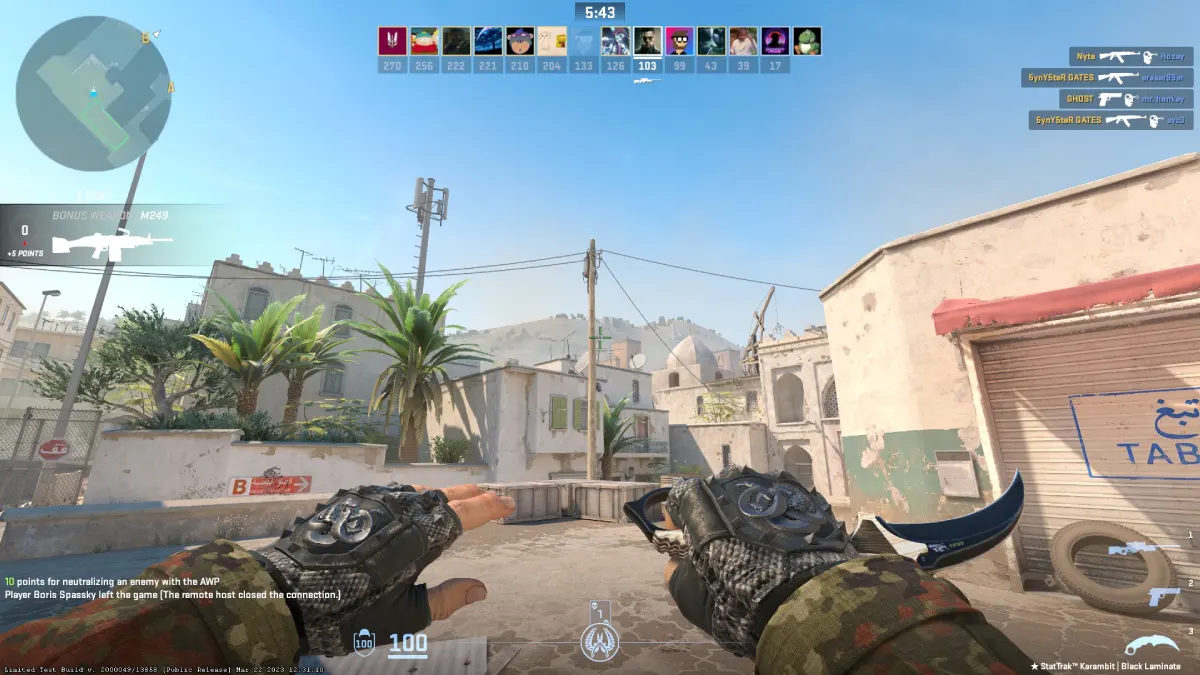
Counter-Strike 2 is the current main entry in Valve's tactical FPS franchise. It replaced Counter-Strike: Global Offensive as the primary version available through Steam rather than launching as an entirely separate paid game.
For longtime CSGO players, this means the transition was both familiar and significant. The core objective-based formula remained recognizable, but the engine, networking systems, visual presentation, smoke mechanics, user interface, maps, and ranking structure received substantial changes.
Source 2 changed the technical foundation
The move to Source 2 was one of the most important differences between CSGO and the new game.
Counter-Strike 2 uses Valve's newer engine to support improved lighting, materials, rendering, visual effects, audio, Workshop tools, and map development.
That does not mean every map was completely redesigned.
Valve initially divided map improvements into different approaches. Some received major overhauls, while others retained much of their established geometry but benefited from Source 2 lighting and visual improvements.
This was essential because competitive players rely heavily on map knowledge.
A seemingly minor change to a doorway, box, angle, or piece of cover can affect:
- Grenade lineups;
- Crosshair placement;
- Defensive positions;
- Entry routes;
- Boosts;
- Rotations;
- Sound information;
- Peeking advantages.
The goal was therefore not to discard decades of Counter-Strike knowledge but to modernize the game without removing its competitive identity.
Dynamic smokes and subtick changed gameplay
Smoke grenades became one of the signature features of CS2.
Instead of behaving like relatively static visual effects, smoke now forms volumetric clouds that interact with the environment. The cloud can fill spaces naturally and react when bullets or explosions temporarily create openings.
This creates tactical possibilities that did not exist in exactly the same form in Counter-Strike: Global Offensive.
Players can briefly shoot through part of a smoke to create visibility, while HE grenades can disperse sections of the cloud and create temporary opportunities.
Networking also changed.
Valve describes Counter-Strike 2 as providing gameplay that is independent of traditional server tick rate. The game's subtick architecture records important player actions with more precise timing rather than depending exclusively on the next discrete tick.
For players, however, the practical lesson is simpler: movement, shooting, peeking, and network consistency still matter enormously.
Technical improvements do not eliminate the effect of latency, packet loss, unstable routing, or poor local performance.
Is Counter-Strike 2 free to play?
Yes. Counter-Strike 2 is free to download and play through Steam.
Players do not need to purchase the base game to access its core modes. Valve also offers Prime Status as a separate paid upgrade for players who want the benefits associated with Prime matchmaking and progression.
The free-to-play model continues the approach introduced during the later years of CSGO.
Do you need Prime Status to play?
Prime is not required simply to launch and play CS2.
However, players interested in the full competitive ecosystem may find Prime useful because Valve separates parts of matchmaking and reward eligibility according to account status.
Before purchasing anything, check the current Steam description because Valve can change Prime features over time.
Prime should also not be confused with skill.
Buying Prime does not automatically produce a higher rank, improve aim, reduce recoil, or guarantee stronger teammates.
Those improvements come from learning the game.
Players migrating from Counter-Strike: Global Offensive may also want to compare their previous performance with newer systems. The Counter-Strike: Global Offensive stats guide provides useful context for understanding statistics from the CSGO era rather than assuming every historical metric maps directly onto modern Counter-Strike 2.
What are the Counter-Strike 2 system requirements?
Valve currently lists the following minimum Windows requirements:
| Component | Minimum requirement |
| Operating system | Windows 10 |
| Processor | 4 hardware CPU threads, Intel Core i5-750 or higher |
| Memory | 8 GB RAM |
| Graphics | 1 GB or more, DirectX 11 compatible, Shader Model 5.0 |
| DirectX | Version 11 |
| Storage | 85 GB available space |
Linux is also officially supported, with Ubuntu 20.04 listed as the minimum operating system and Vulkan-compatible graphics hardware required.
These are minimum specifications rather than a recommendation for high-refresh-rate competitive play.
Counter-Strike is particularly sensitive to frame consistency because aiming, counter-strafing, reaction timing, and fast visual information all benefit from stable performance.
If your PC barely reaches the minimum specifications, reducing demanding graphics options may produce a more consistent experience.
Competitive players commonly prioritize frame rate and visibility over maximum graphical quality.
Useful settings to test include:
- Resolution;
- Display mode;
- Shadow quality;
- Texture quality;
- Anti-aliasing;
- Ambient occlusion;
- Shader settings;
- NVIDIA Reflex, when available;
- Frame-rate limits.
Avoid assuming that a configuration copied from a professional player is automatically ideal for your hardware.
How do Counter-Strike 2 ranks and Premier mode work?
Counter-Strike 2 effectively offers two major ways to approach serious matchmaking: Competitive and Premier.
They use similar core gameplay, but their ranking structure is different.
Traditional Competitive uses map-specific Skill Groups, while Premier centers progression around CS Rating and the Active Duty map pool.
Competitive ranks are tied to individual maps
One of the important differences between modern CS2 Competitive and older CSGO matchmaking is map-specific ranking.
Your performance on Mirage does not automatically mean you have the same displayed Skill Group on Nuke or Inferno.
The traditional Competitive Skill Groups range from Silver I through The Global Elite.
They include familiar divisions such as:
- Silver;
- Gold Nova;
- Master Guardian;
- Distinguished Master Guardian;
- Legendary Eagle;
- Supreme Master First Class;
- The Global Elite.
This structure can be useful for players who specialize in certain maps.
Someone may understand Mirage rotations, grenade lineups, timings, and positions extremely well while still being relatively inexperienced on Anubis.
The separate map rankings reflect that difference more clearly.
For beginners, Competitive can also be a useful way to concentrate on one or two maps rather than immediately learning the full Premier rotation.
Premier uses CS Rating and map vetoes
Premier is designed around a more structured competitive environment.
Instead of selecting one map before searching, teams go through a map pick-and-ban process using the Active Duty pool.
Players receive a numerical CS Rating after meeting the relevant placement requirements.
That rating can then be compared through leaderboards, including regional and global rankings.
Premier matches use the MR12 format. Teams play up to 12 regulation rounds on each side, and the first team to reach 13 rounds wins regulation. Depending on the matchmaking rules involved, tied regulation can continue into overtime.
Premier therefore tests more than raw aim.
Players need broader map knowledge because the veto system can force them away from their favorite location.
Understanding the competitive history behind this structure is useful as well. The evolution of Counter-Strike esports shows how professional Counter-Strike developed around map pools, team economies, tactical preparation, and international competition long before the release of Counter-Strike 2.
What maps are in Counter-Strike 2 in 2026?
Map pools in Counter-Strike 2 are not permanent.
Valve regularly adds, removes, updates, and rotates maps across Premier, Competitive, Casual, Deathmatch, Wingman, and community selections.
As of August 2026, Premier is in Season Five.
What is the current Active Duty map pool?
Season Five began in July 2026 with one major rotation: Cache entered Active Duty and Overpass left.
The Season Five pool consists of:
| Active Duty map | Key characteristic for beginners |
| Ancient | Tight chokepoints and strong utility importance |
| Anubis | Water routes, fast rotations, and vertical engagements |
| Cache | Classic three-lane structure with important mid control |
| Dust II | Familiar long-range fights and simple macro structure |
| Inferno | Utility-heavy chokepoints and close engagements |
| Mirage | Strong focus on mid control and coordinated executes |
| Nuke | Multi-level layout with demanding rotations |
The return of Cache is particularly significant because it was one of the best-known competitive maps during the CSGO era.
However, do not assume that an old Counter-Strike: Global Offensive lineup or grenade guide remains accurate. Source 2 versions can contain geometry, lighting, object, and collision changes that affect old lineups.
Valve continues updating maps throughout each season.
The official Counter-Strike 2 website is therefore a useful place to check the game's current features when an older CS guide conflicts with a recent update.
Which maps should beginners learn first?
There is no mandatory starting map, but learning one map deeply is often more useful than understanding seven maps superficially.
Mirage and Dust II remain approachable choices because their overall structures are widely documented and familiar to much of the community.
However, Cache can also be a useful map to learn because its fundamental lanes are relatively easy to understand.
When studying a map, learn more than callouts.
Focus on:
- Bombsite entrances;
- Rotation routes;
- Common CT positions;
- Common T defaults;
- Safe plant locations;
- Retake positions;
- Wallbang possibilities;
- Smoke lineups;
- Molotov lineups;
- Flash timings;
- Common boost locations.
Then learn the economy surrounding those positions.
Knowing that an enemy might be at connector is useful. Knowing whether their economy makes an AWP likely is even more useful.
Community maps can also help with practice, aim training, movement, grenade lineups, and custom scenarios.
Valve regularly rotates community maps, so individual availability can change with updates.
How do Counter-Strike 2 weapons and economy work?
Counter-Strike 2 is unusual among modern shooters because weapon availability during a match depends heavily on an economy system.
Kills, round outcomes, bomb plants, survival, and loss bonuses influence how much money players have available for future rounds.
That makes purchasing decisions a tactical skill.
Why economy management matters
A team can lose several rounds simply because players buy at different times.
For example, imagine three teammates can afford rifles, armor, and utility while the other two have very little money.
If everyone buys independently, the team may enter the round with an uneven setup and then have another weak purchase after losing.
Sometimes saving together is stronger.
Common economy concepts include:
- Full buy;
- Force buy;
- Eco;
- Half buy;
- Anti-eco;
- Saving;
- Dropping weapons for teammates.
Weapon prices and kill rewards also vary.
SMGs may provide useful financial value against weaker purchases, while expensive rifles and sniper weapons create larger consequences if lost.
The AWP is the most obvious example.
It can dominate long sightlines in the right hands, but losing one repeatedly can damage a team's economy.
Strong CS2 players therefore think about the next round while playing the current one.
Which weapons should beginners practice?
Start with the core rifles.
On the Terrorist side, the AK-47 is fundamental because of its damage potential and role in full-buy rounds.
On the Counter-Terrorist side, learn the M4 options.
Then add:
- Glock-18;
- USP-S or P2000;
- Desert Eagle;
- MP9;
- MAC-10;
- AWP.
You do not need mastery of every weapon immediately.
Learn recoil behavior and first-shot accuracy before memorizing every gun.
One of the most important principles carried from Counter-Strike: Global Offensive into Counter-Strike 2 is that movement and shooting interact heavily.
Running while firing a rifle usually produces poor accuracy.
Learn to stop before shooting.
Counter-strafing can help players become stationary quickly after lateral movement, allowing more accurate shots.
Another core habit is crosshair placement.
Keeping your crosshair at likely head height dramatically reduces how far you need to move the mouse when an opponent appears.
These fundamentals matter far more than constantly changing sensitivity or copying professional configurations.
How do skins work in Counter-Strike 2?
Weapon skins are cosmetic items.
They do not increase damage, reduce recoil, improve accuracy, or alter the competitive statistics of a weapon.
However, the cosmetic ecosystem has become a major part of Counter-Strike culture.
What happened to CSGO skins?
Inventories from CSGO carried forward into Counter-Strike 2.
Players did not need to rebuild years of collected weapon finishes when the new game launched.
Source 2 also changed how materials and lighting interact with many finishes, so some skins can look noticeably different from their appearance in the previous engine.
Cosmetic categories include items such as:
- Weapon finishes;
- Knives;
- Gloves;
- Stickers;
- Charms;
- Agents;
- Music Kits;
- Graffiti.
Exact availability depends on collections, cases, Armory content, drops, events, and the Steam ecosystem.
Not every cosmetic is always obtainable from the same source.
Valve also continues adding new collections. Season Five, for example, introduced new Armory weapon and sticker collections in July 2026.
Why do skin prices vary so much?
Market value can depend on multiple factors:
- Rarity;
- Weapon popularity;
- Exterior wear;
- Float value;
- Pattern;
- Sticker combinations;
- Collection;
- Supply;
- Demand;
- Availability;
- Professional or community interest.
Two skins with the same base name can therefore have significantly different values.
Some patterns or float ranges may be much more desirable than others.
Players interested in trading should also pay attention to current Steam and CS2 restrictions instead of relying on an old CSGO tutorial.
Trading rules can change.
Never enter Steam credentials into an unknown site because it promises free skins, cheap knives, giveaways, or instant trades.
API scams, impersonation, phishing pages, fake trade confirmations, and fraudulent marketplaces have targeted CS players for years.
Why is Counter-Strike still one of the biggest esports games?
The franchise has survived multiple generations of competitive shooters because its basic rules create enormous strategic depth.
Almost anyone can understand the objective after watching a few rounds.
Mastering it can take thousands of hours.
Counter-Strike has more than two decades of competitive history
The original Counter-Strike began as a Half-Life mod in 1999 before developing into a standalone competitive phenomenon.
Several major versions followed, including Counter-Strike 1.6, Counter-Strike: Source, Counter-Strike: Global Offensive, and eventually Counter-Strike 2.
Players searching for a broader chronology can use this Counter-Strike 2 history overview alongside the game's own historical material to understand how the current release emerged from the earlier CS ecosystem.
Each generation changed technology without replacing the central competitive formula.
Five-player teams still need to combine:
- Aim;
- Utility;
- Communication;
- Economy management;
- Positioning;
- Timing;
- Map control;
- Information;
- Mid-round decision-making.
That consistency makes professional matches understandable to experienced players even after major technical changes.
The professional scene continues in 2026
Counter-Strike 2 remains integrated into a global competitive circuit featuring professional organizations, qualification systems, ranking implications, tournaments, and Valve Majors.
In 2026, Valve continued supporting Major-related features directly inside CS2, including tournament hubs, Pick'Em participation, team stickers, and event-related items.
The competitive map pool also connects Premier with professional play.
When Valve changes Active Duty, professional teams must develop new strategies while ordinary Premier players experience the same core map rotation.
That relationship between professional and everyday Counter-Strike has always been important.
Players can watch a professional execute on Mirage, then attempt to understand the same smoke placements, map control, or retake principles in their own matches.
The mechanical gap may be enormous, but the rules are recognizable.
How can beginners improve at Counter-Strike 2?
The fastest improvement usually comes from fixing fundamentals rather than searching for secret settings.
Counter-Strike 2 has an extremely high mechanical ceiling, but beginners can make substantial progress by developing a few consistent habits.
Practice aim without ignoring movement
Do not practice aim as though your character remains stationary throughout a real match.
Combine aiming with movement.
Useful areas to train include:
- Crosshair placement;
- Counter-strafing;
- Recoil control;
- Short bursts;
- Tapping;
- Target switching;
- Peeking;
- Tracking;
- Pre-aiming common positions.
Deathmatch can help increase the number of engagements you experience in a short period.
Workshop training maps can provide more controlled practice.
Still, mechanical training should eventually transfer into actual matches.
A player with excellent raw aim can still struggle when approaching every bombsite without utility or repeatedly taking unfavorable fights.
Learn utility and communication
Smoke grenades, flashbangs, HE grenades, and Molotovs or Incendiaries are part of the tactical foundation of Counter-Strike 2.
You do not need 50 lineups for every map.
Start with a few high-value pieces of utility.
On each map, learn:
- One or two important attacking smokes;
- A defensive Molotov;
- A useful pop flash;
- A retake smoke;
- Basic anti-rush utility.
Then communicate clearly.
Good information is short and specific.
Instead of shouting a long explanation after dying, provide the relevant information: enemy location, estimated number of opponents, damage when useful, and bomb information.
Avoid filling voice chat with speculation.
A teammate hearing footsteps needs enough audio space to use that information.
Good communication is one reason coordinated teams can defeat mechanically stronger groups.
How can ExitLag help with Counter-Strike 2?
Counter-Strike 2 is highly sensitive to timing, but not every performance problem has the same cause.
Low FPS, inconsistent frame times, high ping, jitter, packet loss, and server problems can produce different symptoms and require different solutions.
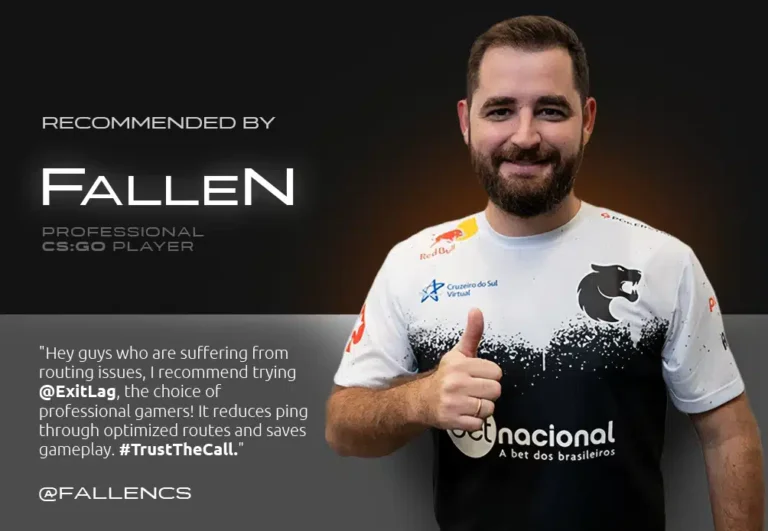
ExitLag focuses on network routing.
Route optimization may improve connection stability
Traffic between your computer and a Counter-Strike 2 server can pass through several network nodes.
Your ISP determines much of that route, and the most direct geographic path is not always the path your traffic actually takes.
Congestion or inefficient routing can sometimes contribute to:
- Latency variation;
- Packet loss;
- Jitter;
- Connection instability;
- Rubber-banding;
- Delayed network responses.
ExitLag analyzes routing options for supported games and can help optimize the path used by your connection.
Depending on your ISP, region, destination, and available network routes, that may reduce routing-related instability or provide a more stable path.
Results vary according to the network conditions involved.
ExitLag cannot guarantee a lower ping in every match.
Network optimization cannot fix every CS2 problem
It is equally important to know what ExitLag does not do.
ExitLag cannot:
- Increase hardware-limited FPS;
- Improve your aim;
- Change recoil;
- Increase CS Rating;
- Change matchmaking;
- Prevent every disconnect;
- Remove VAC penalties;
- Fix corrupted game files;
- Provide skins;
- Change skin prices;
- Fix a global Valve server outage.
If Counter-Strike 2 is stuttering because your GPU is overloaded, change performance settings or troubleshoot the PC.
If the game runs smoothly but your network route is unstable, then testing route optimization is more relevant.
Competitive games reward consistency, so diagnose the correct layer before changing settings randomly.
Frequently asked questions
Counter-Strike 2 carries more than two decades of terminology and systems behind it, so new players frequently encounter old CSGO information mixed with current advice.
The following answers clarify some of the most common questions about the game in 2026.
Is Counter-Strike 2 the same as CS:GO?
No, although Counter-Strike 2 directly replaced Counter-Strike: Global Offensive as the main modern version of the game.
It retains much of the core gameplay and existing inventory but uses Source 2 and introduces significant technical, visual, map, smoke, networking, ranking, and interface changes.
When did Counter-Strike 2 release?
Counter-Strike 2 officially launched on September 27, 2023.
It was released as a free upgrade to CSGO rather than as a conventional full-price sequel.
Is CS2 free?
Yes.
The base CS2 game is free to play on Steam. Prime Status is an optional paid account upgrade with additional matchmaking and progression-related benefits.
Is Counter-Strike 2 available on consoles?
Counter-Strike 2 is primarily a PC title.
The current official Steam release supports Windows and Linux rather than PlayStation or Xbox.
What is the difference between Competitive and Premier?
Competitive allows players to develop Skill Groups on individual maps.
Premier uses a map veto process, the Active Duty pool, and a numerical CS Rating with regional and global leaderboards.
Premier is generally the closer representation of the map structure used in high-level competitive Counter-Strike.
What maps are in Premier Season Five?
As of August 2026, the Active Duty pool includes Ancient, Anubis, Cache, Dust II, Inferno, Mirage, and Nuke.
Cache entered the pool in July 2026 and replaced Overpass.
How many rounds are in a Counter-Strike 2 match?
The main 5v5 competitive rules use MR12 regulation.
Teams switch sides after 12 rounds, and reaching 13 rounds wins regulation. Overtime behavior depends on the mode and applicable matchmaking rules.
Did CSGO skins transfer to Counter-Strike 2?
Yes.
Existing CSGO inventory items moved forward into Counter-Strike 2, with Source 2 providing updated materials and lighting for the cosmetic system.
Does Counter-Strike 2 use VAC?
Yes.
Valve Anti-Cheat remains part of the CS2 ecosystem. Players should avoid cheat software, unauthorized tools, account manipulation, and other behavior that can violate Steam or game rules.
Is Counter-Strike 2 difficult for beginners?
It can be.
The rules are relatively easy to understand, but recoil, movement, economy, grenade usage, map knowledge, communication, and positioning create a very high skill ceiling.
Focus on one improvement area at a time instead of trying to learn everything immediately.
Can ExitLag improve FPS in Counter-Strike 2?
ExitLag should not be treated as a solution for FPS limitations caused by your hardware.
Its role is network route optimization. It may help with routing-related latency or stability problems when the available network path is contributing to the issue.
After more than two decades of Counter-Strike, the fundamentals still explain why Counter-Strike 2 remains so demanding: precise aim matters, but winning consistently also requires economy management, map knowledge, utility, communication, and disciplined decision-making. Learn a small map pool, practice the core weapons, understand the difference between CSGO systems and modern CS2, and build your skills gradually. If unstable network routing is interfering with your matches, try ExitLag and compare several sessions to see whether route optimization can provide a more consistent connection.
All game images used in this article belong to their respective owners. They are used for informational and educational purposes only and do not imply endorsement or affiliation with the rights holders.