
Counter-Strike is one of the most influential franchises in the history of competitive gaming. What began as a modification for Valve’s Half-Life in 1999 evolved over 25 years into a globally recognized esports institution, producing legendary players, record-breaking tournament viewership, and a competitive standard that has shaped every tactical shooter that came after it.
The franchise’s influence extends far beyond its own player base. Mechanical concepts like bomb-site gameplay, round-based economy, buy-phase strategy, and team-based five-versus-five structure were either invented or popularized by Counter-Strike, and virtually every competitive tactical shooter released since 1999 has drawn directly from that foundation.
Counter-Strike currently exists in its most modern form as Counter-Strike 2, released on September 27, 2023, which replaced CS:GO on Steam entirely. Understanding the full release history, the esports trajectory, and where to find reliable guides helps both new players and long-time fans navigate one of gaming’s most layered franchises.
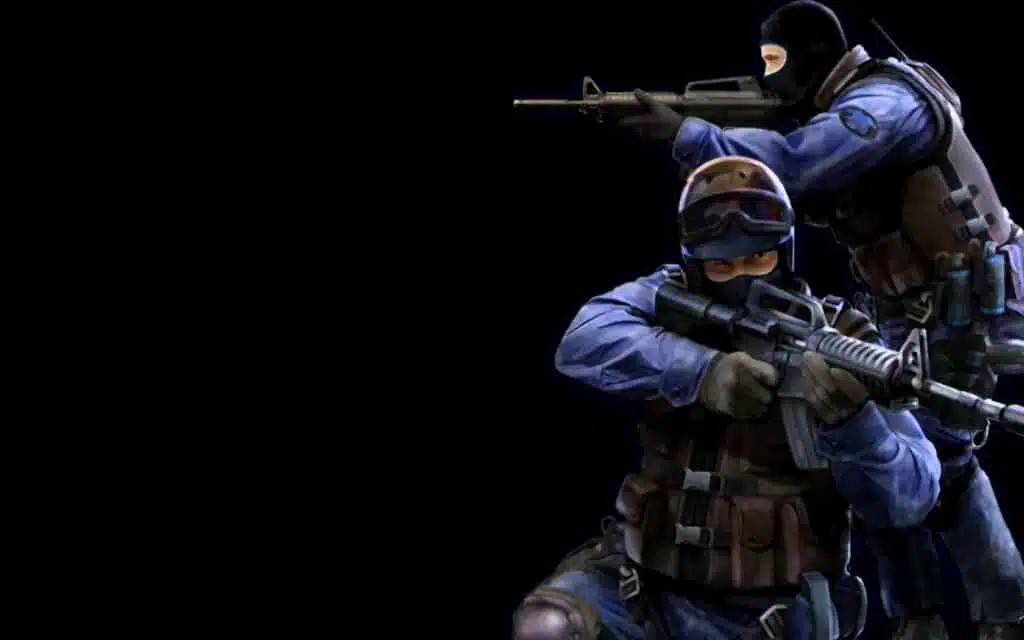
Counter-Strike History: From Mod to Global Phenomenon
How Counter-Strike Was Created
Counter-Strike began in June 1999, developed not by a major studio but by two modders: Minh “Gooseman” Le and Jess “Cliffe” Cliffe. Their modification for Half-Life introduced a concept that had not existed in mainstream gaming before: two teams with asymmetric objectives, limited lives per round, no respawning mid-round, and a persistent economy that required smart purchasing decisions to win consistently.
The mod attracted such a large and dedicated player base that Valve Corporation acquired the rights and the developers themselves. The first official standalone retail release arrived on November 9, 2000 as Counter-Strike 1.0, and it immediately became one of the most played online games in the world.
The Major Counter-Strike Versions and Their Release Dates
| Version | Release Year | Platform | Key Addition |
| Counter-Strike (mod) | June 1999 | Half-Life / Windows | Original bomb and hostage gameplay |
| Counter-Strike 1.0 | November 2000 | Windows | First standalone release |
| Counter-Strike 1.6 | September 2003 | Windows | Definitive classic era version |
| Counter-Strike: Source | November 2004 | Windows | Source engine, improved physics |
| CS:GO | August 21, 2012 | PC, PS3, Xbox 360 | Matchmaking, updated graphics |
| Counter-Strike 2 | September 27, 2023 | PC (Windows) | Source 2 engine, replaced CS:GO |
When Did Counter-Strike Global Offensive Come Out?
Counter-Strike: Global Offensive was officially released on August 21, 2012, developed jointly by Valve Corporation and Hidden Path Entertainment. It launched across Windows, macOS, PlayStation 3, and Xbox 360 as a downloadable title.
CS:GO was announced publicly in August 2011 and entered a closed beta in November 2011, initially limited to professional players and selected testers. The public beta opened in early 2012 before the full release that August.
The game ran from 2012 until September 27, 2023, when Counter-Strike 2 replaced it on Steam. Official support for CS:GO’s servers ended on January 1, 2024. The game’s eleven-year run made it one of the longest-lived competitive titles in esports history. On March 3, 2026, Valve added CS:GO back to Steam as a separate product using its legacy branch, allowing players to access the classic version independently from CS2.
How Does Counter-Strike Compare to Other Esports?
Counter-Strike occupies a unique position in the esports landscape compared to other competitive titles. Where many esports games have risen and partially declined within a single console generation, Counter-Strike has sustained competitive relevance across three decades and multiple complete engine rebuilds.
Counter-Strike vs. Call of Duty: Structural Differences
Both franchises are first-person shooters, but they represent fundamentally different design philosophies:
- Match structure: Counter-Strike uses single-life rounds with economy-driven buy phases. Call of Duty’s competitive format uses respawn mechanics or limited-life modes depending on the specific mode.
- Skill expression: Counter-Strike rewards precise spray control, economy optimization, and map utility over multiple rounds. Call of Duty competitive rewards faster target acquisition and positional aggression.
- Modding and longevity: Counter-Strike grew from a community mod and maintained community map support throughout its history. Call of Duty’s competitive iterations are tied to annual releases rather than a continuously updated single title.
- Esports structure: The Major system Valve uses for Counter-Strike creates fixed event prestige that individual Call of Duty Championship events match in prize pool but not in historical weight.
Counter-Strike’s Esports Scale
The numbers that define Counter-Strike’s competitive reach:
- The Intel Extreme Masters Katowice consistently draws over one million peak concurrent viewers during finals
- BLAST and ESL tournaments distribute millions in prize money annually across professional teams
- The CS2 Majors carry a $1,250,000 prize pool per event
- Steam’s SteamDB tracking has recorded CS2 peak concurrent player counts exceeding 1.8 million players
- The professional ecosystem features established organizations with decade-long histories in the scene
Where to Find Counter-Strike Guides and History
Best Resources for Counter-Strike History and Guides
For players who want to explore the game’s full history or improve their current skills, these platforms offer the most reliable and comprehensive content:
- liquipedia.net/counterstrike: The most complete Counter-Strike esports encyclopedia. Contains every major tournament result, player career history, team roster history, and competitive statistics from 1999 through the CS2 era. Free and community-maintained.
- counter-strike.net: Valve’s official CS2 home for patch notes, skin releases, and official announcements.
- hltv.org: The definitive news and statistics platform for competitive Counter-Strike. World rankings, match results, player ratings, news, and VODs for all major tournaments.
- csgostats.gg: Individual player statistics tracking for CS2, including accuracy, win rates, and ranked performance history.
- CSGO Fandom Wiki: Community-maintained encyclopedia covering game mechanics, weapons, maps, and history.
Where to Find Counter-Strike Guides Specifically
For improvement-focused content:
- YouTube channels from former and current professional players offer detailed breakdowns of grenade lineups, economy decisions, and map strategies
- Reddit communities including r/GlobalOffensive and r/LearnCS2 contain thousands of curated guides organized by topic and skill level
- HLTV’s demo system allows viewers to watch professional matches from any perspective, including the spectator view used by coaches during live games
Counter-Strike in the Broader Esports Ecosystem
Counter-Strike has consistently influenced how other esports operate. Several specific contributions from CS that became industry standards:
- The Major system: Valve’s approach to designated prestige events with direct invite paths based on previous performance created a template that Riot adapted for Valorant Majors and the VCT.
- The skin economy: CS:GO’s cosmetic case system, launched in 2013, became the blueprint for weapon skin economies across dozens of subsequent games.
- Anti-cheat investment: Valve’s ongoing development of VAC and the more recently deployed CS2-native anti-cheat influenced how other competitive shooters think about detection rather than just punishment.
- Community workshop maps: The ability to play community-designed maps within the official client provided a sandbox for new competitive formats and training tools that have since been adopted across the industry.
Pro Tips: Getting Started with Counter-Strike History and Resources
- Start with Liquipedia for any historical reference: When reading about past events, players, or tournaments, Liquipedia provides sourced information with verifiable results. It is more reliable for historical data than news articles, which may contain errors that persist across republication.
- Use HLTV for current competitive context: HLTV’s world rankings update after each major tournament and reflect actual performance data rather than reputation. Checking rankings before watching a match provides the competitive context that makes broadcast analysis meaningful.
- Read the original Counter-Strike blog at counter-strike.net: Valve maintains an official history section on the CS website that provides the developer’s own documentation of the game’s milestones, avoiding the inaccuracies that sometimes appear in third-party histories.
- Watch classic match VODs on YouTube to understand the game’s evolution: Watching CS 1.6 major tournament footage alongside CS2 professional play demonstrates how much the tactical meta has changed while the core mechanics have remained intact.
Common Mistakes When Researching Counter-Strike History
- Confusing the mod release with the standalone release: Counter-Strike as a mod launched in June 1999, but the first full standalone retail product launched November 9, 2000. These dates represent different milestones. Fix: Use June 1999 to refer to the mod’s origin, and November 2000 for the first official standalone game.
- Treating CS:GO’s replacement as its shutdown: Counter-Strike 2 replaced CS:GO on Steam in September 2023, but the game’s competitive legacy, statistics, and skin ownership transferred forward. CS:GO did not end; it evolved. Fix: Understand that CS2 is the continuation of the CS:GO ecosystem under a new engine, not a separate product with separate accounts or inventories.
- Using Wikipedia as the primary source for player or tournament history: Wikipedia’s Counter-Strike entries are often incomplete for minor tournaments and player career details. Fix: Use Liquipedia as the primary source for competitive history and supplement with HLTV news articles for context.
Play Counter-Strike 2 with a Stable Connection Using ExitLag
Counter-Strike is a game where individual aim and team coordination determine outcomes. But connection quality affects whether your inputs register accurately, how early you can hear enemy footsteps relative to your position, and whether the tick rate advantage of a good connection pays off in close duels.
ExitLag is a connection optimizer used by over 30 million players across 4,000+ game titles, including Counter-Strike 2. It analyzes multiple network routes in real time and selects the fastest, most stable path between your device and Valve’s servers, reducing the milliseconds of delay that determine who wins peeked duels.
Key features for CS2 players:
- Real-Time Optimization: Continuously selects the lowest-latency route to CS2 servers, improving the responsiveness of both movement and shooting inputs.
- Multipath Technology: Sends game data through multiple simultaneous routes, preventing single-path failures from interrupting a ranked session.
- Traffic Shaper: Prioritizes CS2 traffic over background applications, so Steam downloads and background processes cannot spike your ping mid-round.
- Multi-Internet: Supports up to four simultaneous connections, ensuring a connection drop never costs you a match in a Premier-rated game.
Download ExitLag and play CS2 at your best.
All images used in this blog post belong to their respective owners and are used for informational and educational purposes only. They do not imply endorsement or affiliation with the rights holders.
Got questions or want to connect with other players? Join the conversation at the ExitLag Forum!