The world of The Elder Scrolls Online is one of the largest and most detailed environments in the MMORPG genre. From ancient ruins and dangerous Daedric realms to peaceful forests and frozen mountains, every region of Tamriel offers unique discoveries. Understanding the Elder Scrolls online map is essential for players who want to explore efficiently, complete achievements, find collectibles, and maximize their rewards.
A well-planned journey across Tamriel requires more than simply following quest markers. The Elder Scrolls online map works as a complete exploration system, showing players where to find skyshards, crafting materials, world bosses, treasure locations, lorebooks, and hidden activities spread across countless zones.
The Elder Scrolls online map is the interactive representation of Tamriel in ESO, showing the continent’s regions, cities, landmarks, fast travel points, PvP areas, dungeons, and exploration objectives. It includes base game territories, chapter expansion zones, DLC locations, and special areas such as Cyrodiil and the Imperial City.
Understanding the Elder Scrolls Online Map System
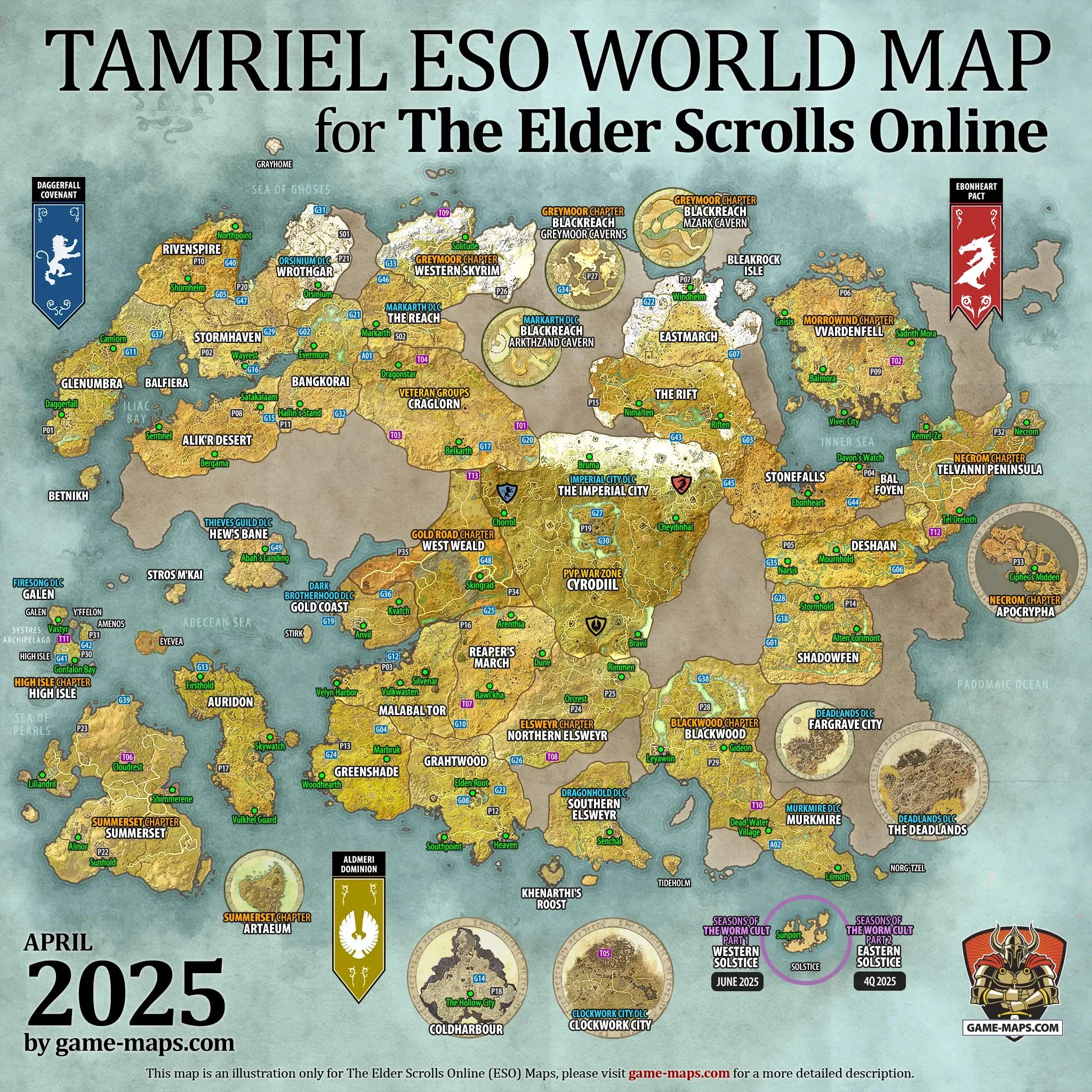
The ESO world is divided into multiple layers that help players navigate the massive continent of Tamriel. Unlike traditional games with a single open-world map, ESO uses different map types depending on the activity.
The main categories include:
- Zone maps focused on regional exploration, quests, and collectibles.
- The world map showing the complete continent and available destinations.
- Dungeon maps designed for group content and underground areas.
- PvP maps featuring Alliance War locations and strategic objectives.
- Treasure and survey maps that require players to identify locations manually.
Each region contains important exploration elements, including wayshrines for fast travel, delves, public dungeons, world bosses, skyshards, crafting nodes, and hidden lore discoveries.
Learning how each map type works allows players to spend less time searching and more time progressing through achievements, builds, and character development.
How the Map of Tamriel Works in ESO
The continent of Tamriel is divided into provinces, each with its own history, enemies, resources, and exploration objectives. The Tamriel map helps players understand the geographical relationship between zones and how different regions connect within the game world.
While each area has unique characteristics, most zones follow a similar structure. Players can expect to discover settlements, quest hubs, landmarks, caves, ruins, and special events.
The map of Tamriel becomes increasingly valuable as players unlock more regions through expansions and downloadable content. With dozens of areas available, having a strong understanding of navigation prevents unnecessary travel time and makes completion goals easier.
Main Features Found Across ESO Zones
Most zones include:
- Wayshrines for instant travel between discovered locations.
- Skyshards that provide skill points after collecting groups of three.
- Lorebooks that improve Mages Guild progression.
- Treasure locations containing valuable rewards.
- Crafting nodes used for equipment production and trading.
- World events such as Dolmens and dynamic encounters.
These features create a reason to explore every corner of the game instead of simply completing the main storyline.
Base Game Zones and Their Important Locations
The original ESO zones remain some of the most visited areas in the game. They introduce players to the three major alliances and contain hundreds of exploration objectives.
Auridon Map: Aldmeri Dominion Territory
Auridon is one of the most recognizable locations in the Aldmeri Dominion. This island region features beautiful coastlines, ancient ruins, and important High Elf settlements.
Players exploring Auridon can discover:
- 16 skyshards.
- Quendeluun ruins.
- Dawnbreak.
- Ezduiin.
- Multiple treasure locations.
The zone is also popular among completionists because its landmarks are relatively easy to navigate. The combination of clear terrain and valuable collectibles makes Auridon an excellent starting area for new adventurers.
Stonefalls Map: Ebonheart Pact Region
Stonefalls presents a completely different environment, combining volcanic landscapes, ash-covered areas, and dangerous enemy territories.
Important locations include:
- Davon’s Watch.
- Ebonheart.
- Ash Mountain.
- Multiple caves and exploration sites.
The region contains 16 skyshards and several treasure locations. Because many areas are close together, Stonefalls is often considered efficient for players focusing on zone completion.
Glenumbra Map: Daggerfall Covenant Lands
Glenumbra combines forests, coastal regions, and ancient Breton architecture. It is one of the first major zones experienced by Daggerfall Covenant players.
Notable areas include:
- Daggerfall.
- Camlorn.
- Cath Bedraud.
The zone offers 16 skyshards and several treasure locations. Its diverse environment also introduces players to important Breton lore and storylines.
Deshaan Map: Dunmer Homeland Region
Deshaan is a central area for Dark Elf culture and Tribunal history. The zone features large cities, volcanic landscapes, and valuable fishing opportunities.
Key attractions include:
- Mournhold.
- Shrine of Saint Veloth.
- Crafting areas.
- Fishing hotspots.
Because of its combination of resources and lore discoveries, Deshaan remains a popular location for both explorers and crafters.
Expansion Zones and Special Areas
As ESO expanded over the years, new regions introduced larger environments, additional collectibles, and unique gameplay mechanics.
Vvardenfell Map: The Morrowind Chapter Region
Vvardenfell brought players back to one of the most iconic locations in Elder Scrolls history. The volcanic island contains memorable landmarks and deep connections to Dunmer culture.
Major points of interest include:
- Vivec City.
- Balmora.
- Red Mountain.
The region includes 18 skyshards and valuable treasure opportunities, especially around ancestral tombs and forgotten ruins.
Blackwood Map: Between Civilization and the Swamp
The Blackwood region combines Imperial architecture with dangerous wilderness. It became known for its large environments, diverse enemies, and unique exploration paths.
Important locations include:
- Leyawiin.
- Gideon.
- Swamp regions.
- Ancient ruins.
Blackwood provides excellent opportunities for gathering materials, completing achievements, and discovering hidden locations throughout the zone.
Wrothgar Map: Orsinium’s Mountain Territory
Wrothgar is a mountainous region filled with Orc history, snowy landscapes, and abandoned strongholds.
Players can discover:
- 17 skyshards.
- Old Orsinium locations.
- High-density crafting areas.
- Hidden treasure sites.
For players interested in exploration and crafting, Wrothgar remains one of the most rewarding areas to investigate.
Comparing Major ESO Map Areas
| Region | Main Feature | Exploration Highlights | Recommended For |
| Auridon | Aldmeri Dominion zone | Ruins, skyshards, coastal areas | New explorers |
| Stonefalls | Volcanic landscape | Dense objectives and resources | Fast completion |
| Glenumbra | Breton territory | Lore and achievements | Story-focused players |
| Vvardenfell | Morrowind environment | Unique landmarks and treasures | Lore collectors |
| Blackwood | Imperial and swamp region | Materials and events | Crafters |
| Wrothgar | Orc homeland | Rare resources and hidden locations | Completionists |
ESO Treasure Maps and Hidden Rewards
Treasure maps are one of the most interesting exploration systems connected to the ESO map. Unlike regular quests, treasure maps do not provide direct markers. Instead, players must analyze an image clue and locate the correct area.
Treasure maps can be obtained through:
- Enemy drops.
- Daily rewards.
- Lootable containers.
- Trading with other players.
How to Read ESO Treasure Maps
Finding treasure requires attention to environmental details.
Players should:
- Open the treasure map item from their inventory.
- Compare the image with nearby landmarks.
- Search for unique structures, rocks, trees, or ruins.
- Dig at the matching location.
Many treasure locations are hidden near recognizable landmarks, making knowledge of each zone extremely useful.
For example, Auridon treasure locations often use distinctive ruins and stone structures as visual references, rewarding players who understand the region’s geography.
Survey Maps and Crafting Opportunities
Survey maps are valuable resources for players focused on crafting and trading. They reveal areas containing concentrated crafting nodes, allowing adventurers to gather large amounts of materials quickly.
Survey maps can reward resources related to:
- Blacksmithing.
- Woodworking.
- Clothing.
- Alchemy.
- Enchanting.
- Jewelry crafting.
Efficient resource gathering depends on understanding the terrain and creating farming routes. Many experienced players combine survey locations with their knowledge of the ESO map to optimize their crafting profits.
Fishing Locations Across Tamriel
Fishing is another activity improved by understanding ESO geography. Every zone contains different water environments, and each one offers specific fish types.
Players can encounter:
- Foul water fishing spots.
- River locations.
- Ocean areas.
- Rare achievement fish.
Fishing maps help players identify suitable environments and complete achievements such as the Master Angler title.
Using the correct bait, joining fishing groups, and tracking discovered locations can significantly improve results.
Skyshard Tracking and Faster Character Progression
Skyshards are among the most important collectibles in ESO because every three collected provide an additional skill point.
Because Tamriel contains hundreds of skyshards, using the right tracking method saves significant time.
Players commonly use:
- Interactive community maps.
- Skyshard tracking addons.
- Achievement progress tools.
Skyshards are usually hidden in locations such as:
- Mountain overlooks.
- Caves.
- Delves.
- Areas protected by enemies.
Explorers who understand the Elder Scrolls map layout can locate these collectibles much faster and unlock abilities earlier.
Achievement-Based Exploration and Completion Goals
Exploring Tamriel is not only about discovering new locations. The Elder Scrolls online map is also directly connected to achievement progression, character rewards, collectibles, and long-term completion goals.
Every zone includes a collection of achievements that encourage players to investigate different parts of the environment. These objectives reward dedication with titles, cosmetics, dyes, collectibles, gold, and sometimes additional progression benefits.
Players who want to complete every region should regularly check their Journal achievements because each zone tracks specific exploration milestones.
Regional Achievements Worth Completing
Achievement categories vary depending on the region, but many follow similar objectives:
- Discovering landmarks and points of interest.
- Defeating specific enemies or world bosses.
- Completing local quests.
- Finding hidden collectibles.
- Exploring delves and public dungeons.
Some notable examples include:
| Zone | Achievement | Reward Type |
| Glenumbra | Wyrd Tree Protector | Cosmetic rewards and title |
| Deshaan | Savior of Deshaan | Progression rewards and lore unlocks |
| Auridon | Anchor Shatterer | Gold and motif-related rewards |
| Stonefalls | Explorer of Stonefalls | Exploration completion reward |
| Vvardenfell | Ancestral Tomb Discoverer | Style-related collectible rewards |
| Cyrodiil | War Hero | PvP title and cosmetic rewards |
Achievement-focused players often combine exploration with daily activities to maximize their progress. Joining exploration guilds or using group activities can make difficult objectives faster to complete.
Hidden Lorebooks and Experience Progression
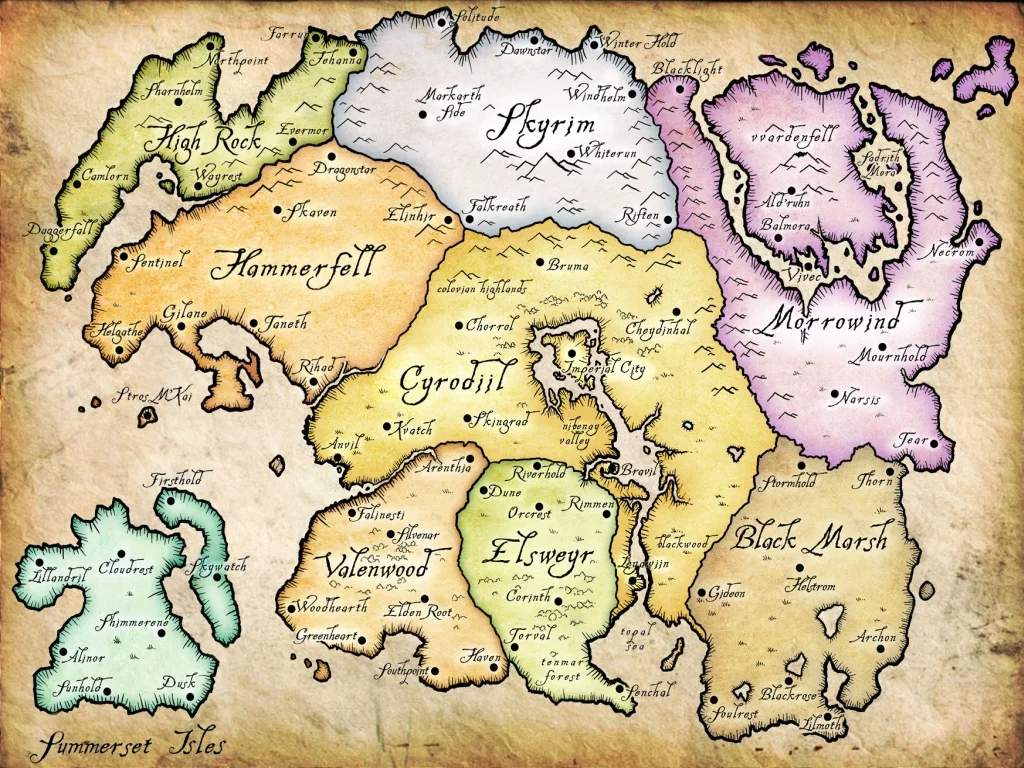
Lorebooks are one of the most important collectibles hidden throughout Tamriel. These books expand the world’s history while also contributing to Mages Guild progression.
The Elder Scrolls map becomes especially useful when searching for lore because many books are placed away from obvious paths.
Common lorebook locations include:
- Abandoned buildings.
- Hidden caves.
- Ruined temples.
- Enemy-controlled areas.
- Remote mountain paths.
Important Lorebook Regions
Some locations are particularly rich in hidden knowledge:
Coldharbour Lore Discoveries
Coldharbour contains some of the most unusual environments in ESO. The Daedric realm created by Molag Bal features distorted landscapes, strange architecture, and hidden areas containing valuable lore.
Wrothgar Ancient Knowledge
Wrothgar’s snowy mountains hide Orc traditions, ancient ruins, and stories connected to the region’s history.
Blackwood Historical Locations
Blackwood combines Imperial and Argonian influences, creating a region filled with books about cultures, conflicts, and forgotten places.
The Rift Hidden Archives
The Rift contains vertical landscapes and underground areas where lorebooks are frequently missed by players rushing through quests.
Completionists can track collected books through Shalidor’s Library in the Journal menu, making it easier to identify missing discoveries.
World Boss Routes and Efficient Exploration
World bosses are among the most rewarding activities found throughout ESO zones. These powerful enemies provide valuable gear, experience, achievements, and opportunities for group gameplay.
Understanding the Tamriel map allows players to create efficient farming routes instead of randomly traveling between locations.
Recommended Farming Routes
Experienced players often create circular paths that include multiple objectives:
- Stonefalls: Start near Davon’s Watch and move toward Fort Arand while clearing nearby encounters.
- Auridon: Follow a triangle route connecting Quendeluun, Dawnbreak, and Ezduiin.
- Wrothgar: Travel from Orsinium through Nyzchaleft and Mad Urkazbur areas.
- Blackwood: Explore the southwestern swamp, central ruins, and northeastern roads.
These routes combine bosses, crafting nodes, treasure locations, and exploration objectives.
Joining zone chat groups is another effective strategy because many players organize daily boss farming sessions.
Crafting Routes and Survey Map Optimization
Crafting is one of the strongest economic systems in ESO. Players who understand resource locations can gather valuable materials and improve their equipment without relying entirely on merchants.
Survey maps create special opportunities because they reveal areas with concentrated high-quality crafting nodes.
Best Practices for Resource Farming
Efficient gathering requires preparation:
- Increase inventory capacity before starting long farming sessions.
- Use mount upgrades to reduce travel time.
- Unlock Keen Eye passives for easier resource detection.
- Create farming loops based on zone geography.
Different regions are known for different resources:
- Glenumbra: Ironweed and flax gathering.
- Deshaan: Columbine and other valuable alchemy materials.
- Auridon: Maple and jute resources.
Players who combine survey maps with knowledge of the ESO map can create profitable gathering routines and improve crafting progression.
Hidden Events, Secret Locations, and Collectibles
One of the reasons ESO remains engaging is that its world contains many discoveries that are not immediately visible on the main map.
Beyond quests and markers, players can find:
- Hidden interactions.
- Environmental puzzles.
- Rare encounters.
- Seasonal event objectives.
- Secret collectible locations.
Some discoveries require returning to areas at specific times or during special events.
Exploration Tips for Finding Secrets
Players searching for hidden content should:
- Investigate unusual structures.
- Explore areas away from roads.
- Check abandoned buildings.
- Look behind waterfalls and cliffs.
- Return to locations after major updates.
The most dedicated explorers often discover locations that casual players overlook completely.
Tamriel Lore Connections Through Exploration
The geography of Tamriel reflects thousands of years of history. Learning about each region makes exploration more meaningful because every location connects to the wider Elder Scrolls universe.
Auridon’s Ancient High Elf Heritage
Auridon represents some of the oldest Aldmeri settlements. Its architecture, ruins, and temples reveal important parts of High Elf history.
Deshaan and Dunmer Tradition
Deshaan is closely connected to Tribunal worship and Dark Elf culture. The region’s temples and settlements reveal centuries of religious and political development.
Coldharbour and Molag Bal’s Creation
Coldharbour is designed as a dark reflection of Nirn. Its landscapes and structures intentionally resemble elements from the mortal world while showing Molag Bal’s influence.
Wrothgar and Orc Legacy
Wrothgar contains ancient Orc locations, including forgotten strongholds and crafting traditions connected to the region’s identity.
Exploring these areas helps players understand why each zone feels different instead of being just another location to clear.
Cyrodiil Map: Strategy, PvP, and Alliance War
Cyrodiil is different from traditional PvE zones because navigation directly impacts combat success. The region combines exploration, objectives, and large-scale player battles.
The Cyrodiil map includes:
- Alliance keeps.
- Resource locations.
- Scroll temples.
- Delves.
- Siege areas.
- PvP objectives.
Players who understand terrain layouts gain advantages during battles because they can predict enemy movements and choose better positions.
PvP Navigation Strategies
Successful Cyrodiil players focus on:
- Learning transit routes between keeps.
- Understanding defensive positions.
- Using terrain during combat.
- Identifying alternative attack paths.
Map knowledge often separates experienced PvP players from newcomers.
Best Navigation Tools and Add-ons
PC players have access to several tools that improve exploration efficiency.
Popular options include:
- Map Pins for tracking discoveries.
- LoreBooks for monitoring collected books.
- HarvestMap for resource locations.
- Skyshards for collectible tracking.
- Destinations for quest and achievement assistance.
These tools make the ESO map easier to understand and reduce the time spent searching for hidden objectives.
Console players can also improve navigation by using external companion maps and carefully tracking completed achievements.
Improving ESO Performance During Exploration and Combat
Exploring a large MMORPG requires a stable connection, especially when moving between crowded cities, public events, dungeons, and PvP environments.
Network instability can affect:
- Combat responsiveness.
- Ability activation.
- Loading transitions.
- Group activities.
- Large Alliance War battles.
ExitLag helps optimize connection routes by reducing unstable network paths and improving consistency between players and game servers.
This can be especially useful during:
- Large PvP battles in Cyrodiil.
- World boss farming groups.
- Public dungeon runs.
- Multi-region exploration sessions.
A stable connection allows players to focus on discovering Tamriel instead of dealing with unpredictable latency.
Final Thoughts on the Elder Scrolls Online Map
The Elder Scrolls online map represents much more than a navigation system. It is a complete guide to exploration, progression, combat preparation, crafting, and discovering the hidden stories of Tamriel. For players who want smoother exploration and better combat performance, connection stability also plays an important role. ExitLag helps optimize network routes, reduce unstable ping, and create a more consistent experience when traveling between zones, participating in world events, or joining large-scale battles.
Frequently Asked Questions
There are hundreds of skyshards throughout the game, including locations in base game zones, expansions, DLC areas, and PvP regions. Collecting three skyshards grants one skill point.
Several zones provide excellent PvE experiences depending on your goals. Wrothgar, Vvardenfell, and Blackwood are popular choices because they combine strong stories, valuable rewards, and interesting exploration content.
Yes. However, some lorebooks are hidden in difficult areas such as delves, enemy locations, and remote sections of the map. Tracking tools can make completion significantly easier.
Treasure maps are character-specific. Each character must obtain and use their own treasure maps when searching for buried rewards.
Deleted treasure maps cannot be recovered through normal gameplay. Players should carefully manage their inventory before removing them.