
Fortnite age rating is one of the most searched topics among parents and players who want to understand whether the game is suitable for younger audiences. With millions of active users worldwide, Fortnite has become a cultural phenomenon across consoles, PC, and mobile devices.
Before allowing children to download the game, many parents ask about the Fortnite age rating and what the official age restrictions actually mean. Understanding these classifications helps families make informed decisions about safety, spending, and online interaction. And before we continue, know that to know more about all the relevant content about gaming, you just have to check our blog.
What is the Fortnite age rating?

So what is the Fortnite age rating officially? The game is rated Teen (13+) by the ESRB in the United States and PEGI 12 in Europe, meaning it is generally considered appropriate for teenagers due to moderate cartoon violence and online interactions.
Although Fortnite features colorful graphics and exaggerated animations, the competitive battle royale structure and live multiplayer environment influence its content rating.
What is the official Fortnite age rating by region?
Different rating boards evaluate content using slightly different standards. However, the overall recommendation remains consistent across most regions.
Fortnite ESRB rating (United States)
In the U.S., Fortnite carries a Teen (T) ESRB rating. This classification indicates:
- Cartoon or fantasy violence
- Online player interactions
- In-game purchases
The ESRB rating focuses primarily on combat mechanics and communication features.
PEGI and international classifications
In Europe, Fortnite is rated PEGI 12. In Brazil, it is classified as 12 anos.
Here is a comparison table:
| Region | Rating | Recommended Age |
| United States | Teen (ESRB) | 13+ |
| Europe | PEGI 12 | 12+ |
| Brazil | 12 anos | 12+ |
These classifications confirm that Fortnite is not designed for very young children without supervision.
Check also: Fix Fortnite Lag: Ultimate Guide to Smoother Gameplay
Why does Fortnite have age restrictions?
The age restrictions are based on three main factors: violence, online interaction, and microtransactions.
Stylized violence and content rating
Although Fortnite does not feature realistic gore, players use weapons to eliminate opponents. The stylized graphics reduce intensity, but the elimination-based gameplay still contributes to its content rating.
Online multiplayer interaction
Because Fortnite is a live-service multiplayer title, players can communicate through voice and text chat. This increases exposure to strangers and potentially inappropriate language.
In-game purchases and spending risks
V-Bucks allow players to buy skins, emotes, and cosmetics. While these purchases are optional, younger players may struggle with impulse control.
That combination explains the official age restrictions associated with the Fortnite age rating.
What age is appropriate for Fortnite?

Parents frequently ask about the appropriate age for Fortnite beyond the official rating.
While rating boards recommend 12–13+, actual suitability depends on maturity level and supervision.
Benefits for teens
Fortnite offers:
- Strategic thinking and fast decision-making
- Team coordination in squad modes
- Creative building mechanics in Creative mode
- Social interaction with friends
Concerns parents should monitor
However, families should also consider:
- Exposure to competitive pressure
- Unfiltered voice chat in public lobbies
- Spending habits related to cosmetics
- Screen time management
Epic Games provides parental controls that allow restrictions on chat, purchases, and friend requests.
Read this: Fortnite Chapter 2 Season 6: updates and connection issues
How Fortnite compares to other games
To better understand its classification, comparing Fortnite to similar titles helps.
| Game | Rating | Violence Level |
| Fortnite | Teen (13+) | Stylized |
| Call of Duty | Mature (17+) | Realistic |
| Minecraft | E10+ | Minimal |
| Roblox | Varies | Experience-based |
This shows Fortnite sits in the middle range of modern multiplayer games.
Understanding the parental guide tools
Epic Games offers several tools aligned with the Fortnite age rating framework.
Parents can:
- Disable voice chat
- Limit in-game purchases
- Restrict friend requests
- Monitor playtime
These tools allow customization depending on the child’s maturity level.
In summary, the Fortnite age rating reflects moderate cartoon violence and online interactions suitable for teens. With proper parental guidance and controls, Fortnite can be both safe and enjoyable for older children and teenagers.
You may also like: Fortnite ballistic shield: a key defensive item in the battle royales
Fortnite age rating demographic insights, safety controls, and long-term impact
Fortnite age rating discussions often go beyond the official classification and move into deeper questions about player demographics, online safety systems, and long-term digital habits. While rating boards provide a recommended baseline, families frequently want more context about how the Fortnite age rating applies in real-world situations.
The Fortnite age rating may officially recommend 12–13+, but the actual player base spans multiple generations. Understanding how the Fortnite age rating interacts with online features, spending systems, and competitive culture helps parents evaluate the full experience rather than relying only on a number.
At its core, Fortnite age rating guidelines are designed to balance accessibility with protection. The goal is not to exclude younger audiences entirely, but to create structured safeguards that reduce exposure to inappropriate content, risky communication, or uncontrolled spending.
As Fortnite continues evolving with new seasons, collaborations, and gameplay modes, the Fortnite age rating remains a foundational framework that shapes account restrictions, parental controls, and online behavior policies across the platform.
What is the average age of Fortnite players today?
To fully understand how the rating aligns with reality, it helps to analyze player demographics in more detail.
Age demographic breakdown
| Age Group | Estimated Player Share | Behavior Patterns |
| 13–17 | Very High | Competitive, social-focused |
| 18–24 | High | Ranked play, content creation |
| 25–34 | Moderate | Casual and returning players |
| 35+ | Smaller but active | Family or recreational play |
The largest concentration of players falls directly within the 13–24 range. This strongly aligns with the official ESRB and PEGI recommendations.
Read this: Cerberus in Fortnite: Mythological Skins Explained
Why teenagers dominate the ecosystem
Teen players are drawn to Fortnite because it combines:
- Fast-paced competitive gameplay
- Social interaction with friends
- Constant seasonal updates
- Cultural crossovers with movies, music, and esports
The combination of these elements reinforces why the appropriate age recommendation focuses on teens rather than young children.
How account age restrictions actually work
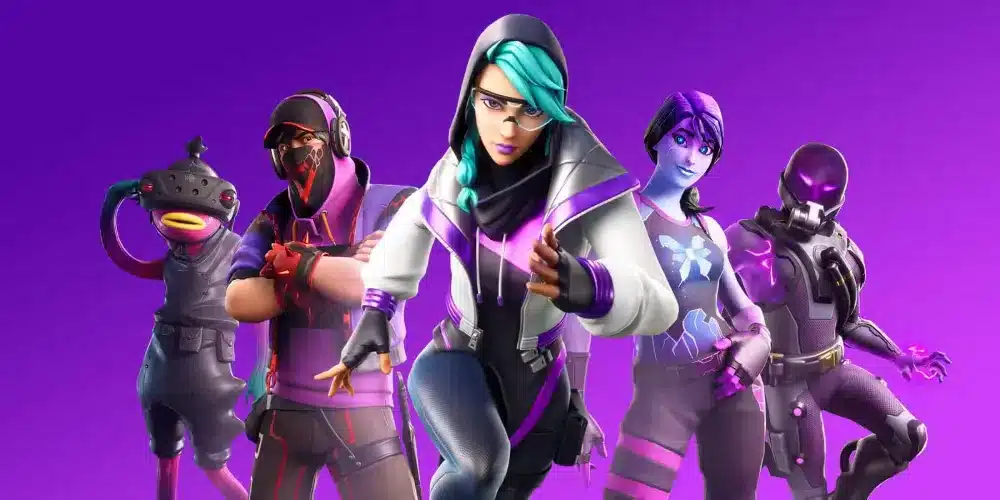
The Fortnite age rating is not just a label. It directly impacts how Epic Games configures account features.
Automatic feature limitations
If an account is registered as under 13 years old, certain features are automatically restricted:
- Limited voice chat access
- Controlled friend requests
- Purchase approval requirements
- Enhanced privacy defaults
These safeguards exist to comply with international child protection laws such as COPPA in the United States and GDPR-K in Europe.
Why birthdate accuracy matters
Many players search for ways to modify their age after registering incorrectly. However, Epic Games intentionally restricts direct edits to prevent bypassing the Fortnite age rating system.
To request corrections, users must:
- Log into their Epic Games account online
- Access account settings
- Contact official support
- Provide verification if required
This structured process ensures that age-based protections remain enforceable.
Fortnite characters and common misconceptions
Another topic often connected to the Fortnite age rating is the perceived age of in-game characters.
It is important to clarify that character lore does not influence content classification. Even if certain skins appear youthful or mature, the rating is determined by gameplay mechanics and online interaction features.
Here are examples of commonly discussed characters and community-estimated lore ages:
| Character | Estimated Age (Lore) | Relevance to Rating |
| Jonesy | 35+ | No impact |
| Skye | 18 | Cosmetic only |
| Jules | 20–25 | Cosmetic only |
| Ramirez | 30 | Cosmetic only |
These narrative details are purely fictional and separate from official age restrictions.
Read also: OG Fortnite Accounts: Understanding OG Reload Mechanics in Fortnite and How It Impacts Gameplay
Parental control tools and responsible gaming
Beyond demographics and restrictions, the Fortnite age rating framework is strengthened by built-in parental tools.
Parents can configure:
- Voice chat permissions
- Text chat filters
- Spending limits for V-Bucks
- Time management features
- Privacy settings for friend invitations
Using these tools transforms Fortnite from a potentially overwhelming open environment into a customizable experience aligned with family values.
Psychological and social considerations
While the game features cartoon-style visuals, competitive elimination mechanics can create intense moments. Younger players may experience frustration, especially in ranked or high-skill lobbies.
Parents should evaluate:
- Emotional maturity
- Reaction to competition and defeat
- Online communication resilience
- Ability to manage digital spending
When these factors are considered carefully, the Fortnite age rating becomes a practical guide rather than a rigid rule.
Why connection stability matters for younger players
In addition to safety settings, performance quality significantly affects the experience. Lag spikes, packet loss, or unstable routing can increase frustration levels, particularly for teens engaged in competitive matches.
Smooth gameplay reduces stress, improves fairness, and enhances reaction timing — all critical factors in fast-paced battle royale scenarios.
Check also: Exploring Unreal Fortnite: What’s Next for Creative Mode?
Frequently Asked Questions (FAQ)
The Fortnite age rating is Teen (13+) according to the ESRB in the United States and PEGI 12 in Europe. These classifications reflect moderate cartoon violence and online interaction features.
Fortnite is generally considered appropriate for players aged 12–13 and older. Younger children may participate with strong parental supervision and active safety settings enabled.
Age restrictions exist because of combat-based gameplay, live online communication, and optional in-game purchases. These elements influence its official content rating.
No. Epic Games enforces age-based limitations and requires support verification for birthdate corrections. The system is designed to comply with international child protection laws.
In Conclusion
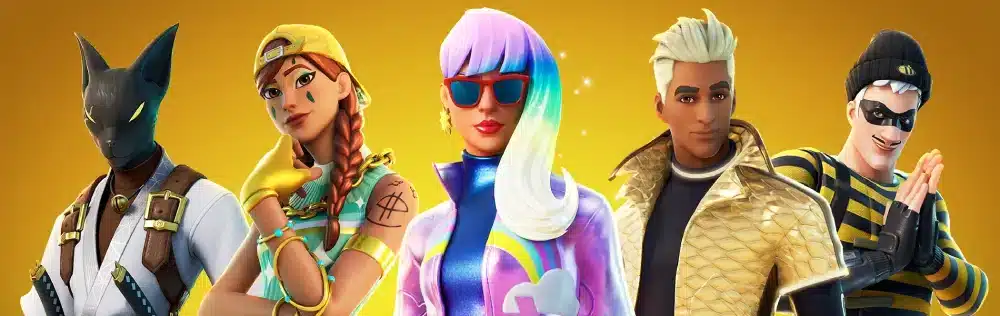
The Fortnite age rating serves as a structured guideline that helps families understand the balance between entertainment and responsibility. While the game offers creative building modes, strategic teamwork, and cultural crossover events, its competitive structure and online communication tools justify its Teen classification.
Understanding demographics, parental controls, and feature restrictions empowers parents to make informed decisions. With proper supervision and digital boundaries, Fortnite can be both safe and engaging for teens.
However, safety tools alone do not guarantee a smooth experience. Connection stability plays a crucial role in reducing frustration and ensuring fair competition, especially for younger players navigating intense matches.
That is where ExitLag becomes essential. By optimizing routing paths, reducing latency spikes, and stabilizing packet delivery, ExitLag ensures fewer interruptions and more consistent gameplay sessions. In the end, whether you are evaluating the Fortnite age rating for your household or simply aiming for better performance, combining smart parental controls with a stable connection through ExitLag creates a safer, smoother, and more enjoyable Fortnite experience. Download ExitLag now!
Got questions or want to connect with other players? Join the conversation at the ExitLag Forum!