Let’s be real: if you have ever wandered into a Guild Wars 2 map hoping to catch a world boss or a major meta event, only to discover that you just missed it, you already know how frustrating event timing can be. That is exactly why Guild Wars 2 event timers are so useful. Instead of guessing when the next major activity will happen, you can check a schedule, see what is coming up, and decide where you want to spend your time in Tyria.
Whether you are farming loot, completing achievements, working toward collections, joining a squad, or simply trying to make better use of a limited gaming session, Guild Wars 2 event timers can turn a wandering play session into a much more organized one. A reliable timer gives you context before you travel, helping you avoid unnecessary map changes and missed event windows.
What are Guild Wars 2 event timers?
Guild Wars 2 event timers are tools that track scheduled Guild Wars 2 activities and present their expected start times, rotations, locations, and, depending on the tool, additional information such as countdowns or event categories. In simple terms, they act like a schedule for some of the most important recurring activities across Tyria. Instead of constantly checking maps or relying on memory, you can look at a timer and immediately understand what is happening now and what is coming next.
That makes a GW2 event timer particularly useful for players who enjoy structured PvE content. World bosses, meta events, map activities, and other recurring encounters often reward players who arrive at the right moment. A timer does not make the event easier by itself, but it gives you the information necessary to prepare, travel, group up, and participate without wasting time.
What Are Guild Wars 2 Event Timers?
At its core, a GW2 event timer is a scheduling tool for recurring activities in Guild Wars 2. It provides a practical way to monitor events that follow recognizable rotations or schedules, allowing players to see when and where they should participate.
The concept is simple. Instead of entering a map and hoping that an event is about to start, you check the schedule first. If a world boss is several minutes away, you have time to travel there. If a meta event is already underway, you can decide whether it is still worth joining. If the next relevant activity is much later, you can use that time for another part of your routine.
How an Event Timer Works
Most timer tools present a chronological list of upcoming events. Depending on the platform, the information can include the event name, map, estimated start time, countdown, and additional details.
The basic process usually looks like this:
- Open your preferred timer tool before or during your play session.
- Check which events are currently active or coming soon.
- Identify the map associated with the event you want.
- Travel to the appropriate location with enough time to prepare.
- Join the event, squad, or map activity.
- Return to the timer afterward and plan your next activity.
This approach becomes increasingly useful when you are trying to chain several activities together. Rather than spending twenty minutes traveling around Tyria without a clear objective, you can build a route around scheduled events.
A good event timer GW2 setup is therefore less about staring at a countdown and more about managing your entire session. The timer becomes the reference point from which you decide what to do next.
What Types of Events Can Be Tracked?
Guild Wars 2 contains many different types of events, and not all of them behave in exactly the same way. Some are recurring scheduled activities, while others are dynamic events that can appear as players interact with the world.
For timer purposes, the most important categories include:
- World bosses: Large encounters that attract players from across a map or region.
- Meta events: Multi-stage chains that can involve objectives, bosses, escorts, and final encounters.
- PvE map events: Dynamic activities connected to specific zones, NPCs, or objectives.
- Festival activities: Seasonal content that becomes available during special in-game periods.
These categories are useful because they require different levels of planning. A world boss might only require you to arrive at the correct map before the fight. A major meta event can require much more preparation, including choosing a build, joining a squad, and understanding the sequence of objectives.
Why Timers Matter for Efficient Play
The biggest advantage of GW2 event timers is information. Information lets you make better decisions before you spend your time.
For example, imagine you have only one hour to play. You could randomly explore maps and hope to encounter worthwhile content, or you could check the schedule and identify a world boss that begins in ten minutes, followed by another activity that starts shortly after.
The second approach gives your session structure without forcing you to play in a rigid way.
Timers can also help players coordinate with friends and guildmates. If everyone knows that a particular event begins at a specific time, it becomes easier to organize a group, choose a map, and arrive together.
The Main GW2 Timer Tools Players Can Use
When looking for Guild Wars 2 event timers, players will find several community tools and reference pages. Each one approaches event tracking differently. Some prioritize simplicity, while others offer detailed visual information, filters, or additional planning features.
The most important thing is not necessarily finding one universally superior tool. Instead, choose the timer that gives you the information you need without making your planning process more complicated.
GW2 Wiki Timer
The Guild Wars 2 Wiki is one of the most useful reference points for players who want information about the game and its events. Its timer functionality is particularly valuable when you want a straightforward reference rather than an elaborate interface.
The official Guild Wars 2 Wiki can be accessed at the Guild Wars 2 Wiki.
The main advantage of a wiki-based approach is familiarity. Players can combine event information with broader pages covering maps, bosses, mechanics, rewards, and other game systems.
That means the timer does not have to be treated as an isolated tool. You can use the schedule to identify an activity and then consult related information if you need to understand the encounter.
GW2Timer.com
GW2Timer.com is another popular community resource for players who want a dedicated interface for tracking activities.
A dedicated timer can be especially convenient when your main goal is planning. Instead of browsing through broader wiki content, you can focus on the schedule and identify the activities that matter to you.
For players who regularly farm events, this can reduce the amount of time spent searching for information before every run.
GW2Temple
GW2Temple is another community resource known for presenting information visually. This style can appeal to players who prefer seeing events in a broader map-oriented context.
Visual organization can be useful when you are thinking about travel rather than only timing. Guild Wars 2 is a large game, and knowing that an event is scheduled is only part of the problem. You also need to know where you are going and whether the travel time makes the activity worthwhile.
Comparing Common Timer Approaches
| Tool or approach | Main strength | Best for | Potential limitation |
| Guild Wars 2 Wiki | Straightforward reference information | Players who want reliable game information alongside schedules | Less focused on customization |
| GW2Timer.com | Dedicated event tracking | Players who frequently plan event rotations | More information can feel overwhelming |
| GW2Temple | Visual presentation | Players who prefer map-oriented planning | Takes some time to learn |
| Personal schedule | Maximum customization | Experienced players with established routines | Requires manual organization |
The right GW2 event timer ultimately depends on how you play. If you only occasionally participate in world bosses, a simple reference may be enough. If you build entire sessions around event rotations, a dedicated timer can become part of your regular routine.
How to Choose the Right GW2 Event Timer
Not every player needs the same information. Someone who logs in casually for thirty minutes has different priorities from someone who spends several hours farming metas.
That is why choosing between different Guild Wars 2 event timers should start with your own routine.
Look for Clear Event Information
The first requirement is clarity. You should be able to identify the event, location, and approximate start time without digging through multiple menus.
A timer is supposed to save time. If its interface makes basic information difficult to find, it can defeat its own purpose.
Check Whether the Timer Fits Your Routine
Think about what you actually use timers for.
Do you mainly want world bosses? Do you follow meta-event chains? Are you trying to build an efficient farming route? Do you coordinate with guildmates?
Your answers determine which features matter.
For example, someone focused on world bosses may only need a simple chronological list. A player focused on farming might prefer more detailed information about map rotations and event sequences.
Consider Notifications and Live Information
Some tools offer features designed to make tracking more convenient, such as alerts, countdowns, filters, or mobile-friendly layouts.
These features are not mandatory, but they can be useful if you frequently move between activities.
The key is to avoid confusing more features with a better experience. A simple tool that you actually use is more valuable than a complicated tool that you constantly have to configure.
Understanding Meta Events and Why Timing Matters
Meta events are some of the most recognizable large-scale PvE activities in Guild Wars 2. They combine multiple objectives into a larger chain, often culminating in a significant encounter.
Because these events are structured around multiple stages, arriving at the correct time matters much more than it does for a simple dynamic event.
What Makes a Meta Event Different?
A typical meta event can involve several phases. Players may need to complete preliminary objectives, defend locations, defeat enemies, escort NPCs, or activate specific parts of the map before the final stage becomes available.
That structure creates a sense of progression.
However, it also means that timing becomes important. Joining too early can mean waiting through preparation stages. Joining too late can mean missing critical objectives or arriving after the main rewards have already been secured.
A GW2 event timer helps reduce that uncertainty.
Dragonfall as a Major Example
Dragonfall is a strong example of the type of content where event timing and player coordination matter.
The map involves a broader sequence of objectives and combat activities, creating a much more structured experience than simply finding a single enemy and defeating it.
Players need to move between objectives, participate in combat, and coordinate around the map. Because of that, knowing when the activity is progressing can help you decide when to enter the map and how much time to dedicate to the run.
If you are farming, timing is even more important. A poorly planned arrival can leave you waiting for the next useful stage or force you to reorganize your session around a different activity.
The Silverwastes Meta
The Silverwastes provides another familiar example of large-scale map activity.
The map revolves around defending key locations, completing objectives, fighting Mordrem forces, and eventually progressing toward the Vinewrath encounters.
For farming-focused players, the appeal comes from combining multiple activities within a single map. However, that efficiency depends on understanding the map’s progression.
This is where GW2 timers become practical rather than merely convenient. You can use the schedule to decide when to enter, then use your understanding of the map to decide what to do once you are there.
What Is the Best Time for GW2 Events?
There is no universal best time for every event or every player. The ideal window depends on the event, your region, the number of players participating, and your personal goals.
This is one reason time GW2 planning can be useful. The clock itself is only one piece of the equation. You also need to consider player activity.
Player Population Changes the Experience
Guild Wars 2 events are designed around player participation, and some large encounters feel very different depending on how many people are involved.
During busier periods, you may find large squads and active maps. That can make major encounters feel smoother because there are more players contributing damage, support, crowd control, and mechanics.
On the other hand, less crowded periods can provide a different experience. Players may need to pay closer attention to mechanics, coordination, and objectives.
Regional Timing Considerations
The original approach to event planning can be summarized around three broad player-activity windows:
| Region | Common active window | Planning consideration |
| North America | Evening hours | Larger player populations and active squads |
| Europe | Afternoon and evening | Strong guild and squad participation |
| Oceania | Evening hours | Smaller but dedicated player communities |
These are practical planning examples rather than guarantees. Player activity changes continuously, and individual events can have their own participation patterns.
The important lesson is that event timer GW2 planning should combine the event schedule with the kind of experience you want.
When to Arrive at an Event
For major events, arriving shortly before the scheduled start can be safer than arriving exactly at the start.
That gives you time to:
- Load into the correct map.
- Find the event location.
- Join a squad or commander.
- Check your equipment.
- Prepare food and utility consumables.
- Understand the current stage of the event.
Arriving early is particularly useful for highly popular content because map capacity and organization can become part of the experience.
Preparing for Dragonfall, Silverwastes, and Other Meta Events
Knowing when an event starts is only the first step. If you want consistently successful runs, preparation matters too.
A timer tells you when to go. Your build, equipment, inventory, and awareness determine how effectively you can participate.
Build for Your Role
You do not need the most optimized build in the game to contribute to a large PvE event.
However, you should understand what your build is designed to do.
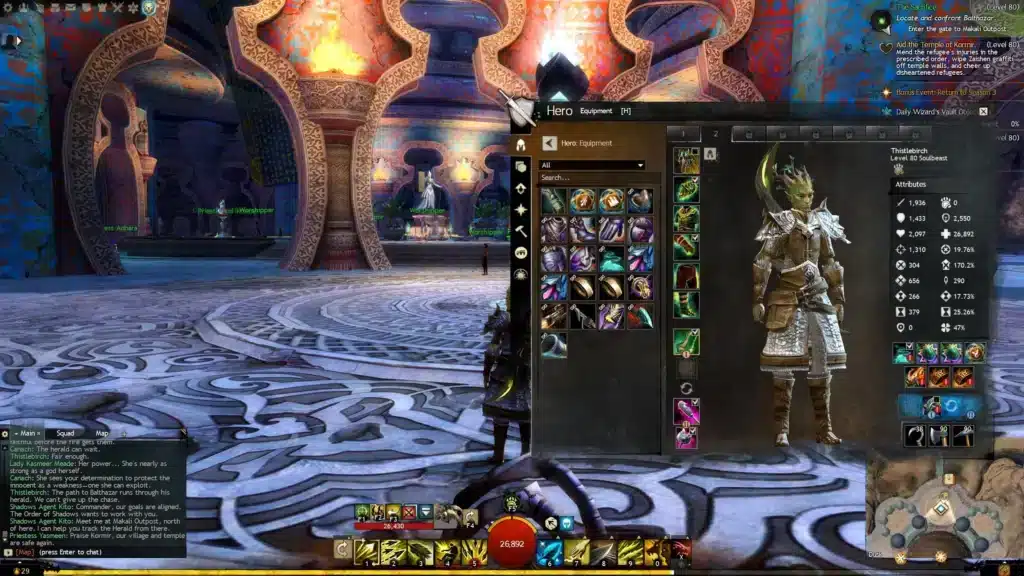
Power-oriented builds, condition builds, support builds, and healing builds can all have different priorities. Your equipment should match your chosen role rather than combining unrelated stats and expecting consistent performance.
Before joining difficult or highly coordinated content, consider checking community build resources such as MetaBattle or Snow Crows.
Bring Useful Utility Skills
Large events can involve more than simply dealing damage.
Depending on the encounter, useful utilities can include:
- Crowd control for breakbars.
- Area-of-effect attacks for groups of enemies.
- Mobility skills for traveling between objectives.
- Defensive abilities for surviving heavy attacks.
- Support skills that benefit nearby players.
The best setup depends on the specific event, but the principle remains the same: build for participation rather than appearance.
Optimize Your Gear
Your gear does not have to be legendary to participate effectively in many event activities.
Exotic equipment can be a practical starting point for newer players, while ascended equipment can provide additional optimization for players who are investing more deeply into their builds.
The important point is consistency.
A build guide can help you understand which stats, weapons, runes, sigils, and traits work together. That is generally more useful than simply selecting the most expensive equipment available.
Consumables, Boosters, and Inventory Preparation
Event farming can involve long stretches of combat and movement. Preparation therefore extends beyond your character build.
Food and utility items can provide useful bonuses, while boosters can support specific farming goals depending on the content you are playing.
Why Small Preparations Matter
A few minutes of preparation before a long event chain can prevent interruptions later.
Before starting, check that you have enough:
- Food.
- Utility consumables.
- Inventory space.
- Repair options when necessary.
- Teleport or travel resources.
- Relevant currencies and collection space.
This is especially useful when you plan to chain multiple events without returning to a major city.
Plan Your Inventory Around Your Goal
If your goal is farming, inventory management becomes part of your event strategy.
Long event chains can generate substantial amounts of loot. If your inventory fills halfway through the activity, you may have to stop at an inconvenient moment.
Therefore, checking your inventory before starting a planned rotation is a small step that can save significant time.
How to Use Guild Wars 2 Event Timers for Farming
One of the strongest use cases for Guild Wars 2 event timers is farming.
Instead of treating each event as an isolated activity, you can use the schedule to create a sequence.
Build a Personal Event Rotation
Start by identifying the events you actually enjoy or want to farm.
Then look at their scheduled times and locations.
From there, create a practical route. The goal is not to participate in every event. The goal is to reduce downtime between worthwhile activities.
A simple rotation might look like this:
- Check the timer before logging into the game.
- Select one high-priority event.
- Travel early enough to secure participation.
- Complete the event and collect rewards.
- Check the next scheduled activity.
- Use the gap for exploration, inventory management, crafting, or another nearby activity.
- Repeat the process while the session remains enjoyable.
This is where a Guild Wars calendar mindset becomes useful. You are not simply reacting to what happens in the game. You are organizing your play session around the activities you value most.
Avoid Over-Optimizing Your Session
Efficiency is useful, but Guild Wars 2 is still a game.
If you turn every login into a strict schedule, you can quickly lose the freedom that makes Tyria enjoyable.
Timers should reduce frustration, not create another obligation.
Use them as a reference. If an event does not fit your schedule, skip it. If something unexpected happens in the game, follow it. If you would rather explore than farm, do that instead.
The best GW2 event timer strategy is one that supports your playstyle instead of controlling it.
Coordinating With Squads and Guilds
Large events become easier to organize when multiple players use the same information.
Join Early When Coordination Matters
If you know a major event is approaching, joining a squad before the action starts can give you time to understand the commander’s expectations and locate the relevant objectives.
It can also reduce the stress of entering a crowded map at the last second.
Use Timers as a Shared Reference
A timer becomes even more useful when an entire group treats it as a common schedule.
Guilds can use upcoming events to organize activities, while friends can choose an event that fits everyone’s available playtime.
This makes GW2 timers more than personal tools. They can become part of a broader coordination system.
Avoiding Common Event Timer Mistakes
Timers are simple tools, but players can still misuse them.
Mistake One: Arriving at the Exact Start Time
If an event is popular, waiting until the timer reaches zero before traveling can create unnecessary problems.
You may need to load the map, locate the group, and find the event objective. Arriving slightly earlier gives you a buffer.
Mistake Two: Ignoring Map Travel Time
An event may be listed as starting soon, but that does not mean you can reach it instantly.
Consider your current location, waypoint availability, and the size of the map.
A good event timer GW2 routine includes travel time rather than treating the countdown as the only relevant number.
Mistake Three: Following Every Event
Not every event deserves your attention.
If you attempt to participate in everything, your play session can become fragmented.
Choose priorities based on your goals.
Mistake Four: Forgetting Preparation
Showing up at the right time with an unsuitable build, full inventory, or missing consumables can make the run less efficient.
Timing and preparation should work together.
Improving Event Performance in Crowded Maps
Large-scale events can place additional demands on your connection and hardware.
When dozens of players, effects, enemies, and combat interactions appear at the same time, performance can become more challenging.
Connection Stability Matters
A timer can tell you exactly when to arrive, but it cannot prevent a network problem from interrupting the encounter.
For players who experience unstable connections, ping spikes, packet loss, or sudden disconnects, connection quality can have a noticeable impact on crowded PvE activities.
That is particularly frustrating when you have planned an entire session around a specific event.
Reduce Unnecessary Disruptions
Before an important event, consider closing unnecessary background applications, checking your connection, and making sure the game is running reliably.
The objective is simple: when the event begins, you want to focus on the mechanics and the objectives rather than troubleshooting your connection.
Five Steps to Get More From GW2 Event Timers
The most effective approach is straightforward. You do not need an elaborate system to make event tracking part of your routine.
Choose a Timer That Matches Your Playstyle
Start with a timer that presents the information you actually need.
If you want simplicity, use a straightforward reference. If you prefer detailed tracking, use a dedicated timer with additional features.
Check the Schedule Before You Travel
Do not wait until you are already inside a map.
Look ahead and identify your next target before spending resources on travel.
Give Yourself a Time Buffer
Whenever possible, arrive early enough to load into the map, find the event, and organize your character.
This is particularly important for major meta events.
Prepare Your Character Before the Event
Check your build, gear, food, utility items, and inventory.
A few seconds of preparation can prevent unnecessary interruptions later.
Use the Timer as a Planning Tool
The most important step is to think beyond the countdown.
Use the timer to decide what your next activity should be, how long you want to stay, and whether an event fits your goals.
A Practical Event-Planning Routine
For players who want a repeatable process, the following routine can work well.
Before Logging In
Check the upcoming schedule and identify two or three activities that interest you.
Do not build your entire session around a single event unless it is particularly important to you.
After Entering the Game
Confirm the event’s current status and travel to the relevant map.
If the event is still some time away, use the remaining window productively.
During the Event
Focus on participation.
Follow commanders when appropriate, complete objectives, use your role effectively, and pay attention to mechanics.
After the Event
Collect your rewards, check your inventory, and immediately look at your next planned activity.
This keeps downtime low without forcing you to play continuously.
Why Guild Wars 2 Event Timers Remain Useful for New and Experienced Players
New players benefit because timers remove some of the uncertainty surrounding recurring events.
Experienced players benefit because timers can make established routines more efficient.
For New Players
If you are unfamiliar with Tyria, it can be difficult to understand where major events occur or when they happen.
A timer provides a starting point.
You can identify an upcoming event, research the map, travel there, and observe how experienced players handle the encounter.
Over time, you begin to recognize the rotations yourself.
For Experienced Players
Veteran players often already know which events they want to attend.
For them, the value of Guild Wars 2 event timers comes from reducing friction.
Instead of remembering every schedule manually, you can keep a timer open and quickly verify the next activity.
This is especially useful when your playtime changes from day to day.
Making Event Timing Part of a Larger Guild Wars 2 Routine
A timer is most powerful when it connects with the rest of your gameplay.
Combine Events With Other Activities
The gaps between events do not have to be wasted.
You can use them for:
- Crafting.
- Map completion.
- Daily objectives.
- Gathering.
- Achievement progress.
- Inventory management.
- Character preparation.
- Exploring nearby locations.
This approach creates a flexible session rather than a simple chain of boss fights.
Think in Terms of Time Windows
Instead of asking only, “What event starts next?”, ask, “What can I accomplish before that event?”
That small change can make your session much more efficient.
If your next major event begins in twenty minutes, you might have enough time for a short activity nearby. If it begins in an hour, you have a much larger window for exploration or another map.
This is the real value of time GW2 planning: the schedule becomes a framework for making decisions.
The Role of Guild Wars 2 Timers in Long-Term Progress
Event timers are not only about one play session.
They can also support longer-term goals.
Achievement Hunting
Some achievements require participation in specific events or event chains.
If you know when those activities occur, it becomes easier to plan your attempts instead of repeatedly checking whether the event is active.
Farming Goals
Players working toward currencies, materials, equipment, or other rewards can use schedules to establish repeatable farming sessions.
Rather than relying entirely on random gameplay, you can build a routine around the content that supports your objectives.
Collection Progress
Collections may involve specific maps or encounters. A timer can help you determine when it is practical to return to a relevant location.
This is especially valuable when your available playtime is limited.
Final Tips for Better Event Planning
The strongest event-planning habits are simple.
Keep Your Timer Accessible
If you regularly participate in scheduled content, keep your preferred timer easy to reach.
The less effort required to check it, the more naturally it becomes part of your routine.
Prioritize the Events You Actually Enjoy
Efficiency should not mean participating in content you dislike.
Select activities based on your goals, rewards, and personal preferences.
Prepare Before the Countdown Ends
Use the remaining time to travel, organize your character, and join the relevant group.
Learn the Maps
A timer tells you when an event happens. Knowledge of the map tells you how to get there and what to expect.
The two work best together.
Treat the Schedule as a Guide
Rotations and schedules are useful planning tools, but your actual experience can depend on map activity, player participation, and the state of the event.
Stay flexible.
Guild Wars 2 Event Timers: The Best Way to Plan Your Tyria Sessions
At the end of the day, Guild Wars 2 event timers are valuable because they solve one of the most common problems in a large MMO: not knowing what is happening next. Instead of wandering between maps hoping to find a worthwhile activity, you can look at the schedule and make an informed decision about where to go. And to improve your experience even further you can count on tools such as ExitLag, which help you reduce lag and optimize your connection.
FAQ
How do Guild Wars 2 event timers work?
Guild Wars 2 event timers track recurring activities across Tyria and show when events are expected to start. Players can use them to plan travel, join squads, prepare their builds, and arrive before important events begin.
What is the best GW2 event timer?
The best GW2 event timer depends on your playstyle. The Guild Wars 2 Wiki is useful for straightforward information, while dedicated tools such as GW2Timer.com and GW2Temple can provide more focused event tracking and additional planning features.
Where can I find GW2 timers?
You can find GW2 timers through community resources and the Guild Wars 2 Wiki. Dedicated timer websites can provide chronological schedules, countdowns, and additional information that helps you identify upcoming world bosses and meta events.
What time do GW2 meta events happen?
GW2 meta events follow their own schedules and rotations, so there is no single time when all meta events occur. Using an event timer GW2 tool lets you check the upcoming schedule and plan your session around the events you want to complete.
Are Guild Wars 2 events region-based?
The event schedule itself is not simply divided into separate regional schedules. However, player activity can vary depending on time zones and peak hours. Checking time GW2 information alongside player activity can help you choose a busier window for major events or a quieter period when that better suits your playstyle.
Got questions or want to connect with other players? Join the conversation at the ExitLag Forum!