
When did Clash of Clans come out? Supercell released the game globally for iOS on August 2, 2012. The Android version followed on October 7, 2013, introducing millions of additional players to its combination of village building, resource management, multiplayer attacks, and clan-based cooperation.
Players no longer need to stay on a phone or tablet to experience the game. Supercell officially expanded it to Windows through Google Play Games in October 2023, and our guide explains how to play Clash of Clans on PC using the supported version. This broader platform history is an important part of answering when did Clash of Clans come out for modern players.
The answer to when did Clash of Clans come out is only the beginning of the story. What started as a relatively focused mobile base-building game has grown into a constantly updated strategy platform with Clan Wars, Heroes, multiple villages, competitive leagues, seasonal events, cooperative raids, official PC support, and an extensive progression system.
When did Clash of Clans come out?
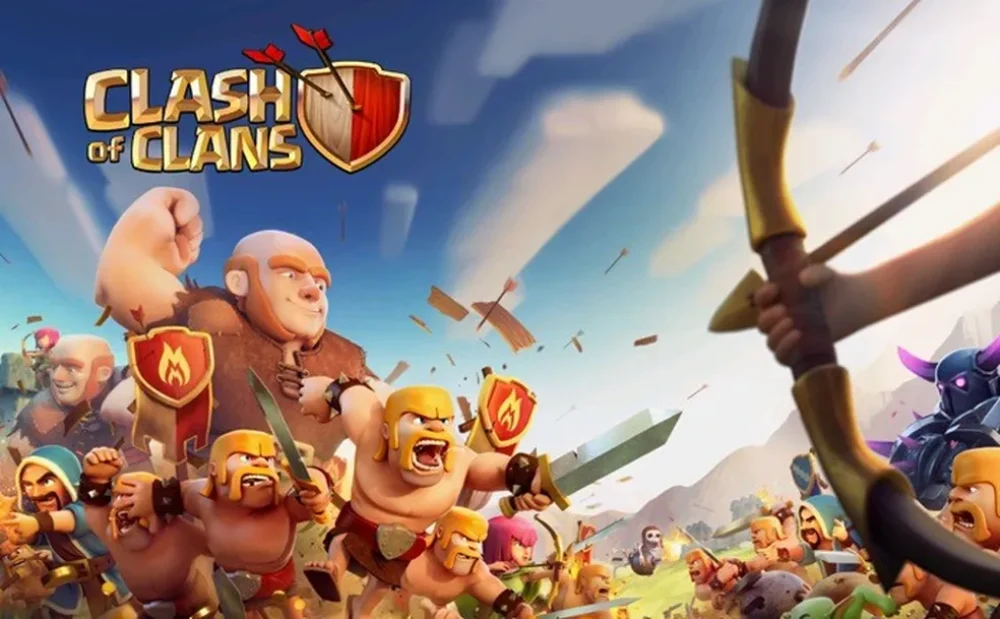
Clash of Clans officially launched worldwide on August 2, 2012, for Apple devices running iOS. Supercell had already released Hay Day earlier that year, but the success of its new strategy game helped establish the Finnish developer as one of the most influential companies in mobile gaming.
The original game focused on a simple but effective loop. Players gathered resources, constructed a village, trained troops, attacked opposing bases, and upgraded buildings over time. The social Clan system gave the experience a lasting communal layer that many competing mobile games lacked.
The original iOS release in 2012
The first version of Clash of Clans was designed around touchscreen devices. Instead of reproducing the dense interfaces of traditional PC strategy games, Supercell made troop deployment, construction, and village management easy to control with taps and gestures.
The game was initially associated primarily with the iPhone and iPad. Its colorful visual style, short attack sessions, persistent progression, and free-to-play structure helped it reach both experienced strategy players and people who had never played the genre before.
Early gameplay was much smaller in scope than the current version. The number of troops, buildings, Town Hall levels, defenses, and progression systems was limited. There were no Clan Wars, seasonal reward tracks, Hero Equipment, Builder Base, Clan Capital, or Ranked Mode.
Even so, the core identity was already recognizable. Players needed to decide how to spend Gold and Elixir, protect important storages, place defenses intelligently, and deploy a limited army without controlling troops after they entered the battlefield.
That combination of planning and unpredictability gave COC a clear personality. A strong army could fail against a well-designed village, while an apparently difficult base could collapse when the attacker identified the correct entry point.
The Android release in 2013
Supercell released the Android version on October 7, 2013. This was a major expansion because the game was no longer restricted to Apple’s mobile ecosystem.
Android availability helped the community grow across more devices, manufacturers, regions, and price ranges. Players could join the same clans and participate in the same broader game regardless of whether they used iOS or Android.
The Android launch did not create a separate version with different progression. It extended the same village-building and multiplayer experience to another platform, eventually allowing accounts to move more easily between supported devices through Supercell ID.
Therefore, the complete answer to when did Clash of Clans come out depends on the platform:
| Platform | Release date | Release type |
| iOS | August 2, 2012 | Original global mobile release |
| Android | October 7, 2013 | Google Play release |
| Windows PC | October 23, 2023 | Official release through Google Play Games |
Players looking for a more focused breakdown of each platform milestone can read the complete Clash of Clans release date history. The launch dates provide a clear foundation, but the updates that followed explain why the game remained active for more than a decade.
How did Clash of Clans evolve after release?
The original version established the foundation, but Supercell continuously expanded its mechanics. Each major period added new reasons to improve a village, cooperate with a clan, experiment with armies, or return after a break.
The history of Clash is not simply a sequence of new Town Hall levels. Its most important updates changed how players interacted with one another and how they approached long-term progression.
Clan Wars transformed the social experience
Clan Wars arrived in 2014 and became one of the defining features of Clash of Clans. Before this update, clans primarily supported troop donations, chat, and community building. Wars gave those groups a shared competitive objective.
During a Clan War, participating members attack bases from an opposing clan and earn stars. The result depends on the combined performance of the group rather than one player’s trophy count or resource collection.
This format encouraged players to discuss base layouts, donate appropriate troops, plan attacks, and help less experienced members. It also created a reason to maintain a defensive War Base separate from the layout used to protect resources.
Over time, Supercell expanded the concept with Friendly Wars, war sizes, spectator tools, preparation systems, and Clan War Leagues. The monthly league format introduced in 2018 placed clans into a competitive structure with promotions, demotions, League Medals, and rotating participants.
Clan Games, introduced in 2017, added another form of cooperation. Members completed individual challenges to contribute points toward shared reward tiers, allowing active clans to earn resources and Magic Items together.
These systems changed the meaning of COC. It was no longer only about developing one village. Progress became connected to the performance and activity of an entire community.
Heroes, new villages, and strategic expansion
Heroes became central to high-level gameplay as the roster expanded. The Barbarian King and Archer Queen established the system, followed by the Grand Warden, Royal Champion, Minion Prince, and Dragon Duke.
Unlike regular troops, Heroes are permanent units that can be upgraded. Their abilities and equipment create major strategic decisions because an attack may depend on precise activation timing, positioning, and interaction with the rest of the army.
The Builder Base arrived in 2017, not 2016 as some older timelines claim. It introduced a separate village with different troops, defenses, progression rules, Hero Machines, and battle mechanics.
Builder Base 2.0 substantially redesigned that mode in 2023. The update introduced multi-stage attacks, revised troop abilities, changes to defensive layouts, and a more tactical structure built around smaller armies.
Clan Capital, released in 2022, added a third major location. Clan members collectively develop districts using Capital Gold and attack other capitals during Raid Weekends.
Unlike the Home Village, the Clan Capital belongs to the entire clan. Players contribute to shared construction and continue attacks from the destruction left by previous members, reinforcing cooperation across the group.
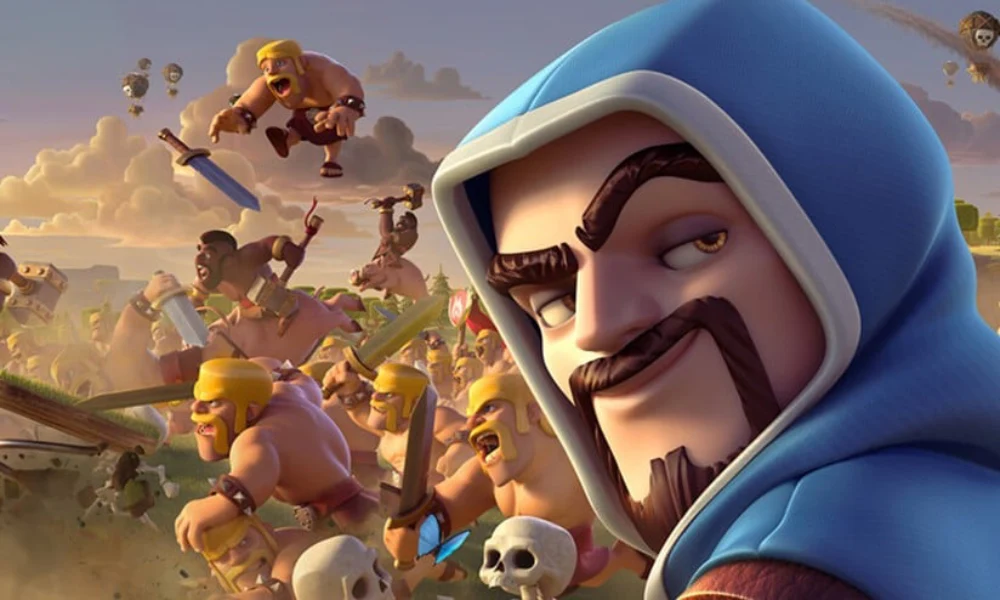
The growth of Clash of Clans, Clash Royale, and the wider Clash universe also helped turn individual troops into recognizable characters. Barbarians, Archers, Goblins, Wizards, Hog Riders, and other units became part of a broader visual identity extending beyond one game.
Players who prefer a larger screen can follow this guide on how to play Clash of Clans on PC. The official Windows version uses the same underlying game as mobile, supports mouse controls, and can synchronize progress through Supercell ID.
What were the biggest Clash of Clans updates?
Not every patch had the same impact. Balance adjustments can temporarily change popular armies, but major systems and Town Hall releases often reshape progression for years.
When discussing when did Clash of Clans come out, it is helpful to compare the relatively simple 2012 release with the number of systems available today.
Major milestones from 2012 to 2023
The following timeline highlights updates that significantly changed how the game was played:
| Year | Major milestone |
| 2012 | Global iOS release |
| 2013 | Android release |
| 2014 | Clan Wars introduced |
| 2015 | Town Hall 11 and Grand Warden expanded late-game play |
| 2017 | Builder Base and Clan Games released |
| 2018 | Town Hall 12 and Clan War Leagues arrived |
| 2019 | Town Hall 13, Royal Champion, and expanded seasonal progression |
| 2020 | Super Troops added temporary upgraded troop forms |
| 2021 | Town Hall 14 introduced Hero Pets |
| 2022 | Clan Capital and Town Hall 15 expanded cooperative and endgame systems |
| 2023 | Builder Base 2.0, Town Hall 16, and official PC support launched |
Town Hall updates are particularly important because they extend the maximum progression level. They usually add or revise defenses, troops, spells, Hero levels, buildings, visual themes, and army strategies.
However, progressing too quickly can leave important defenses, Heroes, laboratories, or army camps underdeveloped. Strategic players balance the desire to unlock new content with the need to maintain an effective village at their current level.
Supercell has repeatedly reduced upgrade costs and construction times for older levels. These reductions help new and returning players move through early progression more quickly as additional Town Hall levels are introduced.
Town Hall 17 and Town Hall 18
Town Hall 17 launched on November 25, 2024. It introduced a new village theme, defenses, troop options, the Minion Prince, and the Hero Hall system.
The Hero Hall reorganized Hero progression and made it possible to manage a larger Hero roster. At higher Town Hall levels, players select which Heroes will be active rather than placing every unlocked Hero into an attack.
Town Hall 18 launched on November 17, 2025. Therefore, older claims that it was merely rumored for late 2025 are no longer accurate.
The Town Hall 18 update introduced Guardians as a new defensive system. Smasher and Longshot patrol the defending village, but they cannot accompany attacking armies.
It also introduced the Revenge Tower, Super Wizard Tower, Meteor Golem as a permanent troop, Totem Spell, further Crafted Defense systems, and additional levels for existing content.
Town Hall 18 also arrived during a period of broader multiplayer changes. Ranked Mode separated structured trophy competition from more flexible regular battles, giving players different ways to farm resources or pursue league progression.
By July 2026, Supercell was still adjusting the Town Hall 18 meta. Balance updates addressed dominant Dragon-based armies, the performance of Meteor Golem, defensive Guardians, and underused troop combinations.
That ongoing tuning illustrates how far the game has moved beyond its original release. The answer to when did Clash of Clans come out remains August 2012, but the version from that year would feel dramatically different from the modern experience.
What is Clash of Clans like in 2026?
In 2026, Clash of Clans remains a live online strategy game with several interconnected forms of progression. A returning player may find new Heroes, equipment, villages, events, currencies, leagues, defensive systems, and interface changes.
The fundamental goal remains familiar: build a village, upgrade an army, attack opponents, earn resources, and cooperate with a clan. The path toward that goal is now considerably broader.
Current gameplay and progression
The Home Village remains the primary mode. Players improve buildings, unlock troops and spells, develop Heroes, configure equipment, and design defensive layouts.
Builder Base provides a separate progression path built around smaller armies and tactical troop abilities. Clan Capital allows an entire clan to develop districts and participate in Raid Weekends.
Competitive players can participate in Clan Wars, Clan War Leagues, Ranked Battles, Legend-level competition, friendly formats, and official tournaments. More casual players can focus on upgrades, cosmetics, seasonal challenges, events, or collecting decorations.
The Gold Pass and free seasonal track provide rotating rewards. Limited-time events may introduce temporary troops, themed progression, cosmetics, challenges, and special currencies.
The Clash of Clans store also exists outside the game through Supercell’s web ecosystem. Available offers and bonuses can change, so players should verify the current items, regional pricing, login requirements, and purchase conditions before spending money.
Purchasing progression items does not replace attack planning. Even a heavily upgraded account can struggle when armies, spells, Heroes, and Siege Machines are deployed without considering the base layout.
Official platforms and account access
Players can access the game on supported iOS and Android devices. Windows users can play the official PC version through Google Play Games.
The PC release supports mouse input and optimized presentation while retaining the same gameplay as the mobile version. It is not a separate PC remake or an independent account environment.
Supercell ID allows players to preserve progress and access an account across supported devices. However, launching the same account on another device can end the previous active session.
The official Clash of Clans website provides access to current news, game information, downloadable versions, videos, and announcements. It is a safer source for update details than unofficial download pages or social posts claiming to offer modified versions.
Avoid unofficial APK files, account-selling pages, generators, private servers, or tools that request Supercell ID credentials. These services can compromise an account and may violate Supercell’s rules.
Why is Clash of Clans still popular?
Few mobile games remain active for more than a decade while continuing to receive major systems, new endgame progression, balance changes, and seasonal content.
The longevity of COC comes from how its basic loop supports both brief sessions and years of gradual development. A player can collect resources and start upgrades in a few minutes, while competitive clans can spend much longer planning wars.
A simple concept with strategic depth
The basic rules are easy to understand. Build defenses, train an army, attack a village, and protect resources.
The strategic depth comes from the number of choices within those rules. Base builders must consider compartments, defensive coverage, traps, pathing, Hero placement, Town Hall protection, and likely attack routes.
Attackers evaluate defenses, choose an entry point, create a funnel, manage spells, deploy Heroes, and adapt when troops move differently than expected.
Players cannot directly command every troop after deployment. Each unit follows targeting and movement rules, which makes preparation essential.
This balance between accessibility and complexity helped Clash appeal to several audiences. Casual players can progress without mastering tournament strategies, while specialists can analyze small differences in placement and timing.
The game also supports different motivations:
- Building and decorating a village.
- Reaching higher Town Hall levels.
- Collecting Hero skins and scenery.
- Competing in Ranked Mode.
- Winning Clan Wars and Clan War Leagues.
- Developing a Clan Capital.
- Completing events and achievements.
- Testing unusual army combinations.
- Following the competitive scene.
A long-term game needs more than new content. It also needs a reason for players to care about what they have already built, and village progression provides that continuity.
Community, culture, and the Clash universe
Clans turn individual progression into a social experience. Donations, wars, chat, Raid Weekends, Clan Games, and leagues encourage members to return and contribute.
The recognizable art style also helped the game become part of mobile gaming culture. Troop sounds, attack animations, character designs, advertisements, and community jokes remain identifiable even to people who have not played recently.
The success of Clash of Clans, Clash Royale, animated videos, esports events, and creator content expanded that identity. The original game became the foundation for a broader universe rather than remaining an isolated mobile release.
Creators publish attack guides, base reviews, challenge videos, update analysis, and tournament coverage. This makes new strategies easier to discover and gives experienced players reasons to reconsider familiar mechanics.
Players can follow the official Clash of Clans Instagram profile for visual announcements, event promotions, community posts, and update-related content. Details that affect gameplay should still be confirmed through the game or official update notes.
How can ExitLag help with Clash of Clans?
ExitLag does not accelerate construction, provide resources, alter matchmaking, improve troop levels, or change the mechanics of Clash of Clans. Its purpose is to optimize network routes for supported online traffic.
Although attacks are not controlled like a fast fighting game or shooter, a reliable connection still matters. Clash of Clans requires internet access to load villages, begin attacks, communicate with the server, donate troops, enter wars, and save account activity.
Situations where network stability matters
An unstable connection can interrupt important actions. A player may struggle to load an opponent, reconnect to the village, open clan features, complete a purchase, or maintain access during an attack.
Because attacks continue according to server and game rules, disconnecting after deployment can leave the army operating without further player input. This is especially damaging when spells, Heroes, Siege Machines, or reinforcements still need to be used.
Potential network-related symptoms include:
- Repeated connection warnings.
- Long loading screens.
- Disconnections during attacks.
- Difficulty opening multiplayer features.
- Unstable access on certain networks.
- Packet loss or routing problems between the player and game services.
ExitLag can analyze available routes and may direct supported traffic through a more stable path. Results depend on the internet provider, region, local network, destination, and available routes.
A routing change cannot guarantee that every session will improve. It should be tested under similar conditions to determine whether it helps a specific connection.
Problems ExitLag cannot fix
Not every Clash of Clans problem is caused by routing. ExitLag cannot solve:
- A global Supercell service outage.
- Incorrect Supercell ID credentials.
- A suspended or compromised account.
- Insufficient storage on the device.
- Unsupported hardware or operating systems.
- Failed payments or regional store restrictions.
- Game bugs unrelated to the network.
- Slow upgrades or missing resources.
- Weak attack strategies or base layouts.
Players should first identify whether the problem is local, account-related, server-side, or network-related. Restarting the game, checking the connection, updating the application, and verifying official service information can help narrow down the cause.
When routing instability appears to be the problem, testing ExitLag may help provide a more stable route. No service should be presented as a guaranteed solution for every provider or region.
Frequently asked questions
The questions below summarize the most important dates and changes for players researching when did Clash of Clans come out.
Clash of Clans was released globally for iOS on August 2, 2012. This date is generally treated as the official anniversary of the game.
The Android version launched on October 7, 2013. It arrived more than a year after the original iOS release.
Clash of Clans became globally available on Windows through Google Play Games on October 23, 2023. It is an officially supported version with the same gameplay and account progression as mobile.
Clash of Clans was developed and published by Supercell, a Finnish game company. Supercell also created games such as Hay Day, Boom Beach, Clash Royale, and Brawl Stars.
COC is a common abbreviation for Clash of Clans. It is widely used in searches, community discussions, videos, and strategy guides.
No. Builder Base launched in May 2017. It later received a major redesign through the Builder Base 2.0 update in May 2023.
Town Hall 18 was released on November 17, 2025. It introduced Guardians, new defenses, additional progression, Meteor Golem, Totem Spell, and other major features.
Yes. Supercell continued releasing balance updates, seasonal content, Ranked Mode changes, Town Hall 18 additions, events, and progression adjustments throughout 2026.
The game is free to download and play. It includes optional purchases involving progression resources, passes, cosmetics, and changing offers through the game and the Clash of Clans store.
Yes. Players can connect their village to Supercell ID and access it through supported mobile devices or the official Windows version. The same account cannot remain actively open on multiple devices simultaneously.
No. ExitLag does not change timers, resources, construction, troops, or progression. It may help optimize a network route when connection instability is affecting access to the online game.
The answer to when did Clash of Clans come out begins with August 2, 2012, but the game’s history now stretches across iOS, Android, and Windows. Download the supported version, protect your account with Supercell ID, join a clan, and test ExitLag when network routing problems are interfering with your attacks or access to the village.
All game images used in this article belong to their respective owners. They are used for informational and educational purposes only and do not imply endorsement or affiliation with the rights holders.
Got questions or want to connect with other players? Join the conversation at the ExitLag Forum!