If you have followed fighting games for any length of time, you have probably encountered King of Fighters Mai, one of the most recognizable characters associated with SNK's fighting game universe. Mai Shiranui stands out because she combines a distinctive ninja-inspired fighting style, fast movement, powerful fire-based techniques, and a personality that has made her memorable across multiple generations of fighting games.
King of Fighters Mai is much more than a popular character design. She is a kunoichi who inherited the Shiranui style of ninja arts and became one of the most recognizable female fighters connected to The King of Fighters and Fatal Fury. Her large fans, acrobatic movements, and fire techniques give her a fighting identity that is immediately recognizable, while her relationship with Andy Bogard adds another layer to her story. SNK's official character material describes her as the successor to the Shiranui style and highlights her signature approach of moving gracefully while using her fans as weapons.
What is King of Fighters Mai?
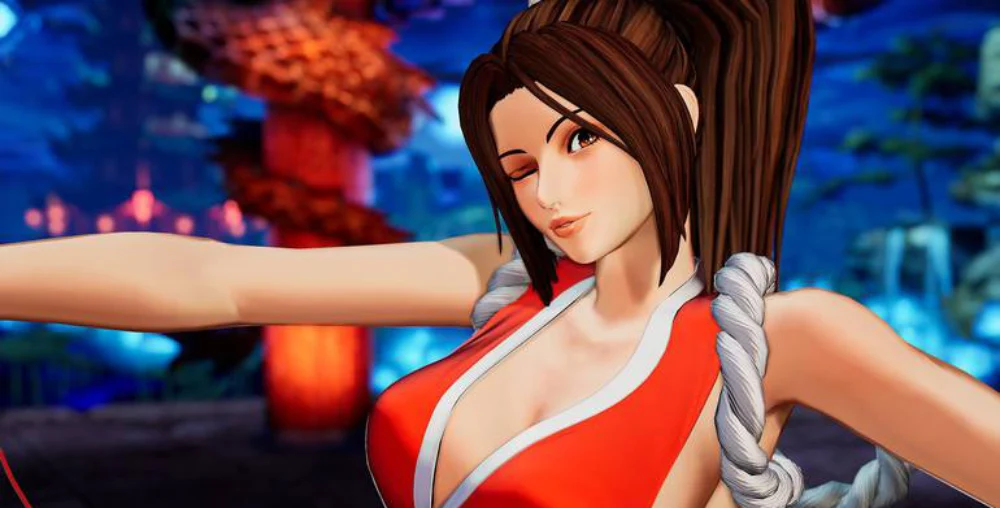
It refers to Mai Shiranui and her role within The King of Fighters fighting game universe. Mai is a Japanese kunoichi who uses Shiranui-style ninja arts, large folding fans, agile movement, and flame-based techniques. She has appeared across numerous KOF titles and related SNK games, becoming one of the franchise's defining characters. SNK's official KOF character information lists her fighting style as Shiranui ninja arts, her birthplace as Japan, and her birthday as January 1.
For players interested in competitive fighting games, understanding King of Fighters Mai also means understanding how her identity translates into gameplay. Her mobility, spacing, aerial options, and special moves make her particularly interesting for players who enjoy characters that can pressure opponents while maintaining control over distance. When playing an online fighting game, however, even a strong character can feel inconsistent if network conditions interfere with inputs, timing, or reactions. A stable connection can therefore be especially valuable when practicing precise movement and executing combos online.
Mai Shiranui and Her Place in The King of Fighters
Who Is Mai Shiranui?
Mai Shiranui is one of SNK's most recognizable female fighters. She is a kunoichi and the successor to the Shiranui style of ninja arts, a fighting discipline that defines much of her visual identity and gameplay. Rather than relying on conventional martial arts alone, Mai combines traditional ninja-inspired techniques with acrobatic movement and the use of large fans.
Her official KOF XV profile identifies her fighting style as Shiranui ninja arts and describes her as a kunoichi who uses graceful movement and large fans in combat. The same profile lists her Japanese birthplace, January 1 birthday, Type B blood type, and hobbies that include cooking.
This combination of characteristics makes Mai different from many traditional fighting-game archetypes. She is not presented simply as a heavy hitter or defensive specialist. Instead, her identity revolves around movement, timing, mobility, and deceptive attacks.
That distinction is important when considering why she has remained relevant for so long. Fighting games regularly introduce new characters, but only a small group becomes instantly identifiable through their silhouette, movement, sound, and mechanics. Mai belongs to that group.
Mai's Connection to the Shiranui Style
The Shiranui style is central to Mai's identity. It provides the foundation for her ninja techniques and helps explain why her attacks often combine speed, acrobatics, flames, and unusual movement patterns.
Her fans are not merely decorative accessories. They are integrated into her combat style and help create attacks that differ from conventional punches and kicks. SNK repeatedly emphasizes this identity in its official character descriptions, including the idea of moving like a butterfly while striking like a bee.
This approach gives Mai a distinctive gameplay rhythm. Instead of constantly approaching in a straight line, players can use her movement and attacks to create uncertainty. A well-timed jump, special move, or projectile can force an opponent to make a decision before Mai commits to a close-range exchange.
For beginners, that can make her feel both accessible and challenging. Her visual design communicates speed and movement, but mastering those tools requires understanding spacing, timing, recovery, and the opponent's habits.
Mai KOF Gameplay Identity and Fighting Style
Fast Movement and Flexible Positioning
A major part of Mai's appeal is her movement. Players who enjoy fast characters can use her mobility to influence where exchanges happen.
Rather than treating every encounter as a direct contest of damage, a Mai player can think about positioning. The goal is often to create a favorable distance, make the opponent react, and then capitalize on that reaction.
This makes Mai KOF gameplay particularly interesting for players who enjoy tactical aggression. Speed is useful, but speed without control can easily become predictable. Strong Mai players therefore need to combine movement with patience.
A few fundamental concepts are especially useful:
- Maintain a distance where Mai's tools remain threatening.
- Avoid jumping repeatedly without a clear purpose.
- Use movement to create uncertainty rather than simply rushing forward.
- Watch how the opponent reacts to projectiles and aerial approaches.
- Convert successful openings into reliable combos.
- Return to a favorable position after attacking whenever possible.
The objective is not to move constantly. Instead, movement should make the opponent uncertain about what comes next.
Fans, Flames, and Special Techniques
Mai's fans and fire-based techniques are among the elements that make her immediately recognizable. Her moves often combine the visual language of traditional Japanese performance and ninja-inspired combat with the exaggerated effects expected from an arcade fighting game.
This combination also creates an interesting learning curve. Beginners can recognize Mai's attacks quickly, while experienced players can explore how those tools interact with spacing and timing.
In older KOF material, Mai's move set includes techniques such as the Kacho Sen, Ryu En Bu, Hisho Ryuu En Jin, Musasabi no Mai, and Shinobi Bachi. A published KOF manual also documents combinations involving jumping attacks followed by standing or crouching heavy punches and special attacks.
The exact mechanics can vary between games, so players should avoid assuming that a move behaves identically in every version. KOF has evolved considerably across its different entries, and character balance, frame data, command inputs, and combo systems can change.
That is one reason why learning Mai KOF in a specific game is more useful than memorizing a universal strategy. The character's core identity remains recognizable, but her practical game plan depends on the title being played.
Why King of Fighters Mai Remains So Popular
A Character Built for Recognition
Mai has an unusually strong visual identity. Her hairstyle, fans, ninja-inspired costume, fiery attacks, and acrobatic movements immediately distinguish her from the rest of the roster.
However, visual recognition alone does not explain her longevity. Her gameplay identity reinforces her appearance. A character who looks fast but plays slowly can create a disconnect. Mai's design and mechanics generally work together to communicate agility and theatricality.
This consistency is one of the reasons Mai Shiranui has remained recognizable even among players who do not regularly play KOF.
Her presence also extends beyond a single game. SNK's official character portal lists Mai among characters associated with multiple main KOF titles, including KOF '94, KOF '95, KOF '96, KOF '97, KOF '98, KOF '99, KOF 2000, KOF 2001, KOF 2002, KOF 2003, KOF XI, KOF XII, KOF XIII, KOF XIV, and KOF XV, as well as several related releases.
A Character That Connects Different SNK Generations
Another reason Mai has remained important is her connection to the broader SNK fighting-game universe.
She originated within Fatal Fury before becoming closely associated with The King of Fighters. That history means she is not simply a character created for one specific KOF roster. Instead, she represents the crossover philosophy that helped make SNK's fighting games distinctive.
Her relationship with Andy Bogard is also an important part of that connection. SNK's official KOF material identifies Andy as Mai's romantic partner and explains his connection to the Shiranui-style arts.
As a result, Mai works on several levels. She is a playable fighter, a recurring story character, a connection between SNK franchises, and a recognizable symbol of the company's fighting-game legacy.
Mai King of Fighters Across Different Games
From Early KOF Appearances to Modern Entries
The history of Mai King of Fighters spans decades. Her presence in the franchise demonstrates how a character can retain a recognizable identity while adapting to changing gameplay systems.
In earlier KOF games, her attacks and movement reflected the design philosophy of arcade fighters from that period. As the series evolved, animation quality, presentation, combo systems, and character balance also changed.
Yet the central concepts remained familiar: Shiranui-style techniques, fans, agility, fire, and a strong emphasis on movement.
SNK's official KOF XV material continues to present Mai as a kunoichi and successor to the Shiranui style. Her profile retains the same core identity while updating her presentation for a modern fighting game.
This continuity matters because long-running fighting franchises can easily lose the identity of older characters when they are redesigned. Mai instead demonstrates how a character can evolve without losing the features that made her recognizable.
Comparing Mai's Role Across KOF Eras
| KOF era | Mai's defining identity | What players should notice |
| Early KOF | Agile kunoichi with fan-based attacks | Fundamental movement and special-move identity |
| Mid-series entries | More developed combo and movement systems | Greater emphasis on execution and matchup knowledge |
| KOF XIV | Modernized presentation and animation | Updated visuals while retaining classic character traits |
| KOF XV | Refined modern fighting-game presentation | Strong connection between legacy design and contemporary mechanics |
The important point is that Mai should not be evaluated solely through one version of the character. Each KOF game creates a different competitive environment.
For players switching between titles, the safest approach is to relearn the character's frame data, command inputs, combo routes, defensive options, and matchup considerations rather than relying entirely on previous experience.
Mai Street Fighter and the Expansion of Her Fighting-Game Legacy
Why Mai Street Fighter Matters
The phrase Mai Street Fighter became especially relevant when Mai crossed from SNK's fighting-game universe into Capcom's Street Fighter universe.
This is significant because crossover appearances can expose a character to a completely different audience. Players who primarily know Street Fighter can encounter Mai without necessarily having deep experience with KOF or Fatal Fury.
That makes her crossover presence more than a simple guest appearance. It creates an opportunity for two fighting-game communities to interact through a character who already has a long history.
Capcom officially identifies Street Fighter 6 as a fighting game available on PlayStation 5, PlayStation 4, Xbox Series X|S, and PC.
The arrival of Mai in that environment also highlights how recognizable her core character design has become. Even outside KOF, players can immediately identify the fans, ninja-inspired movement, and flame-based techniques associated with her.
What Changes When Mai Enters a Different Fighting Game?
A crossover character cannot simply be copied from one game to another.
Every fighting game has its own systems. Street Fighter has its own approach to neutral play, defensive mechanics, drive systems, combos, spacing, and resource management. KOF has a different structure, including its own movement options, team-based history, and combat rhythm.
Therefore, the experience of playing Mai in Street Fighter should not be treated as identical to playing her in KOF.
The character may preserve familiar attacks and animations while functioning differently because the surrounding mechanics have changed.
For players moving between the two franchises, this distinction is crucial. Knowing Mai's identity gives you a starting point, but it does not automatically provide mastery.
Mai Shiranui SF6: What Players Should Know
Mai's Arrival in Street Fighter 6
Mai Shiranui SF6 represents one of the most notable modern crossover developments involving the character.
Capcom announced Mai as part of the Street Fighter 6 Year 2 character lineup. Official Capcom material and promotional content identify her arrival as a playable character associated with the game's Year 2 content.
Her inclusion gives Street Fighter players the chance to experience a character whose history is deeply connected to SNK's fighting-game legacy.
For long-time Mai fans, the crossover also provides an opportunity to see how her signature traits are translated into another game's design language.
How Mai's Identity Translates to SF6
The key challenge in adapting Mai to Street Fighter is preserving what makes her Mai while ensuring that she fits naturally into the game's systems.
Her fans remain an important part of her identity. Her movement retains the theatrical qualities associated with the character. Her flame-based attacks also help maintain the connection to her traditional fighting style.
At the same time, Street Fighter 6 provides a different environment for those tools.
Players accustomed to KOF should therefore approach Mai Shiranui SF6 as a new character experience rather than simply importing an old KOF strategy.
The most useful transferable skills are fundamentals:
- Learn the character's normal attacks and effective ranges.
- Understand her special moves and their purposes.
- Practice reliable confirms before attempting advanced combos.
- Study how she interacts with the game's defensive mechanics.
- Learn when to pressure and when to reset to neutral.
This approach makes the transition more manageable while preserving the qualities that make Mai enjoyable.
Playing Mai Online: Why Connection Quality Matters
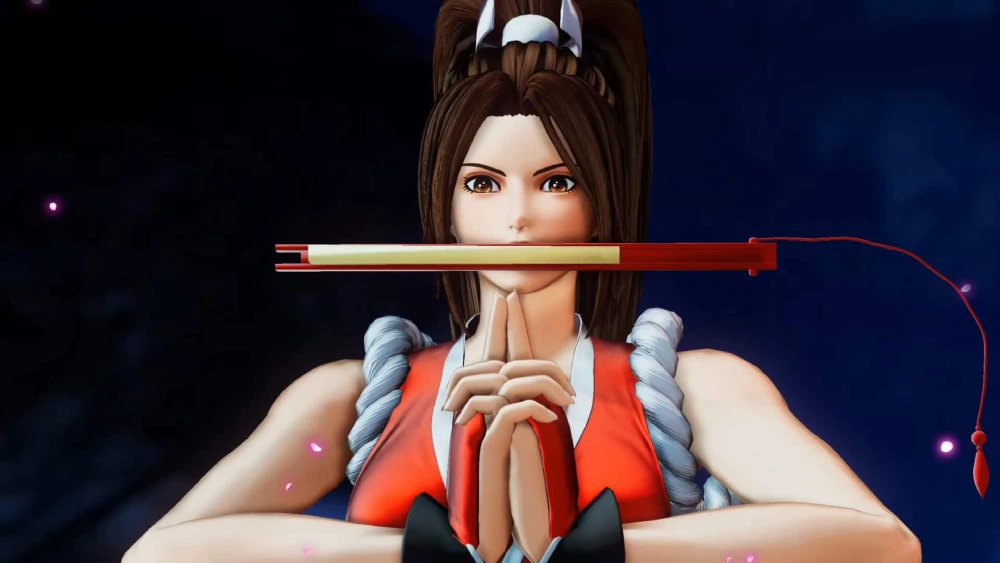
Precision Is Important in Fighting Games
Fighting games are highly sensitive to timing. A small delay can affect a combo, a punish, an anti-air, or a defensive response.
For that reason, players learning King of Fighters Mai online should pay attention not only to character knowledge but also to the quality of their connection.
A stable network can help make online practice more consistent. This is particularly relevant when learning sequences that require precise inputs.
However, connection optimization cannot replace fundamental fighting-game skills. A player still needs to understand spacing, matchup knowledge, execution, defense, and decision-making.
Building Better Online Practice Habits
When practicing Mai online, focus on repeatable situations rather than trying to memorize everything at once.
Useful practice goals include:
- Landing a basic combo consistently.
- Learning an anti-air response.
- Understanding the range of important normals.
- Practicing movement without unnecessary jumps.
- Recognizing common opponent approaches.
- Testing pressure sequences against different defensive responses.
A good training routine should gradually move from execution to decision-making.
First, make the input reliable. Then learn when to use it. Finally, understand when not to use it.
That progression is useful whether you are playing KOF or exploring Mai in another fighting game.
The Appeal of Mai for New and Experienced Players
Why Beginners Notice Mai
New players often choose characters based on appearance, personality, or immediately recognizable moves. Mai performs well in this respect because her visual and mechanical identity is clear.
Her fans are easy to recognize. Her fire techniques are visually distinctive. Her movement communicates speed. As a result, players can quickly understand the basic fantasy of the character.
That does not mean she is automatically easy to master.
The difference between recognizing a character and playing that character effectively is substantial. Beginners still need to learn fundamentals, including blocking, spacing, anti-airs, punishes, and resource management.
Why Experienced Players Keep Exploring Her
For experienced players, Mai provides more room for optimization.
Once basic execution becomes consistent, the focus can shift toward matchup-specific decisions. Players can examine how opponents respond to her movement, which attacks are safest in particular situations, and how to convert different openings into damage.
This creates a progression that can keep the character interesting for a long time.
A player may begin with simple attacks and gradually develop a much more sophisticated game plan based on conditioning, spacing, pressure, and adaptation.
Mai's Personality Beyond Combat
Cooking and Everyday Details
One detail that helps distinguish Mai from a purely combat-focused character is the inclusion of everyday interests in her official profile.
SNK lists cooking as one of her hobbies, specifically making Japanese lunch boxes. Her favorite foods include ozoni and ohagi.
These details provide contrast with her fighting persona.
On one side, Mai is a highly trained kunoichi capable of using elaborate techniques. On the other, she has ordinary interests and relationships that make her feel like a character beyond the fighting arena.
That contrast contributes to her enduring appeal.
Mai and Andy Bogard
Mai's relationship with Andy Bogard is another important element of her character.
Andy is deeply connected to the Shiranui tradition, and SNK's official character material describes him as being in a relationship with Mai. His profile also explains that he learned Shiranui-style ninja arts alongside his own martial-arts training.
Their relationship connects Mai's personal story to the wider Fatal Fury and KOF narrative.
It also reinforces the idea that Mai is not an isolated character. Her history is intertwined with other major fighters and with the broader South Town storyline that has shaped SNK's fighting-game universe.
Understanding the Difference Between Character Popularity and Competitive Strength
Popular Does Not Always Mean Overpowered
One common mistake when discussing a famous fighting-game character is assuming that popularity automatically means competitive dominance.
That is not necessarily true.
A character can be popular because of personality, design, history, animations, or nostalgia while having an entirely different competitive ranking.
Therefore, players should distinguish between Mai's cultural importance and her performance in a particular game's current competitive environment.
Balance changes can alter the strength of individual attacks, combos, defensive options, and matchups. Consequently, a strategy that works well in one version may be less effective in another.
Learn the Current Game, Not Just the Character
If your goal is to improve with Mai, focus on the game you are actually playing.
For example, learning Mai King of Fighters means studying the specific KOF entry, while learning Mai Shiranui SF6 means adapting to Street Fighter 6's systems.
The character is familiar, but the competitive environment is not identical.
This distinction is particularly important for players who move between franchises. Familiarity with Mai gives you an advantage in recognizing her moves and personality, but it does not eliminate the need to learn the mechanics of the new game.
Why King of Fighters Mai Continues to Represent SNK's Fighting-Game Identity
Few fighting-game characters can remain recognizable across decades without losing their central identity. Mai has managed to preserve the fundamental elements that define her: the Shiranui ninja arts, fans, acrobatic movement, flames, and a strong personality. That consistency makes her an important part of the franchise's visual and gameplay heritage. And to improve your gaming even further, you can count on tools such as ExitLag, which optimizes your connection and reduces lag.
FAQ
Mai Shiranui is a Japanese kunoichi and the successor to the Shiranui style of ninja arts. She is one of the most recognizable characters in The King of Fighters and is known for her large fans, acrobatic movement, and fire-based techniques.
Mai uses Shiranui ninja arts, combining agile movement, fan-based attacks, acrobatics, and flame techniques. Her gameplay generally rewards players who understand spacing, mobility, timing, and pressure.
Yes. Mai Shiranui was added to Street Fighter 6 as part of the game's Year 2 character lineup. Her inclusion brings the SNK character into Capcom's fighting-game universe while preserving many of her recognizable visual and gameplay characteristics.
Yes. Mai Shiranui is the character commonly associated with The King of Fighters, although she originally appeared in the Fatal Fury series. Her identity, fighting style, and story have carried across multiple SNK games and KOF entries.
Mai's popularity comes from a combination of her distinctive character design, ninja-inspired fighting style, fan weapons, fire techniques, personality, and long history across SNK's fighting games. Her appearances in different titles have also introduced her to multiple generations of fighting-game players.