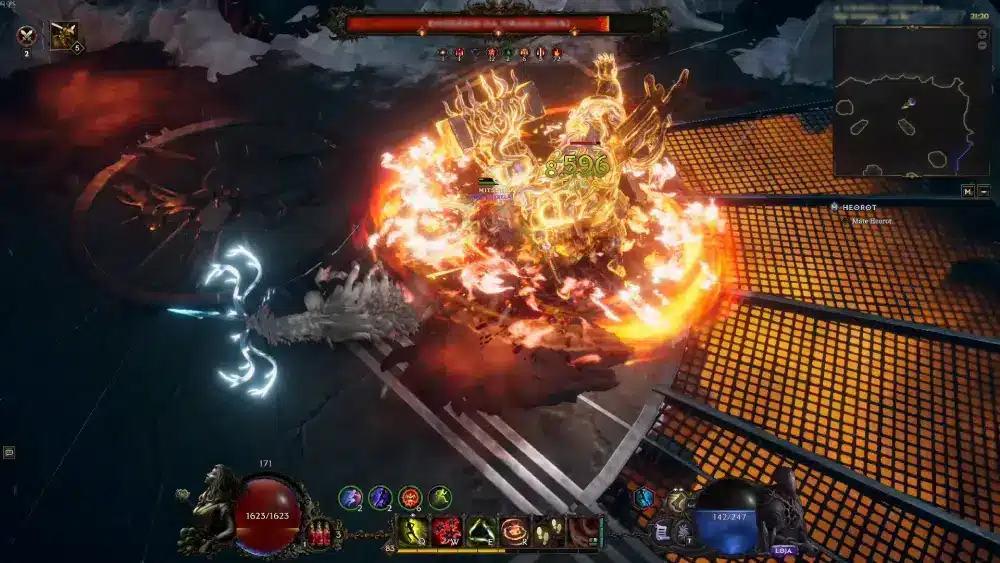
Last Epoch classes give players one of the most flexible character-building systems in the action RPG genre. Every base class can branch into three Masteries, and each Mastery can support multiple damage types, defensive layers, movement styles, minion setups, and endgame goals. That means choosing a class is not only about picking a weapon or spell. It is about deciding how you want to approach the whole game.
A broader overview can help before narrowing that choice into a specific Mastery or endgame plan. This Last Epoch beginner guide is a useful starting point when you want to connect class identity, progression, and core systems before committing to a character.
The strength of Last Epoch classes comes from that flexibility. A Mage can become a long-range spellcaster, a close-range elemental fighter, or a rune-focused combo specialist. A Sentinel can protect allies, spin through enemies, summon forged weapons, or build around Void damage. The same base class can feel completely different depending on its Mastery, skill trees, gear, and passives.
For that reason, Last Epoch classes should not be judged only by a single damage number or a simplified ranking video. A build that clears Monoliths quickly may not be the easiest for a new player. A durable boss-killing setup may feel slow during campaign leveling. Meanwhile, a powerful trade-focused build may require gear that is difficult to obtain in a self-found character.
This guide explains how all Last Epoch classes work, how to compare them without relying blindly on a fixed Last Epoch tier list, and how to choose a Mastery that fits your preferred style. It also covers current Season 4 considerations, build planning, unique-item decisions, and online connection stability.
What Are the Last Epoch Classes?

There are five base Last Epoch classes: Acolyte, Mage, Primalist, Rogue, and Sentinel. Each base class has three Masteries, creating 15 major character paths.
You choose your Mastery during the campaign. That decision shapes your exclusive passive tree and access to Mastery-specific skills. While you can respec passive points and specialized skills later, you should treat the Mastery selection as a long-term character identity.
The Five Base Classes and Their Masteries
Each class has a distinct overall theme. However, the Masteries inside that class can shift the gameplay dramatically.
| Base Class | Masteries | Main Playstyle Themes |
| Acolyte | Necromancer, Lich, Warlock | Minions, necrotic damage, curses, transformations |
| Mage | Sorcerer, Spellblade, Runemaster | Elemental spells, melee magic, rune combinations |
| Primalist | Beastmaster, Shaman, Druid | Companions, totems, storms, shapeshifting |
| Rogue | Bladedancer, Marksman, Falconer | Mobility, bows, traps, shadows, companion damage |
| Sentinel | Forge Guard, Paladin, Void Knight | Armor, melee, shields, fire, Void damage |
The best way to approach Last Epoch classes is to start with a fantasy you genuinely enjoy. Do you want to command an army? Play a spellcaster? Use a bow? Transform into an animal? Spin through packs with a two-handed weapon? Start there.
A tier ranking can help later, especially when you want to push specific endgame content. However, it should not replace the most important question: will you enjoy using this character for dozens of hours?
How Masteries Change Your Character
Masteries are more than small bonuses. They unlock different skill trees, passive nodes, and build directions. A Primalist who chooses Beastmaster may focus on companions. The same Primalist can become a Druid and spend much more time shapeshifted into forms such as Werebear or Spriggan.
This is why a general Last Epoch tier list can be misleading. It may label one Mastery as stronger because of a particular endgame build, while ignoring the fact that another Mastery may be easier to level, safer in hardcore, more enjoyable in multiplayer, or much cheaper to gear.
Before selecting a Mastery, ask:
- Do I prefer melee, ranged, spellcasting, or minions?
- Do I want a simple rotation or a more technical setup?
- Am I playing solo, with friends, or trading heavily?
- Do I want to level quickly or focus on difficult bosses?
- Do I enjoy managing buffs, transformations, or summons?
- How dependent am I willing to be on rare items?
The answer matters more than copying a build without understanding why it works.
Once the class fantasy is clear, the next step is comparing actual setups that turn that idea into a playable character. A focused guide to Last Epoch builds and planning can help players move from general class choice into skills, gear, and endgame direction.
Which Last Epoch Classes Fit Your Playstyle Best?
The strongest class is not universal. Each Mastery has a different relationship with mobility, defense, clearing speed, boss damage, and gear requirements.
Instead of treating every class as a permanent “best” or “worst” option, use a purpose-based comparison. This makes the guide useful even when balance patches change skill scaling or item interactions.
Best Last Epoch Classes for Minions, Curses, and Sustain
Acolyte is a strong starting point for players who enjoy darker themes, minion armies, damage-over-time effects, and life-draining mechanics.
Necromancer focuses on commanding undead minions. It is a natural option for players who want pets to handle part of the pressure while they manage positioning, buffs, and enemy control. It can feel comfortable during leveling because minions help create space between the player and dangerous enemies.
Lich is more direct and aggressive. It often appeals to players who want to transform, fight at close range, and manage health as part of the character’s resource system. Lich builds can feel exciting because they reward momentum, but they also require attention to survivability and sustain.
Warlock leans into curses, chaos damage, necrotic damage, and spell-based damage-over-time playstyles. It is a good fit for players who like setting up effects that continue dealing damage while they reposition.
Acolyte may suit you if you enjoy:
- Summoning allies.
- Damage-over-time builds.
- Necrotic or poison-style themes.
- Health manipulation and sustain.
- Strong visual identity and spell effects.
- Hybrid caster-minion gameplay.
Some older Last Epoch season 2 builds focused heavily on Ward scaling or specific curse interactions. Those guides can still teach skill synergies, but they should not be copied exactly into the current cycle without checking current patch notes and item tooltips.
Best Last Epoch Classes for Spells, Mobility, and Combos
Mage is a good fit for players who want elemental damage, active spell rotations, and strong movement tools. It offers three very different ways to play magic.
Sorcerer is the traditional spellcaster path. It works well for players who want to cast large elemental spells, manage mana, and clear enemies from range. Fire, lightning, cold, and elemental combinations can all appear in Sorcerer builds.
Spellblade mixes melee combat with elemental magic. It is for players who want to stand closer to enemies while using Firebrand, Shatter Strike, Flame Reave, or other weapon-enhanced attacks. Spellblade can feel fast and stylish, but it asks for more awareness because positioning matters.
Runemaster is a combo-oriented caster. It rewards players who enjoy combining elemental skills and triggering Runic Invocations. It can feel more complex than a direct Sorcerer build, but it offers a high degree of experimentation.
If you enjoy active rotations, Mage is one of the most expressive Last Epoch classes. However, it can demand more attention to mana, defensive timing, and safe positioning than a minion-based character.
How Should Beginners Choose a Last Epoch Class?
New players often make the mistake of choosing a class based only on a current meta ranking. That can work, but it can also make the early game less enjoyable if the recommended build requires uncommon uniques, precise skill timing, or a very specific endgame setup.
A better beginner approach is to choose a class with a clear fantasy, then select a build that works with common gear before transitioning into a specialized endgame version.
Beginner-Friendly Ways to Pick a Class
Some playstyles are easier to understand immediately. That does not mean they are automatically stronger. It means they have a more forgiving learning curve.
| If You Like… | Consider Starting With… | Why It Can Feel Accessible |
| Minions and safety | Necromancer or Beastmaster | Companions create space and simplify early fights |
| Direct melee combat | Paladin, Void Knight, or Druid | Clear gameplay loop and durable options |
| Ranged attacks | Marksman or Falconer | Strong positioning tools and ranged damage |
| Big elemental spells | Sorcerer | Straightforward offensive spell identity |
| Fast, technical movement | Bladedancer or Spellblade | High mobility and active combat |
| Totems and persistent effects | Shaman or Warlock | Can control space while repositioning |
Do not confuse “beginner-friendly” with “weak.” Many straightforward builds can clear substantial endgame content when they have a coherent defensive plan and appropriate gear.
The best first character among Last Epoch classes is usually one that makes you want to keep playing. A player who enjoys a B-tier build will learn more, farm more efficiently, and make better decisions than a player forcing an S-tier build they dislike.
Start With a Leveling Plan, Not a Finished Build
A leveling build and an endgame build do not always use the same skills. That is normal. You might level with a reliable clearing skill, then move toward a boss-focused setup after unlocking more passives, idols, and item options.
A good early plan includes:
- Pick one main damage skill.
- Add one movement skill.
- Add one defensive or recovery tool.
- Choose support skills that improve the main damage skill.
- Prioritize resistance, health, and reliable defense before chasing damage.
- Replace gear often while leveling.
- Use the skill specialization trees to learn how a build changes.
This structure is more useful than following an old Last Epoch tier list line by line. Meta guides often assume you already understand crafting, blessings, Legendary Potential, Factions, and defensive scaling.
How Should You Use a Last Epoch Tier List?
A tier list can be useful, but it needs context. Most rankings are based on one or more specific goals: fast Monolith clearing, high Corruption pushing, boss killing, Hardcore survivability, leveling speed, Arena performance, or low-budget accessibility.
A build can rank highly in one category and feel average in another. That is why no single Last Epoch tier list should decide your entire character choice.
Why Tier Lists Change So Often
Balance changes can affect skills, passives, defense systems, item availability, crafting options, and specific interactions between abilities. A small adjustment to one unique item or a passive node can push a build up or down dramatically.
Season 4, Shattered Omens, added new mechanics and included broad skill, passive, item, and endgame adjustments. That means rankings based on earlier cycles can quickly become outdated.
For current game information, official updates, and broader details about the ARPG, it is safest to check the source directly. The official Last Epoch website can help players verify what is current before relying on older tier lists or outdated build assumptions.
When reading a ranking guide, always check:
- Which patch the guide uses.
- Whether it is for leveling or endgame.
- Whether it assumes trade access.
- Whether it requires rare uniques.
- Whether it is designed for Hardcore.
- Whether it was tested in the current cycle.
- Whether the author explains its weaknesses.
This is especially important when searching Last Epoch season 2 builds. Season 2 had different balance conditions, different endgame systems, and different item values than the current game.
Compare Builds by Goal Instead of Rank
A practical comparison looks like this:
| Goal | What to Prioritize |
| Fast campaign leveling | Mobility, area damage, low gear dependence |
| Monolith farming | Clear speed, sustain, reliable defenses |
| Boss killing | Single-target damage, movement, survivability |
| Hardcore | Health, mitigation, recovery, low-risk gameplay |
| Merchant’s Guild trading | Item demand, crafting flexibility, market costs |
| Circle of Fortune farming | Self-sufficient progression and loot flexibility |
| Multiplayer | Reliable damage, utility, survivability, group coordination |
A strong Last Epoch tier list should tell you why a build succeeds, not simply place a letter next to it. If a guide does not explain its defenses, gear requirements, and playstyle, it is less useful than it looks.
How Do Gear and Unique Items Shape Last Epoch Classes?
Gear matters because Last Epoch builds are designed around interaction. You are not simply stacking a bigger weapon number. You are choosing affixes, idols, blessings, uniques, passives, and skills that reinforce one another.
The strongest item for one build can be useless for another, even inside the same Mastery. That is why you should build around mechanics first and unique items second.
When Should You Build Around a Unique Item?
A unique can be exciting because it changes a skill, damage type, defense layer, or resource system. However, do not assume every unique automatically belongs in your build.
For example, players searching Brewmaster Buckle Last Epoch are usually looking for a belt associated with potion-oriented or vitality-focused build decisions. Whether it fits depends on your character’s defenses, stat needs, potion interactions, and opportunity cost.
Before committing to Brewmaster Buckle Last Epoch or any other unique, ask:
- Does it support my main skill?
- Does it improve a defensive weakness?
- What rare affixes am I losing by equipping it?
- Does it require Legendary Potential to become worthwhile?
- Is it useful now or only in a finished endgame version?
- Can I craft a stronger rare alternative for my current stage?
The answer may change as your build develops. A unique that feels excellent while leveling may become less valuable when you can craft better resistances, health, critical avoidance, or damage scaling.
Crafting, Trading, and Self-Found Planning
Last Epoch supports different item-progression preferences. Some players enjoy buying specific upgrades through the Merchant’s Guild. Others prefer finding and crafting their own gear through Circle of Fortune.
This affects how you should choose between Last Epoch classes. A build that needs several specific uniques may be easier to complete through trade. A build that works with generic crafted rares may be more comfortable for self-found play.
Use these principles:
- Trade builds can target precise upgrades more quickly.
- Self-found builds benefit from flexible skill trees and common affixes.
- Crafting is valuable for every class, not only endgame players.
- Do not ignore defensive affixes while chasing damage.
- Save promising bases for future crafting.
- Use loot filters to reduce visual clutter.
- Check whether a rare item improves your current build before keeping it.
A thoughtful gear plan can often matter more than copying the highest-rated build from a Last Epoch tier list.
Performance can also affect how a build feels, especially when visual effects, enemy density, or fast movement make combat harder to read. If the issue is local smoothness rather than build design, this guide to FPS boost in Last Epoch can help separate frame-rate problems from online connection instability.

How Can ExitLag Help Last Epoch Players?
ExitLag is a connection optimization tool for online gaming. It does not improve a class’s damage, unlock unique items, increase drop rates, or replace a defensive layer in your build.
However, it may help players who experience routing instability, packet loss, inconsistent ping, or disconnections while playing Last Epoch online. This can be relevant in multiplayer sessions, online Monolith progression, trading, or long farming routes.
When Connection Stability Matters
A network issue can look like a gameplay mistake. You may see delayed movement, late skill activation, enemies appearing to reposition suddenly, or interactions that feel inconsistent.
These issues can be especially frustrating when you are:
- Fighting an endgame boss.
- Managing a timing-sensitive rotation.
- Playing with a group.
- Trading or moving between online zones.
- Running high-Corruption Monoliths.
- Using a fast melee or mobility-heavy build.
- Farming during a busy seasonal period.
For certain Last Epoch classes, stable timing is especially important. A Bladedancer, Spellblade, or Void Knight may feel worse when movement and skill timing become inconsistent. Meanwhile, minion builds can still suffer when positioning and server response are unstable.
Use ExitLag With Basic Network Checks
ExitLag is most useful when the issue is truly network-related. Start with basic troubleshooting first.
- Close background downloads and streaming apps.
- Check whether other online games are also unstable.
- Restart your router if the problem affects multiple devices.
- Use wired internet when possible.
- Test the game at different times of day.
- Compare local performance with online performance.
- Try ExitLag across several sessions if routing instability continues.
A stable connection cannot replace a good build. However, it can help actions register more consistently when you are playing online and want your chosen Last Epoch classes setup to perform as expected.
Community discussion can also help when a class, item, or build interaction is unclear after a patch. The official Last Epoch forum is a useful place to compare player feedback, bug reports, build questions, and ongoing discussions around current updates.
FAQ
There is no single best option for every new player. Necromancer and Beastmaster can feel approachable because minions create space. Paladin and Void Knight can work well for players who like direct melee combat and durable defenses. Sorcerer is a strong choice for players who want straightforward elemental spellcasting.
The best option is the one whose combat style you enjoy enough to learn. A beginner-friendly build should have clear damage, movement, and defense tools without relying immediately on rare items.
There are 15 Masteries across five base classes. Each base class has three Masteries, creating distinct paths such as Paladin, Runemaster, Falconer, Necromancer, and Druid.
Your Mastery choice is permanent for that character, even though you can later respec passives and skill-specialization points.
Some Last Epoch season 2 builds are still useful for learning skill interactions, leveling paths, and basic class concepts. However, they should not be treated as current meta guides because balance, itemization, endgame systems, and available options have changed since Season 2.
Always compare the guide’s patch version with the current game before copying its gear or passive choices.
Brewmaster Buckle Last Epoch can be valuable in specific builds, particularly ones that benefit from its unique stat and potion-related considerations. It is not automatically the best belt for every class or Mastery.
Check the current tooltip, compare it with a crafted rare belt, and decide whether its special effect supports your actual build goal.
A Last Epoch tier list can be useful as a starting point, especially when you want to compare leveling, bossing, farming, Hardcore, or budget performance. However, it should never be the only source for your decision.
Use tier lists to understand current trends, then choose a class based on your preferred combat style, gear access, and endgame goal.
The best Last Epoch classes choice is the one that supports the way you want to play: minions, melee, spells, bows, transformations, totems, or high-mobility combat. Use current patch notes to validate old guides, evaluate unique items before building around them, and compare tier lists by purpose instead of chasing a permanent rank. When online instability disrupts your farming or multiplayer sessions, try ExitLag and see whether a more consistent route helps your Last Epoch classes build perform smoothly.
Got questions or want to connect with other players? Join the conversation at the ExitLag Forum!