
League of Legends Download is the first step toward playing one of the world’s most established competitive multiplayer games, but getting started involves more than downloading a single file. Riot Games provides official installers for Windows and Mac, with the Riot Client handling installation, updates, login, and access to the game.
Before starting your League of Legends Download, checking whether your computer meets the current requirements can prevent installation and launch problems. League now requires modern graphics support, including DirectX 11 feature level 11_0 on Windows, while older operating systems that once supported the game are no longer compatible.
This League of Legends Download guide covers the complete process, from choosing the official installer and understanding Riot Client to checking storage requirements, completing installation, solving stuck downloads, and preparing your connection for online matches. Follow the steps below to get League installed correctly and avoid the most common problems.
What Is League of Legends?
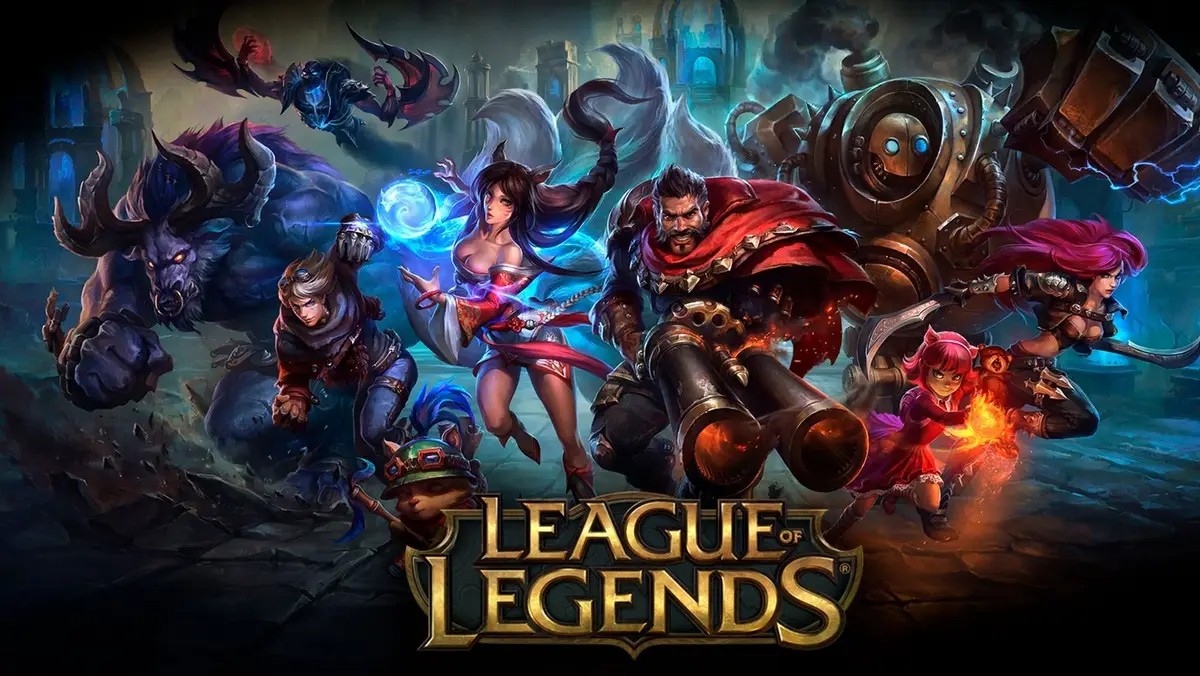
League of Legends is Riot Games’ free-to-play multiplayer online battle arena game, commonly known as League or LoL.
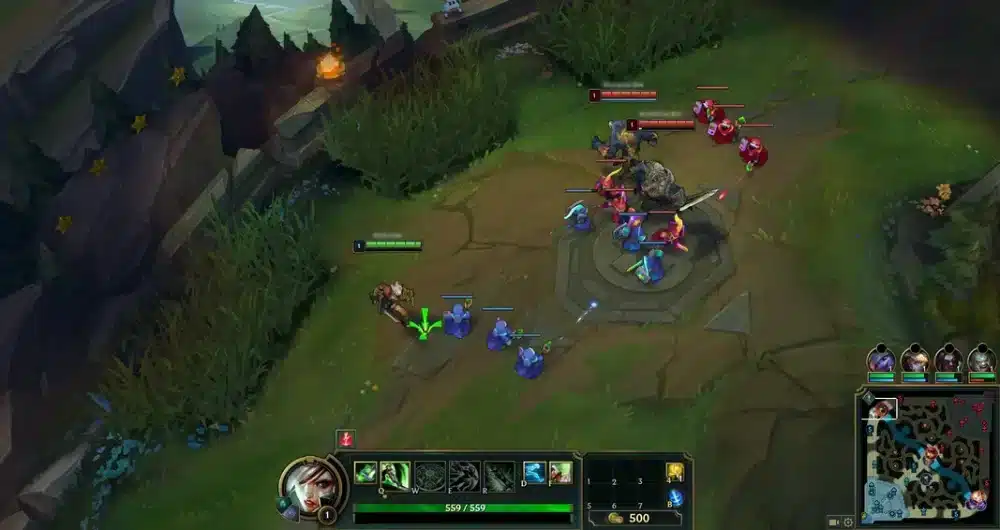
Players compete in teams using characters called champions, each with unique abilities and playstyles. The game’s primary competitive experience takes place on Summoner’s Rift, where two teams attempt to destroy the opposing Nexus.
Although the basic concept is straightforward, League has considerable strategic depth. Champions occupy different roles, players purchase items during matches, objectives influence map control, and teamwork becomes increasingly important as skill levels rise.
The PC game should also not be confused with League of Legends: Wild Rift.
Wild Rift was designed specifically for mobile platforms and has differences in gameplay, controls, champions, and other systems. If you want the traditional PC League experience, you need the Windows or Mac version.
Is League of Legends Free to Download?
Yes. League of Legends is free to download and play.
You don’t need to purchase the base game before installing it. Riot monetizes League through optional content and other in-game purchases rather than charging an initial download fee.
New players can therefore download the game, create a Riot account, complete the installation, and begin playing without buying the game itself.
Some champions and content are unlocked through progression or the game’s currencies, while optional purchases provide additional ways to obtain cosmetics and other eligible content.
The important point for new players is simple:
You do not need to pay for a League of Legends installer.
If a third-party website asks you to purchase League before downloading the standard game, don’t use it.
Where to Download League of Legends Safely
The safest place to perform a League of Legends download PC installation is Riot Games’ official League of Legends website.
Riot currently provides two primary installer options:
- Download for Windows;
- Download Mac Installer.
Using the official source reduces the risk of receiving outdated, modified, or malicious installation files.
Avoid downloading installers from random file-sharing websites, unofficial mirrors, torrents, or pages claiming to provide special versions of League.
The official installer also ensures that you’re entering Riot’s normal update ecosystem. Once installed, Riot Client can manage the game files and download subsequent patches.
For most players, there is no reason to obtain the League installer anywhere else.
How to Download League of Legends on Windows
Downloading League on Windows is straightforward. Start on the official League of Legends download page and choose the Windows option. Then:
- Download the Windows installer;
- Open the downloaded installation file;
- Allow it to make the necessary changes when Windows requests permission;
- Follow the installation process;
- Open Riot Client;
- Sign in with your Riot account or create one;
- Allow League to download its required files;
- Complete any required Riot Vanguard installation;
- Restart your PC if prompted;
- Launch League of Legends.
The small initial installer isn’t necessarily the entire game.
Once Riot Client is running, additional game files and updates need to be downloaded before League is fully ready.
Keep your computer connected to the internet throughout this process.
League of Legends System Requirements for Windows
Checking the League of Legends system requirements before installation can save considerable troubleshooting later.
Riot’s current Windows requirements include:
| Requirement | Minimum | Recommended |
| CPU | Intel Core i3-530 / AMD A6-3650 | Intel Core i5-8250 / AMD Ryzen 3 1200 |
| GPU | GeForce 400 Series / Radeon HD 6570 / Intel HD 4600 | GeForce 560 / Radeon HD 6950 / Intel UHD 630 |
| VRAM | 1 GB | 2 GB |
| RAM | 2 GB | 4 GB |
| Storage | 16 GB HDD | 16 GB SSD |
| Graphics support | DirectX 11-compatible hardware | DirectX 11-compatible hardware |
| OS | Windows 10 19041+ or Windows 11 | Windows 11 |
| Architecture | x64 | x64 |
| Resolution | 1024×768 | 1920×1080 |
The graphics requirement deserves special attention.
League now requires DirectX 11 feature level 11_0. Simply having “DirectX 12” displayed somewhere in Windows does not necessarily prove that an old GPU supports the required hardware feature level.
If the hardware doesn’t provide the required graphics functionality, League may prevent you from launching the game.
Windows 11 users also need to pay attention to applicable security requirements, including TPM 2.0.
DirectX 11 Requirements Explained
One of the most significant compatibility changes for older League PCs is the DirectX requirement.
Since Patch 25.21, Riot requires DirectX 11 feature level 11_0 for Windows players.
This can create confusion because DirectX has both a software version and hardware feature levels.
Your Windows installation might report a recent DirectX version while an old GPU still lacks the feature level League requires.
To inspect your system, Windows includes the DirectX Diagnostic Tool.
Press:
Windows Key + R → type dxdiag → Enter
You can then inspect information about your graphics hardware and DirectX capabilities.
If your GPU doesn’t support the required feature level, reinstalling League repeatedly will not add the missing hardware capability.
That’s a compatibility issue rather than a corrupted download.
How Much Storage Does League of Legends Need?
Riot’s current requirements list 16 GB of free storage for the recommended Windows configuration, with an SSD recommended.
However, keeping additional free space is sensible.
Games receive updates, installation processes can require temporary space, and an almost-full system drive can create other performance or update problems.
Don’t prepare exactly 16 GB and assume you’ll never need additional storage.
Before beginning the installation, verify how much free space is available on the drive where Riot Games will be installed.
On Windows, you can check this through File Explorer → This PC.
If you’re low on storage, remove unnecessary files or applications before downloading the game rather than waiting for the installation to fail midway.
What Is the League of Legends Riot Client?
The League of Legends Riot Client is part of Riot’s ecosystem for accessing and managing its PC games.
Think of the process as having different layers:
Riot account → Riot Client → League of Legends.
The Riot Client handles functions such as signing into your Riot account and launching supported Riot games.
League then has its own game experience and interface.
New players sometimes become confused when they download “League of Legends” but see Riot branding during installation or startup.
That’s expected.
You haven’t accidentally downloaded a different game launcher. Riot Client is part of the normal process for installing and accessing League.
Keep the client updated because Riot may require current components before allowing the game itself to launch.
How to Install League of Legends
If you’re searching how to install League of Legends, the entire process can be divided into four stages.
1. Get the Official Installer
Download the correct Windows or Mac installer from Riot.
2. Install Riot Components
Open the installer and follow the prompts. Riot Client will handle the next stages of installation and game management.
3. Sign Into Your Riot Account
Use an existing Riot account or create one if you’re completely new. Make sure you remember the account credentials and use accurate account information.
4. Let League Finish Downloading
The initial installer doesn’t mean the entire game is immediately ready.
Wait until all required game files and updates have completed before trying to enter a match.
If Riot requests a system restart during setup, particularly when required components such as Vanguard are involved, restart before continuing.
What Is Riot Vanguard?
Riot Vanguard is Riot Games’ anti-cheat system and is required for League of Legends.
For a new player, this means Vanguard isn’t an unrelated application that mysteriously appeared after installing League.
It’s part of the current environment required to play the game.
Vanguard can also generate specific VAN error codes when system requirements or security configurations aren’t satisfied.
For example, Riot documents errors associated with Windows security configurations and unsupported system states.
Don’t disable random security features or modify BIOS settings based on an unverified internet tutorial just to remove a VAN error.
Identify the exact error code first.
Then follow troubleshooting appropriate to that code, particularly when TPM, Secure Boot, Windows security, or other system-level requirements are involved.
Incorrect BIOS changes can prevent a computer from booting properly.
League of Legends Download on Mac
Riot also provides an official Mac installer.
The process follows the same general concept:
download official Mac installer → install Riot components → sign into Riot account → complete game download → launch League.
Current minimum Mac requirements include:
| Requirement | Minimum | Recommended |
| CPU | Intel Core i5-750 / Apple M1 listed | Intel Core i5-3300 / Apple M1 listed |
| VRAM | 1 GB | 2 GB |
| RAM | 2 GB | 4 GB |
| Storage | 12 GB HDD | 16 GB SSD |
| Graphics | Metal-compatible GPU | Compatible recommended hardware |
| macOS | macOS 10.15 | macOS 11 |
| Resolution | 1024×768 | 1920×1080 |
There is an important compatibility detail.
Riot’s current support information lists Apple M1 in its requirements table while also stating that it natively supports only Intel macOS.
Because Mac support can therefore involve additional compatibility considerations depending on hardware, check the current requirements for your particular Mac rather than assuming every modern Apple computer behaves identically.
Can You Download League of Legends on Linux?
Linux is not an officially supported League of Legends operating system.
Riot currently states that League supports Windows and macOS and does not provide support for systems such as:
Linux, SteamOS, and Bazzite OS.
This distinction matters because you may encounter community guides describing compatibility layers, custom configurations, or older workarounds.
Even if a particular unofficial method worked historically, Riot does not guarantee compatibility with it.
League’s anti-cheat requirements also make relying on old installation tutorials particularly problematic.
If your objective is a stable, officially supported League installation, use a compatible Windows or macOS system that meets Riot’s current requirements.
Can You Download League of Legends on Chromebook?
A standard Chromebook is not an officially supported platform for the PC version of League of Legends.
ChromeOS isn’t among Riot’s supported operating systems for League.
This is another area where League of Legends and Wild Rift shouldn’t be confused.
Finding a mobile Riot title available for a particular environment does not mean the traditional PC League client is supported there.
You may encounter guides suggesting developer modes, Linux environments, remote access, or other workarounds.
Those methods are not equivalent to official native support.
For players who simply want to install League and receive normal compatibility and troubleshooting support, Windows or macOS remains the appropriate route.
Why Is My League of Legends Download Stuck?
A League of Legends download stuck problem can have several causes.
First, determine whether the download has actually stopped or is temporarily processing files.
Then check basic conditions:
- internet connection;
- available storage;
- Riot Client status;
- Windows or macOS updates;
- system permissions;
- firewall/security software;
- Riot service availability.
Restarting Riot Client can solve temporary client problems.
If that doesn’t help, restarting the computer is another simple diagnostic step before making more complicated changes.
Riot’s connection troubleshooting documentation also notes that DNS-related problems can sometimes prevent the launcher from beginning an update correctly.
Avoid changing several advanced network settings simultaneously.
Start with the simplest causes and progress toward more technical troubleshooting only when necessary.
League of Legends Download Is Very Slow
A slow download doesn’t automatically mean something is wrong with League.
Your available bandwidth, Wi-Fi quality, other devices using the connection, background downloads, storage performance, Riot infrastructure, and internet routing can all influence the overall experience.
Start by closing other bandwidth-heavy applications.
Pause large downloads, cloud synchronization, video streaming, or other game updates on the same computer.
If possible, test a wired Ethernet connection instead of Wi-Fi.
Also consider other people or devices on the same network.
A fast internet plan doesn’t guarantee that one computer receives the entire connection capacity while several televisions, phones, consoles, and PCs are actively downloading or streaming.
If the problem affects only Riot services while other downloads work normally, investigate Riot Client and connection troubleshooting separately.
Riot Client Won’t Open
If Riot Client itself doesn’t open, your first priority isn’t reinstalling the entire game.
Restart the computer and try again.
If the issue remains, check whether Riot processes are already running in the background and whether Windows security or another application is preventing the client from starting correctly.
Operating system updates can also matter.
Riot’s troubleshooting guidance recommends keeping Windows updated and provides additional steps for permission-related problems.
Be careful when using administrator privileges.
Riot specifically notes that inconsistent privilege configurations between the Riot Client and League executable can cause problems.
If an error code appears, search for the specific error rather than applying generic fixes.
A named VAN or client error gives you considerably more diagnostic information than “League doesn’t work.”
League of Legends Play Button Is Greyed Out
A greyed-out Play button can indicate that League isn’t ready or that your system no longer meets an important requirement.
One particularly important current cause is graphics compatibility.
Riot states that players without the required DirectX 11 feature level 11_0 can see the Play button disabled alongside a message explaining that a hardware upgrade is required.
Don’t confuse that with a slow download.
If game files are still being installed, wait for installation to complete.
If everything appears installed but League specifically reports unsupported graphics hardware, repeatedly reinstalling the client won’t solve the missing hardware feature.
Windows version also matters.
Windows 10 installations below version 19041 aren’t currently supported and can trigger compatibility errors.
What to Do If League Won’t Update
Updates are essential because League is a continuously maintained online game.
If an update refuses to begin, first restart Riot Client.
Then check your connection, free storage, and whether Riot is experiencing a service problem.
Security software and permissions can sometimes interfere with game clients accessing or modifying files.
Network configuration can also affect patching.
Riot’s advanced connection guidance specifically discusses situations where the launcher fails to begin downloading an update and suggests DNS troubleshooting as one possible avenue.
However, don’t immediately change DNS settings whenever an update pauses for a few minutes.
Rule out temporary client behavior and straightforward local problems first.
If Riot provides an error message or code, use that information to narrow your troubleshooting.
Should You Reinstall League of Legends?
Reinstallation should usually be a later troubleshooting step rather than the first response to every error.
A full reinstall makes sense when game files are badly corrupted or when other appropriate repair and troubleshooting methods have failed.
Before uninstalling, make sure you know your Riot account credentials.
Your Riot account stores account-side progression, so reinstalling the local game isn’t equivalent to deleting your League account.
After uninstalling, restart your computer before performing a clean installation. Then download a fresh installer from Riot’s official source.
Avoid using an installer that has been sitting in your Downloads folder for years.
Starting from the current official installer reduces the chance of introducing unnecessary complications from outdated installation files.
Download Problems vs. In-Game Network Problems
It’s important to separate installation problems from gameplay connection problems.
A download that won’t start, insufficient storage, unsupported DirectX hardware, or a Vanguard configuration error needs the appropriate installation or system fix.
Once you’re actually playing League, different network symptoms can appear.
High latency means communication takes longer. Jitter describes variations in latency. Packet loss occurs when network data doesn’t successfully reach its destination.
These problems can affect responsiveness during online matches, but they’re different from installation errors.
Likewise, network optimization cannot add missing storage, upgrade your GPU, install DirectX hardware capabilities, or turn an unsupported operating system into an officially supported one.
Correctly identifying the problem prevents unnecessary troubleshooting.
Prepare Your Connection Before Playing League of Legends
Once League is installed successfully, connection quality becomes much more relevant.
League is a real-time competitive multiplayer game, so delayed or inconsistent network communication can affect how responsive online interactions feel.
Start with the basics. Use Ethernet when practical, avoid unnecessary bandwidth-heavy activity while playing, and make sure your local network is functioning normally.
Then monitor what happens during matches.
A high but stable ping is different from ping constantly changing. Packet loss creates another type of problem, while local FPS drops originate primarily from the computer’s rendering performance rather than network latency.
Keeping those categories separate makes troubleshooting much easier.
First get the game installed correctly. Then verify local performance. Finally, investigate network conditions when the symptoms actually point toward the connection.
Optimize League of Legends Network Routing With ExitLag
After completing your League of Legends Download and successfully launching the game, you can focus on optimizing the online experience.
Internet traffic doesn’t always travel between your connection and game infrastructure through the most favorable available route. Routing conditions can contribute to latency variation, jitter, packet loss, or connection instability.
ExitLag is designed to work on this network-routing layer, helping optimize paths for supported online games such as League of Legends.
It isn’t an installer repair utility and won’t solve unsupported hardware, insufficient storage, corrupted operating-system components, or missing DirectX capabilities.
Instead, ExitLag becomes relevant after League is properly installed, when network routing is contributing to online connection problems.
That distinction lets you use the right solution at the right stage: Riot’s installer and troubleshooting tools for installation, PC settings for local performance, and network optimization when routing is the issue.
FAQ
Download League directly from Riot Games’ official League of Legends website. Riot currently provides official installers for both Windows and Mac.
Download the Windows installer, run it, complete the Riot Client setup, sign into your Riot account, allow all required game files and components to install, and restart your PC if requested.
Riot currently lists 16 GB of storage in its Windows requirements. Keeping additional free space available is recommended for updates and temporary installation files.
Possible causes include connection problems, insufficient storage, Riot Client issues, permissions, security software, DNS problems, or temporary service issues. Restart the client and check basic system conditions before attempting advanced fixes.
League has an official Mac installer, provided your system meets Riot’s requirements. Linux, SteamOS, and Bazzite are not officially supported operating systems for League.
Complete Your League of Legends Download and Enter the Rift
A successful League of Legends Download starts with the official Riot installer and a compatible computer. Check your system requirements first, make sure you have enough storage, complete the Riot Client and Vanguard setup, and resolve installation errors before trying to optimize anything else.
Once League is running correctly, you can focus on performance and connectivity separately.
Keep your PC properly configured, identify whether problems involve FPS or network conditions, and try ExitLag when network routing is affecting your League of Legends online experience.
Got questions or want to connect with other players? Join the conversation at the ExitLag Forum!