

The Monster Hunter franchise has always been about one thing: the thrill of the hunt. You study the target. You gear up. You commit. Then you earn the win. Monster Hunter Wilds aims to keep that core intact while making the world feel more alive, more reactive, and more intense than ever.
Performance planning starts before the first hunt. Getting your rig ready now means fewer headaches later, especially when launch-week servers and heavy effects push systems hard. Use this Monster Hunter Wilds PC requirements and specs guide to sanity-check your CPU/GPU, RAM, and storage, and to set realistic expectations for smooth play.
If you’ve been waiting for the next big leap, Monster Hunter Wilds looks built for that moment. It’s not just “new monsters and new maps.” It’s a new kind of ecosystem pressure. A new pace. And a more fluid loop between tracking, fighting, adapting, and surviving.
In this guide, you’ll get a practical breakdown of what matters most. You’ll learn what to expect from Monster Hunter Wilds and how to prepare for the first weeks when everyone is learning, failing, and optimizing at the same time.
What makes Monster Hunter Wilds feel different?

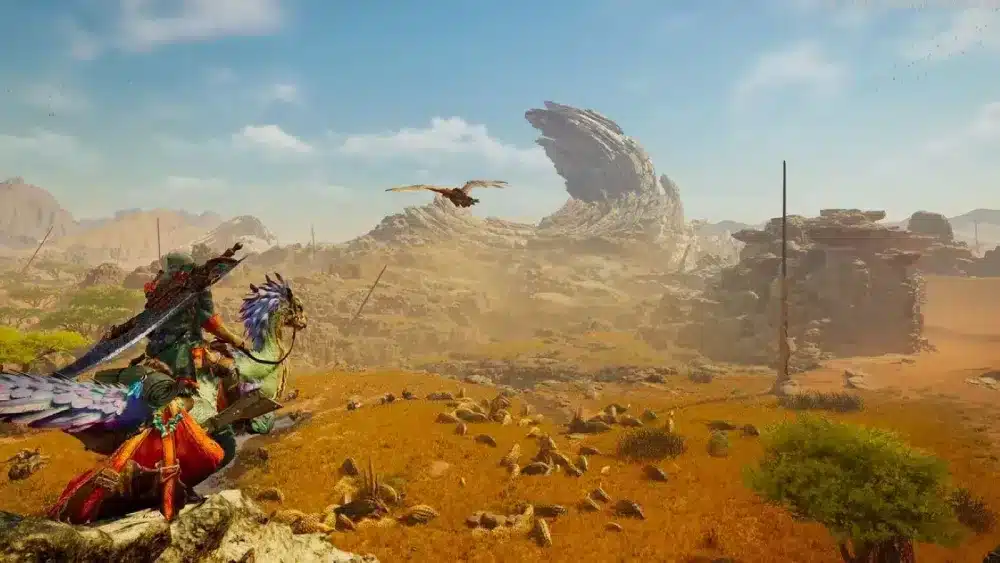
At a glance, the big promise is a world that changes on its own. Not scripted changes. Not “enter this zone and it rains.” A living environment that shifts with weather, time, and conditions that influence creature behavior.
Capcom keeps framing this as an ecosystem-first Monster Hunter, where the environment isn’t a backdrop, it’s a system that shapes your decisions. The official Monster Hunter Wilds living world details page is worth scanning because it highlights the kind of world logic you’ll need to read quickly when conditions shift mid-hunt.
That matters because your hunt is never isolated. It’s affected by visibility, mobility, and monster patterns. It also means that your best strategy is not a single “meta build.” It’s adaptation.
Here’s a simple way to frame the experience:
- Exploration is information. You’re not just traveling. You’re scouting.
- Weather is gameplay. You’re not just watching the sky. You’re planning around it.
- Ecosystems create pressure. Monsters don’t exist in a vacuum. They respond.
And if you’re asking, “Okay, but what does that change in practice?” Start here.
The new hunt loop, in plain terms
- Read the biome. Track conditions, paths, hazards, and movement.
- Predict the monster. Use patterns, not just reactions.
- Control the tempo. Push when you have advantage. Reset when you don’t.
- Win with consistency. Big damage is great. Clean execution is better.
This is where Monster Hunter Wilds gameplay is expected to shine. It’s not about a single gimmick. It’s about how all the pieces interact.
When is Monster Hunter Wilds release date?
Right now, the clearest expectation is a 2025 launch window. But “2025” can mean very different things depending on how the team handles previews, marketing beats, and test phases. So the better question is: what milestones should you watch?
For clean, reliable updates (trailers, platform notes, and any test announcements), stick to the source of truth: the official Monster Hunter Wilds website. Checking it during big marketing beats helps you separate confirmed info from community guesses and hype threads.
Monster Hunter Wilds will likely follow a cadence that rewards players who prepare early. The first month of a major Monster Hunter entry is where progress, builds, and community knowledge explode. If you want to be ahead, you want a plan.
To keep it practical, here’s what to track around the Monster Hunter Wilds release window:
- Major trailers that reveal systems (not just monsters).
- Hands-on preview reports that mention performance and pacing.
- Any official notes about platforms, cross-play, or matchmaking.
- Network test hints (even vague ones matter).
And yes, if you care about day-one smoothness, you should assume the early weeks will be chaotic. That’s normal. The best move is to control what you can: your setup, your party plan, and your approach to learning.
Quick prep checklist for launch season
- Update GPU drivers and OS ahead of time.
- Clear storage space. Big games need room to breathe.
- Decide your main weapon early (but keep one backup).
- Build a small “hunt squad” with clear roles.
- Practice the basics: positioning, stamina discipline, and resets.
Gear matters, but weapon comfort matters more—especially in the first weeks when everyone is still learning timings and openings. This Monster Hunter Wilds weapons and combat guide is a great way to lock in a main weapon early, understand the core combat mindset, and avoid the classic mistake of switching tools every two hunts.
Now let’s break down what we “know” versus what you should treat as “likely.”
What we know so far (and what’s still unknown)
Some details will stay uncertain until the final marketing stretch. That’s fine. You can still prepare intelligently.
More likely to be confirmed early:
- Core themes of dynamic biomes and weather.
- New monster behaviors tied to environment.
- Broad multiplayer direction.
More likely to be confirmed later:
- Specific platform features and performance targets.
- Full weapon roster and new weapon reveals.
- Exact endgame structure and long-term systems.
The goal is simple: show up ready to learn fast. That’s how you win early in MH Wilds.
How to prepare without overcommitting
Here’s the trap: people try to plan everything before launch. That rarely works. Instead, plan for flexibility.
Use a “three-phase” approach:
- Phase 1: Learn. Focus on fundamentals and monster patterns.
- Phase 2: Optimize. Tighten builds and farming routes.
- Phase 3: Specialize. Commit to speed, support, or high-risk damage.
If you do that, Monster Hunter Wilds becomes less overwhelming and more rewarding, faster.
Will there be a Monster Hunter Wilds beta?
A beta (or network test) is one of the most valuable things a community can get. It helps players learn the feel. It helps developers gather data. And it creates early “tech” that shapes launch strategies.
A Monster Hunter Wilds beta is not guaranteed until it’s announced. But it’s very plausible, especially if the game leans into deeper multiplayer features and network stability.
If it happens, don’t treat it like a demo. Treat it like training.
Because a good beta does three things:
- Teaches you combat rhythm.
- Exposes you to system complexity.
- Reveals performance bottlenecks early.
That’s a big deal if you play online a lot. Lag, unstable routing, or jitter can make reactive combat feel inconsistent. So if you want clean execution, network stability is part of your build.
Here’s what you should do if Monster Hunter Wilds beta access becomes available:
- Play at different times of day to test matchmaking load.
- Test solo, duo, and full party hunts.
- Track any stutter patterns in crowded scenes.
- Note input feel during high-pressure moments.
And importantly: do not burn out. A beta is not the whole game. It’s a preview. Use it for knowledge, not grind.
How betas usually work for games like this
In action games with deep multiplayer loops, betas tend to be limited in scope:
- A small slice of the map.
- A short list of monsters.
- A partial weapon set.
- A narrow progression cap.
That’s enough. You’re not trying to “finish” anything. You’re trying to understand what matters.
Focus on:
- Movement and camera comfort.
- Hit feedback and animation commitment.
- Weapon identity and stamina flow.
- Team coordination under pressure.
Those fundamentals transfer directly into launch performance in Monster Hunter Wilds gameplay.
What to test if you’re playing with friends
If you run multiplayer, test teamwork systems first. Not damage.
Use a simple structure:
- One player focuses on aggression and positioning.
- One player focuses on support and control.
- One player focuses on disruption (status, traps, stagger).
- One player rotates based on monster behavior.
Even if the beta limits loadouts, you can still practice communication:
- Callouts for openings.
- Trap timing.
- Reset signals (when to disengage).
- Item discipline (don’t over-heal, don’t panic-bomb).
Those habits matter more than gear. They’ll carry you through the early chaos of Monster Hunter Wilds.
What can we expect from Monster Hunter Wilds gameplay?
This is where the hype becomes real. Because “gameplay” is not a feature list. It’s feel. It’s rhythm. It’s whether the game rewards smart choices or just rewards time.
The best expectation to hold is this: Monster Hunter Wilds will likely reward adaptability more than ever.
Why?
Because dynamic conditions punish autopilot. They reward awareness.
Here are the gameplay pillars that should shape your mindset:
- Situational control beats brute force.
- Clean positioning beats reckless DPS.
- Consistency beats highlight moments.
To make this easier to visualize, here’s a quick table of what changes might mean for you.
| System focus | What it changes | How you should respond |
| Dynamic weather | Visibility, monster aggression, timing windows | Slow down, scout, punish mistakes |
| Reactive ecosystems | Unpredictable encounters, new hazards | Keep items ready, plan exits |
| Enhanced co-op | More teamwork value, role clarity | Assign roles, communicate openings |
| Combat refinement | More weapon identity, higher mastery ceiling | Commit to one main weapon early |
Now let’s go deeper in a way that actually helps you play better.
Managing fights when the world shifts
When conditions change mid-hunt, your goal is not to “force” the fight. Your goal is to control risk.
Use this decision flow:
- If you have advantage: push damage, but stay safe.
- If the monster has advantage: reposition, reset, re-engage.
- If conditions get chaotic: disengage, heal, and re-establish control.
That’s how you stay consistent in Monster Hunter Wilds gameplay.
“New monsters” isn’t the point. Behavior is.
Every Monster Hunter entry adds new monsters. The real question is whether they feel alive.
In a dynamic world, monsters can become more than “attack patterns.” They can become predators that exploit terrain.
Expect scenarios like:
- A monster that forces vertical pressure.
- A monster that punishes over-commitment with terrain traps.
- A monster that uses weather to hide movement cues.
- A monster that drags you into bad positioning.
Your response should be simple:
- Play slower when you don’t know the move.
- Play faster when you recognize the opening.
- Never trade damage blindly.
That’s how you stay sharp in MH Wilds.
Multiplayer and teamwork that actually wins hunts
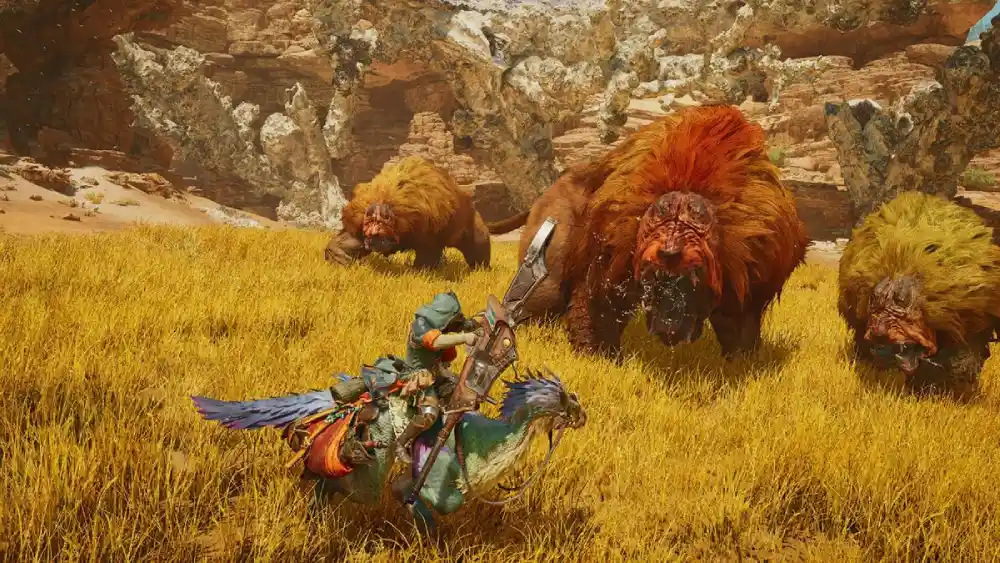
Co-op has always been core to Monster Hunter. But deeper systems make teamwork more important, not less.
If your party is uncoordinated, the hunt becomes longer and riskier. If you coordinate well, you get faster kills and cleaner runs.
Squads also need a plan for platforms and matchmaking expectations, because that changes who can reliably hunt together on day one. This Monster Hunter Wilds crossplay and cross-platform breakdown helps you track what’s confirmed, what’s likely, and what to watch for before you commit to a launch-week group.
Here’s a straightforward role system you can use on day one:
- Opener: creates the first advantage (stagger, trap, positioning).
- Controller: focuses on status, traps, interrupts.
- Damage: commits to burst during safe windows.
- Support: manages heals, buffs, recovery, and resets.
No one is “locked” into a role forever. You just need structure.
Communication that improves results fast
Don’t overcomplicate comms. Keep it short:
- “Opening now.”
- “Trap ready.”
- “Disengage.”
- “Heal then push.”
- “Stagger window.”
Simple callouts turn four random players into a team.
And if you’re preparing for the Monster Hunter Wilds release, your best advantage is a consistent group.
FAQ
Monster Hunter Wilds released on February 28, 2025 (Capcom’s official site and PlayStation channels used Feb 28 as the release date).
For PC, it launched globally at 12:00 a.m. ET, and for consoles it generally went live at midnight local time (with regional differences noted for North America).
It’s available on PlayStation 5, Xbox Series X|S, and PC (Steam/Windows).
On Steam, the game lists “Cross-Platform Multiplayer” as a supported feature.
Capcom’s official page lists online multiplayer for 1–4 players.
What exists publicly is largely tied to official tests/periods around launch, but “beta” availability depends on region/platform timing.
Post-launch content and how to stay ahead
Monster Hunter games thrive on updates. That’s where the long-term loop becomes “your game,” not just “the campaign.”
A strong post-launch plan usually includes:
- New monsters and variants.
- Event quests and limited-time challenges.
- New gear paths and build diversity.
- Quality-of-life improvements and balance tweaks.
So how do you stay ahead?
You don’t grind everything. You focus your grind.
A smart progression plan
- Farm builds that improve consistency first.
- Only chase “max damage” when your fundamentals are solid.
- Keep one flexible set for new content drops.
- Save upgrade materials when you can.
This is how you avoid burnout and keep enjoying Monster Hunter Wilds for months.
You’re not just waiting for a new game. You’re gearing up for a new ecosystem, a new tempo, and a new kind of hunt. If you want to enjoy it more and progress faster, focus on fundamentals, teamwork, and a setup that stays stable under pressure. And when launch week hits, show up ready to learn aggressively, adapt quickly, and play clean. Monster Hunter Wilds will reward that mindset.
Want smoother online hunts and more consistent performance when it matters most? Try ExitLag, optimize your routing, and keep your sessions stable—then subscribe for more guides, builds, and launch-week strategies.
Got questions or want to connect with other players? Join the conversation at the ExitLag Forum!