
The path of exile currency system is one of the most unique features in the action RPG genre. Unlike traditional games that rely on gold, Path of Exile uses a complex collection of orbs and crafting materials that function as both currency and gameplay tools.
The path of exile currency economy is entirely player-driven. Every trade, item upgrade, and crafting decision revolves around valuable currency items, making them essential for progression. Whether you’re a new exile or a veteran player, understanding the value of these items is crucial for long-term success. And before we continue, know that to know more about all the relevant content about gaming, you just have to check our blog.
What is Path of Exile currency and how does it work?
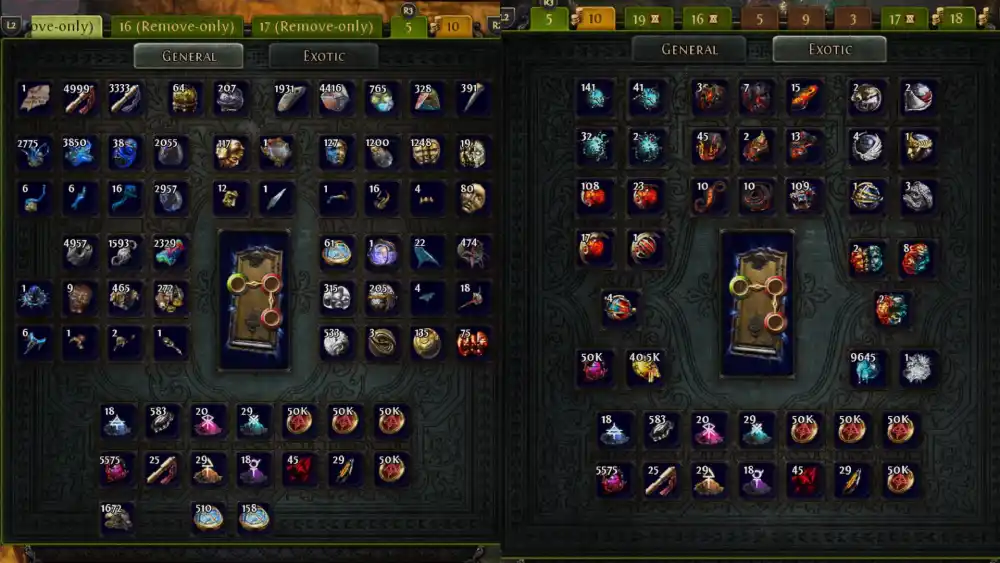
If you’re wondering why the path of exile currency system is so important, the answer is simple. Currency impacts nearly every aspect of the game, from character progression and crafting to endgame trading and market investments. Learning how to manage it efficiently can dramatically improve your experience.
Path of Exile was developed by Grinding Gear Games and released in 2013. Since launch, its economy has stood apart from other RPGs because it completely avoids a traditional gold-based system.
Instead, players trade using currency items that have practical in-game functions. This design creates a dynamic marketplace where value is determined by both utility and scarcity.
Why PoE uses a currency-based economy
Every currency item serves a purpose beyond trading.
For example:
- Chaos Orbs reroll rare items.
- Divine Orbs modify numerical values.
- Exalted Orbs add modifiers.
- Orb of Fusing changes socket links.
- Chromatic Orbs alter socket colors.
Because these items provide direct gameplay benefits, they naturally gain market value.
The most important currency items
Several items form the foundation of the game’s economy.
Popular examples include:
- Chaos Orb
- Divine Orb
- Exalted Orb
- Orb of Fusing
- Orb of Regret
- Orb of Alchemy
Among these, Divine Orbs have become one of the most important standards for high-value trades in recent leagues.
Main Path of Exile currency types every player should know
Understanding different currency categories is essential for efficient trading and crafting.
Some items are used frequently during progression, while others become important primarily in the endgame economy.
Basic crafting and trading currencies
Most players encounter these currencies immediately.
Common examples include:
- Chaos Orbs
- Orb of Alchemy
- Orb of Alteration
- Orb of Transmutation
- Chromatic Orbs
These currencies are often used to improve equipment during leveling and early mapping.
Furthermore, Chaos Orbs continue to serve as a major trading standard for mid-tier items.
High-value currencies and investments
Advanced players focus heavily on premium currencies.
Important examples include:
- poe currency such as Divine Orbs
- Exalted Orbs
- Ancient Orbs
- Awakened Sextants
- Mirror Shards
These items frequently determine market trends and influence the pricing of endgame gear.
Because of their value, experienced traders often monitor market fluctuations carefully before making major transactions.
You may also like: Addressing Sound Bugs in Path of Exile: troubleshoot to get rid of the issue
Understanding Divine Orbs and premium currencies
The economy has evolved significantly over recent years. As a result, Divine Orbs now play a larger role in trading than they once did.
Players interested in advanced crafting should understand how these currencies influence the market.
Why Divine Orbs became so valuable
Divine Orbs reroll modifier values on equipment.
This allows players to perfect powerful items by maximizing important stats.
As a result, Divine Orbs became one of the primary currencies for:
- High-end crafting
- Premium item trading
- Market valuation
- Endgame investments
Their utility continues to drive strong demand throughout every league.
Divine Orb PoE2 and the future economy
Interest in divine orb poe2 continues to grow as players prepare for Path of Exile 2.
Although many economic systems are evolving, Divine Orbs remain a major point of discussion due to their influence on item progression and trading.
Understanding their role now helps players adapt more easily to future market changes.
Read also: Path of Exile 2 0.5 guide for better performance and smoother gameplay
How the Path of Exile trading system works
Trading is one of the most important aspects of the game.
Unlike many modern RPGs, Path of Exile does not use an automated auction house. Instead, players interact directly with one another.
How players buy and sell items
Most transactions occur through trading platforms and official listings.
The typical process includes:
- Search for an item.
- Contact the seller.
- Receive an invitation.
- Visit the seller’s hideout.
- Complete the trade manually.
This system encourages player interaction while maintaining a dynamic economy.
Understanding poe1 trade systems
Many players still actively participate in poe1 trade leagues and markets.
The economy remains highly active because:
- New leagues launch regularly.
- Items constantly change value.
- Build popularity influences demand.
- Seasonal content creates opportunities.
Learning how to evaluate prices is one of the most important trading skills in Path of Exile.
As your wealth grows and trading becomes more frequent, connection stability becomes increasingly important. A disconnected trade, delayed interaction, or lag spike during farming sessions can slow progression. ExitLag helps optimize network routes, improve responsiveness, and maintain smoother gameplay during every stage of your Path of Exile journey.
ExitLag can drastically improve your gameplay for an accessible price. To know more, check our pricing page.
Best Path of Exile currency farming strategies
Efficient path of exile currency farming is one of the most important skills for long-term progression. Whether you’re starting a new league or pushing endgame content, understanding where and how to farm can significantly increase your profits.
The best farming strategy often depends on your build, Atlas setup, and current market conditions.
League start currency farming
During the early days of a league, demand for basic crafting materials is extremely high.
Popular farming methods include:
- Heist contracts
- Expedition encounters
- Essence farming
- Early Atlas progression
- Chaos recipe farming
These activities require relatively low investment while providing reliable returns.
As a result, they are excellent choices for newer players building their first currency reserves.
Endgame currency farming
Once your character becomes stronger, more advanced strategies become available.
Popular endgame options include:
- Delirium maps
- Legion farming
- Expedition optimization
- Scarab-enhanced mapping
- Divination card targeting
These activities often generate significantly more profit but require stronger builds and greater investment.
Therefore, players should gradually transition into these strategies as their gear improves.
You may also like it: Overview of New Classes in Path of Exile 2: understand the basics to improve your gaming
Poe currency value and market trends
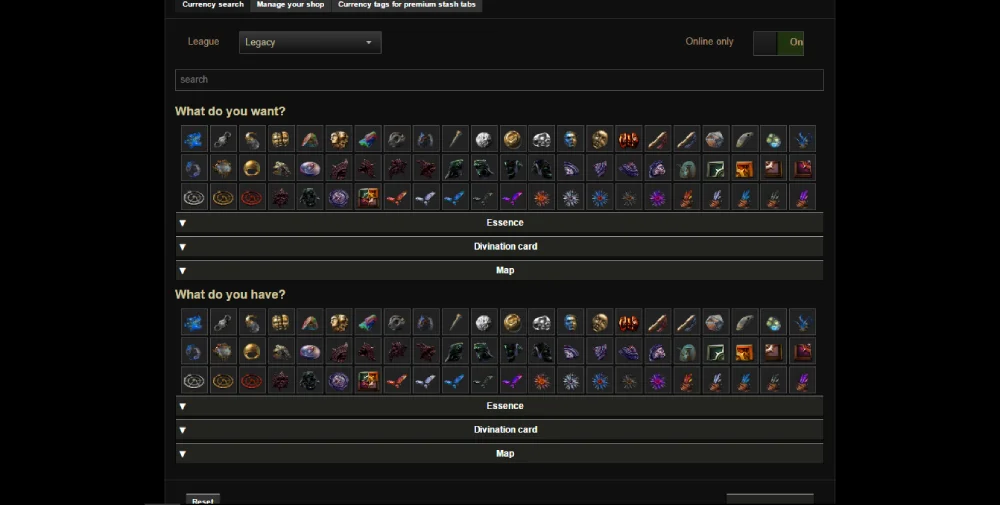
The value of poe currency changes constantly throughout every league. Supply, demand, patch notes, and popular builds all influence prices.
Understanding market behavior allows players to maximize profits and avoid costly mistakes.
What affects currency prices?
Several factors influence pricing:
- League age
- Player demand
- Build popularity
- Crafting trends
- Endgame content
For example, crafting-focused leagues often increase demand for premium currencies such as Divine Orbs and Exalted Orbs.
Similarly, balance changes can dramatically impact market values overnight.
When to buy and sell currency
Timing is critical in Path of Exile.
General guidelines include:
- Sell early-league crafting materials quickly.
- Invest in valuable currencies during market dips.
- Monitor build trends.
- Follow league announcements.
- Watch community pricing tools.
Players who understand market timing often accumulate wealth much faster than those who only focus on farming.
Check also: Understanding Early Access Costs for Path of Exile 2 and how to play the game in beta season
Poe2 currency and economy differences
As Path of Exile 2 continues to attract attention, many players are curious about how poe2 currency will compare to the existing economy.
While many familiar systems remain, new mechanics are expected to influence item valuation and trading behavior.
How poe 2 currency may evolve
The upcoming economy introduces new opportunities while maintaining the core philosophy of item-based trading.
Many players expect:
- Updated crafting systems
- New currency items
- Different item progression paths
- Revised market dynamics
Because of these changes, understanding current economic principles remains valuable for future adaptation.
Preparing for the poe 2 currency market
Players planning to transition into poe 2 currency trading should focus on developing strong economic fundamentals now.
Important skills include:
- Price evaluation
- Market research
- Farming efficiency
- Crafting knowledge
- Trading experience
These fundamentals will remain useful regardless of future economic adjustments.
Read also: Playing Path of Exile in 3-Player Co-op: learn the ropes of a group gameplay
Advanced trading strategies for experienced players
Trading often generates more wealth than farming alone.
Experienced players frequently combine farming with strategic market activity to maximize profits.
Bulk trading and flipping
One common strategy involves purchasing items at lower prices and reselling them later.
Popular examples include:
- Currency flipping
- Scarab trading
- Fragment trading
- Crafting material speculation
Although this requires market knowledge, it can become extremely profitable.
Identifying valuable opportunities
Successful traders constantly monitor:
- League trends
- Popular builds
- Patch notes
- Community discussions
- Crafting demand
This information helps identify opportunities before the wider market reacts.
Consequently, informed traders often generate substantial profits with relatively little gameplay time.
How ExitLag improves Path of Exile performance
Fast reactions and stable connections are important in every aspect of Path of Exile.
Whether you’re farming maps, trading valuable items, or fighting endgame bosses, network performance can directly impact results.
Reduced lag during farming sessions
ExitLag optimizes routing between your connection and game servers.
Potential benefits include:
- Lower latency
- Reduced packet loss
- Improved stability
- More consistent responsiveness
This creates a smoother experience during extended farming sessions.
Better performance during trading and boss encounters
Large trades and challenging endgame encounters demand reliability.
ExitLag can help reduce interruptions during:
- Boss fights
- League mechanics
- Trade interactions
- Party play
- High-density mapping
| Feature | Standard Connection | ExitLag Optimized |
| Ping Stability | Variable | Improved |
| Packet Loss | Possible | Reduced |
| Route Optimization | No | Yes |
| Farming Consistency | Standard | Enhanced |
| Trading Reliability | Standard | Improved |
For players spending hours farming and trading, connection quality can become a major factor in overall efficiency. Use the free trial to explore all features!
Frequently asked questions
Path of Exile currency consists of various orbs and items that function as both crafting materials and trading assets. Unlike traditional RPGs, the game does not use gold. Instead, players exchange valuable currency items that have direct gameplay applications.
Some of the most valuable poe currency items include Divine Orbs, Exalted Orbs, Mirror Shards, and other high-demand crafting materials. Their value depends on league conditions, supply, demand, and crafting relevance.
Efficient farming methods include Heist, Expedition, Delirium, Legion, and targeted divination card farming. The best approach depends on your build, Atlas progression, and the current stage of the league.
The divine orb poe2 remains one of the most discussed currencies because of its role in optimizing item modifiers. Its importance extends into conversations surrounding future Path of Exile 2 economic systems and crafting strategies.
The poe1 trade system relies on direct player-to-player exchanges. Players search listings, contact sellers, meet in-game, and complete trades manually through the trading interface. This player-driven economy remains one of the defining features of Path of Exile.
In conclusion
The path of exile currency system is one of the deepest and most rewarding economic systems in modern gaming. From understanding basic crafting materials to mastering advanced trading strategies, every player benefits from learning how currency influences progression and wealth generation.
Whether you’re farming maps, investing in premium items, exploring poe2 currency opportunities, or participating in poe1 trade, a strong understanding of the economy will dramatically improve your results. Combined with a stable connection through ExitLag, you’ll be better prepared to maximize profits, complete endgame content, and fully enjoy everything Path of Exile has to offer. Download ExitLag now!
Got questions or want to connect with other players? Join the conversation at the ExitLag Forum!