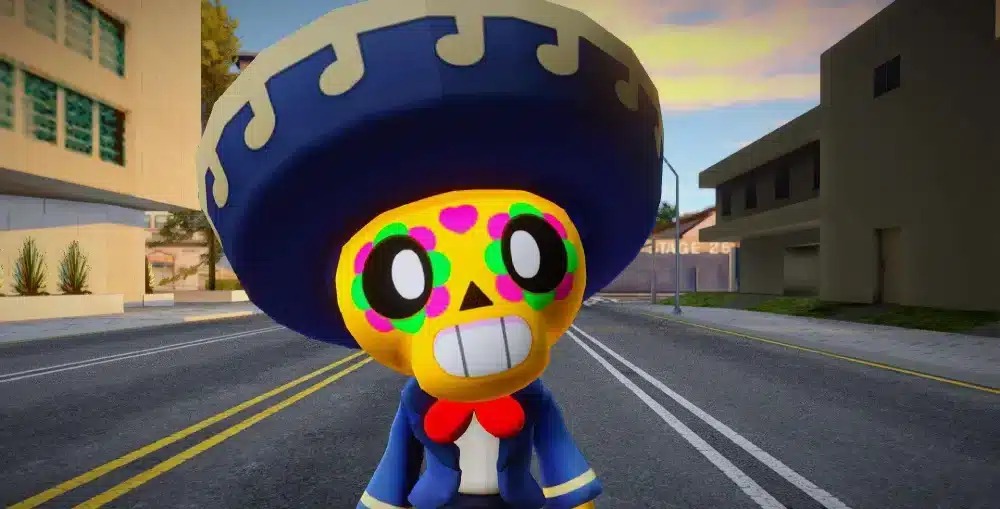
Brawl Stars Poco remains one of the game’s most recognizable Support Brawlers, combining a wide musical attack with team healing and a powerful Super that can rescue multiple allies at once. His kit looks simple compared with more mechanically complex characters, but good positioning, healing timing, and team awareness make a major difference between an average Poco and one who consistently keeps a squad alive.
Progression also matters when deciding where and how to use Brawl Stars Poco. If you are pushing trophies or moving through competitive progression, our guide to Brawl Stars ranks and progression explains how the wider ranking systems work. Poco is especially useful when you understand what your team needs from a Support rather than treating him as a traditional damage dealer.
Brawl Stars Poco changed significantly during the August 2026 update cycle. Poco gained baseline healing through his main attack, his Gadgets and Da Capo! were reworked, Buffies expanded his support utility, and the September 16 maintenance increased the healing provided by Tuning Fork and Da Capo! again. As a result, older guides describing his previous kit can now give misleading advice.
Is Poco good in Brawl Stars?
Poco can be a strong team-oriented choice when his healing and wide attacks match the map and composition. However, his value depends heavily on positioning and teammates because he is designed to amplify a group rather than independently burst down every opponent.
That makes Poco Brawl Stars particularly approachable for newer players while still leaving room for experienced players to optimize healing angles, Super timing, lane support, and team positioning.
Poco’s role as a Support Brawler
Poco is officially a Support Brawler. His basic attack, Power Chord, sends a wide musical wave forward, making it easier to hit several targets than with narrow projectile attacks.
Following his 2026 rework, Power Chord can also heal allies it passes through. This gives Poco from Brawl Stars more consistent support utility even without relying entirely on a Star Power.
His Super, Encore, sends an even larger wave that heals Poco and allies caught in its path. It can travel through obstacles, making it possible to save teammates without having a completely open line between them.
Because Poco can affect several characters at once, his strength increases when teammates coordinate their positioning.
He generally wants to stay close enough to support the front line without becoming the first target eliminated.
Poco’s biggest strengths and weaknesses
Poco’s major strengths include:
- wide attack coverage;
- reliable team healing;
- strong sustain during extended fights;
- good synergy with durable teammates;
- a Super capable of affecting multiple allies;
- relatively accessible mechanics;
- useful support across several objective modes.
However, the Poco Brawl Stars playstyle also has limitations.
His damage pressure is usually less threatening than that of dedicated Damage Dealers or Assassins. Enemies with superior range can force Poco into uncomfortable positions, while heavy burst damage can eliminate a teammate before healing has enough time to matter.
He also becomes less valuable if teammates constantly spread too far apart. Much of Poco’s kit rewards situations where one attack or heal can affect more than one player.
Therefore, choosing Poco is partly about reading your own composition.
A coordinated team that can capitalize on sustained healing will generally get more from him than three players independently fighting on opposite sides of the map.
What is the best Poco build in Brawl Stars?
The best Poco build depends on whether your priority is maximum team sustain, protection against negative effects, or more offensive pressure.
The 2026 rework made this choice more interesting because several of Poco’s abilities now have additional baseline effects, while Buffies can strengthen Gadgets, Star Powers, and his Hypercharge.
There is no single loadout that should automatically be used against every enemy team.
Tuning Fork vs Protective Tunes
Tuning Fork is usually the easier Gadget to fit into general-purpose healing builds.
After its 2026 rework, Tuning Fork heals nearby allies through several healing pulses over its duration instead of functioning like its older version. The September 16 balance update increased its healing again.
This makes it a natural option when the best Poco build needs sustained recovery during extended fights.
Use Tuning Fork when:
- teammates are likely to stay relatively close;
- the enemy composition relies more on raw damage than disabling effects;
- your team expects long fights around an objective;
- you want additional healing between Super uses.
Protective Tunes has a different purpose.
Rather than simply restoring health, it creates an area that removes negative effects and protects allies inside it from those effects for a limited time.
That can make Protective Tunes considerably more valuable against compositions built around control effects.
Choosing between the two should therefore depend on the enemy team rather than habit.
For players who enjoy comparing Brawler kits and learning how unusual abilities change positioning, our Cordelius Brawl Stars guide provides another example of a character whose utility changes how fights are approached.
Da Capo!, Screeching Solo, and Medic’s Melody
Da Capo! remains the support-focused Star Power.
However, its current function is different from older versions of the game. Poco’s basic Power Chord attack now provides some healing without Da Capo!, while the Star Power increases that healing.
The September 16, 2026 balance changes strengthened Da Capo! further.
For a dedicated healer setup, the best Poco build will often use:
| Slot | Support-focused option |
| Gadget | Tuning Fork |
| Star Power | Da Capo! |
| Hypercharge | Medic’s Melody |
| Gear | Damage, Shield, Health, Speed, or Gadget Cooldown depending on the map |
Screeching Solo is the more offensive alternative.
It allows Encore to damage enemies in addition to Poco’s normal healing utility. That can punish opponents who assume they are safe while Poco uses his Super to rescue teammates.
Medic’s Melody is Poco’s Hypercharge. Its Hypercharged Super can convert excess healing into a temporary shield, allowing a well-timed Encore to protect teammates beyond their normal maximum health.
With its Buffie enhancement, Poco gains even more support potential during the Hypercharge window.
The result is a character whose modern build options are more flexible than the older defensive-healer versus offensive-healer distinction suggested.
How do you play Poco in Brawl Stars?
Playing Poco well is mostly about positioning before your team actually needs healing.
If you wait until an ally is almost eliminated before trying to find the correct angle, you may already be too late.
A good Poco Brawl Stars player constantly tracks teammate health, enemy pressure, available cover, and the position from which one attack can affect the largest number of useful targets.
Position yourself behind the first line of pressure
Poco usually performs best slightly behind the teammate taking the most space.
That position lets him attack enemies while remaining close enough to provide healing support.
Do not automatically stand directly behind a tank, however. If both players occupy exactly the same path, an enemy with piercing or area damage can hit both at once.
Instead, create angles.
Try to position so your wide attack can:
- hit an enemy and an ally;
- support two teammates;
- pressure several enemies at a chokepoint;
- charge your Super without exposing yourself unnecessarily.
This is one of the most important adjustments for Poco from Brawl Stars after the rework. Because the main attack has built-in supportive value, attack placement matters for both offense and healing.
Poco also benefits from patience.
Using every shot simply because ammunition is available can leave you unable to pressure an enemy who suddenly advances.
Save Encore for high-value healing
Poco’s Super is most valuable when it changes the outcome of a fight.
Using Encore to restore a tiny amount of health to one safe teammate may waste an opportunity to save two teammates seconds later.
Look for situations where:
- two allies need healing simultaneously;
- a teammate is about to lose an objective;
- your front line needs enough health to continue pushing;
- several allies can receive value from the Hypercharge shield;
- you can combine healing with Screeching Solo pressure.
A good best Poco build helps, but timing remains more important than simply equipping the correct abilities.
Try not to hold the Super forever either.
If you repeatedly die with Encore available, you are saving it too aggressively.
The ideal balance is to use the Super when it creates a meaningful advantage while continuing to charge future Supers through active participation in fights.
Which game modes are best for Poco?
Poco is strongest when fights last long enough for healing to create repeated value.
Modes built around sustained control, team pushes, and grouped objectives naturally provide more opportunities for his kit.
However, map design matters just as much as the mode name.
Gem Grab, Hot Zone, and Brawl Ball
Gem Grab fits Poco’s support identity well because teams frequently fight around a central area.
He can help a gem carrier survive while also supporting teammates contesting lanes. His wide attack can pressure chokepoints without requiring perfect projectile accuracy.
Hot Zone also creates concentrated fights.
Because players repeatedly contest defined areas, Tuning Fork, Da Capo!, and Encore can provide repeated value if your team stays grouped enough to benefit.
Brawl Ball can also work well for Brawl Stars Poco, especially when paired with durable Brawlers capable of advancing under healing support.
Keeping a ball carrier alive through one additional attack can be more important than trying to secure an elimination yourself.
Still, Poco should not automatically be selected on every map.
Very open layouts dominated by extreme-range Brawlers can make it harder for him to consistently reach enemies.
Showdown, Knockout, and other modes
Solo Showdown is less natural for Poco because much of his identity revolves around helping teammates.
He still has healing tools and a wide attack, but abilities designed to sustain allies lose some of their value when there are no teammates to support.
Team-based modes generally make better use of Poco from Brawl Stars.
Knockout can be situational. Healing becomes valuable because each elimination matters significantly, but enemy teams with strong long-range burst may reduce Poco’s ability to safely build Super charge.
The same principle applies across the game: do not select Poco only because a mode has three players.
Consider the map, enemy range, your teammates, and how frequently fights are likely to produce meaningful healing opportunities.
Players should also avoid relying on unofficial modifications to compensate for difficult matchups or progression. If you are curious about how community modifications differ from normal gameplay and the risks involved, our Brawl Stars coding and mods guide explains the topic in more detail.
What teammates work best with Poco?
Poco is famous for working with durable Brawlers because healing becomes more valuable when allies survive long enough to receive it.
This has historically led to tank-heavy compositions built around repeated healing and aggressive space control.
The exact meta changes frequently, so team construction should focus on principles rather than one permanent three-Brawler lineup.
Pair Poco with teammates who can use sustained healing
A durable teammate can convert healing directly into additional pressure.
Instead of retreating after taking damage, they may continue holding a position while Poco restores health from behind.
Useful partners often include Brawlers who:
- play near the front line;
- have enough health to survive burst damage;
- create space for Poco;
- benefit from extended fights;
- force enemies to spend ammunition;
- can protect Poco from aggressive opponents.
The goal of a Poco Brawl Stars composition is not necessarily to create the highest theoretical healing number.
Healing matters because it allows teammates to accomplish something: hold a zone, keep gems safe, score a goal, maintain pressure, or survive an engagement.
Avoid compositions with overlapping weaknesses
Three short-range characters can struggle severely against long-range opponents.
Likewise, a team with little burst damage may have trouble finishing enemies who repeatedly disengage and heal.
When building around Poco, consider what the remaining two Brawlers provide.
Ideally, the composition should have answers to several situations:
- long-range opponents;
- aggressive Assassins;
- tanks;
- wall-heavy maps;
- open spaces;
- objective pressure.
A best Poco build cannot compensate for a fundamentally bad draft.
Poco is one piece of the composition rather than a universal solution.
Before investing resources or preparing for a new season, you can also check the official Brawl Stars website for current Brawlers, updates, and announcements. That matters because Poco’s 2026 rework demonstrates how quickly an old strategy guide can become outdated after a major systems update.
What is DJ Poco and which skins does Poco have?
Poco’s musical identity has made him a natural candidate for many cosmetic themes.
One of the most notable recent additions is DJ Poco, a Hypercharge skin built around a modern streetwear and DJ aesthetic rather than his traditional mariachi appearance.
Cosmetics change presentation rather than competitive power.
DJ Poco and its Hypercharge variants
DJ Poco is part of the Streetwear skin theme and belongs to the Hypercharge skin category.
It also has alternate visual variants associated with the same concept.
These include Scratcher Poco and Beatmatcher Poco, which extend the DJ theme with different designs.
Because DJ Poco is a cosmetic, equipping it does not increase healing, damage, Super charge, or any other competitive statistic.
Its value is visual.
Hypercharge skins can include more elaborate transformations and effects connected to Hypercharge activation, making them significantly more distinctive than basic recolors.
Availability and purchase methods can change through events, boxes, offers, and catalog updates, so players should check the current in-game catalog before assuming an old acquisition method still applies.
Other notable Poco skins
Poco from Brawl Stars has accumulated a large cosmetic collection over the game’s history.
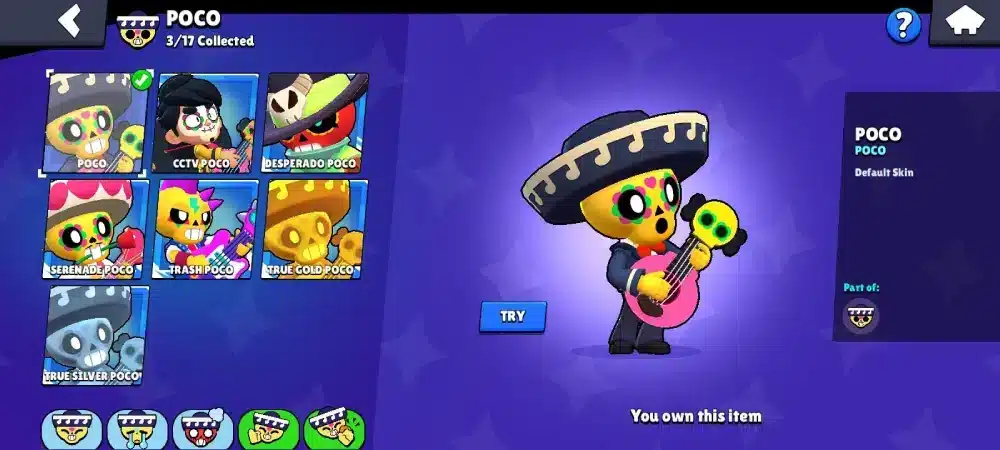
Recognizable options have included skins such as:
- Pirate Poco;
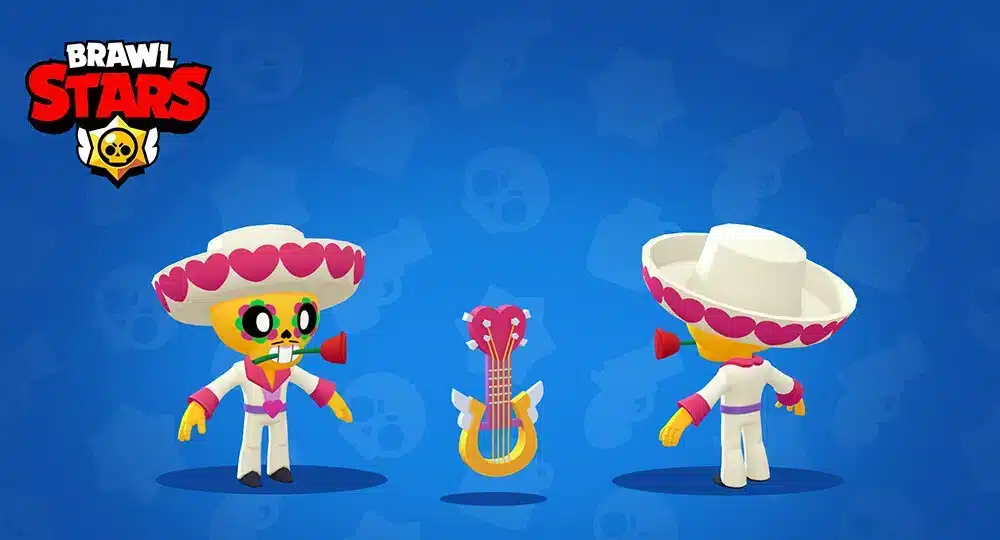
- Serenade Poco;
- Trash Poco;
- CCTV Poco;
- Quit Playing Poco;
- Possessed Poco;
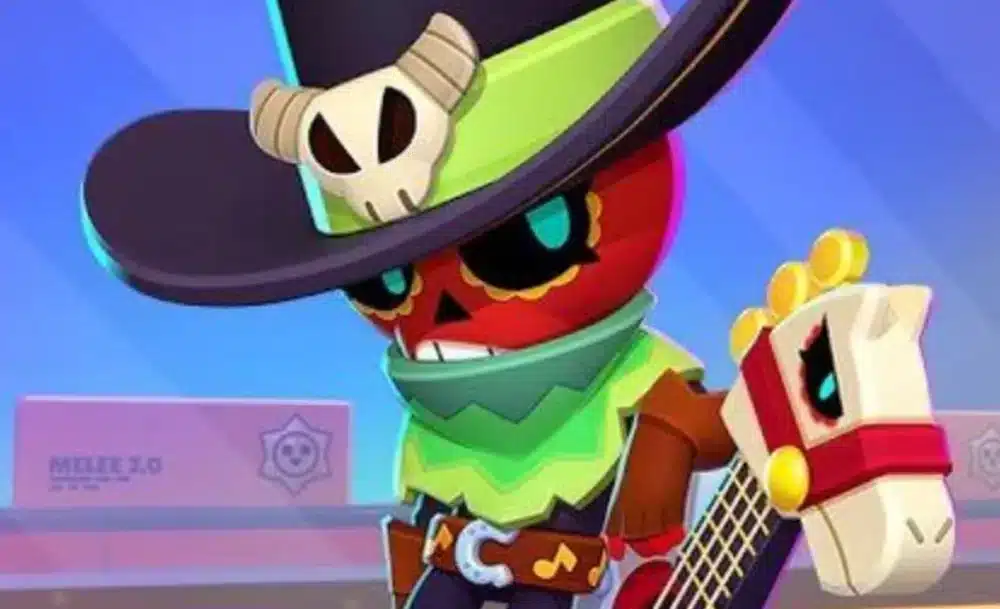
- Desperado Poco;
- True Silver Poco;
- True Gold Poco;
- Poco Starr.
Some cosmetics may have seasonal or event-specific availability.
Others can return through different systems over time.
That is why older lists sometimes incorrectly describe a skin as permanently exclusive or attach an outdated price to it.
If you want to see upcoming cosmetics, reworks, or skin reveals directly from Supercell, the official Brawl Stars YouTube channel regularly publishes Brawl Talk episodes and other update videos.
How can ExitLag help when playing Poco in Brawl Stars?
ExitLag does not change Poco’s healing, damage, build, or matchmaking.
Its purpose is related to network routing.
That distinction is especially important with a support character because a delayed action can feel like a gameplay mistake even when connection instability contributed to what happened.
When connection instability affects Poco
Poco relies heavily on timing.
A delayed Super can mean an ally is eliminated before Encore activates. A connection spike can also interfere with positioning, attacks, or Gadgets during an important team fight.
Possible network-related symptoms include:
- unstable latency;
- sudden ping spikes;
- packet loss;
- connection interruptions;
- inconsistent routing.
ExitLag can help optimize network routes for supported games and may provide a more stable route depending on your ISP, region, destination, and current network conditions.
Results vary.
Network optimization cannot guarantee lower latency in every situation.
What ExitLag cannot fix
ExitLag cannot correct problems unrelated to networking.
It cannot:
- increase Poco’s damage;
- change the best Poco build automatically;
- give you DJ Poco;
- unlock Gadgets or Star Powers;
- improve matchmaking;
- change balance values;
- repair game bugs;
- fix device performance limitations;
- resolve a global Brawl Stars outage.
If Brawl Stars itself is experiencing a server-wide problem, changing the route on your local connection may not solve it.
Likewise, if your problem is positioning or Super timing, the solution is gameplay practice rather than network software.
Use ExitLag when the symptoms actually point toward connectivity, and compare results under similar conditions to determine whether route optimization helps your specific connection.
FAQ about Brawl Stars Poco
Poco has changed enough in 2026 that many older answers about his build are no longer fully accurate.
The questions below focus on his current support-oriented kit and how the recent reworks affect gameplay.
What is the best Poco build right now?
A strong general support setup uses Tuning Fork with Da Capo!, plus Medic’s Melody as the Hypercharge.
This combination emphasizes healing and team sustain.
However, the best Poco build changes when the opponent has dangerous negative effects. Protective Tunes can become more valuable in those matchups because it provides cleansing and temporary protection within its area.
Screeching Solo is also worth considering when you need additional offensive pressure from Encore.
Did Poco get reworked in 2026?
Yes.
The August 2026 update significantly changed Brawl Stars Poco.
His basic attack gained built-in ally healing, Tuning Fork became a pulse-based healing tool, Protective Tunes became a persistent area that removes and prevents adverse effects, and Da Capo! was changed to improve the healing already provided by Power Chord.
Poco also received Buffies that add extra effects to these abilities.
Tuning Fork and Da Capo! were then buffed again during the September 16 maintenance.
Is Poco a healer or a damage dealer?
Poco is primarily a Support Brawler.
He deals damage through his basic attack, and Screeching Solo can give Encore offensive value, but his defining strength is sustaining allies.
Treating Poco from Brawl Stars like a pure Damage Dealer usually wastes part of his kit.
You should still apply pressure, but that pressure should help create opportunities for teammates rather than encouraging Poco to chase eliminations alone.
Is Poco good for beginners?
Yes.
Poco’s wide attacks make aiming more forgiving than with narrow projectile Brawlers, and his healing mechanics introduce players to team awareness.
At the same time, he is not limited to beginners.
Advanced Poco play involves optimizing attack angles, deciding when healing is more valuable than damage, positioning relative to multiple allies, and predicting when a Super will be necessary.
Is DJ Poco stronger than normal Poco?
No.
DJ Poco is a skin.
It changes Poco’s appearance and cosmetic effects but does not provide a competitive stat advantage.
Players using the default skin and players using DJ Poco have access to the same underlying Brawler stats when their gameplay upgrades are otherwise equal.
Which Star Power is better for Poco?
Da Capo! is the natural choice when maximizing team sustain.
Screeching Solo adds offensive value by allowing Poco’s Super to damage opponents.
Neither is automatically correct in every match.
Choose based on what your composition needs.
A durable team built around extended engagements will often benefit from Da Capo!, while a lineup that already has enough healing or needs additional finishing pressure may benefit from Screeching Solo.
Should you use Tuning Fork or Protective Tunes?
Tuning Fork is generally straightforward when additional healing is useful.
Protective Tunes becomes more valuable against enemy teams with important negative effects.
Instead of thinking of Protective Tunes as simply the weaker healing option, treat it as a specialized utility tool.
The better Gadget is the one that addresses the actual matchup.
What is Poco’s Hypercharge?
Poco’s Hypercharge is Medic’s Melody.
Its Hypercharged Encore can convert excess healing into a temporary shield, allowing Poco to protect already healthy allies when the healing would otherwise exceed their maximum health.
That gives the best Poco build another way to prepare teammates for incoming damage rather than only reacting after they have already lost health.
Poco’s Buffie system can add another effect during the Hypercharge window as well.
Where can I learn about future Poco updates?
Balance changes, Brawler reworks, skins, Hypercharges, and other systems can change between updates.
Official Brawl Stars announcements and Brawl Talk presentations are the best places to verify new mechanics before relying on an older guide.
This is especially important for Poco because his current 2026 kit differs substantially from the version players used for years.
Brawl Stars Poco is still built around the same core fantasy that made him popular: pressure enemies with music while keeping teammates in the fight. However, the 2026 rework gives him more baseline healing, more meaningful Gadget choices, expanded Buffie effects, and stronger ways to support a coordinated team. Choose your loadout according to the matchup, use healing before a fight becomes impossible to recover, and test ExitLag only when connection routing is contributing to instability. With those principles in place, Brawl Stars Poco can remain a reliable support choice without depending on outdated strategies from earlier versions of the game.
All game images used in this article belong to their respective owners. They are used for informational and educational purposes only and do not imply endorsement or affiliation with the rights holders.