
Rocket League hacks remain a controversial topic among players looking for an advantage without putting in the same mechanical practice required to improve naturally. Searches around cheating software, automated tools, and supposedly undetectable exploits continue to attract attention, especially when players encounter suspicious behavior in online matches.
However, the reality is very different from what many cheat-related communities promise. Rocket League hacks can expose players to account penalties, security threats, stolen credentials, malicious downloads, and a much greater risk than the short-term advantage these tools claim to provide. Understanding that distinction is essential before downloading or interacting with any unauthorized software.
What is Rocket League hacking?
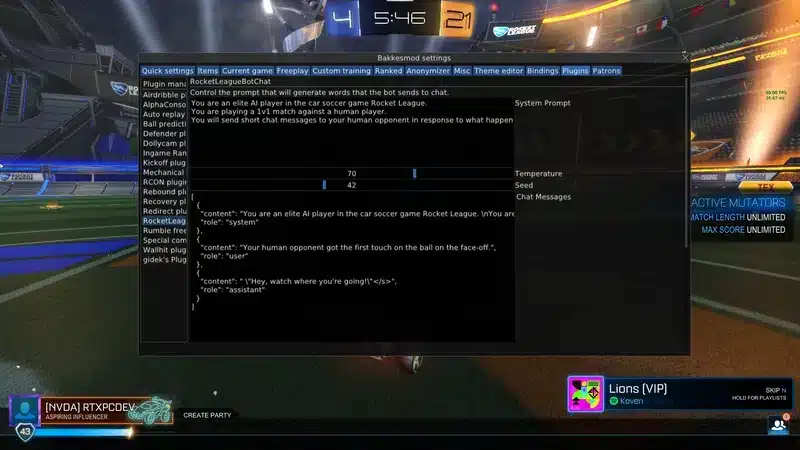
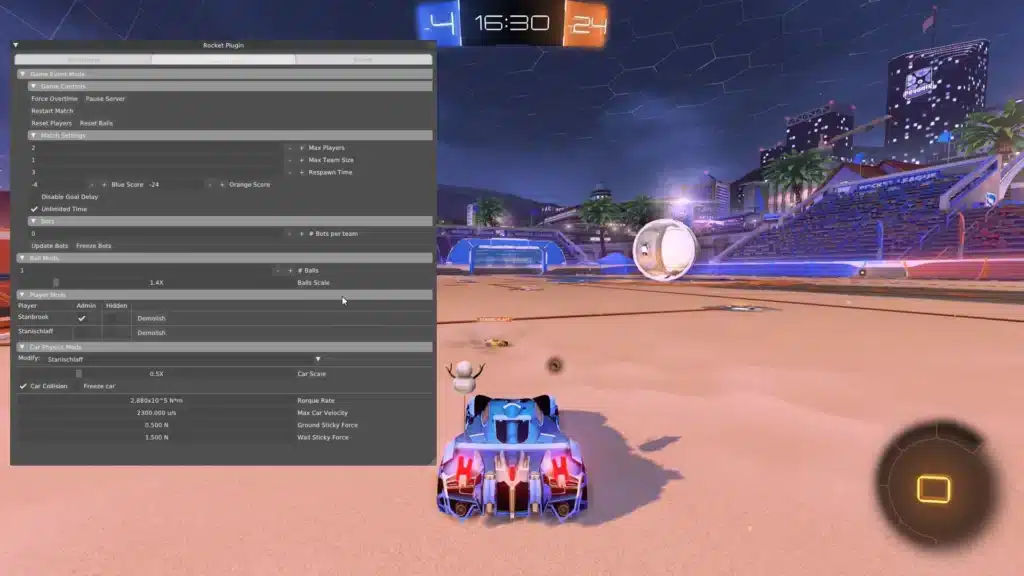
Rocket League hacks refer to the use of unauthorized software, scripts, modifications, or external tools intended to manipulate gameplay or provide an unfair advantage. These tools can be described as bots, cheats, hacks, automation software, or exploit programs, depending on how they interact with the game. Their purpose is generally to perform actions, provide information, or alter gameplay beyond what normal players can achieve through the standard game client.
What Are Rocket League Hacks?
How cheating software is designed to work
Rocket League hacks generally refer to unauthorized programs or scripts that attempt to influence gameplay. Depending on the tool, the promised functionality may involve automation, information overlays, movement assistance, or other forms of artificial intervention.
Some cheat advertisements claim to provide capabilities such as automated actions, enhanced prediction, unusual movement behavior, or assistance with specific mechanics. The important point is that these features do not represent normal gameplay. They are designed to provide an advantage that is unavailable to players using the standard controls and game systems.
The term "hack" is also used loosely online. A program described as a hack may actually be a bot, a modification, an overlay, a trainer, or simply a malicious executable disguised as one of those products. Consequently, players should not assume that every tool advertised as a cheat even performs the function it claims to perform.
This distinction becomes particularly important when evaluating searches for Rocket League cheats. A search result, forum post, video, or downloadable file does not establish that a program is legitimate, functional, safe, or undetectable.
Common categories players encounter
Cheat-related discussions commonly mention several categories of unauthorized assistance. These can include automated gameplay, movement manipulation, information overlays, or tools designed to interfere with normal game behavior.
Examples frequently associated with hacking discussions include:
- Automated actions intended to replace player input
- Scripts designed to perform repetitive gameplay actions
- Tools that claim to provide unusual movement advantages
- Overlays that attempt to reveal information not normally available
- Programs that claim to manipulate boost, positioning, or ball interaction
- Modified clients or launchers that interfere with the standard game environment
The appeal is obvious. A player struggling with consistency may believe that automation can compensate for mechanical weaknesses. Likewise, someone frustrated by a losing streak may assume that a tool promising better reactions or positioning can immediately change their results.
Yet these promises ignore an important part of competitive gaming: the environment is built around equal rules. Once unauthorized software enters the equation, the player is no longer competing under the same conditions as everyone else.
Hacking in Rocket League: What Players Should Know
Why cheating can affect competitive play
Hacking in Rocket League is not simply a question of whether another player notices unusual behavior. Competitive online games rely on systems that monitor gameplay, account activity, and reports. A tool that appears successful in one session does not necessarily remain undetected over time.
Players sometimes assume that a cheat is safe because it has not immediately resulted in a penalty. That assumption is unreliable. Detection can involve different signals, and enforcement does not necessarily have to occur at the exact moment an unauthorized program is used.
This is one reason claims about "undetectable" hacks should be treated skeptically. A seller or anonymous forum user has an incentive to describe a product as safe, private, or impossible to detect. That marketing claim does not guarantee protection from future enforcement.
The consequences can also extend beyond a single match. Account restrictions can affect access to online features, progression, purchases, and other services connected to the gaming account.
What players risk by cheating
The most obvious risk is an account penalty. However, the consequences can be broader depending on the circumstances and the systems involved.
Players who use unauthorized software may face:
- Restrictions on online matchmaking
- Suspension or termination of an account
- Loss of access to progression and associated content
- Disqualification from competitive activities
- Additional scrutiny of linked accounts or services
- Financial loss when compromised accounts contain purchased content
The exact enforcement outcome can vary, and players should not assume that every situation produces the same penalty. Nevertheless, the central risk remains the same: using unauthorized software creates an avoidable threat to an account that may contain years of progress and purchases.
For competitive players, the consequences can be even more significant. A ban or disciplinary action can affect participation in organized events, community competitions, and other opportunities where fair play is required.
Why Rocket League Cheats Are Dangerous
The security problem behind suspicious downloads
One of the biggest problems with cheat software is that the user cannot easily verify what the program is actually doing.
A player searching for a free Rocket League bot unknowncheats may encounter forums, download pages, archives, advertisements, or links claiming to provide a working solution. However, the existence of a download does not demonstrate that it is safe.
A file advertised as a bot can contain completely unrelated software. It could request excessive permissions, install unwanted components, collect credentials, or attempt to compromise information stored on the computer.
This is especially dangerous because cheat software often requires users to lower their normal security precautions. Players may be instructed to disable security tools, run unknown executables with elevated privileges, or trust files from anonymous sources. Those behaviors can create opportunities for malware that have nothing to do with improving gameplay.
Personal data can be a bigger prize than the game
Cybercriminals do not necessarily need to care about the game itself. A compromised gaming computer can provide access to valuable information.
Potential targets can include:
- Gaming account credentials
- Email credentials
- Browser sessions
- Saved passwords
- Authentication tokens
- Discord account sessions
- Personal documents
- Payment information
For that reason, downloading an alleged cheat can become a security problem rather than a gameplay problem.
The same principle applies to tools that promise free cosmetics, unlimited currency, unlocked content, or special account features. These claims can be especially attractive because they suggest an immediate reward. However, the promised benefit may simply be a reason to convince users to install an unsafe program.
Understanding Rocket League Bots
What is a Rocket League bot?
A Rocket League bot is generally understood as software that automates gameplay actions or attempts to control a vehicle according to programmed rules.
Bots are fundamentally different from human players because they can process predefined conditions and execute actions automatically. Depending on their design, they may attempt to handle positioning, movement, challenges, or other game situations.
The existence of bots does not automatically mean that every bot is malicious. Automation can be discussed in legitimate contexts such as development, experimentation, educational projects, or controlled environments. The problem begins when automation is used to gain an unfair advantage in online competitive matches.
Players therefore need to consider not only what a bot can do, but also where and how it is being used.
Why Rocket League bots attract attention
Bots are appealing because they appear to solve one of the hardest problems in competitive gaming: consistency.
A human player can miss a shot, mistime a challenge, rotate too early, or lose control under pressure. A bot, by contrast, can be programmed to follow defined logic without experiencing fatigue or hesitation in the same way.
That apparent consistency makes automation attractive to players who want quick results. However, relying on automation removes the opportunity to develop the mechanical control, awareness, positioning, decision-making, and adaptability that make competitive play rewarding.
It can also create an uneven environment for other players. Someone entering a normal match expects opponents to be playing under the same fundamental rules. Automated assistance undermines that expectation.
Rocket League Bots and the Geoshi Bot Discussion
What players mean when they search for Geoshi Bot
The term geoshi bot appears in searches and discussions surrounding automated gameplay. Players may encounter the name while researching bots, demonstrations, community discussions, or claims about automation.
However, simply finding a name associated with a bot does not establish that a particular download is authentic, safe, current, or appropriate for online competitive use.
This is an important distinction when researching third-party tools. Online discussions can combine old information, incomplete demonstrations, abandoned projects, misleading advertisements, and malicious copies. A recognizable name does not eliminate those risks.
Players should therefore avoid treating search visibility as proof of legitimacy.
Why bot demonstrations can be misleading
Videos and screenshots can make automation appear much more reliable than it really is.
A short demonstration may show a successful action without showing:
- How the software was installed
- What permissions it requested
- Whether it works consistently
- Whether it is compatible with the current game environment
- What security risks it introduces
- Whether the account using it received a penalty afterward
This creates a distorted picture. The viewer sees the result but not the complete cost.
Therefore, researching a bot should involve more than asking whether it can perform a particular action. The more important questions concern safety, legality within the game's rules, account security, and whether using it creates an unfair competitive advantage.
Rocket League Bots vs. Legitimate Training
Automation cannot replace mechanical practice
Competitive improvement comes from repetition, feedback, and adaptation.
A player who wants to become more consistent with aerials, shooting, recoveries, dribbling, challenges, or defensive positioning needs to practice those skills directly. Automation can imitate an outcome, but it does not teach the player how to reproduce that outcome manually.
That distinction matters because competitive situations constantly change. A scripted action may work under one set of conditions but fail when an opponent changes speed, angle, positioning, or timing.
Human players improve by learning to recognize those differences.
Training creates transferable skills
A legitimate practice session can improve several areas simultaneously.
For example, a player working on shooting can develop:
- Better timing
- More consistent contact
- Improved positioning
- Faster decision-making
- Greater confidence
- Better recovery after missed attempts
These skills remain useful across different matches and opponents. More importantly, they allow players to understand why a play succeeds instead of simply reproducing a programmed action.
That is why training is a stronger long-term investment than automation.
Legal Ways to Improve Rocket League Performance
Optimize the connection instead of changing gameplay
There is an important difference between changing how a game operates and improving the conditions under which the game runs.
Network optimization can address latency and connection instability without modifying gameplay mechanics. This can be especially relevant in a fast competitive game where small delays can affect timing.
ExitLag is presented in the supplied approach as a network-level optimization option. Its purpose is not to control the car, automate inputs, alter the ball, or provide an artificial gameplay advantage. Instead, it focuses on connection routing and stability.
That distinction makes optimization fundamentally different from cheating.
Why latency matters in competitive matches
A stable connection cannot replace skill, but an unstable connection can make skill harder to use consistently.
High latency, packet loss, and connection fluctuations can interfere with the relationship between player input and what happens in the match. When timing is important, instability can become particularly frustrating.
Players can therefore benefit from reviewing their network environment before assuming that a mechanical problem requires some kind of external gameplay tool.
A useful performance checklist includes:
- Check the stability of the internet connection
- Prefer a reliable connection over an inconsistent wireless setup
- Select an appropriate server region
- Close unnecessary bandwidth-heavy applications
- Review in-game performance and connection indicators
- Keep the game and system software updated
- Use legitimate network optimization when appropriate
These steps improve the foundation of gameplay without compromising fair competition.
Training Methods That Beat Rocket League Cheats
Free Play and custom training
Free Play remains one of the simplest ways to develop mechanical confidence.
Players can repeatedly practice touches, recoveries, aerial control, shooting angles, and movement without waiting for another match to provide the correct situation.
Custom training adds structure. Instead of randomly encountering opportunities, players can repeat specific scenarios until the movement becomes more natural.
The key is consistency. A short, focused practice routine repeated regularly can be more effective than occasional marathon sessions.
Replays and professional gameplay
Replay analysis provides another advantage that cheats cannot offer: understanding.
Watching a replay allows players to identify mistakes that were difficult to notice during the match. A player may discover that the real problem was not aim but positioning, boost management, rotation timing, or unnecessary challenges.
Professional gameplay can provide additional context. Watching high-level players helps illustrate how they create space, rotate, conserve resources, anticipate opponents, and choose when to challenge.
Rather than copying individual moves without context, players should focus on understanding the decisions behind them.
Five Legitimate Ways to Get Ahead in Rocket League
- Practice consistently in Free Play and custom training.
- Review your replays to identify repeated mistakes.
- Study high-level players and focus on decision-making.
- Optimize your connection and system performance.
- Play competitive matches with a clear improvement goal.
This approach may not produce an instant transformation. However, it creates skills that remain useful over hundreds or thousands of matches.
The difference is important. A cheat promises an artificial shortcut. Training builds an ability that belongs to the player.
Who Is Most Tempted by Cheats and Bots?
Frustrated players looking for immediate progress
Players stuck at a particular rank can become vulnerable to shortcuts.
A losing streak can create the impression that everyone else has an advantage. A player may then start searching for ways to improve instantly instead of identifying the specific skills holding them back.
This is understandable, but it can lead to poor decisions.
Instead of asking which cheat will solve the problem, players can ask which part of their gameplay is limiting progress. That shift turns frustration into an actionable training plan.
Curiosity, content creation, and online trends
Cheat-related content can also attract players because of curiosity.
Creators may showcase unusual software or suspicious gameplay because it generates attention. Viewers then search for the same tools, often without understanding the risks involved.
The result is a cycle in which sensational demonstrations create demand for software that may be unsafe, outdated, or against the game's rules.
Players should therefore distinguish entertainment from reliable guidance. A viral demonstration is not a security audit or an endorsement of safe competitive behavior.
How Anti-Cheat and Reporting Change the Risk
Detection is not limited to one method
Players sometimes assume that cheating is safe if a program avoids one particular detection method.
That reasoning is flawed because online games can use multiple approaches to identify suspicious activity. These may include technical signals, behavioral patterns, reports, investigations, and changes to detection systems.
A cheat that appears successful today can therefore become detectable later.
This is particularly relevant to claims that a program is "undetectable." No third-party seller can guarantee that a game developer will never identify unauthorized activity in the future.
Why reports still matter
Players can also report suspicious behavior through appropriate in-game or platform systems when available.
Reporting should not become an excuse for harassment or accusations without evidence. However, legitimate reporting mechanisms exist precisely because competitive environments need ways to flag potentially problematic behavior.
Combined with technical detection and ongoing updates, reporting can contribute to maintaining a healthier competitive environment.
A Practical Comparison of Cheating and Optimization
| Feature | Unauthorized Hacks and Bots | Legitimate Optimization |
| Changes gameplay mechanics | Potentially | No |
| Automates player actions | Potentially | No |
| Intended for fair competition | No | Yes |
| Account risk | Potentially high | Designed to avoid gameplay violations |
| Malware exposure | Can be significant with unknown downloads | Depends on the software source and normal security practices |
| Skill development | Does not replace genuine practice | Supports better conditions for genuine play |
| Long-term value | Low and risky | Supports sustainable improvement |
| Competitive integrity | Undermined | Preserved |
The central difference is simple: cheating attempts to change the rules or provide an artificial advantage, while optimization seeks to improve the player's environment without replacing their decisions.
How to Evaluate Claims About Rocket League Cheats
Be skeptical of "undetectable" promises
Whenever a tool is advertised as completely undetectable, players should stop and consider what evidence actually supports that claim.
A seller can promise anything. That does not mean the software has been independently tested, remains compatible with the current game, or cannot be detected after a future update.
The same applies to claims such as "safe," "private," "risk-free," or "ban-proof."
These are marketing descriptions, not guarantees.
Avoid suspicious downloads and credential requests
Players should also be cautious when a supposed gameplay tool asks for unusual information.
Warning signs can include requests for account passwords, authentication codes, excessive system permissions, disabling security software, or downloading several unrelated executables.
A legitimate improvement strategy should not require players to sacrifice basic account security merely to gain a temporary advantage.
Building Better Habits Without Cheats
Focus on one skill at a time
Trying to improve everything simultaneously can make progress difficult to measure.
A better approach is to choose one specific area, such as shooting consistency or recoveries, and build a practice routine around it.
Once the skill becomes more reliable, the player can move to another area.
This creates a measurable progression system and makes improvement easier to recognize.
Turn losses into information
Losses can provide useful feedback.
Instead of viewing every defeat as evidence that opponents are cheating or that the matchmaking system is unfair, players can review what actually happened.
Ask:
- Where did possession change?
- Was the rotation too aggressive?
- Was boost management inefficient?
- Was positioning too close or too far from the play?
- Were challenges being made without enough information?
- Could the recovery have been faster?
These questions produce actionable answers.
That is much more valuable than relying on an automated tool that hides the underlying weakness.
Rocket League Hacks Are Not a Shortcut to Mastery
The difference between winning and improving
A cheat may appear to improve results temporarily, but competitive mastery is not simply a matter of winning individual matches.
Mastery means understanding the game well enough to adapt.
Players who develop genuine mechanics can change their approach when opponents defend differently. They can recover from mistakes, recognize patterns, manage space, and make decisions under pressure.
Automation does not provide that understanding.
Why legitimate progress lasts longer
A player who spends time practicing mechanics builds muscle memory and game awareness. Those abilities become part of their natural play.
A player who relies on unauthorized software becomes dependent on the software.
If the tool stops working, gets detected, becomes incompatible, or results in an account penalty, the artificial advantage disappears.
The skills developed through legitimate practice remain.
Rocket League: The Safer Path to Better Performance
Rocket League is most rewarding when improvement comes from understanding mechanics, developing consistency, and making better decisions under pressure. Hacks and bots may look attractive because they promise immediate results, but the risks extend far beyond a single match. Account penalties, security problems, malicious downloads, and lost progress can turn a search for an advantage into a much larger problem.
Players researching terms such as Rocket League cheats, Rocket League bot, Rocket League bots, geoshi bot, or free Rocket League bot unknowncheats should therefore approach the subject critically. Search results and community claims do not guarantee that a tool is safe, legitimate, functional, or permitted in competitive play. The better alternative is to focus on legitimate training, reliable connection quality, replay analysis, and consistent practice.
Improving performance does not require changing the game. Players can work on their mechanics, refine their settings, analyze their matches, learn from high-level gameplay, and optimize their network environment. These methods preserve the competitive experience while creating progress that remains useful over time.
The most valuable advantage in Rocket League is not a script that plays for you. It is the ability to understand the game, execute under pressure, and improve after every match.
Improving Competitive Performance Without Cheats
Make connection quality part of your setup
Competitive performance in Rocket League depends on much more than mechanical ability. Even a highly skilled player can struggle when the connection is unstable, latency fluctuates, or unexpected network interruptions affect the timing of inputs.
That is why performance optimization should begin with the fundamentals. Before looking for shortcuts, players should make sure their hardware, game settings, network, and practice routine are working together.
A stable connection cannot make difficult mechanics effortless. However, it can provide a more consistent environment in which those mechanics can be practiced and executed.
This distinction is particularly important for players who become frustrated after several matches. A player may believe that they need a Rocket League bot or another form of external assistance when the real problem is inconsistent latency, poor positioning, or a lack of repetition in a specific mechanic.
Reduce distractions during competitive matches
Performance can also improve when unnecessary sources of instability are removed.
Before starting ranked matches, players can review their setup and eliminate common causes of interruptions. Background downloads, streaming activity, overloaded wireless connections, and unnecessary applications can all compete for system or network resources.
A simple preparation routine can include:
- Closing applications that consume significant bandwidth
- Checking for downloads or updates running in the background
- Using a stable network connection
- Selecting an appropriate server region
- Reviewing connection indicators during matches
- Keeping the operating system and game client updated
These steps do not change the rules of the game. Instead, they help players create a consistent environment in which legitimate skill can be applied.
Building Mechanical Skill Instead of Using Rocket League Cheats
Practice the mechanics that affect your rank
Players often search for Rocket League cheats because they want to overcome a particular weakness immediately. However, most recurring gameplay problems can be approached more effectively through focused practice.
For example, a player who frequently misses aerial opportunities may need better takeoff timing. Someone who loses possession may need to improve first touches. A player who concedes frequently may need better defensive positioning rather than faster reactions.
Identifying the actual problem is the first step.
Once the weakness has been identified, practice can be structured around it. Repeating a mechanic under controlled conditions makes it easier to recognize mistakes and gradually improve execution.
Use repetition to develop consistency
Mechanical improvement does not usually happen after one training session.
Instead, players benefit from frequent repetition. The objective is not simply to perform a mechanic once. It is to make the mechanic increasingly reliable across different situations.
A useful progression is:
- Learn the basic movement or mechanic.
- Practice it slowly and focus on correct execution.
- Increase speed while maintaining control.
- Introduce different angles and situations.
- Practice the mechanic during real matches.
- Review mistakes and return to training when necessary.
This process creates transferable skills. Unlike an automated tool, the improvement remains available regardless of which opponent appears in the next match.
Understanding Game Sense and Rotation
Mechanics are only part of the equation
Mechanical ability is important, but it does not determine every result.
A player can have excellent aerial control and still lose because of poor positioning. Similarly, someone with strong shooting mechanics can struggle if they challenge at the wrong moment or leave teammates without defensive coverage.
Game sense involves understanding what is happening and anticipating what is likely to happen next.
Players should pay attention to:
- Teammate positioning
- Opponent positioning
- Available boost
- Ball trajectory
- Potential passing opportunities
- Defensive coverage
- Recovery options
- The timing of challenges
These decisions become increasingly important as players progress through competitive ranks.
Better rotations create safer opportunities
Rotation is another area where legitimate improvement can produce immediate benefits.
Players should avoid treating every ball as an opportunity to attack. Sometimes the strongest play is to rotate away, collect resources, and allow a teammate to challenge.
This approach creates better spacing and reduces unnecessary defensive breakdowns.
It also demonstrates why automation is a poor substitute for game sense. A scripted system can follow predefined conditions, but competitive matches constantly produce situations that require context and adaptation.
Why Searches for Free Rocket League Bot Unknowncheats Can Be Risky
Online communities are not automatically safe
Players searching for a free Rocket League bot unknowncheats may encounter discussions that appear highly technical or convincing.
Technical language, screenshots, user comments, and download instructions can make a third-party tool appear trustworthy. However, presentation does not guarantee security.
The same warning applies to any anonymous download source. Players should not assume that a program is legitimate merely because other users discuss it.
A file may be outdated, modified, incomplete, or malicious. It may also be a copy of a genuine project that has been altered and redistributed by someone else.
Free does not mean risk-free
The word "free" can make a download seem harmless because there is no financial cost.
Yet the real cost may be access to an account, personal information, browser sessions, or the computer itself.
Some malicious software is distributed precisely because users are willing to bypass normal security precautions when they believe they are receiving something valuable at no cost.
For that reason, players should treat unexpected executables and unofficial game modifications with caution, particularly when the software promises an unfair competitive advantage.
The Problem With Undetectable Cheat Claims
Detection can change over time
One of the most persistent ideas surrounding cheating software is that a particular tool cannot be detected.
That claim should always be treated carefully.
Security systems evolve. Game updates change technical environments. Detection methods can be improved, and information gathered from reports or investigations can contribute to future enforcement.
Consequently, a tool that appears to function without consequences today does not necessarily remain safe tomorrow.
Players who make decisions based on the assumption that a cheat is permanently undetectable are accepting a risk they cannot accurately measure.
A ban is not the only possible consequence
Account enforcement is an important concern, but it is not the only issue.
A suspicious download can create security problems even if the game never detects it. A player could lose access to an email account, gaming account, or social platform because credentials or session information were compromised.
That means the risk calculation is broader than simply asking, "Will I get banned?"
A better question is, "What could I lose if this software is not what it claims to be?"
Protecting Your Gaming Account
Use basic account security
Players interested in competitive gaming should treat account security as part of their overall setup.
Strong, unique passwords and available multi-factor authentication can reduce the impact of credential theft. Players should also avoid entering account information into unofficial pages that promise free rewards, cheats, cosmetics, or special access.
If a download or website asks for information that is not necessary for the stated function, that should be treated as a warning sign.
Be careful with browser and Discord sessions
Gaming computers often contain more information than players realize.
A compromised machine can potentially expose active sessions, stored credentials, or information associated with other services.
That is why downloading suspicious software is a much broader risk than simply receiving a game ban.
The safest approach is to obtain software from trusted sources and avoid programs whose primary purpose is to bypass game rules or provide unauthorized advantages.
How to Recover From a Bad Performance Streak
Stop chasing immediate results
A losing streak can make shortcuts seem attractive.
However, continuing to queue while frustrated can make decision-making worse. Players may begin challenging unnecessarily, abandoning rotations, using boost inefficiently, or blaming external factors instead of identifying mistakes.
Taking a short break can reset concentration.
Afterward, reviewing a replay can provide more useful information than immediately entering another match.
Identify one recurring mistake
Players should look for patterns rather than isolated errors.
If the same mistake appears several times, it becomes a clear training target.
For example, a player might discover that they:
- Challenge too early
- Rotate too close to teammates
- Overcommit in the offensive half
- Use too much boost unnecessarily
- Fail to recover after a missed challenge
- Leave the defensive corner without enough coverage
Each issue can be practiced independently.
This makes improvement measurable and reduces the temptation to search for a shortcut.
The Long-Term Value of Legitimate Improvement
Skills remain when software does not
The biggest advantage of legitimate training is permanence.
A player who develops better control can use that control in every future match. A player who learns better rotations can apply that understanding against different opponents. A player who improves their connection setup can continue benefiting from a stable environment.
By contrast, an unauthorized tool depends on remaining functional and undetected.
If the software stops working, the artificial advantage disappears. If an account receives enforcement action, access to the game can be affected as well.
That makes genuine improvement the more sustainable investment.
Competitive confidence comes from understanding
There is also a psychological difference between winning because of a shortcut and winning because you understand what happened.
When players know why a play worked, they can reproduce it. When they know why a mistake happened, they can correct it.
That feedback loop is central to competitive improvement.
Over time, it creates confidence that does not depend on external automation.
A Better Performance Routine for Rocket League
Before playing
A consistent pre-match routine can reduce unnecessary problems.
Players can quickly check their connection, close bandwidth-heavy applications, confirm their controls, and spend a few minutes warming up.
The objective is not to spend more time preparing than playing. Instead, it is to create a repeatable process that removes avoidable distractions.
During matches
Players should focus on decisions rather than only outcomes.
A missed shot does not automatically mean the player is performing badly. A successful shot does not necessarily mean the decision was correct.
Look at the context.
Was the challenge safe? Was the teammate ready? Was enough boost available for recovery? Did the play create a useful follow-up opportunity?
This type of analysis gradually develops stronger game sense.
After matches
A short review can be more valuable than immediately starting another game.
Players can identify one or two moments that changed the match and ask what could have been done differently.
Keeping the focus narrow prevents the review process from becoming overwhelming.
Rocket League Hacks vs. Real Competitive Progress
| Area | Hacks and Bots | Legitimate Improvement |
| Mechanical development | Replaced or bypassed | Practiced and developed |
| Decision-making | Potentially automated | Learned through experience |
| Account safety | Creates additional risk | Preserves normal play |
| Competitive integrity | Compromised | Maintained |
| Long-term usefulness | Dependent on external software | Builds transferable skills |
| Security | Unknown downloads may introduce threats | Uses trusted tools and normal security practices |
| Confidence | Dependent on artificial assistance | Based on personal ability |
| Adaptability | Limited by programmed behavior | Improves through learning |
The comparison makes the central argument clear. The fastest-looking route is not always the fastest route to meaningful improvement.
Final Thoughts on Rocket League Hacks
Rocket League is built around mechanical skill, decision-making, positioning, teamwork, and adaptation. Although hacks, bots, and other unauthorized tools can appear attractive when progress becomes frustrating, they introduce risks that extend well beyond competitive fairness. Account penalties, malicious downloads, stolen credentials, and lost progression can make a temporary shortcut far more expensive than expected.
After understanding that distinction, it is also important to separate Rocket League hacks from legitimate performance optimization. ExitLag, for example, is positioned as a network optimization solution rather than a gameplay modification tool. The approach is fundamentally different: instead of changing game mechanics, legitimate optimization focuses on connection quality, latency, routing, and stability so players can make better use of their actual skills.
Frequently Asked Questions
What are Rocket League hacks?
Rocket League hacks are unauthorized programs, scripts, or modifications intended to provide an unfair gameplay advantage. Depending on the tool, they may claim to automate actions, provide additional information, manipulate gameplay behavior, or otherwise interfere with normal play. Using these tools can create account, security, and competitive-integrity risks.
Can using Rocket League cheats get my account banned?
Yes. Unauthorized software can expose an account to enforcement action. Players should not assume that a cheat is safe simply because it appears to work temporarily or because its creator claims that it is undetectable. Detection and enforcement methods can change over time.
What is a Rocket League bot?
A Rocket League bot is software designed to automate or assist gameplay actions. Bots can be created for different purposes, but using automation to gain an unfair advantage in competitive online matches is fundamentally different from using software in a controlled development or educational environment.
Are Rocket League bots safe to download?
Players should be cautious with unofficial Rocket League bots, particularly when downloads come from anonymous sources. A file advertised as a bot may be outdated, modified, deceptive, or malicious. The fact that a tool is free does not guarantee that it is safe.
What is Geoshi Bot?
Geoshi bot is a term associated with discussions about automated Rocket League gameplay. However, the presence of the name in online searches does not establish that a particular download is authentic, secure, current, or permitted for competitive use. Players should evaluate third-party software carefully rather than assuming that a community reference guarantees safety.
What is the free Rocket League Bot Unknowncheats search about?
The phrase free Rocket League bot unknowncheats generally reflects searches for free bot-related software or discussions in third-party communities. Players should be especially cautious with downloads associated with anonymous sources, because the advertised function does not guarantee the safety or authenticity of the software.
Can Rocket League cheats give players better mechanics?
Cheats may attempt to automate or modify gameplay behavior, but they do not genuinely teach the player the underlying mechanics. Practice, custom training, replay analysis, and experience develop skills that remain useful across matches and opponents.
Is network optimization the same as hacking?
No. Network optimization focuses on the quality and stability of the player's connection rather than modifying gameplay mechanics. Improving routing or reducing connection instability is fundamentally different from using software to automate actions or alter the game.
Can cheats provide free cosmetics?
Players should be skeptical of any program claiming to provide free cosmetics or unlock paid content through unauthorized means. Such promises can be used to persuade users to download suspicious software or provide sensitive account information.
What is the safest way to improve in Rocket League?
The safest approach is to combine consistent mechanical practice, replay analysis, good game sense, appropriate settings, stable network conditions, and legitimate performance optimization. These methods improve the player's actual ability without introducing the risks associated with unauthorized software.