This Splatoon Raiders Review looks at Nintendo's boldest spin on the franchise yet: a looter shooter built almost entirely around solo and co-op action instead of competitive Turf War.
If you have followed Splatoon since its debut, this Splatoon Raiders Review answers the question everyone is asking. Is trading competitive multiplayer for a PvE loot grind actually worth it?
Here is the short answer: Splatoon Raiders takes the series' signature ink combat and rebuilds it around raids, gear upgrades, and a small squad of characters called tanks. It works, and it works well for players who enjoy structured, replayable action.
This guide breaks down the combat, the story, the co-op options, and how to keep your sessions smooth when you play with friends online.
Splatoon Raiders Review: What Is the Game All About?
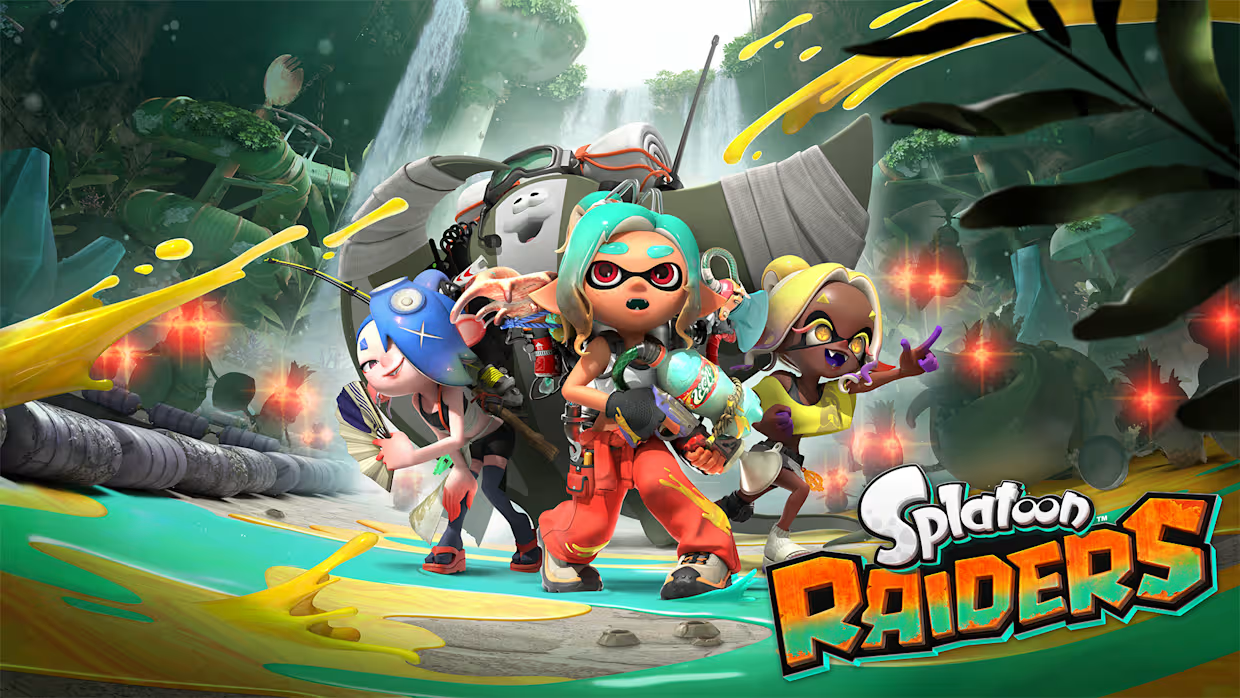
Splatoon Raiders drops players into the Spirhalite Islands as a mechanic working alongside Deep Cut, the band first introduced in a previous mainline entry. A helicopter crash strands the crew, and the story unfolds through raids across the islands.
Unlike earlier single-player content in the series, which functioned as short side modes, this release is a full standalone experience. There is no competitive Turf War mode here at all.
A Different Kind of Splatoon Game
The core structure borrows heavily from looter shooters. You pick a tank, which functions as a character class, then head into short, focused raids to earn gear and materials.
Every build in this Splatoon Raiders Review starts with picking a tank, so here is what each one brings to a raid:
- Three selectable tank classes: Speed, Power, and Tactical
- Upgradeable gadgets like turrets, ink vortexes, and trip mines
- Multiple selectable Ultimate abilities per tank
- A rewarding post-game campaign for players who finish the story
The Story and Presentation
The plot itself is intentionally light. It serves mostly as a reason to keep raiding rather than as a deep narrative experience, and most reviewers agree the writing is charming but forgettable.
Visually, however, the game keeps the vibrant, colorful identity that made the franchise popular in the first place. Gliding through ink while reloading still feels smooth and responsive.
Players can choose between an Inkling or an Octoling as their character, a small but welcome nod to long-time fans. Either way, the mechanic role puts you at the center of every raid rather than on the sidelines.
Who Should Read This Splatoon Raiders Review
This Splatoon Raiders Review is aimed at two groups: longtime fans wondering if the spin-off honors the series, and newcomers curious about a looter shooter on Nintendo hardware.
If you fall into either camp, the answer leans positive. Just come in expecting raids and gear grinding, not competitive matches against other players.
Is the Splatoon Raiders Combat Loop Actually Fun?
The heart of any Splatoon Raiders Review has to focus on combat, since that is where the game spends most of its runtime. The core loop is simple: shoot, die, upgrade, shoot again.
Difficulty and Replayability
Difficulty scales through named tiers, and the hardest setting is genuinely demanding. Consequently, players looking for a real challenge will find plenty of it here, especially in the dungeon style raids.
Any honest Splatoon Raiders Review has to acknowledge that this difficulty curve is one of the biggest surprises for players expecting a casual experience.
Raid variety keeps things from feeling too repetitive:
- Exploration based raids across open island sections
- Multi-level dungeon raids ending in a boss fight
- Time attack raids against the clock
- Standalone challenge levels with unique modifiers
- Story missions featuring unique, mechanically distinct bosses
Weapons and Loadout Customization
Weapon variety is one of the strongest parts of the package. Between the base arsenal, gadget upgrades, and Ultimate options, players can spend hours after the credits roll just refining a build.
However, some reviewers note the middle stretch of raids can feel samey, since the maps rarely favor one weapon type strongly over another.
Post-Game Content
Finishing the story is not the end of the road. A rewarding post-game campaign unlocks tougher raid variants and additional gear, giving dedicated players a reason to keep grinding well after the credits roll.
Indeed, this is where the loadout customization really shines, since higher difficulty raids demand smarter gadget and weapon combinations rather than just higher numbers.
How Does Co-op and Online Play Work in Splatoon Raiders?
Multiplayer works differently here than in past entries. Up to four players can team up, either through local wireless play or online, and enemy difficulty scales automatically based on player count.
Local Wireless vs Online Play
Local play requires each participant to bring their own console and their own copy of the game, since split-screen and shared-console play are not supported. Online play works similarly, just without the need to be in the same room.
- Up to four players per raid session
- Automatic difficulty scaling based on player count
- A dedicated Call for Help feature for online assistance
- Active online subscription required for internet-based sessions
Is Online Co-op Worth Using?
Yes, particularly on higher difficulty raids where enemy density spikes fast. Playing with a full squad cuts down how many enemies swarm any single player at once, which makes the harder raid tiers far more manageable.
What You Need Before Playing Online
Setting up an online raid session takes a small amount of preparation. Each participant needs their own console, their own copy of the game, and an active online subscription tied to their account.
Therefore, it helps to confirm everyone is ready before starting a session, since the difficulty scaling kicks in immediately once a full squad joins.
Pro Tips For Playing Splatoon Raiders
Pro Tips: Splatoon Raiders
- Start on a lower difficulty tier first: Difficulty only affects combat, not loot quality, so there is no real downside to easing in before jumping to the hardest setting.
- Prioritize gadget upgrades early: Tactical tools like turrets and trip mines scale well and make crowded raids far more manageable than relying on raw weapon damage alone.
- Save online sessions for raid-heavy play: A full squad is most valuable during dungeon and boss raids, where enemy density benefits from extra firepower.
- Experiment with all three tanks before committing: Each tank plays differently enough that your favorite playstyle may not be the one you expect going in.
Common Mistakes Splatoon Raiders Players Make
Common Mistakes Splatoon Raiders Players Make
- Judging the game by its story alone: The narrative is intentionally light. Fix: treat the story as a backdrop and focus on the raid gameplay loop instead.
- Ignoring gadget customization: Many new players lean only on weapons. Fix: invest in gadget upgrades early, since they make crowd control far easier.
- Skipping lower difficulty raids: Jumping straight to the hardest tier often leads to frustration. Fix: build up gear and confidence on easier settings first.
Overall, this Splatoon Raiders Review finds that most early frustration comes from these avoidable habits rather than the core design itself.
| Difficulty Tier | Enemy Density | Best For | Loot Impact |
|---|---|---|---|
| Tourist | Low | New players learning the loop | Same as other tiers |
| Raider | Medium | Most solo and co-op players | Same as other tiers |
| Survivalist | High | Experienced players seeking a challenge | Same as other tiers |
Should You Optimize Your Connection for Online Raids?
Online co-op depends entirely on a stable connection between every player in the session, and dropped connections mid-raid can undo real progress fast. No Splatoon Raiders Review would be complete without covering this side of the experience.
Why Connection Quality Matters in Raids
Furthermore, since difficulty scales with player count, a disconnect mid-session does not just remove a player, it changes the balance of the entire fight for everyone left standing.
- Wired connections reduce the chance of mid-raid disconnects
- A stable host connection matters as much as your own
- Background downloads on any console in the session can affect everyone
- Router placement affects wireless stability for local sessions too
Where ExitLag Fits Into Your Wider Gaming Setup
It is worth being upfront here: ExitLag currently supports PC and mobile titles, not Nintendo Switch 2 consoles directly, so it will not optimize your Splatoon Raiders sessions on its own.
That said, most gamers split their time across multiple platforms. If you also play online games on PC, ExitLag is a connection optimizer that analyzes multiple network paths in real time and picks the fastest, most stable route to the game server.
- Real-time Optimization: Reduces delay and packet loss on supported PC and mobile titles.
- Multipath Technology: Routes traffic through multiple paths, so one bad route does not end your session.
- Multi-Internet: Switches between up to four connections automatically if one drops.
For your Switch 2 sessions specifically, a wired connection to your router and a quick check for background downloads will get you most of the same stability benefits.
If you want to see what ExitLag can do for your other games, the free trial is a simple way to test it.
Final Verdict: Splatoon Raiders Review Summary
This Splatoon Raiders Review lands on a clear recommendation for fans of looter shooters and structured co-op action. The combat loop, tank variety, and raid design carry the experience well past its light story.
If competitive Turf War is what drew you to the series originally, this spin-off will feel like a different game entirely, and that is by design.
For everyone else, the Splatoon Raiders Review consensus so far is a confident recommendation, especially for players who enjoy grinding gear and pushing into harder difficulty tiers.
All images used in this blog post belong to their respective owners and are used for informational and educational purposes only. They do not imply endorsement or affiliation with the rights holders.