A Steam Cloud error appears when Steam cannot confirm that the save data on your device matches the copy stored online. The warning may show before a game launches, after it closes, or when you move between a PC, laptop, Steam Deck, or another supported device.
Some games create more opportunities for Steam Cloud error messages because they generate frequent saves, configuration files, or multiplayer session data. Players troubleshooting a specific title can also review this guide to Content Warning on Steam for a practical example of checking game requirements, platform settings, and connection-related problems without treating every warning as the same issue.
The safest response to a Steam Cloud error is not to click through the message immediately. First, identify which copy is newer, back up your local files, and confirm whether the problem affects one game or your entire library. That approach can fix Steam Cloud error conditions while reducing the risk of overwriting recent progress.
What Does a Steam Cloud Error Mean?
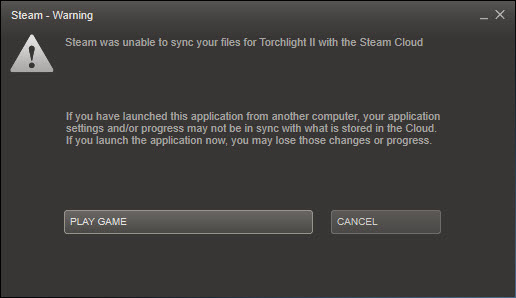
Steam Cloud stores files selected by a game’s developer and makes them available on other computers connected to the same Steam account. According to Valve’s Steamworks documentation, supported files are normally uploaded after a game exits and downloaded before it launches on another computer. Steam handles that synchronization through either the Steam Cloud API or Auto-Cloud, depending on how the developer implemented the feature.
A Steam Cloud error means that this process did not complete as expected. The client may be waiting for an upload, unable to download the newest file, or detecting two versions that cannot be reconciled automatically. In practical terms, most Steam Cloud sync error cases fall into one of three categories: a temporary communication failure, a mismatch between local and remote files, or a game-specific implementation problem.
The warning does not always mean your save is corrupted. However, it does mean you should pause before opening the game on another device. Launching with an older file can create additional Steam save sync issues, especially when the game immediately autosaves and replaces the version you intended to keep.
How Steam Cloud synchronization works
Steam commonly synchronizes supported files before and after a play session. Auto-Cloud can also synchronize selected groups of files when an application launches and exits. Games using dynamic cloud sync may perform additional synchronization around suspended Steam Deck sessions, but developers must explicitly support that behavior.
The basic sequence is usually:
- Steam checks the cloud before launching the game.
- The newest compatible files are downloaded when necessary.
- You play, change settings, and create new save data.
- The game closes.
- Steam uploads changed files to cloud storage.
- The client displays a current cloud status when the process finishes.
Interruptions at any point can trigger a Steam Cloud conflict or leave the status stuck on “Syncing,” “Out of sync,” “Unable to sync,” or “Retry sync.” Large save sets and many frequently changing files may also take longer to upload, because Valve notes that file quantity and size can affect synchronization time and bandwidth use.
Common causes of sync failures
Before trying to resolve Steam Cloud error messages, narrow down the cause. The most common possibilities include:
- Steam or the game closing before the post-session upload finishes.
- An unstable connection during an upload or download.
- Steam Cloud being disabled globally or for that specific game.
- Two devices modifying the same save before either one finishes syncing.
- A local save, mod, configuration file, or backup tool changing timestamps.
- Antivirus, firewall, or file-permission restrictions blocking access.
- Temporary Steam service problems.
- A game-specific cloud quota, file-path, or cross-platform configuration issue.
- A damaged Steam installation or library folder.
- A game that does not support Steam Cloud for the files you expected it to store.
A broader network problem can affect cloud saves, downloads, authentication, and multiplayer at the same time. Separating a network failure from a file mismatch is often the fastest way to resolve Steam Cloud error warnings without risking progress. When several Steam features are failing, use this Steam connection troubleshooting guide to check the network first instead of repeatedly changing save files. That distinction helps fix Steam Cloud error symptoms without creating a second problem.
How Do I Fix a Steam Cloud Error?
To fix a Steam Cloud error safely, start with reversible steps. Do not delete remote data, reinstall the game, or choose between conflicting saves until you have made a backup. Steam Support states that it cannot recover lost saves or resolve cloud conflicts on the user’s behalf, so preserving your own files is essential.
The sequence below moves from low-risk checks to deeper troubleshooting. After each step, reopen Steam and look at the cloud status beside the affected game. Stop once synchronization works. A Steam Cloud error that returns after a complete restart usually needs a settings, file, or permission check.
| Steam status or symptom | Most likely category | Safest first action |
| Unable to sync | Network, client, or service interruption | Wait, restart Steam, and retry |
| Out of sync | Local and cloud versions differ | Back up files and compare timestamps |
| Cloud status stuck on syncing | Game process or upload still active | Close the game fully and wait |
| Several games affected | Global setting, Steam client, or network | Check Cloud settings and connectivity |
| One game affected | Game files, save path, quota, or developer issue | Verify files and check official game support |
| Conflict after changing devices | Newer progress exists on only one device | Stop launching and identify the newest save |
Start with the safest troubleshooting steps
- Wait and retry the sync.
A temporary service or connection interruption may clear without any local changes. Select the retry option beside the game when Steam offers it. - Close the game completely.
Check Task Manager, Activity Monitor, or your system monitor to confirm the game is no longer running. Steam may not finish uploading while the process remains open. - Exit and restart Steam.
Use Steam > Exit rather than only closing the window. Then reopen the client and allow it to finish signing in. - Restart the computer and router.
This clears temporary processes and network sessions that may be contributing to a Steam Cloud sync error. If the Steam Cloud error disappears after the reboot, the interruption was probably temporary; if it returns, continue through the remaining checks. - Confirm the device has internet access.
Test another website or online app. If the entire connection is unstable, address that before working with saves. - Check whether the problem affects one game or many games.
One affected title points toward game files, save paths, or developer configuration. Multiple affected titles point toward Steam, account settings, security software, or the network. This comparison helps fix Steam Cloud error cases without applying unrelated changes. It also shows whether a Steam Cloud conflict is isolated to one title or part of a wider client problem. - Let Steam finish syncing before shutting down.
Valve’s documentation explains that changed cloud files are normally uploaded after the game exits. Closing Steam or powering off too quickly can interrupt that stage.
These steps solve many temporary Steam save sync issues without touching the files themselves. They also create a clearer diagnosis if the warning returns.
Check Cloud settings, game files, and cache
Next, verify that synchronization is actually enabled. A Steam Cloud error can remain active indefinitely when either the global or per-game option is disabled.
Global Steam Cloud setting
- Open Steam.
- Select Steam > Settings > Cloud.
- Confirm that Steam Cloud synchronization is enabled for supported applications.
- Restart Steam after changing the setting.
Per-game Steam Cloud setting
- Open your Library.
- Right-click the affected game.
- Select Properties.
- Open General.
- Confirm that the option to keep saves in Steam Cloud is enabled, when available.
Valve documents both global and per-game controls. A missing per-game option may mean the title does not support Steam Cloud, uses its own account-based save system, or does not expose a user-facing toggle.
Account security matters during troubleshooting as well. Unexpected logins, shared computers, or unauthorized access can create confusing activity across devices, so review this complete Steam account protection guide before changing credentials or dismissing unfamiliar sessions. Protecting the account will not automatically resolve Steam Cloud error messages, but it removes an important source of uncertainty.
Then verify the installation:
- Right-click the game in your Library.
- Open Properties > Installed Files.
- Select Verify integrity of game files.
- Wait for the scan to finish.
- Restart Steam and retry synchronization.
File verification checks the installed game data. It does not guarantee that a damaged save can be repaired, but it can correct missing or altered installation files that prevent a game from reading or writing saves normally. If the Steam Cloud error remains after verification, continue with backups and conflict diagnosis instead of repeating the scan.
You can also clear the Steam download cache through Steam > Settings > Downloads > Clear Download Cache. Expect to sign in again afterward. This step is more relevant when the client also has download, update, or connection problems. It may help resolve Steam Cloud error warnings tied to a damaged client cache, but it should not be treated as a universal cure for every Steam Cloud conflict.
How Do You Resolve a Steam Cloud Conflict Without Losing Saves?
A Steam Cloud conflict occurs when Steam sees a local file and a cloud file that differ in a meaningful way. This often happens after playing offline, switching devices too quickly, restoring a backup, using mods, or closing Steam before the previous upload completed.
The conflict dialog may show timestamps, device information, or file details. Do not assume “Cloud” is safer simply because it is online. Likewise, do not assume “Local” is newer. The correct choice depends on where your most recent confirmed progress exists. Treat the Steam Cloud error as a data-version problem until you have proved that the network is the only cause.
Compare both versions before selecting one
Use this checklist before resolving the conflict:
- Which device did you play on most recently?
- Did you exit the game normally on that device?
- Did Steam finish uploading afterward?
- Is the local timestamp later than the cloud timestamp?
- Does the game show an in-game save date or playtime?
- Did you recently restore, copy, or modify save files?
- Were you offline during the last session?
- Does the newer file have a plausible size?
Timestamps are useful, but they are not perfect. A backup utility, mod manager, system clock problem, or manual file copy can change them. Valve has previously issued Steam client fixes for incorrect or unknown timestamps in cloud conflict dialogs, which is another reason to back up both versions when possible.
When Steam presents two choices, read the full dialog. Select the version that corresponds to your latest real gameplay, not simply the largest file or the most recent timestamp. To resolve Steam Cloud error prompts safely, preserve both candidates before allowing either version to overwrite the other. If you cannot determine which is correct, cancel the launch and make copies before proceeding.
Back up saves before forcing a new sync
Save locations vary by game and operating system. Common Windows locations include:
- Documents
- Saved Games
- %LOCALAPPDATA%
- %APPDATA%
- %USERPROFILE%
- The game’s installation folder
- Steam userdata folders
Valve’s Auto-Cloud documentation lists several possible platform-specific roots, including Windows AppData folders, Documents, Saved Games, macOS application-support paths, and Linux home or XDG data directories. Developers choose which files and locations are included.
For game-specific reports, the Steam Community discussion boards can reveal whether an update has caused similar Steam save sync issues for other players. Search by the exact game name and error message, then prioritize pinned developer posts or official support responses over unverified file-deletion advice. Community reports can help fix Steam Cloud error cases, but they should not replace backups.
A safe backup process is:
- Close the game and Steam.
- Find the game’s local save folder using the developer’s support page, PCGamingWiki, or the game community.
- Copy the entire save folder to a separate location.
- Name the backup with the date, device, and whether it came from local storage.
- Reopen Steam.
- Choose the file that reflects your newest confirmed progress.
- Launch the game and verify the save before creating more progress.
Do not delete the backup immediately. Keep it until you have launched the game more than once and confirmed that the correct progress survives a full close-and-sync cycle. These Steam save sync issues are much easier to reverse when a dated copy remains outside the active save folder. Confirm that the Steam Cloud error no longer returns before removing older backups.
Why Does Steam Keep Saying “Unable to Sync”?
Steam may keep showing “Unable to sync” because the underlying cause remains active. Repeatedly pressing retry will not solve a blocked file, a disabled setting, a full game-specific quota, or a conflict that still needs user input.
Persistent warnings require a more targeted diagnosis. First determine whether the error follows one title, one computer, one network, or your entire account.
When only one game is affected
If one game has the Steam Cloud error while other titles sync normally, investigate the affected game first. A recurring Steam Cloud error limited to one title usually points away from a global account outage and toward that game’s files or implementation.
Possible causes include:
- The game recently changed its save format or cloud configuration.
- A mod or launcher is modifying save files after the game closes.
- Cross-platform saves are not supported between the two devices.
- The game stores some data in Steam Cloud and other data through its own servers.
- The title has reached a developer-defined cloud quota.
- A save file is locked, read-only, corrupted, or stored in an unexpected path.
- Security software blocks that game’s executable from writing files.
- The developer temporarily disabled cloud support.
Steam Cloud quotas are configured per user and per game by the developer. Therefore, a quota problem can affect one title even while every other game works normally. Valve also notes that cross-platform behavior depends on how the developer configures file paths and platform synchronization.
A persistent Steam Cloud sync error in one title deserves game-specific troubleshooting. To resolve Steam Cloud error warnings for one title:
- Check the game’s official support page and patch notes.
- Verify its files.
- Confirm the per-game Cloud option is enabled.
- Back up and inspect the save folder.
- Temporarily disable mods or third-party launchers.
- Test a clean session without changing devices.
- Report the issue to the developer if it began after an update.
Avoid copying generic fixes from another game. Cloud integration differs between titles, so a procedure that is safe for one save format may damage another.
When every game is affected
If several titles show a Steam Cloud sync error, focus on the client, network, and operating system.
Player reports on the Steam subreddit and support discussions can help confirm whether a widespread client update or temporary outage is causing similar Steam Cloud conflict warnings. Compare several recent reports, check timestamps, and look for official confirmation before applying registry edits, console commands, or file deletions. That research can help you fix Steam Cloud error symptoms without following an isolated workaround blindly.
Check the following:
- Steam Cloud is enabled globally.
- Steam is fully updated.
- Your system date and time are correct.
- Steam can write to its installation and userdata folders.
- Security software is not blocking Steam.
- Another backup or synchronization program is not locking files.
- Your network allows stable uploads.
- The same error appears on another network or device.
- Steam is not stuck in Offline Mode.
- Your account does not show unexpected sessions.
For advanced diagnosis, Valve’s Steamworks documentation identifies cloud_log.txt inside the Steam installation’s logs folder as the relevant debugging log for Steam Cloud activity. A Steam Cloud error affecting every supported game may leave repeated patterns in that log. The file may show repeated upload failures, missing paths, or other clues, although interpreting it can require technical experience.
How Can ExitLag Help With Steam Cloud and Connection Stability?
ExitLag is designed to optimize network routes for supported online games and services. It can help when Steam save sync issues are part of a broader pattern that includes unstable connectivity, packet loss, fluctuating latency, or poor routing between your connection and online infrastructure.
However, ExitLag is not a save-recovery tool. It cannot choose the correct file in a Steam Cloud conflict, repair corrupted progress, increase a game’s cloud quota, or correct a developer’s cloud configuration. Its role is limited to the connection side of the problem.
Connection problems ExitLag may improve
ExitLag can analyze available routes and direct supported traffic through optimized paths. Depending on the network and destination, this may reduce route instability and improve connection consistency.
That can be useful when a Steam Cloud error appears alongside:
- Intermittent internet drops.
- Packet loss during online sessions.
- Unstable routing from the ISP.
- High or fluctuating latency in multiplayer games.
- Disconnects that prevent a game from closing cleanly.
- Other Steam connection problems occurring at the same time.
A more stable route may reduce the chance that connection interruptions contribute to failed online activity. Still, no routing tool can guarantee a successful cloud sync, because Steam Cloud also depends on the Steam client, local files, Valve’s services, and each game’s implementation.
Problems that require another solution
Use a different approach when the error involves:
- Choosing between local and cloud saves.
- Recovering deleted progress.
- Repairing corrupted save files.
- Correcting folder permissions.
- Disabling or re-enabling Steam Cloud.
- Fixing a game-specific cloud integration bug.
- Removing a mod conflict.
- Resolving an exceeded storage quota.
- Contacting the developer or Steam Support.
The best workflow is to protect the save first, diagnose the actual cause, and then optimize the connection only when network instability is relevant. This keeps the solution proportionate to the problem and avoids promising that connection optimization will repair data.
How Can You Prevent Future Steam Cloud Errors?

Prevention is mostly about allowing synchronization to finish and keeping a recoverable local copy of important progress. A Steam Cloud error is easier to manage when you already know where your newest local backup is stored. The more devices, mods, and backup tools you use, the more deliberate your routine should be.
A good prevention plan also assumes that cloud storage is convenient but not infallible. Keep independent backups for long campaigns, rare items, custom worlds, heavily modded games, or saves that would be difficult to recreate. This reduces the impact of recurring Steam save sync issues.
Use a safe end-of-session routine
After every important session:
- Save manually inside the game when possible.
- Return to the main menu.
- Exit through the game’s normal quit option.
- Wait for Steam to finish synchronizing.
- Confirm the cloud status is current.
- Only then close Steam or shut down the device.
This routine helps prevent Steam Cloud sync error messages caused by interrupted post-game uploads. It is particularly important on laptops and handheld devices that may sleep or lose connectivity immediately after a game closes.
Other useful habits include:
- Keep Steam and the game updated.
- Avoid launching the same game on two devices at once.
- Do not switch devices until the previous device finishes syncing.
- Back up saves before installing large mod packs.
- Exclude save folders from unrelated cloud-backup tools when they cause conflicts.
- Check free disk space and folder permissions.
- Use stable Ethernet or reliable Wi-Fi for important uploads.
- Review developer notes after updates that change saves or cross-platform support.
These habits can resolve Steam Cloud error patterns before they become recurring and reduce the risk of choosing between two uncertain files.
Create a simple backup strategy
A backup does not need to be complicated. For valuable saves, use a folder structure such as:
Game Name > Device > YYYY-MM-DD > Save Files
Keep at least two recent versions. Store one outside the game’s active save directory so the game, Steam, or a mod cannot overwrite it automatically.
For frequently played games, schedule a local backup after major milestones. For modded games, back up both saves and the mod list. For games with custom worlds or character exports, check whether those files are stored separately.
This strategy does not prevent every Steam Cloud conflict, but it turns a potentially destructive warning into a manageable choice. Instead of guessing which file is correct, you retain a known working version.
Frequently Asked Questions About Steam Cloud Errors
The answers below cover common questions players ask when they need to fix Steam Cloud error messages or protect recent progress. They also clarify when a Steam Cloud sync error needs a game-specific solution. Always back up valuable saves before applying a game-specific workaround.
A Steam Cloud error does not always require a forced procedure. Close the game normally and wait for Steam to upload changes. If Steam displays “Retry sync,” select it. You can also restart the client after confirming that Cloud synchronization is enabled globally and for the game.
Avoid forcing synchronization by deleting files unless the game developer provides exact instructions. A safer method is to back up local data, restart Steam, and retry the normal sync process.
It may be safe only when you know which save the game will load and have backed it up. Launching while out of sync can overwrite newer progress, especially if the game autosaves immediately. A Steam Cloud conflict can become harder to reverse as soon as a new autosave is created.
When the warning mentions changes from another computer, stop and compare the devices first. That is the safest way to prevent additional Steam save sync issues.
Normally, verifying integrity checks installed game files rather than intentionally deleting personal saves. However, games store data differently, and mods or modified files may be replaced.
Back up important saves and custom files before verification, especially for older or heavily modded games.
Steam Support says it cannot recover lost saves or resolve cloud conflicts for users. Your best options are local backups, game-specific backup folders, operating-system recovery tools, or developer support.
Yes. Valve documents a per-game control in the game’s Properties, in addition to the global Cloud setting. Disabling Cloud can be useful for testing, but it also stops automatic synchronization for that title.
The Deck may have suspended before the game completed its normal cloud process, or another device may have created newer files. Dynamic Cloud Sync can support suspended sessions, but only for applications that implement it.
Reconnect the Deck, allow Steam to finish syncing, and compare timestamps before launching elsewhere.
Back up the save folder, collect the exact error message, note when the problem started, and check official developer channels. Include the game version, operating system, devices involved, and whether the issue affects other games.
Then contact the game developer or Steam Support with those details. Clear evidence is more useful than repeatedly reinstalling or deleting files.
Protect your progress, stabilize your setup, and address the real source of the warning before your next session. This process can resolve Steam Cloud error warnings while preventing new Steam save sync issues. After your saves are secure, try ExitLag when network instability is contributing to the problem, and spend less time dealing with Steam Cloud error messages and more time playing.
All game images used in this article belong to their respective owners. They are used for informational and educational purposes only and do not imply endorsement or affiliation with the rights holders.
Got questions or want to connect with other players? Join the conversation at the ExitLag Forum!