

Sweaty Fortnite skins are outfits that the community associates with skilled, aggressive, or highly competitive players. The label does not come from an official Fortnite category. Instead, it develops when particular outfits become common in Ranked matches, tournaments, box fights, Zone Wars, and clips from experienced creators.
Understanding sweaty Fortnite skins also means understanding how quickly Fortnite’s gameplay changes around them. The Fortnite Chapter 5 season 1 items and mobility guide shows how weapons, movement options, and strategies can shift between seasons, while certain outfits keep the same competitive reputation for years. A skin may outlast several metas even though it never provides a statistical advantage.
Sweaty Fortnite skins are popular because they create a recognizable visual identity. Players often choose clean outfits, simple pickaxes, limited back bling, and coordinated wraps to build a loadout that looks focused without filling the screen with distracting effects.
However, no cosmetic can improve aim, building speed, editing accuracy, movement, damage, or matchmaking. A player wearing a famous sweaty skin can still be a beginner, while an expert can dominate a lobby using a colorful, bulky, or humorous outfit.
What are sweaty Fortnite skins?
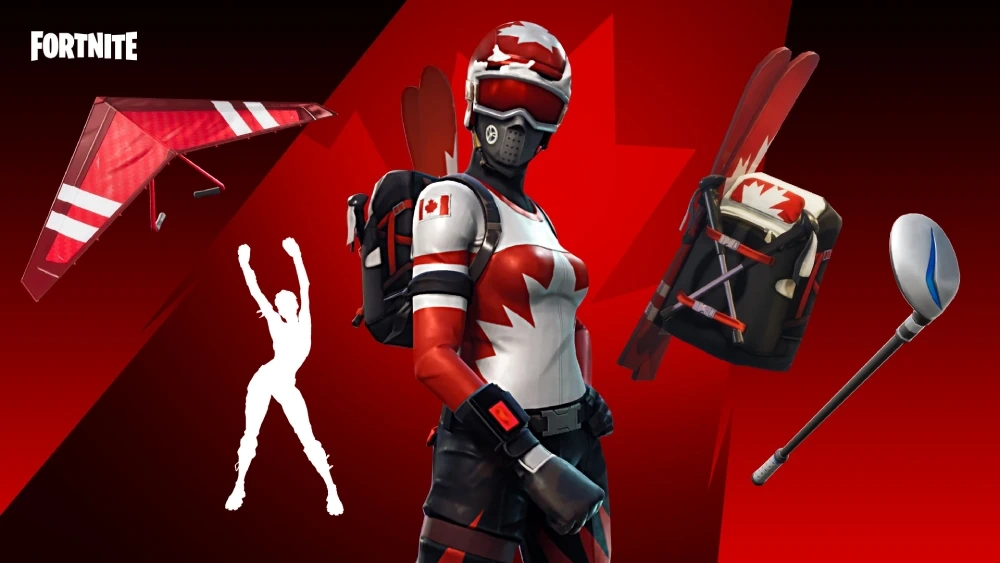
Sweaty Fortnite skins are cosmetics that have gained a reputation through repeated use by competitive players, content creators, and highly active members of the community. The term “sweat” is informal gaming slang for someone who plays with intense focus and uses advanced mechanics even in situations that other players consider casual.
In Fortnite, that image is commonly connected to fast editing, aggressive pushes, strong piece control, accurate movement, and consistent weapon switching. The outfit becomes part of the stereotype because it is the first thing an opponent sees.
Common characteristics of a sweaty skin
There is no fixed design rule that determines whether an outfit belongs among the most recognizable Fortnite sweaty skins. Nevertheless, community favorites often share several characteristics:
- A clean or relatively simple silhouette;
- Limited visual effects;
- Neutral, dark, or coordinated colors;
- Multiple selectable styles;
- A history of use by skilled creators;
- A relatively affordable Item Shop price;
- Easy compatibility with simple pickaxes;
- Little or no back bling;
- A design that remains readable during rapid movement.
These features do not change the functional hitbox. A slim-looking character model may feel visually cleaner to some players, but choosing one does not make the player harder to hit under Fortnite’s normal gameplay rules.
The idea that a small outfit has a smaller functional hitbox is one of the most persistent myths surrounding Fortnite sweat skins. Visual proportions can affect personal comfort and screen perception, but they do not create a secret competitive statistic.
How a normal outfit becomes a sweat skin
A cosmetic usually develops this reputation through association. A popular player begins using it, fans copy the combination, and the outfit becomes increasingly visible in competitive clips and Creative practice maps.
Price can also matter. Aura, Crystal, Manic, and Par Patroller became accessible choices because their standard prices were lower than many elaborate outfits. That made them easier for large numbers of players to adopt.
Once enough people use the same cosmetic, jokes and expectations spread. Players may see a familiar sweaty skin and immediately expect fast edits or an aggressive push, even though the person behind it may have chosen the outfit only because they liked its design.
Rarity is not required. Some sweat Fortnite skins return through the Item Shop, while others are connected to older passes, limited events, or competitive rewards. A common outfit can have a stronger tryhard reputation than a genuinely rare cosmetic.
Fortnite contains several forms of collectible scarcity beyond competitive outfits. The rarest Sprite in Fortnite guide explores how low availability and difficult acquisition can create interest without necessarily making an item part of the sweat aesthetic.
What are the sweatiest Fortnite skins?
The sweatiest Fortnite skins change as creators adopt new cosmetics and old outfits return to the Item Shop. Therefore, no permanent objective ranking exists. Still, several names have remained closely associated with competitive and Creative players.
The table below focuses on recurring community favorites rather than claiming that every skilled player uses them.
| Outfit | Why players call it sweaty | Typical loadout style |
| Aura | Affordable, clean, and historically popular | No back bling with a simple pickaxe |
| Crystal | Minimal design and long-standing Creative presence | Dark or neutral accessories |
| Focus | Technical appearance and clean movement | Matching dark pickaxe and wrap |
| Manic | Multiple styles and simple silhouette | Minimal back bling or no back bling |
| Par Patroller | Bright but uncomplicated design | Golf-themed or simple pickaxe |
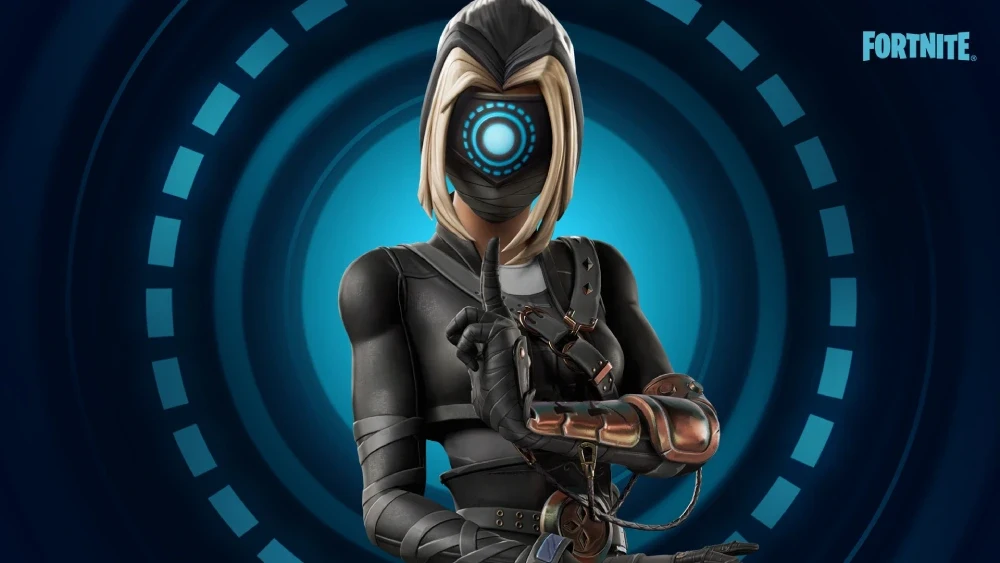
| Siren | Clean Noir style and creator influence | Black, gray, or silver accessories |
| Zadie | Masked styles and tactical appearance | Dark wrap and compact back bling |
| Mogul Master | Older competitive reputation | Country-themed or neutral combination |
| Superhero outfits | Extensive color customization | Single-color or low-contrast styling |
| Dummy | Memorable design used in aggressive clips | Driver or another compact harvesting tool |
Aura, Crystal, and Focus
Aura is frequently the first outfit mentioned in discussions about sweaty Fortnite skins. Its simple design, selectable styles, and relatively accessible price helped it spread across regular Battle Royale, Creative, and competitive communities.
Crystal developed a similar reputation. Its uncomplicated character design and visibility in practice maps made it one of the most recognizable Fortnite sweaty skins, particularly during periods when box fights and build-focused Creative modes were central to Fortnite content.
Focus uses a more technical, tactical design. The mask, hood, and muted palette make it easy to combine with minimalist accessories. As a result, it often appears in lists of Fortnite sweat skins even when the competitive meta changes.
These three outfits demonstrate that sweat status is usually cultural rather than mechanical. Their designs are popular, but none changes weapon handling or character performance.
Manic, Par Patroller, and Siren
Manic combines a clean base outfit with several selectable styles. Players can create a darker combination, a brighter Punk look, or another coordinated setup without changing the main character.
Par Patroller is visually brighter than many stereotypical sweat Fortnite skins, yet its clean design and low visual clutter helped it become associated with skilled players. It also shows why dark colors are not an absolute requirement.
Siren gained attention through its simple form and Noir style. That alternative style supports black-and-white loadouts, which are common among players who want their cosmetics to look coordinated without using large animated accessories.
All three remain examples of how a sweaty skin can become popular through flexibility. A cosmetic that works with many pickaxes and wraps is easier to reuse across different seasons.
Zadie, Mogul Master, and Dummy
Zadie has selectable masked appearances and a tactical theme that fits the traditional competitive aesthetic. Its darker options work especially well with simple wraps and harvesting tools.
Mogul Master has a longer history in Fortnite’s competitive culture. Different national variants gave players several choices, and its association with experienced players developed during earlier Fortnite chapters.
Dummy looks less serious, but its simple crash-test design has appeared frequently in aggressive gameplay clips. This makes it an example of how Fortnite sweaty skins can also be humorous or unconventional.
A skin does not need to look intimidating to gain a tryhard reputation. Consistent use by visible players is often more influential than the original artistic concept.
Why do players use sweaty Fortnite skins?
Players use sweaty Fortnite skins for aesthetics, familiarity, community identity, and personal confidence. Some simply prefer a clean visual setup, while others enjoy the reputation associated with a classic tryhard combination.
The effect is psychological rather than statistical. A familiar cosmetic can make a player feel prepared, but it cannot replace practice or improve the underlying game systems.
Visual clarity and personal comfort
Fortnite includes outfits with wings, capes, reactive elements, large armor pieces, glowing effects, and animated details. These designs can look impressive, but some players prefer a simpler screen during fast fights.
A compact sweaty skin may feel easier to track while editing or moving through a crowded structure. This is a matter of visual preference, not a hidden advantage.
Many players also remove back bling because they find a clean character model less distracting. Others select a small accessory that matches the outfit without dominating the screen.
The same principle applies to wraps and pickaxes. A coordinated combination can feel more comfortable because the visual elements do not compete with one another.
Players can check the Fortnite Shiny Hours guide for another example of how limited activities and cosmetic-focused events can shape player interest. However, timed availability does not automatically turn an item into one of the recognized Fortnite sweat skins.
Confidence and routine
Competitive players often develop routines. They may use the same outfit, pickaxe, sensitivity, keybinds, and warm-up map before an important session.
Maintaining a familiar sweaty skin can become part of that preparation. The outfit acts like a uniform that tells the player it is time to focus.
This confidence effect is personal. It does not guarantee better gameplay, and another player may perform better after choosing a completely different cosmetic.
Routine can still be useful when it supports good habits. A consistent warm-up, stable settings, clear communication, and thoughtful decision-making matter far more than the cosmetic itself.
Community identity and imitation
Players frequently imitate creators they admire. When a professional player or popular streamer uses a particular combination, viewers may recreate the loadout in their own lockers.
That imitation can quickly transform an ordinary cosmetic into one of the best-known sweat Fortnite skins. The effect becomes stronger when the creator uses the same outfit in tournaments, montages, or educational videos.
Creative communities also influence the trend. Players repeatedly encounter the same cosmetics in Zone Wars, box fights, realistic PvP maps, and free-build sessions. Over time, the outfit becomes shorthand for a specific play style.
The stereotype should still be treated carefully. Judging an opponent only by their outfit can lead to poor decisions. A player using a default-looking cosmetic may be highly experienced, while someone wearing a classic sweaty skin may simply like the design.
How do you make a sweaty Fortnite skin combo?
A strong tryhard combination usually emphasizes consistency rather than rarity. The outfit, pickaxe, wrap, back bling, and glider should look intentional together without requiring every item to belong to the same set.
Start with the outfit, choose one or two main colors, and avoid adding accessories only because they are expensive or old.
Choose the outfit and color palette
Pick an outfit you genuinely enjoy using. Aura, Focus, Crystal, Manic, Siren, Zadie, and Par Patroller are common choices, but any cosmetic can anchor a clean loadout.
Next, identify the dominant colors. A black-and-white sweaty skin may work with silver or gray tools, while a blue outfit can pair with a subtle blue wrap.
Avoid assuming that one-color combinations are always superior. Contrast can make a setup more interesting without creating excessive visual noise.
The official Fortnite website provides access to current game information and Item Shop options. Because cosmetic availability rotates, check the live shop rather than relying on an old list that claims a particular item is permanently available.
Pick a simple harvesting tool
The harvesting tool is central to many Fortnite sweaty skins combinations because players see and hear it repeatedly during a match.
Frequently associated choices include:
- Driver;
- Ice Breaker;
- Star Wand;
- Leviathan Axe;
- Harley Hitter;
- Studded Axe;
- Crowbar;
- Simple victory-themed tools.
Popularity does not change swing speed or damage under normal cosmetic rules. Choose based on appearance, animation, and sound rather than claims that a specific pickaxe is secretly faster.
A visually small harvesting tool may feel cleaner, but that does not mean it has a competitive hitbox advantage.
Decide whether to use back bling
No back bling is one of the most common choices for Fortnite sweat skins. It keeps the outfit’s silhouette visually simple and prevents a large accessory from moving across the screen.
However, a compact matching back bling can make the combination more distinctive. Small shields, bags, holographic pieces, and set-specific accessories may work well when their colors complement the outfit.
Reactive back bling can be entertaining, but players who want minimal distraction may prefer a static design. Again, this is a preference rather than a performance rule.
Complete the loadout with a wrap and glider
Use the wrap to reinforce the main palette. Neutral wraps are flexible, while animated wraps can create a stronger visual contrast.
For the glider, victory umbrellas remain popular because they are compact and represent accomplishments from different seasons. Simple gliders such as One Shot have also appeared in traditional sweat Fortnite skins combinations.
The glider matters less once the player lands, so it can be the place to add more personality. A serious outfit combined with a funny glider can create a memorable contrast.
Do sweaty skins give an advantage in Fortnite?
No. Sweaty Fortnite skins do not increase damage, improve accuracy, reduce recoil, accelerate edits, change matchmaking, or provide special movement.
Their reputation can influence expectations, but the competitive result still depends on mechanics, positioning, decision-making, communication, equipment, device performance, and connection quality.
Hitbox and visibility myths
Players sometimes believe that slim character models are harder to hit. Cosmetic designs can look different, but Fortnite does not sell outfits as functional hitbox upgrades.
A visually compact model may make some players feel more comfortable because less of the screen appears covered. That perception should not be confused with an actual reduction in the area that receives damage.
Dark cosmetics can also appear less visible in certain environments, but maps contain changing lighting, bright effects, outlines, movement, and many contrasting surfaces. No dark sweaty skin provides universal camouflage.
Relying on cosmetic visibility can create bad habits. Strong positioning and awareness are more reliable than expecting an outfit to hide the player.
What actually improves competitive performance
Players who want better results should focus on controllable skills:
- Practice crosshair placement.
- Learn current weapon behavior.
- Improve movement and positioning.
- Review missed edits instead of repeating them blindly.
- Use Creative maps for specific weaknesses.
- Maintain clear audio settings.
- Avoid changing sensitivity constantly.
- Learn when not to take a fight.
- Monitor connection instability.
- Review matches and identify repeated mistakes.
Seasonal changes matter as well. A loadout that worked in one update may become less effective after loot-pool adjustments or new mobility systems.
For example, the official article about Star Wars taking over Fortnite Galactic Battle documented a themed season with different weapons, locations, vehicles, and progression. It is a historical example of how gameplay environments can change while familiar Fortnite sweaty skins remain cosmetic choices.
How can ExitLag help Fortnite players?
ExitLag can help when a Fortnite player’s problem is connected to inefficient or unstable network routing. It does not make a skin competitive, improve mechanical skill, raise FPS, or change Epic Games’ servers.
The service analyzes network paths and may provide a more stable route between the player and supported game infrastructure. Results depend on location, internet provider, server, congestion, and available routes.
Route optimization during online matches
Online Fortnite sessions require game data to travel between the player’s connection and the server. An inefficient route can contribute to unstable latency or packet loss.
ExitLag can help optimize those paths and may improve connection consistency in situations where routing is the cause of the problem. It should not be described as guaranteed to lower ping for every user.
Before testing ExitLag, players should also:
- Restart the router and device;
- Stop unnecessary downloads;
- Check whether other devices are using the connection heavily;
- Use a wired connection when practical;
- Compare several Fortnite servers;
- Test at different times;
- Confirm that the issue is not a global outage;
- Separate network lag from low FPS.
A sweaty skin cannot compensate for an unstable route, but changing the outfit will not fix it either. Diagnose the actual source before choosing a solution.
What ExitLag cannot fix
ExitLag cannot:
- Unlock Fortnite sweat skins;
- Add V-Bucks to an account;
- change Item Shop rotations;
- Remove bans;
- Recover stolen accounts;
- Improve FPS limited by hardware;
- Repair corrupted game files;
- Guarantee lower ping;
- Stop every packet-loss event;
- Fix a global Fortnite outage;
- Improve aim or editing skill;
- Alter cosmetic hitboxes.
These limits are important because connection optimization should not be confused with general game repair. Use the tool when network routing is relevant, and use the appropriate Epic Games or platform support process for account and installation problems.
Frequently asked questions about sweaty Fortnite skins
Sweaty Fortnite skins continue to change as new outfits enter the game and older combinations return through the Item Shop. The following answers address the most common misconceptions.
Aura is often described as the most iconic choice because of its long association with competitive players and Creative modes. Crystal, Focus, Manic, Siren, Par Patroller, and customizable superhero outfits are also common answers.
There is no official ranking. The reputation of a sweaty skin depends on community trends and can change over time.
No. A slim-looking outfit does not provide a smaller functional hitbox. Players may prefer a visually clean model, but cosmetics do not grant that type of competitive advantage.
Positioning, movement, aim, and decision-making have a real impact. Cosmetic silhouette is primarily an aesthetic preference.
Aura became affordable, recognizable, and widely used by competitive and Creative players. Repeated exposure connected the outfit with aggressive gameplay and strong mechanics.
The reputation is cultural. Wearing Aura does not automatically mean someone is skilled.
No. Professional players use many different cosmetics. Some prefer consistent minimalist combinations, while others choose branded, humorous, promotional, or newly released outfits.
Tournament rules, sponsorships, personal taste, and content goals can all influence cosmetic choices.
Yes. A new outfit can gain that reputation when visible competitive players adopt it and the community begins copying their loadouts.
This is why lists of sweat Fortnite skins evolve. Popularity and association matter more than an official cosmetic category.
Customizable superhero outfits remain associated with competitive combinations because players can create simple color schemes. However, available customization rules and visual options may change, so players should review the current in-game representation.
They still provide no statistical advantage.
No back bling creates a cleaner appearance, which some players prefer. It does not improve movement, reduce the hitbox, or raise FPS.
A small back bling can be equally comfortable when it matches the player’s visual preferences.
ExitLag does not change cosmetics or make a loadout stronger. It may help optimize network routes when routing contributes to an unstable Fortnite connection.
Performance depends on the player’s network and available route, so results are not guaranteed.
Ultimately, sweaty Fortnite skins are about community culture, personal style, and the visual identity players build around competitive gameplay. Choose a combination that feels comfortable, train the mechanics that actually affect matches, and test ExitLag when network routing or connection stability is the real issue you need to address.
All game images used in this article belong to their respective owners. They are used for informational and educational purposes only and do not imply endorsement or affiliation with the rights holders.
Got questions or want to connect with other players? Join the conversation at the ExitLag Forum!

