

Valve fixed the VACnet bypass on July 29, 2026. The CS2 patch notes are unusually direct about it: “Fixed a bug that allowed malicious players to avoid being processed by VACnet.” For a company that has kept anti-cheat mechanics behind a curtain for decades, that level of candor is notable. More notable still is what happened immediately after the patch went live: rage hack users and spin bot operators began receiving bans within their opening rounds.
The fix closes an exploit that had protected some of the most blatant cheating in CS2 Premier for over a year. This article covers exactly what the bypass was, why it matters, how the current 2026 VACnet architecture works, the full 2026 timeline of anti-cheat changes leading up to this patch, and what comes next in the ongoing arms race between Valve’s AI and cheat developers.
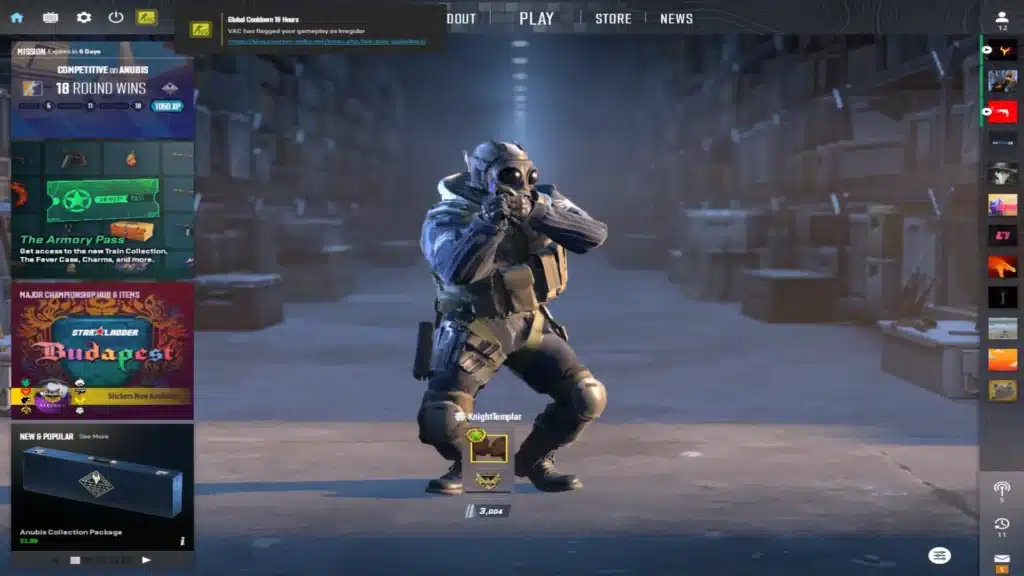
What Happened on July 29, 2026
The developers deployed a patch on July 29, 2026, which contained the following fix: “Fixed a bug that allowed malicious players to avoid being processed by VACnet.” For months, cheat developers had exploited systemic gaps, effectively allowing bad actors to play without their telemetry ever being scanned by Valve’s machine-learning system. By resolving this bypass, Valve restored VACnet’s ability to ingest, process, and analyze server-side inputs across all active matches.
This has been corroborated by initial reports surfacing on social media forums, where many claim that rage hacks and spin bots are now getting swiftly detected by VAC.
The practical impact of this fix did not take long to manifest. Well-known Counter-Strike dataminer and streamer @aquaismissing highlighted a noticeable spike in anti-cheat enforcement shortly after the update went live. With the processing barrier removed, VACnet immediately began clearing a backlog of flagged accounts that had previously bypassed detection.
What the Bypass Was
The fix closes a subtick input exploit that had let rage-hack cheat clients starve the AI anti-cheat of behavioral data for over a year. Bans began landing for rage-hack users within their first rounds of play after the patch went live, suggesting VACnet had accumulated a significant backlog of flagged accounts waiting to be acted on once the pipeline was cleared.
The mechanism: CS2’s subtick system timestamps every input at the sub-tick level within each server tick. Cheat clients exploited a gap in how this telemetry was collected, feeding VACnet’s behavioral analysis pipeline either corrupted data or no data at all for those accounts. Without behavioral data to analyze, VACnet had no basis to flag them. The AI was not outmaneuvered by their aim patterns: it simply never received data about them.
The fix restores the data pipeline. VACnet can now see these players. The backlog of accounts it had already flagged but could not process began clearing immediately.
Who Noticed First
Anti-cheat analyst Matt (@VACdeluxe), one of the most closely followed competitive integrity researchers in the CS2 community, laid out the mechanism clearly in a post that circulated widely after the patch.
The community response was swift and largely positive. Players who had been reporting rampant cheating in Premier for months saw results within hours of the patch going live. Cheat forums simultaneously showed users reporting unexpected bans.
The 2026 VACnet Architecture: All Layers Explained
The July 29 fix is the latest update to what is now a multi-layered system. Understanding the full picture requires knowing what each component does and how they interact.
VAC (Classic Valve Anti-Cheat)
The original system. VAC scans your PC for known cheat files — specific patterns from known cheat code in memory. VACnet watches how you play in demos server-side. They work together.
Classic VAC handles signature-based detection. Known cheat executables, injectors, and memory patterns match against a database. Cheat developers circumvent this by obfuscating code signatures, which is why signature-based detection alone is insufficient for modern cheat software.
VACnet (Behavioral AI)
VACnet is an internal Valve ML project that started running inside CS:GO back in 2018. Unlike classic VAC, which looks for signatures in memory, VACnet analyzes player behavior: accuracy spikes, snap-flick patterns, reactions to invisible targets.
VACnet operates server-side, not on your PC. It analyzes match demos and server-side telemetry for behavioral patterns that no legitimate player produces. Aim snapping to targets through walls, reaction times below human physical limits, movement patterns that indicate automated rather than human input: these are the signals VACnet was trained to detect.
Because VACnet relies on continuous machine learning to identify unnatural aim patterns and movement mechanics, feeding it an uninterrupted stream of data makes the algorithm significantly smarter over time.
VAC Live (Real-Time Intervention)
VAC Live is the system’s “immediate executioner.” It monitors matches in real-time and, if a blatant cheater is detected, it cancels the match instantly. This ensures that legitimate players do not lose Skill Rating (Elo) due to a compromised match.
The May 2026 Transition: VACnet Notifications
A late-May overnight update from Valve changed how anti-cheat behaves in Counter-Strike 2. Players noticed two things: ban notifications now come from VACnet, not classic VAC, and matches show exactly who just got banned, in real time — a feature that’s been gone since the CS2 launch. Valve published no official patch notes.
Players also noticed that after the update it became possible to see exactly who received a ban during or after a match. Previously, the system usually displayed a standard VAC notification without additional details, but now in some cases VACnet is specifically mentioned. The community believes Valve is gradually moving CS2’s anti-cheat toward a new detection system.
Trust Factor
Valve uses an updated Trust Factor system to group players based on account history and statistical patterns.
Trust Factor affects matchmaking. Accounts with low Trust Factor, due to reports, suspicious behavior patterns, or associations with flagged accounts, are more likely to be matched against other low-Trust accounts and are prioritized for VACnet review.
The 2026 Anti-Cheat Timeline
| Date | Event |
|---|---|
| January 2026 | VAC Live update triggers instant bans; mass account restoration after false positives affect legitimate players |
| May 8, 2026 | CS2 anti-cheat update: ban notifications shift from VAC to VACnet; real-time ban display returns |
| May 27, 2026 | Valve quietly switches CS2 to VACnet as the primary detection system |
| June 19, 2026 | VAC Ban Tracker logs over 52,000 CS2 game bans in a single day (targeting Wingman drop farmers mid-Major) |
| July 29, 2026 | VACnet bypass patched: rage cheats and spin bots begin receiving bans within opening rounds |
Why the Timing Matters
The timing is significant. North American and South American StarLadder StarSeries Fall 2026 qualifier brackets are currently running through August 2, with the $500,000 offline main event scheduled for September 17 to 20, 2026. The European qualifier concluded July 26, with Aurora and magic earning the two qualifying spots.
Cleaning up Premier and the competitive ecosystem immediately before a major qualifier period sends a clear signal that Valve is aware of the stakes. A $500,000 main event played on infrastructure still compromised by rage cheats would generate significant scrutiny. The timing of the July 29 patch, one day before the start of NA and SA qualifier brackets, is unlikely to be coincidental.
The False Positive Risk
In January 2026, Valve was forced to mass-restore accounts after an incorrect ban wave implicated legitimate players. The same behavioral analysis that catches rage hackers within opening rounds is also capable of flagging unusual but legitimate play. The faster VACnet acts, and post-patch it is acting faster than ever, the more important it becomes that its training data is clean and its confidence thresholds are calibrated for precision, not just recall.
The January 2026 mass restoration is the most important cautionary data point in the 2026 anti-cheat story. VACnet’s behavioral model can flag statistically unusual play as suspicious even when it is genuinely legitimate. A player with an unusually high headshot rate in a single session, a playstyle that does not match their demographic’s statistical averages, or patterns that VACnet has not seen enough legitimate examples of can all trigger investigation.
Valve has apparently tuned its confidence thresholds since January to reduce false positive rates while maintaining detection sensitivity. But the risk never goes to zero in a behavioral system trained on population statistics.
What Cheat Developers Are Doing Now
Cheat clients injected false subtick telemetry to starve VACnet’s pipeline. With that bypass closed, cheat developers face a different problem: they now have to get their behavioral signatures past an AI that has not seen their data for over a year and is applying its full model to them for the first time.
The arms race continues. Cheat developers will inevitably attempt to adapt, but Valve’s recent patch proves that server-side detection is alive, active, and finally processing the telemetry needed to clean up competitive play.
The typical pattern after a major anti-cheat improvement: cheat developers go quiet while they retool, legitimate players experience a honeymoon period of cleaner lobbies, and eventually new bypass methods emerge. How long that honeymoon lasts depends on how quickly cheat developers can reverse-engineer whatever Valve changed in the data pipeline.
What It Means for CS2 Players Right Now
For Premier players: The immediate post-patch period is the cleanest competitive environment CS2 has had in over a year. Rage cheats and spin bots that were previously invisible to VACnet are now being detected in their opening rounds. The experience in Premier should be noticeably better.
For competitive integrity: The qualifiers running through August 2 are being played on infrastructure that is functioning closer to intended than at any point this year.
For long-term expectations: This is an improvement, not a permanent solution. Anti-cheat is an ongoing process. The July 29 patch restored VACnet’s ability to do its job. What it does with that restored capability over the coming months will determine whether this represents a lasting shift or a temporary correction.
Play CS2 with the Best Possible Connection Using ExitLag
VACnet’s behavioral analysis works better in a cleaner competitive environment. Your own performance benefits from that same clean environment, and your connection to Valve’s servers is the variable that determines whether your mechanical skill translates into results.
High ping, packet loss, and routing instability all affect CS2’s subtick system specifically. The same subtick architecture that VACnet uses to timestamp behavioral data for cheat detection also determines how precisely your spray control, peek timing, and AWP shots register on the server. At low, stable ping, the subtick system works as designed. At elevated or inconsistent ping, the registration gaps widen.
ExitLag is a connection optimizer used by over 30 million players across 4,000+ game titles including CS2. It analyzes multiple network routes in real time and selects the fastest, most stable path between your device and Valve’s game servers, replacing your ISP’s default routing with one built for gaming performance.
Features that directly benefit CS2 players in the post-VACnet-patch environment:
- Real-Time Optimization: Continuously selects the lowest-latency route to Valve’s CS2 servers, keeping spray control and peek timing consistent with what the subtick system is designed to reward
- Multipath Technology: Routes game data through multiple simultaneous paths so packet loss never interrupts a spray sequence or costs a critical clutch round
- Traffic Shaper: Prioritizes CS2 traffic above every background application so downloads and system processes cannot spike your ping during an active round
- Multi-Internet: Supports up to four simultaneous connections, eliminating disconnections from Premier matches at critical moments
Download ExitLag and try it free.
Pro Tips: Playing CS2 After the VACnet Update
- Play Premier now while the environment is cleanest: Post-major anti-cheat patches are historically the cleanest period in any CS competitive cycle. The backlog of flagged accounts being processed and the temporary slowdown in cheat client updates create a window of genuinely fairer matchmaking. This is the moment to push your rating.
- Do not confuse lower cheater prevalence with no cheaters: The July 29 patch closes a specific bypass. Cheaters using methods that did not rely on that bypass were unaffected. The environment is cleaner, not clean.
- Report suspicious play regardless: VACnet’s training improves with human feedback signals feeding into the Trust Factor system. Reporting clearly suspicious behavior contributes to the model’s calibration, even if individual reports rarely result in direct action.
- Use ExitLag to protect your CS2 connection quality: VACnet now processes your matches fully. That means your performance data is being analyzed accurately. Ensuring your connection is stable means your legitimate high-skill plays are recorded cleanly without the data anomalies that could theoretically affect Trust Factor assessments on unusual statistical sessions.
Common Questions About the VACnet Update
- Will this ban wave affect legitimate players? There is always a false positive risk with behavioral AI. The January 2026 incident demonstrated this. Valve has tuned its thresholds since then, but if you receive an unexpected ban, the Valve support process for VAC appeals exists for this scenario. Appeals for accounts you believe were incorrectly flagged go through help.steampowered.com.
- Will cheat developers find a new bypass? Yes, eventually. Anti-cheat is an ongoing arms race and has been since 2002. The July 29 patch represents a meaningful improvement, not an endpoint. What matters is that Valve demonstrated both willingness to patch rapidly and unusually transparent patch note language about what was fixed.
- Is CS2 Premier worth playing now? Yes, more than it has been in a while. The post-patch period is historically the best window for legitimate players to climb before the next generation of bypass methods emerges.
CS2 VACnet Update Quick Reference
| Detail | Info |
|---|---|
| Patch Date | July 29, 2026 |
| Official Fix | “Fixed a bug that allowed malicious players to avoid being processed by VACnet” |
| Mechanism Closed | Subtick input exploit that starved VACnet’s data pipeline |
| Bypass Active For | Over a year (confirmed) |
| Immediate Effect | Rage hacks and spin bots banned within opening rounds |
| Accounts Affected | Backlog of flagged accounts cleared post-patch |
| False Positive Risk | Exists; Valve mass-restored accounts in January 2026 after incorrect ban wave |
| Context | NA/SA StarLadder qualifier brackets running through August 2 |
Download ExitLag and compete in CS2’s cleanest ranked environment in over a year.
Counter-Strike 2, VAC, VACnet, and related marks are trademarks of Valve Corporation. Used for informational and educational purposes only.
Got questions or want to connect with other players? Join the conversation at the ExitLag Forum!