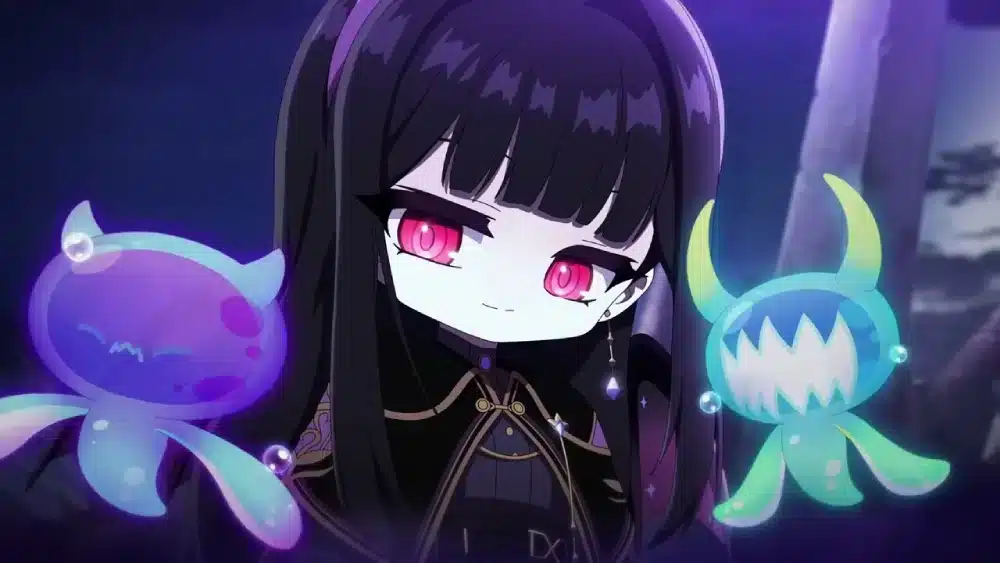
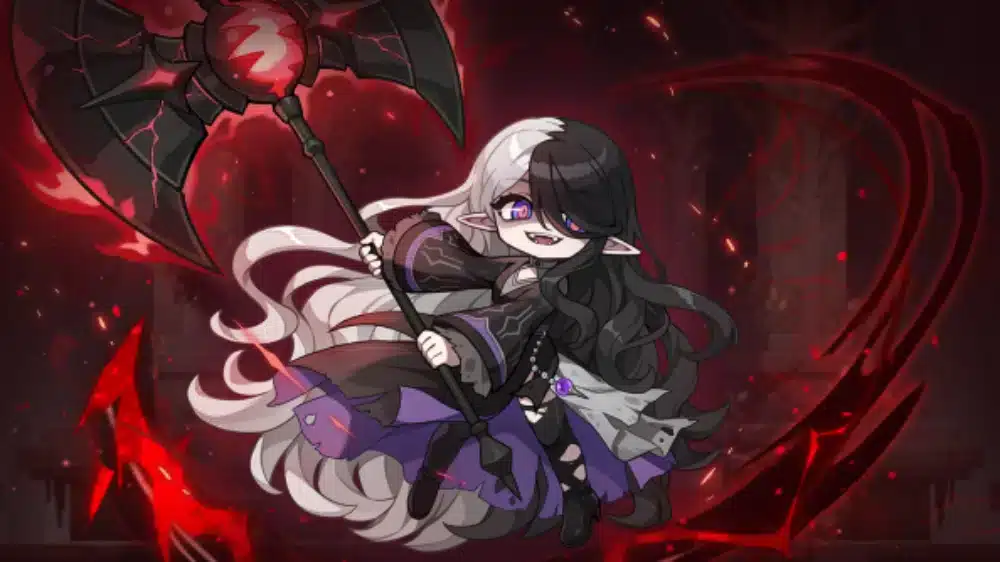
If you are wondering when did maplestory come out, the answer goes back more than two decades. MapleStory began its journey in South Korea in 2003, long before many of today’s biggest online games existed, and it eventually expanded into an MMORPG recognized by players around the world.
However, searching when did maplestory come out can produce different dates because MapleStory did not launch globally at the same time. Its original Korean release and later Global MapleStory service represent separate milestones in the history of Nexon’s long-running MMORPG.
So, when did maplestory come out originally? MapleStory officially launched in South Korea on April 29, 2003. Global MapleStory arrived later, in 2005, introducing the side-scrolling MMORPG to a much broader international audience and beginning another important chapter in its history.
Those dates only tell part of the story.
MapleStory has continued evolving for more than 20 years, receiving new classes, regions, bosses, progression systems, and major updates. Meanwhile, the franchise expanded beyond the original game through projects such as MapleStory 2.
MapleStory also became part of gaming culture outside traditional MMORPG communities. One famous example is BTS member Jin, whose connection to the game goes considerably deeper than simply appearing in promotional material.
Understanding MapleStory’s history therefore means looking beyond one release date. Its Korean debut, international expansion, celebrity connections, sequel, and continuing development all help explain why players are still talking about the game in 2026.
When did MapleStory come out?
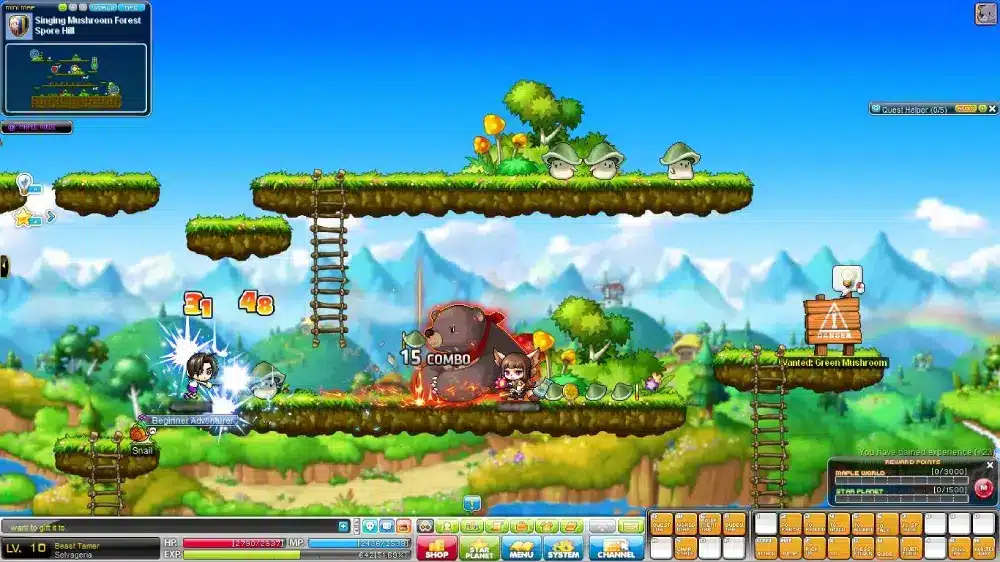
MapleStory’s original 2003 Korean release
The original answer to when did maplestory come out is April 29, 2003.
That date represents MapleStory’s official launch in South Korea. Nexon’s own historical material has recognized April 29 as the game’s anniversary, including its 10th-anniversary celebrations in 2013.
MapleStory entered the MMORPG market with a presentation that looked very different from many online role-playing games of its era.
Instead of relying on a traditional 3D fantasy world, MapleStory used colorful 2D graphics and side-scrolling movement. Players explored maps, defeated monsters, completed quests, developed characters, and interacted with other people in shared online environments.
The combination created a distinctive identity.
Characters could grow stronger through leveling and equipment while also becoming recognizable through cosmetic customization. Towns and social areas gave players places to interact beyond simply fighting monsters.
Some of MapleStory’s defining characteristics included:
- 2D side-scrolling exploration and combat.
- Persistent online character progression.
- Distinct classes and job advancements.
- Social interaction between players.
- Equipment and cosmetic customization.
- Large interconnected regions filled with monsters and quests.
- Long-term progression through continuously expanding content.
These elements helped MapleStory establish an identity that remained recognizable even as the game changed dramatically over the following decades.
The 2003 date is therefore the correct starting point when discussing MapleStory’s overall history.
However, many international players remember a different year.
When did Global MapleStory launch?
For players outside South Korea, asking when did maplestory come out may actually mean “When did Global MapleStory launch?”
Global MapleStory followed the Korean game, with its service launching in 2005. May 11, 2005 is generally recognized as the launch date associated with Global MapleStory.
This explains why both 2003 and 2005 frequently appear in discussions about MapleStory’s age.
The distinction is simple:
- MapleStory originally launched in South Korea on April 29, 2003.
- The game expanded through additional regional services.
- Global MapleStory launched in May 2005.
- The franchise continued receiving new content and regional development afterward.
- The original MapleStory remains active more than two decades after its Korean debut.
Therefore, saying MapleStory “came out in 2005” without context misses its original Korean history.
Likewise, telling a Global MapleStory player that their version launched in 2003 would mix the original game’s release with the later international service.
For an accurate timeline, both dates matter.
How MapleStory became a global MMORPG
From Korea to an international audience
MapleStory did not remain limited to its original Korean audience.
As the game expanded, localized services brought MapleStory to players across different markets. That international growth turned the distinctive 2D MMORPG into a much larger franchise.
Localization was important because MMORPGs depend heavily on community.
Players need more than translated menus to build an active regional ecosystem. Events, updates, support, community communication, and ongoing service all contribute to the experience.
Over time, different MapleStory regions also developed differences in available content and systems.
As a result, players researching older information should always check which version of MapleStory a guide or historical reference describes.
This matters even today.
An instruction, event, item, or progression mechanic discussed for one regional service may not always apply identically to Global MapleStory.
Nevertheless, the fundamental identity of the original game remained recognizable.
Players created characters, chose classes, explored increasingly large areas, defeated monsters, improved equipment, and participated in a persistent online world.
That basic formula helped MapleStory survive far beyond its original release period.
Why MapleStory stood out
MapleStory arrived during an era filled with influential MMORPGs, but its visual identity immediately separated it from many competitors.
The side-scrolling structure made exploration easy to understand.
Instead of navigating a fully 3D environment, players moved across layered 2D maps filled with platforms, ladders, portals, monsters, NPCs, and other players.
Its character design also played an important role.
MapleStory allowed players to combine RPG progression with extensive visual customization. Clothing, hairstyles, faces, equipment, and cosmetic items could make individual characters recognizable even when players shared the same class.
Social interaction added another dimension.
For many longtime players, memories of MapleStory are not limited to defeating bosses or maximizing damage. They include conversations in towns, guilds, trading, parties, and simply spending time with other players.
This combination of progression and social identity helped create a long-lasting community.
It also helps explain why someone can search when did maplestory come out in 2026 and find an MMORPG that is not merely remembered historically, but continues to receive attention and updates.
Does BTS Jin actually play MapleStory?
Jin’s history as a MapleStory player
Does BTS Jin actually play MapleStory? Yes. His connection to MapleStory has been documented as a genuine long-term interest rather than simply a celebrity appearing in an advertising campaign.
Jin has spoken publicly about playing MapleStory, and official entertainment coverage surrounding BTS has described him as an avid player.
His history with the game reportedly stretches back to childhood. Weverse Magazine documented that Jin started playing MapleStory when he was in fifth grade, making his connection to the MMORPG much older than his later collaborations with Nexon.
That history is significant.
Celebrity partnerships with video games are common, so players can reasonably question whether a famous person featured in a collaboration actually plays the game.
In Jin’s case, the documented history provides a much clearer answer to Does BTS Jin actually play MapleStory?
His interest predates the promotional collaborations.
MapleStory has also appeared repeatedly in conversations and content surrounding Jin, reinforcing his reputation as one of the game’s most recognizable celebrity players.
For MapleStory itself, the connection is particularly interesting because Jin belongs to a generation that could have encountered the MMORPG relatively early in its lifespan.
The game launched in 2003 and expanded internationally during the following years. Players who discovered it as children could therefore grow up alongside an MMORPG that continued receiving updates for decades.
Jin represents a particularly visible example of that longevity.
BTS Jin and Nexon’s MapleStory collaborations
Jin’s history as a player eventually developed into official collaboration with Nexon.
One of the most notable examples came in 2022, when his involvement with MapleStory moved beyond simply being known as a famous fan of the game.
The collaboration attracted attention because it reversed the usual dynamic of celebrity marketing.
Instead of choosing a celebrity with no visible connection to the product, Nexon was working with someone whose enthusiasm for MapleStory was already well documented.
That gave the partnership additional relevance for players.
His relationship with MapleStory has also continued beyond that single period, including renewed collaboration activity in 2026.
Therefore, Does BTS Jin actually play MapleStory? is one of the easier questions in MapleStory celebrity history to answer. Available documentation consistently connects him with the game as a longtime player, while his later official collaborations built upon that existing interest.
Jin’s involvement also demonstrates just how long MapleStory has remained culturally relevant.
A game that began in South Korea in 2003 has survived long enough to cross generations, expand internationally, collaborate with globally recognized artists, and continue evolving more than two decades after launch.
That longevity naturally leads to another major question for anyone discovering the MMORPG today: whether MapleStory’s enormous history makes it an exciting game to start in 2026 or a difficult one for newcomers to enter.
Continuing directly from the first half with the 2026 evaluation, MapleStory 2 history, ExitLag integration, timeline, FAQ, and mandatory disclaimer.
Is MapleStory still worth playing in 2026?
What MapleStory offers new players today
Is MapleStory still worth playing in 2026? For players who enjoy long-term character progression, large class rosters, bossing, equipment development, and a distinctive 2D MMORPG format, MapleStory can still offer a huge amount of content.
That does not mean the experience is ideal for everyone.
More than two decades of development have transformed MapleStory into a much larger game than the version players encountered when searching when did maplestory come out and discovering its 2003 origins.
New players enter a game filled with classes, regions, bosses, equipment systems, progression mechanics, and years of accumulated content.
That depth can be a major advantage.
Players who enjoy developing a character over a long period have many goals to pursue. Furthermore, the large class roster makes it easier to experiment with different combat styles before deciding which character deserves the greatest investment.
Some reasons to consider MapleStory in 2026 include:
- A distinctive 2D MMORPG experience.
- A large selection of playable classes.
- Extensive character progression.
- Boss encounters and other combat challenges.
- Regularly evolving content.
- Guild and social features.
- More than two decades of MapleStory history to explore.
The game’s age also creates something newer MMORPGs cannot easily reproduce: an enormous legacy.
Locations, characters, music, classes, bosses, and systems have accumulated across years of development. Returning players can encounter familiar elements alongside content that did not exist when they stopped playing.
What new and returning players should consider
There is another side to that longevity.
MapleStory can feel complex to someone arriving without previous experience. A game with more than 20 years of development naturally contains systems that require time to understand.
Progression is also a major commitment.
Players who dislike grinding or incremental equipment development may find the experience less appealing than those who enjoy slowly improving a character.
Therefore, the answer to Is MapleStory still worth playing in 2026? depends heavily on what you expect from an MMORPG.
MapleStory may be worth trying if you enjoy:
- Long-term character progression.
- Grinding toward measurable upgrades.
- Learning class-specific combat.
- Building multiple characters.
- Boss progression.
- A colorful 2D visual style.
On the other hand, someone looking for a short RPG campaign with a defined ending may not find the same appeal.
MapleStory remains an actively maintained online game rather than a historical MMORPG frozen in its original state. Players asking when did maplestory come out should therefore remember that the current experience is dramatically different from the 2003 release.
That continuing evolution is also one of the biggest differences between the original game and its sequel.
When did MapleStory 2 launch?
MapleStory 2’s Korean and Global releases
When did MapleStory 2 launch? Like the original MapleStory, the answer depends on the region being discussed.
MapleStory 2 first launched in South Korea in 2015. The Global version followed several years later, officially launching on October 10, 2018.
This timeline is important because MapleStory 2 was not simply a major update for the original game.
It was a separate title.
The original MapleStory continued operating while MapleStory 2 attempted to take the franchise in a different visual and gameplay direction.
A simplified timeline makes the distinction clearer:
| MapleStory milestone | Date |
| Original MapleStory launch in South Korea | April 29, 2003 |
| Global MapleStory launch | May 2005 |
| MapleStory 2 Korean launch | 2015 |
| Global MapleStory 2 launch | October 10, 2018 |
| Global MapleStory 2 shutdown | May 27, 2020 |
| Original MapleStory | Active in 2026 |
So, players asking when did maplestory come out are normally looking for 2003 or the 2005 Global launch. Players asking When did MapleStory 2 launch? are discussing a different game and a much later period in the franchise.
How MapleStory 2 differed from the original
The most immediately noticeable difference was visual.
Original MapleStory is famous for its side-scrolling 2D presentation. MapleStory 2 moved into a colorful 3D environment with a very different approach to world design.
That was a significant departure.
| Feature | MapleStory | MapleStory 2 |
| Core presentation | 2D side-scrolling | 3D |
| Original Korean launch | 2003 | 2015 |
| Global launch | 2005 | 2018 |
| Global status in 2026 | Active | Closed |
| Global MapleStory 2 closure | — | May 27, 2020 |
MapleStory 2 also explored different approaches to customization, environments, combat, and social activities.
As a result, players should not view it as simply “MapleStory with better graphics.”
The sequel attempted to reinterpret the franchise.
That experiment ultimately had a much shorter Global lifespan than the original MapleStory.
Why did MapleStory 2 fail?
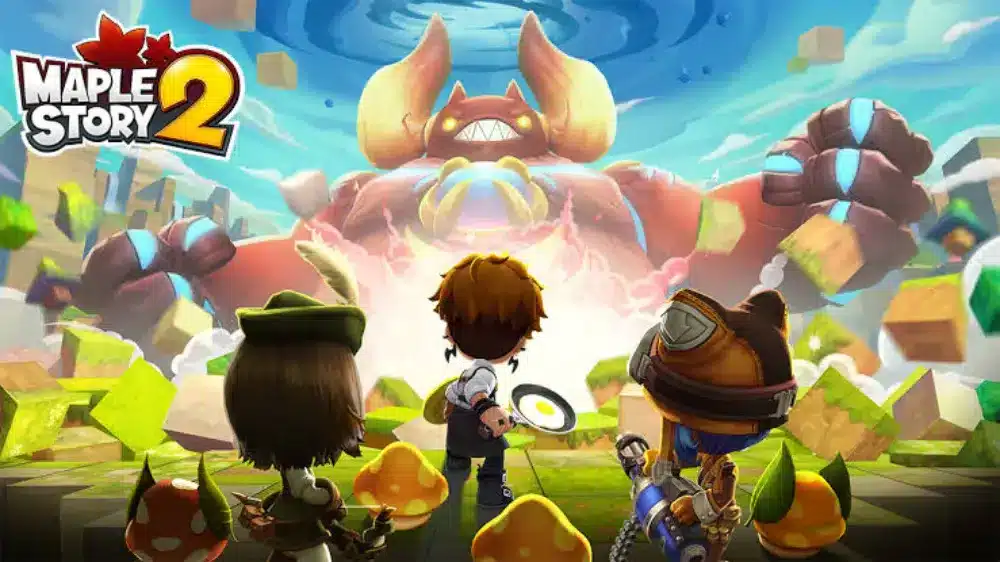
What Nexon said about the shutdown
Why did MapleStory 2 fail? The safest answer starts with what Nexon actually said rather than turning community theories into confirmed facts.
Nexon announced that Global MapleStory 2 would close on May 27, 2020.
In its closure communication, the company explained that it had tried to adapt the service to player expectations but ultimately concluded that it could not continue providing the type of service players expected while remaining true to MapleStory 2.
That wording matters.
It is tempting to reduce the shutdown to one simple explanation, such as player numbers, monetization, progression, or competition. However, presenting any single community explanation as Nexon’s confirmed reason would oversimplify the available information.
Instead, the Global version should be understood as a game that Nexon attempted to improve but ultimately decided was not sustainable in the form players expected.
The timeline was relatively short:
- Global MapleStory 2 launched in October 2018.
- Nexon continued developing and adjusting the game.
- The team introduced initiatives intended to address player concerns.
- Nexon announced the Global service closure in 2020.
- Global servers shut down on May 27, 2020.
The original MapleStory, meanwhile, continued operating.
That contrast became even more striking as the original game’s lifespan passed the 20-year mark.
Project New Leaf and MapleStory 2’s problems
One important part of MapleStory 2’s later history was Project New Leaf.
The initiative represented an attempt to address problems identified within the game and improve the overall experience.
Its existence demonstrates that Nexon was actively trying to respond to concerns before the shutdown.
However, those efforts were ultimately not enough to preserve the Global service.
When discussing Why did MapleStory 2 fail?, it is reasonable to examine broader factors players criticized, but those interpretations should remain separate from Nexon’s official explanation.
The clearest confirmed outcome is that Nexon concluded it could not continue delivering the Global service in a way that met expectations while maintaining the game’s intended identity.
Therefore, MapleStory 2 provides an interesting contrast to the original.
One attempted to reinvent the franchise through a 3D sequel but had a relatively short Global lifespan. The other retained its recognizable 2D foundation while continuously changing and expanding.
MapleStory vs. MapleStory 2
Why the original survived
There is no single factor that explains more than two decades of MapleStory.
However, continuous development has clearly allowed the original game to evolve rather than remain locked to its 2003 design.
New classes expanded the roster. New regions increased the size of the world. Bosses created additional progression targets, while equipment and character systems changed how players developed their accounts.
At the same time, MapleStory retained a recognizable identity.
Its 2D presentation, character designs, side-scrolling movement, and long-term progression continue to distinguish it from many other MMORPGs.
Nostalgia also matters.
A player searching when did maplestory come out today may have first encountered the game in childhood. Returning years later creates a mixture of familiar locations and completely unfamiliar systems.
That relationship with longtime players is difficult for a new MMORPG to replicate.
MapleStory and MapleStory 2 timeline
Looking at both games together shows how differently their histories developed.
The original MapleStory launched in South Korea in 2003 and expanded internationally afterward. More than two decades later, it remains an active online game.
MapleStory 2 arrived much later.
Its Global version launched in 2018 and closed in 2020, giving the international service a lifespan of less than two years.
That does not erase the ideas or experiences MapleStory 2 introduced.
However, it makes the original game’s longevity even more notable.
It also explains why the answer to when did maplestory come out remains relevant in 2026. Players are not simply researching an old game that disappeared years ago. They are researching the origins of an MMORPG that continues to evolve.
Why MapleStory is still relevant more than 20 years later
Updates, nostalgia, and community
Long-running online games depend on more than nostalgia.
Memories can encourage players to return, but continuing development gives them reasons to stay and discover what has changed.
MapleStory benefits from both.
Veterans can recognize the basic visual identity of the game while encountering classes and progression systems that did not exist during their original time with it.
New players approach that same history from the opposite direction.
They may know MapleStory because of its reputation, modern updates, online communities, or even famous players such as Jin.
This is where Does BTS Jin actually play MapleStory? becomes more than a celebrity trivia question.
His documented history with the MMORPG demonstrates how MapleStory has remained part of players’ lives across very long periods of time.
MapleStory’s future after more than two decades
MapleStory’s age is unusual even within the MMORPG genre.
The game has survived major changes in online gaming, from the rise of free-to-play titles to mobile gaming, esports, live-service games, and increasingly sophisticated 3D worlds.
Yet its basic presentation remains immediately recognizable.
That gives MapleStory a strong identity.
The challenge is balancing that history with modern development. New content must give established players goals while remaining understandable enough for returning and newer audiences.
For someone asking Is MapleStory still worth playing in 2026?, that history can be either an advantage or a challenge.
There is an enormous amount to discover, but there is also a lot to learn.
How ExitLag can improve your MapleStory connection
Connection stability during long MapleStory sessions
Whether you started playing shortly after 2005 or discovered MapleStory in 2026, it remains an online experience that depends on communication with game servers.
Grinding, boss encounters, guild activities, and long progression sessions can all become frustrating when network instability interferes with gameplay.
ExitLag focuses on optimizing that connection.
Its Real-Time Optimization technology analyzes routes between the player and supported game servers, helping select efficient paths for gaming traffic.
Multipath Connection can use multiple simultaneous routes to improve stability when appropriate.
ExitLag does not change MapleStory’s progression, equipment, damage, or drop rates. Instead, it focuses specifically on connection performance.
Optimizing routes while playing MapleStory
Internet traffic does not necessarily take the most efficient route to a game server automatically.
Congested or unstable routes can contribute to latency and connection inconsistency, even when the player’s internet connection has sufficient bandwidth.
ExitLag is designed to optimize this routing process.
The setup is straightforward: sign up, download ExitLag on PC, select the supported game, apply the routes, and play.
Automatic optimization keeps the process accessible, while additional configuration options are available for players who want more control.
For an MMORPG built around potentially long gameplay sessions, maintaining a stable route can make it easier to focus on character progression rather than connection-related interruptions.
FAQ
MapleStory originally launched in South Korea on April 29, 2003.
Therefore, 2003 is the correct answer when discussing the original release of the game.
Global players may also encounter 2005 because the international service arrived later.
Global MapleStory launched in 2005.
This regional distinction explains why searches for when did maplestory come out can produce more than one correct date depending on the version being discussed.
The original Korean release came first in 2003, followed by the Global service in 2005.
Yes. Does BTS Jin actually play MapleStory? His history with the game has been documented beyond official promotional appearances.
Jin has been described as a longtime MapleStory player, with his interest tracing back to childhood.
His later collaborations with Nexon therefore built upon an existing connection with the game rather than creating that association from scratch.
It can be, especially for players who enjoy long-term progression, bossing, character development, multiple classes, and grinding.
However, newcomers should expect a game with more than two decades of accumulated systems and content.
Players who prefer short, linear RPG experiences may find that structure less appealing.
The Global version officially launched on October 10, 2018.
Global MapleStory 2 shut down on May 27, 2020.
The original MapleStory continued operating after the sequel’s Global closure and remains the primary long-running MMORPG associated with the franchise.
Nexon’s official explanation focused on its inability to continue providing the type of service players expected while keeping the game true to its intended identity.
There were broader player discussions about MapleStory 2’s design and progression, but those opinions should not be presented as Nexon’s confirmed explanation for the shutdown.
Ultimately, MapleStory’s history is what makes the question when did maplestory come out so interesting more than two decades later. The original Korean release happened on April 29, 2003, Global MapleStory followed in 2005, and the game continues evolving in 2026 despite MapleStory 2’s much shorter Global lifespan. For players returning to this long-running online world, when did MapleStory come out is only the beginning of the story—and ExitLag can help optimize routing, reduce connection-related lag, and maintain a more stable connection while you explore everything MapleStory has added since those early years.
All game images used in this blog belong to Nexon. They are used for informational/educational purposes only and do not imply endorsement or affiliation with the rights holders.
Got questions or want to connect with other players? Join the conversation at the ExitLag Forum!