WoW Season of Discovery is an experimental version of World of Warcraft Classic that transforms the original Azeroth experience with new class abilities, Rune Engraving, redesigned raids, alternative class roles, PvP events, and content that never existed in the original Classic progression.
Instead of immediately sending everyone toward level 60, WoW Season of Discovery began with a level cap of 25 and gradually expanded through multiple phases. Each stage introduced new runes, raids, progression systems, class changes, and secrets for players to uncover across Azeroth.
Today, WoW Season of Discovery has progressed through eight phases, culminating with level-60 endgame content including Naxxramas, Karazhan Crypts, New Avalon, and the Scarlet Enclave raid. This makes SoD much more than a fresh WoW Classic server: it is a reinterpretation of Classic built around experimentation and discovery.

What Is WoW Season of Discovery?
WoW Season of Discovery, often shortened to SoD, is a special seasonal version of World of Warcraft Classic designed around the idea of discovering new ways to experience the original game.
Blizzard launched Season of Discovery on November 30, 2023. Instead of reproducing Classic exactly as players remembered it, SoD introduced abilities, encounters, class roles, and progression systems that changed how familiar content worked.
The original launch included three major concepts:
- A level cap of 25;
- Rune Engraving;
- Blackfathom Deeps redesigned as a 10-player raid.
The level cap was particularly important because it prevented players from immediately rushing to 60.
Instead, level 25 temporarily became the endgame.
How Does WoW Season of Discovery Work?
Season of Discovery uses the world, classes, quests, professions, dungeons, and overall foundation of Classic Azeroth but layers experimental systems on top of them.
The Rune system is the biggest example.
Runes provide abilities that were not normally available to classes in original WoW Classic, allowing players to create builds that would have been impossible under traditional Classic class design.
Some changes are dramatic enough to create entirely new roles. For example:
- Mages can heal;
- Warlocks can tank;
- Rogues can tank;
- Shamans have expanded tanking options;
- Traditional classes gain abilities inspired by later versions of WoW.
This fundamentally changes how groups can be constructed.
WoW Season of Discovery vs. WoW Classic
The easiest way to understand SoD is to compare it directly with traditional World of Warcraft Classic.
Both use classic Azeroth as their foundation, but their design philosophies are very different.
| Feature | WoW Classic | Season of Discovery |
| Classic Azeroth | Yes | Yes |
| Level 60 | Yes | Yes, after phased progression |
| Original class design | Primarily yes | Heavily expanded |
| Rune Engraving | No | Yes |
| New class roles | No | Yes |
| Progressive level caps | No | Yes |
| Redesigned raids | Limited | Major feature |
| New raids | No | Yes |
| Experimental abilities | No | Yes |
| New PvP events | No | Yes |
| Classic progression | Traditional | Reimagined |
Traditional Classic attempts to recreate a historical version of World of Warcraft.
Season of Discovery asks a different question: what could Classic become if Blizzard were allowed to experiment with it?
What Are Runes in Season of Discovery?
Runes are one of the defining features of WoW Season of Discovery.
Rune Engraving allows players to apply special abilities and passive effects to equipment slots. These abilities can significantly change how a class plays.
They are not simply minor stat bonuses.
Some runes provide abilities associated with later eras of WoW, while others help enable roles that were previously impractical or impossible in Classic.
How do you get runes?
The original concept encouraged players to explore Azeroth and discover them. Runes could be connected to:
- Hidden NPCs;
- Quests;
- Special enemies;
- Environmental puzzles;
- Items;
- Class-specific interactions;
- Exploration;
- Group activities;
- Reputation systems.
Some were relatively easy to discover, while others required the community to collectively determine how their mechanics worked.
This discovery process gave the season its name.
How Rune Engraving Changes Classes
Rune Engraving does more than add extra buttons to your action bar.
Certain runes modify fundamental class mechanics, enabling new builds and giving players considerably more freedom than traditional WoW Classic.
A Warlock, for example, is normally associated with ranged damage and demons.
Season of Discovery’s Metamorphosis system helped turn Warlocks into viable tanks.
Mages experienced an equally dramatic change through healing-oriented abilities.
These changes meant players could revisit familiar classes without necessarily playing them in familiar ways.
Season of Discovery Classes
Season of Discovery uses the Classic class roster rather than introducing an entirely new playable class.
The available classes include:
- Druid;
- Hunter;
- Mage;
- Paladin;
- Priest;
- Rogue;
- Shaman;
- Warlock;
- Warrior.
Faction restrictions inherited from Classic still matter, particularly for Paladins and Shamans.
However, runes dramatically expand what several of these classes can accomplish.
New Class Roles in Season of Discovery
One of SoD’s most interesting experiments involves allowing familiar classes to perform unexpected roles.
| Class | Traditional identity | SoD possibilities |
| Mage | Ranged DPS | DPS / Healing |
| Warlock | Ranged DPS | DPS / Tank |
| Rogue | Melee DPS | DPS / Tank |
| Shaman | Hybrid | Expanded Tank / DPS / Healing |
| Druid | Hybrid | Tank / Healing / DPS |
| Paladin | Hybrid | Tank / Healing / DPS |
| Priest | Healer / Caster | Healing / DPS |
| Hunter | Ranged DPS | Expanded melee/ranged options |
| Warrior | Tank / Melee DPS | Tank / DPS |
Not every experimental build is equally powerful at every stage of progression, but the system dramatically increases the number of possible playstyles.
That freedom is central to Season of Discovery.
All WoW Season of Discovery Phases
WoW Season of Discovery eventually expanded through eight major phases.
The first three progressively increased the level cap, Phase 4 opened level 60, and later phases concentrated heavily on endgame content.
| Phase | Level Cap | Major Content |
| Phase 1 | 25 | Blackfathom Deeps, Battle for Ashenvale |
| Phase 2 | 40 | Gnomeregan, Blood Moon |
| Phase 3 | 50 | Sunken Temple, Nightmare Incursions |
| Phase 4 | 60 | Molten Core, level-60 endgame |
| Phase 5 | 60 | Blackwing Lair, Zul’Gurub |
| Phase 6 | 60 | Ahn’Qiraj, Nightmare Grove |
| Phase 7 | 60 | Karazhan Crypts, Naxxramas |
| Phase 8 | 60 | New Avalon, Scarlet Enclave |
This phased model was one of the season’s biggest departures from normal Classic progression.
Let’s examine how each stage changed the game.
WoW Season of Discovery Phase 1
Phase 1 launched Season of Discovery with a surprisingly low level cap: 25.
That limitation was deliberate.
Instead of treating level 25 as a temporary milestone players would quickly pass, Blizzard transformed it into an endgame bracket.
Players could optimize gear, experiment with runes, participate in PvP, and raid without needing to reach level 60.
Blackfathom Deeps Raid
Blackfathom Deeps was traditionally a dungeon.
Season of Discovery transformed it into a 10-player level-25 raid with redesigned encounters, new mechanics, and new rewards.
This immediately established one of SoD’s core ideas:
old content could become something new.
Rather than simply increasing enemy health, Blizzard reworked encounters to make the dungeon function as an actual raid experience.
Battle for Ashenvale
Phase 1 also introduced the Battle for Ashenvale, giving players a large-scale PvP activity associated with the familiar contested zone.
Ashenvale had always been a natural location for Horde and Alliance conflict.
SoD formalized that conflict into an event with objectives and rewards.
This added another form of endgame progression for players who reached the temporary level cap but were not exclusively interested in raiding.
WoW Season of Discovery Phase 2
Phase 2 increased the maximum level from 25 to 40.
That opened a substantial amount of Azeroth, additional talent points, new dungeons, profession progression, and more rune discoveries.
Gnomeregan became the major raid destination.
Gnomeregan Raid
Like Blackfathom Deeps before it, Gnomeregan was transformed from a familiar Classic dungeon into a raid.
The redesigned version was built for 10 players and featured six bosses.
Existing encounters were modified, and the raid also introduced additional challenges and rewards appropriate for the new level-40 endgame.
For players familiar with WoW Classic, entering Gnomeregan as a raid rather than a leveling dungeon demonstrated just how far SoD was willing to reinterpret existing content.
Blood Moon PvP Event
Phase 2 introduced the Blood Moon event in Stranglethorn Vale.
This created a very different PvP environment from normal questing in the zone.
Players could participate in the event, fight for special rewards, and experience Stranglethorn as an organized seasonal PvP destination.
The event later received additional rewards as subsequent phases expanded progression.
WoW Season of Discovery Phase 3
Phase 3 increased the level cap to 50.
Players received additional talent points, new runes, new PvP progression, Nightmare Incursions, and another dramatically reworked Classic dungeon.
This time, the major raid was the Temple of Atal’Hakkar.
Sunken Temple Raid
Sunken Temple became Season of Discovery’s first 20-player raid.
The redesigned Temple of Atal’Hakkar featured eight bosses and new rewards, changing a dungeon many Classic players already knew into a substantially different endgame activity.
Moving from 10-player raids toward a larger 20-player structure also prepared players for the level-60 raid environment that would arrive later.
Nightmare Incursions
Phase 3 introduced Nightmare Incursions as a new outdoor PvE activity.
Players could interact with mysterious portals connected to the Emerald Nightmare in areas including:
- Ashenvale;
- Duskwood;
- Hinterlands;
- Feralas.
These activities provided experience, reputation, items, and another progression path beyond repeatedly running dungeons.
Nightmare Incursions also connected thematically with the redesigned Sunken Temple content.
WoW Season of Discovery Phase 4
Phase 4 was one of the most important transitions in the entire season because it finally raised the maximum level to 60.
The temporary leveling endgames were over.
Players could now access the traditional maximum-level regions and dungeons of vanilla World of Warcraft while continuing to use SoD’s runes and altered class design.
Level 60 Dungeons
Phase 4 expanded access to familiar high-level content such as:
- Blackrock Depths;
- Blackrock Spire;
- Dire Maul;
- Scholomance;
- Stratholme.
Rewards and progression were adjusted to fit Season of Discovery’s endgame.
But the centerpiece was Molten Core.

Molten Core in Season of Discovery
Molten Core returned as a 20-player-focused raid, although the Season of Discovery version was not simply a copy of the original Classic raid.
Loot was redesigned, Tier 1 sets received changes, and Blizzard introduced variable difficulty through the Heat system.
Players could choose between different Heat levels:
- Sweltering;
- Blistering;
- Molten.
Higher difficulty increased the challenge and placed greater emphasis on preparation, including Fire Resistance.
This gave an extremely familiar World of Warcraft Classic raid a new progression dimension.
World Bosses in Phase 4
Season of Discovery also changed how players interacted with classic world bosses.
Azuregos and Lord Kazzak received instanced versions of their encounters.
This reduced some of the logistical problems traditionally associated with open-world competition for bosses while allowing Blizzard to tune the encounters around SoD’s altered class systems.
Onyxia also remained an important part of the level-60 progression.
WoW Season of Discovery Phase 5
Phase 5 moved deeper into the classic endgame with two major destinations:
Blackwing Lair and Zul’Gurub.
Both were familiar to veteran players, but SoD continued its philosophy of changing how classic encounters worked.
Blackwing Lair
Blackwing Lair was tuned around 20 players while allowing groups to bring additional players up to 40.
More importantly, the raid incorporated additional mechanics and a variable difficulty system.
Players could activate raid-wide effects associated with the five dragonflights, creating additional challenges.
Tier 2 itemization was also redesigned to support different specializations and SoD playstyles.
Zul’Gurub
Zul’Gurub returned as flexible raid content supporting groups between approximately 10 and 20 players, with difficulty and rewards primarily tuned around 10.
This gave smaller groups another progression path alongside Blackwing Lair.
For players who remembered the original raid, it offered familiar locations with Season of Discovery’s broader approach to itemization and progression.
WoW Season of Discovery Phase 6
Phase 6 moved the season toward one of Classic’s most memorable large-scale conflicts: Ahn’Qiraj.
The phase brought the war against the Qiraji back into focus while continuing to remix Classic endgame content.
Players could participate in Ahn’Qiraj progression and additional activities such as Nightmare Grove.
At this point, Season of Discovery had effectively transformed almost every major stage of the traditional Classic endgame.
The season was no longer primarily about discovering early-level runes. It had become a complete alternative progression path through vanilla Azeroth.
Ahn’Qiraj in Season of Discovery
Ahn’Qiraj represents one of the most iconic periods of original World of Warcraft.
Season of Discovery revisited that content within its altered class, itemization, and raid environment.
This meant players entered familiar encounters with abilities and builds that did not exist during original Classic.
That difference is significant.
A Mage healer, Warlock tank, or other SoD-specific build changes how a raid group approaches content originally designed around far more rigid class roles.
WoW Season of Discovery Phase 7
Phase 7 brought players to another legendary WoW Classic destination: Naxxramas.
But it also delivered something particularly interesting for players who wanted genuinely new content — Karazhan Crypts.
The phase included:
- Karazhan Crypts;
- Scourge Invasions;
- Rune Brokers;
- Naxxramas;
- New difficulty mechanics;
- New rewards.
This combination of familiar and previously unexplored content captured the central idea behind Season of Discovery particularly well.
Karazhan Crypts
Karazhan Crypts had fascinated World of Warcraft players for years.
The mysterious underground area beneath Karazhan existed in various forms throughout WoW’s history but was not originally presented as a normal playable Classic dungeon.
Season of Discovery finally turned the crypts into an explorable dungeon experience.
Players could enter with a group, confront enemies, solve mysteries, and explore an area surrounded by years of community curiosity.
This was exactly the kind of content many players hoped SoD would eventually explore.
Rune Brokers
By Phase 7, Blizzard also made acquiring older runes considerably easier.
Rune Brokers were introduced in racial starting areas and capital cities, allowing players to obtain rune-related discovery items for a symbolic cost.
This represented an important change in philosophy.
Early in SoD, discovering runes was part of the adventure.
Later, forcing new characters to repeat every old discovery would have created a major barrier to catching up.
Rune Brokers helped solve that problem.
Naxxramas in Season of Discovery
Naxxramas returned as a raid tuned primarily around 20 players, while allowing groups of up to 40.
Season of Discovery again modified the familiar raid formula with new mechanics and difficulty options.
Players could pursue Sanctified gear and interact with systems designed around the season’s revised progression.
Sapphiron and Kel’Thuzad also held additional secrets for groups capable of overcoming the raid’s greater challenges.
This made Naxxramas more than a simple recreation of its Classic version.
WoW Season of Discovery Phase 8
Phase 8 became the culmination of the Season of Discovery journey.
Rather than simply recycling another familiar Classic raid, Blizzard introduced substantial new content around the Scarlet Crusade. The phase centered on:
- New Avalon;
- New outdoor content;
- Profession content;
- New stories;
- Legendary weapon questline;
- Scarlet Enclave raid.
This made Phase 8 particularly significant for anyone interested in the idea of expanding Classic Azeroth rather than merely replaying it.
What Is New Avalon?
New Avalon is tied to the Scarlet Crusade storyline and gives players new outdoor content built around infiltration.
Players go behind enemy lines in disguise, interact with citizens and merchants, learn new recipes, and pursue new rewards.
This type of content demonstrates how far SoD evolved from its Phase 1 premise.
What began with level-25 characters searching for hidden runes eventually grew into entirely new max-level adventures built within the Classic world.
Scarlet Enclave Raid
Scarlet Enclave is the major raid introduced with Phase 8.
Unlike Blackwing Lair, Molten Core, or Naxxramas, this is not simply another classic raid being modified for SoD.
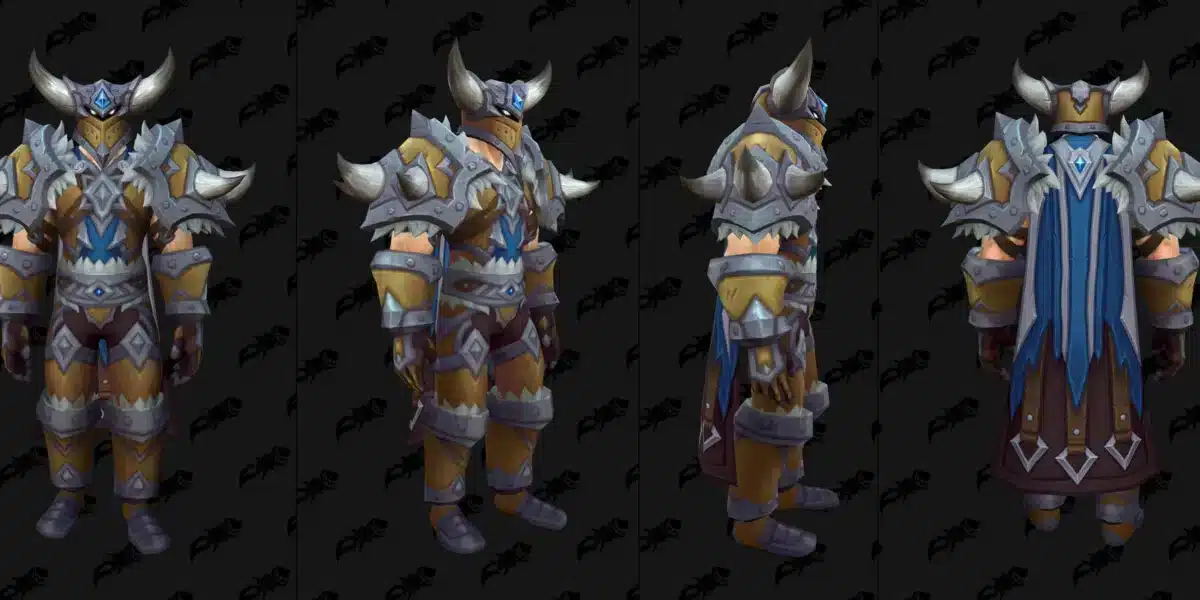
Players face eight bosses while progressing through the raid and can collect new eight-piece class armor sets.
That makes Scarlet Enclave one of the clearest examples of what Season of Discovery can do when it moves beyond reinterpretation and creates new Classic-style endgame content.
Phase 8 Legendary Weapon Quest
Phase 8 also introduced a new Legendary weapon questline.
Warriors, Hunters, and Paladins can participate in a storyline involving the restoration of a fallen weapon.
Legendary quests are particularly suited to Classic’s design philosophy because they can involve lengthy progression, group content, exploration, crafting, and prestige rather than simply providing an immediate reward.
Combined with Scarlet Enclave and New Avalon, the quest helps Phase 8 feel like a true endgame chapter.
What Is the Current WoW Season of Discovery Level Cap?
The current maximum level is 60.
However, understanding the previous caps explains why SoD progression felt so different from normal WoW Classic.
| Progression | Level Cap |
| Phase 1 | 25 |
| Phase 2 | 40 |
| Phase 3 | 50 |
| Phase 4 onward | 60 |
Each temporary cap effectively created a miniature endgame.
Players who normally ignored level-25 or level-40 gear suddenly had reasons to optimize characters at those levels.
This also made overlooked dungeons, professions, quests, and items much more valuable.
Why Did Season of Discovery Use Level Caps?
The level caps slowed down progression and gave Blizzard space to make different portions of Azeroth relevant.
Without them, many players would have rushed directly to level 60. With a cap of 25, however, players suddenly cared about:
- Low-level BiS gear;
- Professions at lower skill levels;
- Blackfathom Deeps;
- Ashenvale PvP;
- Level-25 talents;
- Rune combinations;
- Unusual quest rewards.
When the cap increased, the entire optimization process began again.
This turned leveling itself into a sequence of endgame experiences.
Professions in Season of Discovery
Professions also received additional importance throughout SoD.
Instead of functioning exactly as they did in original Classic, different phases introduced new recipes, materials, questlines, and rewards.
Professions affected the economy and provided additional ways to prepare characters for endgame content.
Phase 8 continued this approach with new profession content connected to New Avalon.
This means Classic profession knowledge remains useful, but players should not assume every crafting strategy works exactly as it does on a traditional Classic realm.
PvP in WoW Season of Discovery
PvP evolved alongside PvE progression.
Season of Discovery introduced events such as Battle for Ashenvale and Blood Moon while also progressively expanding PvP ranks and rewards.
The altered class design creates an additional layer of complexity.
Players familiar with traditional Classic PvP may suddenly encounter:
- Mage healers;
- Tank Warlocks;
- Tank Rogues;
- New offensive abilities;
- New defensive abilities;
- Different burst combinations.
This makes PvP knowledge from traditional Classic useful but not always sufficient.
Is Season of Discovery the Same as Classic Plus?
Not officially.
The community frequently uses “Classic+” to describe the idea of taking original World of Warcraft and adding new content without simply progressing into later expansions.
Season of Discovery certainly experiments with many ideas associated with that concept.
It includes:
- New abilities;
- New roles;
- New encounters;
- Reworked raids;
- New dungeons;
- New endgame content;
- Altered itemization;
- New progression systems.
However, Season of Discovery itself remains a seasonal WoW Classic experience rather than an official product named “Classic Plus.”
The distinction matters when discussing Blizzard’s future plans.
Why Season of Discovery Matters for WoW Classic
SoD became an enormous experiment in what Blizzard can change without abandoning the original Azeroth framework.
Instead of answering only “What was World of Warcraft like in the past?”, it explores another question:
“What else could original World of Warcraft have become?”
Rune Engraving is one answer.
New class roles are another.
Karazhan Crypts and Scarlet Enclave push the experiment even further by demonstrating how new adventures can be created inside the design language of Classic.
That makes Season of Discovery relevant even beyond the characters playing on its realms.
Is WoW Season of Discovery Good for New Players?
It can be, but new players should understand what they are choosing.
If you want the closest possible recreation of original vanilla World of Warcraft, traditional Classic may make more sense.
Season of Discovery is better suited to players who enjoy:
- Experimentation;
- Exploring secrets;
- Alternative builds;
- Faster catch-up systems;
- Modified Classic raids;
- New class roles;
- New Classic-style content;
- A different version of Azeroth.
Veterans may actually experience an even stronger sense of discovery because they recognize when SoD deliberately breaks established Classic rules.
Is Season of Discovery Good for Returning Players?
Yes, particularly if you already know Classic.
A returning player can recognize familiar zones, quests, dungeons, and raids while constantly encountering mechanics that did not exist in the original game.
That mixture creates an unusual experience:
you know Azeroth, but you don’t completely know this Azeroth.
A familiar class may have an unfamiliar build. A dungeon you remember may now be a raid. An area that previously contained little endgame relevance may suddenly become important.
That tension between familiarity and novelty is one of SoD’s biggest strengths.
Can You Start WoW Season of Discovery Late?
Yes. Starting late is very different from participating during Phase 1, but Blizzard introduced systems that make catching up easier.
Rune Brokers, for example, greatly simplify acquiring many older rune discoveries.
Experience catch-up mechanics have also been used throughout the season to help characters move through earlier leveling ranges faster.
This means a new player does not necessarily need to reproduce the exact progression path followed by someone who started in 2023.
However, some of the original sense of community discovery naturally cannot be recreated after solutions have been documented extensively.
Using Wowhead Classic for Season of Discovery
Resources such as Wowhead Classic can be useful when researching SoD quests, items, runes, builds, professions, raids, and game mechanics.
There is an important limitation, though.
Season of Discovery modifies many systems that traditional Classic players already know.
Therefore, always make sure the information you are reading applies specifically to SoD rather than standard Classic Era.
A traditional World of Warcraft Classic build guide may not account for Rune Engraving or SoD-specific itemization.
The same applies when researching community discussions through search variations such as R Wowhead or other player-created resources: check the context and date before following old recommendations.
Best Classes in WoW Season of Discovery
There is no single class that remains objectively best for every activity and every phase.
Class balance changes, gear improves, runes evolve, and different encounters reward different strengths. Instead of selecting solely from a tier list, consider what role you actually want.
Choose Mage if you want:
- Ranged spellcasting;
- AoE potential;
- Utility;
- The unusual option to heal.
Choose Warlock if you want:
- Damage-over-time gameplay;
- Demons;
- Ranged damage;
- An unconventional tank option.
Choose Rogue if you want:
- Stealth;
- Melee damage;
- PvP utility;
- An experimental tank role.
Choose Druid if you want:
- Multiple roles;
- Shapeshifting;
- Healing;
- Tanking;
- Melee or spell-based gameplay.
The same principle applies across the roster: SoD rewards experimentation more than rigid adherence to traditional Classic expectations.
Best Tank Classes in Season of Discovery
Traditional Classic tanking was heavily associated with Warriors, with Druids and Paladins occupying different niches.
SoD expands the possibilities.
Depending on balance and content, tank options can include:
- Warrior;
- Druid;
- Paladin;
- Shaman;
- Warlock;
- Rogue.
This variety changes raid composition and gives players more freedom when forming groups.
However, having the ability to tank does not automatically mean every tank performs identically in every encounter.
Boss mechanics, gear, runes, mitigation, threat, and group composition still matter.
Best Healers in Season of Discovery
Healing also changed because Mage entered a role it never traditionally occupied in vanilla.
Potential healing classes include:
- Priest;
- Druid;
- Paladin;
- Shaman;
- Mage.
Traditional healers retain much of their established identity, but Rune Engraving changes their toolkits and creates new possibilities.
Mage healing is especially representative of SoD’s design philosophy because it takes a class everyone thought they understood and gives it a fundamentally different purpose.
Are Season of Discovery Runes Permanent?
Runes are fundamental to the Season of Discovery environment, but players should distinguish between systems created for a seasonal mode and permanent changes to every version of WoW.
An ability appearing as a SoD rune does not automatically mean Blizzard has permanently changed traditional Classic Era.
Different versions of WoW operate under different rules.
This is particularly important because World of Warcraft now includes several experiences that can coexist while using very different class designs.
Always verify which game version a guide is discussing.
What Is the Current Status of WoW Season of Discovery?
Season of Discovery has reached Phase 8, which Blizzard described as the culmination of the journey.
The phase introduced New Avalon content, profession additions, a Legendary weapon questline, and Scarlet Enclave with eight bosses.
This means players searching older guides that stop at Phase 4, Phase 5, or even Phase 7 are looking at an incomplete picture of the season.
There is no reason to assume a Phase 9 exists simply because the previous progression followed numbered phases.
Until Blizzard announces additional SoD progression, Phase 8 should be treated as the culmination of the established phase structure.
Season of Discovery Raids in Order
The raid progression illustrates how dramatically SoD grew.
A simplified path looks like this:
- Blackfathom Deeps;
- Gnomeregan;
- Sunken Temple;
- Molten Core;
- Onyxia and world-boss progression;
- Blackwing Lair;
- Zul’Gurub;
- Ahn’Qiraj;
- Naxxramas;
- Scarlet Enclave.
Additional dungeon and raid-adjacent content, including Karazhan Crypts and Nightmare Grove, expands the progression beyond this simplified list.
Early raids reimagined existing dungeons, while later content increasingly combined familiar Classic endgame with completely new experiences.
Season of Discovery Raid Sizes
Raid sizes also changed throughout the season.
| Content | Typical SoD structure |
| Blackfathom Deeps | 10 players |
| Gnomeregan | 10 players |
| Sunken Temple | 20 players |
| Molten Core | Tuned for 20 |
| Blackwing Lair | Tuned for 20, allows up to 40 |
| Zul’Gurub | Tuned for 10, allows up to 20 |
| Naxxramas | Tuned for 20, allows up to 40 |
| Scarlet Enclave | Endgame raid with 8 bosses |
This is another major difference from the rigid expectations many players associate with original Classic raiding.
SoD frequently uses smaller raid groups while retaining the feel of Classic encounters.
WoW Season of Discovery Endgame
The endgame has changed dramatically since Phase 1.
Originally, “endgame” meant being level 25 and raiding Blackfathom Deeps.
Now it includes level-60 content spanning redesigned Classic raids and entirely new encounters.
Players can pursue:
- Raid gear;
- Class sets;
- Legendary progression;
- Professions;
- PvP;
- Reputation;
- New Avalon content;
- Scarlet Enclave;
- Naxxramas;
- Older raid progression;
- Alternate builds;
- Rune combinations.
This enormous difference is why old launch-era guides can be misleading for current players.
Common WoW Season of Discovery Mistakes
SoD resembles Classic enough that experienced players sometimes make assumptions based on old knowledge. Common mistakes include:
- Assuming classes have their original roles;
- Following a normal Classic build without considering runes;
- Using outdated phase guides;
- Assuming the level cap is still 25, 40, or 50;
- Treating redesigned raids exactly like their Classic versions;
- Ignoring SoD-specific itemization;
- Following outdated rune acquisition methods;
- Assuming every Classic tier list applies to SoD;
- Confusing Season of Discovery with Season of Mastery;
- Assuming SoD is officially called Classic+.
The safest approach is to verify that any guide specifically targets the current Season of Discovery environment.
Season of Discovery vs. Season of Mastery
These two seasonal experiences should not be confused.
Season of Mastery was built around a faster and more challenging replay of Classic progression.
Season of Discovery is considerably more experimental.
| Season of Mastery | Season of Discovery |
| Faster Classic progression | Reimagined Classic |
| Modified raid difficulty | Redesigned and new content |
| Familiar class roles | New class roles |
| No Rune Engraving | Rune Engraving |
| Classic-focused | Experimental |
| Six-phase structure | Eight phases |
Both use Classic as a foundation, but they pursue very different goals.
WoW Season of Discovery and ExitLag
WoW Season of Discovery is an online multiplayer experience, which means connection quality can affect activities ranging from questing to PvP and raiding.
Network-related problems may include:
- High latency;
- Packet loss;
- Latency spikes;
- Routing instability;
- Connection fluctuations;
- Unexpected disconnections.
These issues should be distinguished from server maintenance, game bugs, addons, FPS problems, or class mechanics.
How Can ExitLag Help WoW Players?
ExitLag is designed to optimize network routes for supported online games.
Internet traffic can travel through multiple networks before reaching game infrastructure, and the route selected by an internet provider is not always the most efficient available path.
When a WoW connection problem involves routing, packet loss, or unstable latency, route optimization can potentially provide a more consistent path.
ExitLag does not increase FPS, improve your gear, optimize your runes, or fix a Blizzard server outage. Those problems have different causes and require different solutions.
FAQ
WoW Season of Discovery has changed considerably since its original level-25 launch. These five questions cover the most important information for players entering or returning to the season.
What is WoW Season of Discovery?
Season of Discovery is an experimental World of Warcraft Classic experience featuring Rune Engraving, altered class roles, progressive level caps, redesigned raids, new PvP activities, and original Classic-style content.
What is the level cap in WoW Season of Discovery?
The current maximum level is 60. The season originally launched with a level-25 cap before progressing to 40 in Phase 2, 50 in Phase 3, and finally 60 beginning with Phase 4.
How many phases does WoW Season of Discovery have?
The established progression reached eight phases. Phase 8 culminated the journey with New Avalon, new profession content, a Legendary weapon questline, and the eight-boss Scarlet Enclave raid.
What is the difference between WoW Classic and Season of Discovery?
WoW Classic primarily recreates classic World of Warcraft, while Season of Discovery deliberately changes it. SoD adds runes, new class roles, redesigned encounters, new content, altered itemization, and progression systems that were not part of original vanilla WoW.
Can you still start Season of Discovery as a new player?
Yes. Later catch-up systems make joining easier than reproducing the original progression from Phase 1. Rune Brokers, for example, simplify access to older rune discoveries, while the current endgame has progressed to level 60 content.
Discover a Different Side of Classic Azeroth
WoW Season of Discovery began as an experiment with level-25 characters searching Azeroth for mysterious runes, but it ultimately grew into a complete alternative journey through Classic. Blackfathom Deeps became a raid, Mages learned to heal, Warlocks and Rogues learned to tank, and familiar raids received new mechanics and progression systems.
The later phases pushed that concept even further. Karazhan Crypts gave players a chance to explore one of Classic’s long-standing mysteries, while New Avalon and Scarlet Enclave demonstrated how completely new adventures could exist alongside Naxxramas, Molten Core, Blackwing Lair, and other legendary WoW Classic content.
For players who want the familiarity of World of Warcraft Classic without knowing exactly what waits around every corner, Season of Discovery offers one of WoW’s most unusual takes on Azeroth.
And when network routing, packet loss, or unstable latency interferes with that experience, ExitLag can help optimize the connection path for supported online games.
Got questions or want to connect with other players? Join the conversation at the ExitLag Forum!