Baldur’s Gate: Dark Alliance is remembered as one of the most important action RPGs ever released on consoles. At a time when role-playing games were still largely associated with PCs and complex interfaces, this title proved that deep RPG systems could coexist with fast-paced, controller-friendly combat.
Released in 2001, Baldur’s Gate: Dark Alliance arrived during a transitional era for RPGs. Players were hungry for more accessible experiences, yet they still wanted meaningful progression, loot systems, and a rich fantasy setting. This game managed to deliver all of that while staying true to the spirit of classic Dungeons & Dragons adventures.
In simple terms, Baldur’s Gate: Dark Alliance is an action RPG set in the Forgotten Realms universe, launched in 2001 and developed by Snowblind Studios. Unlike traditional Baldur’s Gate titles, it focuses on real-time combat and dungeon crawling, making it approachable for a much wider audience while still respecting its tabletop roots.
Baldur’s Gate Dark Alliance Gameplay Explained
The gameplay of Baldur’s Gate Dark Alliance is the main reason the game has remained relevant for so long. Instead of turn-based encounters and isometric micromanagement, the game embraces real-time action that feels smooth and responsive, especially on a controller.
Action-based combat system
Combat in Baldur’s Gate Dark Alliance is immediate and visceral. Players attack, dodge, block, and cast spells in real time, creating a rhythm closer to hack-and-slash games than classic CRPGs. This design choice made the game instantly appealing to console players who were unfamiliar with slower, menu-heavy RPGs.
Each encounter emphasizes positioning and timing. Melee characters rely on crowd control and spacing, while ranged and magic users must manage distance and resources carefully. The absence of turn-based pauses keeps the pace fast and engaging, especially during intense dungeon fights.
Another key element is how well the combat scales with progression. As characters level up, attacks feel more impactful, spells become flashier, and enemies grow more dangerous. This steady escalation keeps players invested throughout the campaign.
Dungeon exploration and level design
Dungeon crawling is at the heart of the experience. Baldur’s Gate Dark Alliance features a series of handcrafted environments filled with enemies, traps, and hidden rewards. While the paths are mostly linear, each dungeon encourages exploration through secret rooms, breakable objects, and optional encounters.
Environmental interaction plays a major role. Traps can damage careless players, destructible elements hide valuable loot, and lighting effects enhance the atmosphere. These details make exploration feel rewarding rather than repetitive.
Loot drops further reinforce the desire to explore every corner. Weapons, armor, and magical items appear frequently, pushing players to constantly evaluate and upgrade their gear. This loop of combat, exploration, and reward is one of the game’s strongest pillars.
Baldur’s Gate: Dark Alliance Classes and Progression
Character choice has a significant impact on how Baldur’s Gate: Dark Alliance plays. Each class offers a distinct approach to combat, encouraging experimentation and replayability.
Playable classes overview
The game features three main playable classes, each designed with a clear identity:
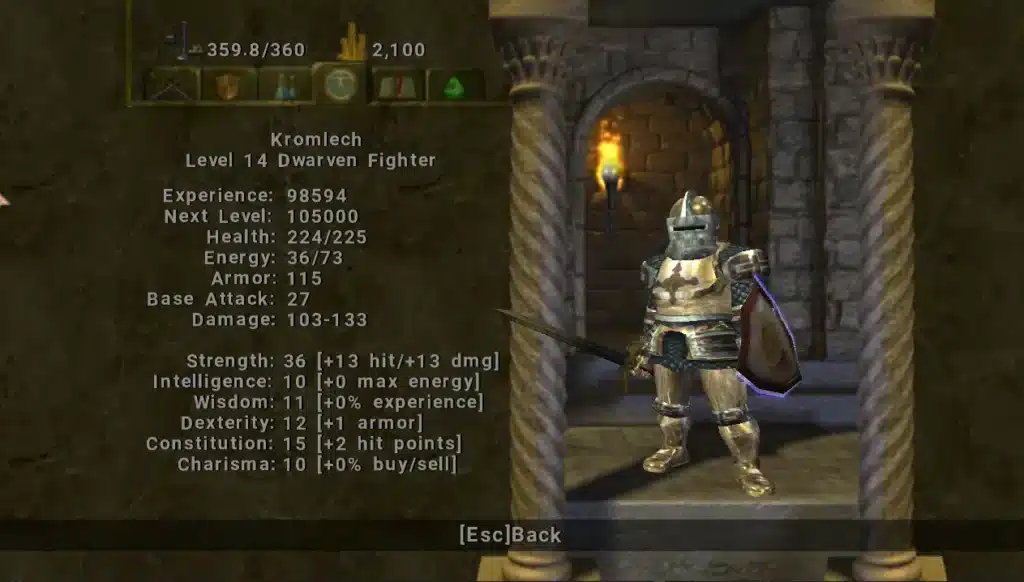
- Fighter: A melee-focused class built around strength, durability, and close-range dominance. Fighters excel at absorbing damage and controlling enemy groups.
- Archer: A ranged damage dealer that relies on precision, mobility, and sustained damage from a distance. Archers reward careful positioning and accuracy.
- Sorceress: A magic-based class specializing in elemental spells and area damage. While fragile, the Sorceress can devastate groups of enemies when played correctly.
Each class feels unique, not only in combat style but also in how players approach dungeons and boss encounters. This variety makes the game especially appealing for co-op sessions, where complementary roles shine.
Character progression and RPG systems
Progression in Baldur’s Gate Dark Alliance follows classic RPG principles while remaining accessible. Characters earn experience points by defeating enemies and completing objectives, gradually leveling up and improving their abilities.
Attributes such as strength, dexterity, and intelligence directly influence combat effectiveness. Equipment plays an equally important role, with weapon rarity and enchantments significantly affecting performance.
The balance between simplicity and depth is one of the game’s greatest achievements. Players can enjoy steady growth without feeling overwhelmed by complex systems, yet there is enough customization to support different playstyles.
Baldur Gate Dark Alliance Story and Setting
While gameplay takes center stage, the narrative and setting provide essential context and immersion. The game is firmly rooted in the Forgotten Realms, one of the most iconic fantasy universes in gaming.
Sword Coast and Dungeons & Dragons universe
The story unfolds along the Sword Coast, a region known for political intrigue, dangerous dungeons, and powerful magic. Familiar locations and themes connect the game to the broader Baldur’s Gate lore, even though the narrative stands on its own.
This standalone approach allows new players to jump in without prior knowledge while still rewarding longtime fans of the Dungeons & Dragons universe. The setting feels authentic, filled with classic fantasy elements like taverns, underground lairs, and ancient ruins.
Main plot and enemies (spoiler-light)
At its core, the story revolves around rising criminal activity and dark forces threatening the region. Players investigate increasingly dangerous situations, uncovering secrets hidden deep within dungeons.
The narrative pacing is intentionally straightforward. Rather than long dialogue sequences, the game delivers story beats between action segments, keeping the focus on momentum and discovery. This design complements the action-oriented gameplay perfectly.
Baldur’s Gate Dark Alliance Co-op Experience
One of the defining features of Baldur’s Gate Dark Alliance is its local co-op functionality. This aspect alone set it apart from many RPGs of its time.
Local split-screen co-op
The game supports couch co-op through split-screen play, allowing two players to explore dungeons together. Each player controls their own character, sharing the same world while managing individual inventories and progression.
This setup encourages cooperation and communication. Players must coordinate movement, combat strategies, and resource management, especially during challenging encounters.
Why co-op defined the game’s success
Co-op gameplay significantly increased replay value. Many players experienced the game multiple times with different class combinations, discovering new strategies and synergies.
Beyond mechanics, the social aspect played a major role. Baldur’s Gate Dark Alliance became a staple of local multiplayer sessions, proving that RPGs could be both deep and social on consoles.
This combination of accessibility, action, and cooperative play cemented the game’s legacy and laid the groundwork for future console-focused action RPGs.
Baldur’s Gate Dark Alliance Remastered Versions
The return of baldur’s gate dark alliance in remastered form gave both veteran fans and new players the opportunity to experience this classic action RPG on modern hardware. Rather than reinventing the game, the remaster focuses on preservation, stability, and accessibility across current platforms.
What changed in the remastered edition
The remastered edition of Baldur’s Gate: Dark Alliance stays faithful to the original while improving its technical presentation. Visual upgrades include higher resolutions, cleaner textures, and improved lighting that makes dungeons easier to read without losing their dark atmosphere.
Performance is one of the biggest improvements. The game now runs at stable frame rates on modern systems, eliminating the slowdowns that could occur on older hardware. Load times are shorter, controls feel more responsive, and crashes are far less common.
Most importantly, the core gameplay remains untouched. Combat mechanics, class balance, enemy behavior, and progression systems are exactly as players remember. This approach ensures nostalgia is preserved while removing technical barriers that previously limited the experience.
Platforms and availability
Today, the remastered version of Baldur’s Gate: Dark Alliance is available on multiple platforms, making it more accessible than ever. Players can enjoy the game on PC, PlayStation consoles, Xbox systems, and Nintendo Switch.
Each platform delivers a consistent experience, with only minor differences related to controls and resolution. PC players benefit from higher resolution options, while console players enjoy a streamlined, controller-first setup that mirrors the original design.
Baldurs Gate Dark Alliance Performance on PC
Playing baldurs gate dark alliance on PC offers a smooth and flexible experience, especially for players who value performance stability and customization.
PC performance and system requirements
One of the strengths of the PC version is its low system requirements. Even modest hardware can run the game comfortably, making it accessible to a wide range of players.
Frame rate stability is excellent, with the game maintaining consistent performance during combat-heavy sections. Input responsiveness is also solid, whether using a controller or keyboard and mouse.
Because the game was originally designed for consoles, controller support feels especially natural on PC. This makes it easy to recreate the classic experience without sacrificing modern convenience.
Common PC issues and optimization tips
While the PC version is generally stable, some players may encounter minor issues. Resolution scaling can occasionally require manual adjustment, and certain audio settings may need fine-tuning depending on hardware.
To ensure the best experience, it is recommended to:
- Use a controller for the most authentic feel
- Verify resolution and refresh rate settings
- Keep graphics drivers updated
- Close unnecessary background applications
These small adjustments help maintain smooth gameplay and prevent distractions during longer sessions.
Baldur Gate Dark Alliance on Consoles and Switch
Console versions of baldur gate dark alliance preserve the game’s original identity while benefiting from modern hardware improvements.
Console experience compared to PC
On PlayStation and Xbox consoles, the game feels extremely close to its original release. Controls are intuitive, performance is stable, and local co-op works seamlessly.
Couch co-op remains one of the strongest reasons to choose console versions. The shared-screen experience feels natural, making the game ideal for casual multiplayer sessions at home.
Nintendo Switch portability advantages
The Nintendo Switch version adds a unique advantage: portability. Players can enjoy Baldur’s Gate: Dark Alliance both docked and in handheld mode, making it easy to play in short sessions or on the go.
Performance remains stable in both modes, and the ability to pause and resume instantly fits well with the game’s dungeon-based structure. This version is especially appealing to players who value flexibility without sacrificing content.
Is Baldur’s Gate Dark Alliance Worth Playing?
Even decades after its original release, baldur’s gate dark alliance continues to hold up remarkably well.
Who should play it today
This game is an excellent choice for several types of players:
- Fans of action RPGs who prefer straightforward systems
- Players looking for a strong local co-op experience
- Retro gamers seeking classic console RPGs
- Diablo-style ARPG fans interested in a more compact experience
Its accessibility makes it especially welcoming to newcomers who may find modern RPGs overwhelming.
How it compares to modern ARPGs
Compared to contemporary action RPGs, Baldur’s Gate: Dark Alliance is simpler and more focused. It lacks the massive skill trees and endless endgame loops found in newer titles, but that simplicity is part of its charm.
The game prioritizes moment-to-moment gameplay, cooperative fun, and clear progression. For players who value a complete experience without excessive complexity, it remains a strong option.
Baldur’s Gate Dark Alliance – Version Comparison
| Version | Platform | Resolution | Co-op | Best For |
| Original (2001) | PS2 / Xbox | SD | Yes | Retro purists |
| Remastered | PC | HD / 4K | Yes | Performance-focused players |
| Remastered | Consoles | HD | Yes | Couch co-op |
| Remastered | Switch | HD | Yes | Portable play |
Playing Better Online RPGs With ExitLag
While Baldur’s Gate: Dark Alliance focuses on local gameplay and does not include online multiplayer, many modern RPGs and action games rely heavily on stable online connections. This is where ExitLag becomes essential for players who want the best possible performance.
ExitLag works on PC by optimizing your connection routes in real time, reducing ping, packet loss, and connection instability. With worldwide servers and multipath technology, it ensures smoother gameplay in online RPGs, ARPGs, and competitive titles.
If you enjoy fast-paced combat and cooperative experiences in online games, using ExitLag can significantly improve responsiveness and consistency, allowing you to focus entirely on gameplay instead of connection issues.
All game images used in this blog belong to Interplay Entertainment. They are used for informational/educational purposes only and do not imply endorsement or affiliation with the rights holders.
Got questions or want to connect with other players? Join the conversation at the ExitLag Forum!