CSGO 2 is the name many players still use when searching for Counter-Strike 2, Valve’s modern version of the legendary tactical shooter that replaced CS:GO as the main competitive platform. Even though the official name is Counter-Strike 2, the phrase CSGO 2 remains popular because it clearly connects the new game to the Global Offensive era.
To understand CSGO 2, it helps to look at where the series came from before the Source 2 upgrade. The jump from older releases to modern Counter-Strike 2 feels bigger when you remember how each generation shaped movement, aim, maps, and online competition. For that historical context, this Counter-Strike: Source classic FPS guide is a useful companion before comparing CSGO, CS2, and the current Counter-Strike experience.
CSGO 2 is not a separate sequel that players buy as a new product. It is the community nickname for Counter-Strike 2, the free upgrade that moved the franchise into a new engine, refreshed core systems, and carried forward player inventories from CS:GO. For veterans, that made the transition familiar but also controversial, because some old features changed or disappeared.
This guide explains what changed, how CSGO 2 differs from CS:GO, what system requirements matter, how gameplay feels today, and how ExitLag can help optimize connection stability during competitive matches. It also keeps the terminology clear, so players searching for CSGO, CS2, Counter-Strike, and Counter-Strike 2 can understand what is current and what belongs to the legacy era.
What is CSGO 2?
CSGO 2 is a common search term for Counter-Strike 2. Valve does not use “CSGO 2” as the official title, but players use it naturally because the game replaced Counter-Strike: Global Offensive and continued its competitive ecosystem. In practice, when someone says CSGO 2, they usually mean CS2.
Counter-Strike 2 keeps the same tactical foundation that made the franchise famous. Two teams compete across objective-based rounds, with Terrorists trying to plant the bomb and Counter-Terrorists trying to stop them, retake the site, or defuse. The core still depends on economy management, aim, utility, map control, communication, and round-by-round adaptation.
However, the technical layer changed significantly. CS2 runs on Source 2, bringing upgraded lighting, improved map visuals, dynamic smokes, new networking systems, refreshed audio and visual effects, and a redesigned competitive structure. That is why CSGO 2 is more than a visual patch, even if it still feels like Counter-Strike at its core.
For a focused breakdown of the modern version, this Counter-Strike 2 guide goes deeper into the official game and how Counter-Strike 2 works today. It is especially useful if you want to separate current CS2 mechanics from old CSGO habits.
Is CSGO 2 the official name?
No. The official name is Counter-Strike 2. CSGO 2 is a player-made search term and shorthand expression. It appears in search engines, YouTube titles, community discussions, and casual conversations because many players think of CS2 as the successor to CS:GO.
That distinction matters for accuracy. If you are looking for downloads, updates, official news, patch notes, tournaments, or support, use Counter-Strike 2 or CS2. If you are writing for SEO, CSGO 2 can still be useful because it reflects how many players search for the game.
Did Counter-Strike 2 replace CS:GO?
Yes. Counter-Strike 2 replaced CS:GO as the main official version on Steam. Player inventories moved forward, including skins and other items, but the live competitive ecosystem shifted to CS2.
That transition created mixed reactions. Some players liked the new technology, visual upgrades, and future potential. Others missed older features, maps, modes, settings, and the specific feel of CS:GO. Because Counter-Strike has a highly technical community, even small changes can become major debates.
What changed from CSGO to CS2?
The move from CSGO to CS2 changed graphics, smokes, map lighting, networking, ranking, interface design, sound, and workshop tools. Some changes are obvious immediately, while others become clearer after many matches.
The most visible change is Source 2. Maps look cleaner, lighting feels more modern, and environments have stronger visual depth. Some maps were upgraded while keeping their classic layout, while others received broader reworks. This helped preserve familiar strategy while modernizing presentation.
The second major change is dynamic smoke. In CS:GO, smoke grenades created fixed visual barriers. In CS2, smokes are volumetric and can interact with bullets, grenades, and lighting. This makes utility more dynamic and creates new tactical possibilities.
Main differences between CS:GO and CS2
| Feature | CS:GO | CS2 |
| Engine | Source | Source 2 |
| Smokes | Static smoke clouds | Dynamic volumetric smokes |
| Networking | Tick-based server logic | Sub-tick update system |
| Ranking | Classic matchmaking ranks | Premier with CS Rating |
| Maps | Legacy visuals and lighting | Upgraded and overhauled maps |
| Items | CS:GO inventory | Items carried into CS2 |
| Interface | Older HUD and menus | Redesigned HUD and menus |
These changes make CSGO 2 feel familiar but not identical. The weapons, economy, and round structure are still recognizable, but utility timing, visibility, peeking, and map readability can feel different.
Why dynamic smokes matter
Dynamic smokes are one of the most important changes in Counter-Strike 2. They are no longer simple static clouds. They occupy space more naturally and can be temporarily affected by bullets and grenades.
This changes how players attack and defend bombsites. A smoke can still block vision, but it is now more interactive. Teams can create temporary gaps, punish careless positioning, or use grenades to reshape a fight.
For competitive players, this means utility knowledge must be updated. Old CS:GO smoke lineups may not always work the same way in CS2, and some familiar timings may need adjustment.
How does CSGO 2 gameplay feel?
CSGO 2 gameplay feels like a modernized version of Counter-Strike. The core is still precise, punishing, and tactical. You still need crosshair placement, recoil control, utility discipline, map knowledge, economy awareness, and team communication.
However, CS2 can feel different because of its visuals, networking, animations, sound, and smoke behavior. Some players feel the game is cleaner and more readable. Others feel certain mechanics changed the rhythm they built over years of CS:GO.
The best way to adapt is to stop expecting every detail to behave exactly like Global Offensive. CSGO 2 rewards the same strategic mindset, but the execution layer has changed. Treat it as a new version of the same sport rather than a perfect copy.
What skills still transfer from CS:GO?
Most important CS:GO skills still transfer to CS2. If you had strong fundamentals before, you already have a major advantage.
Key transferable skills include:
- crosshair placement;
- recoil control;
- map callouts;
- economy management;
- trade fragging;
- bombsite execution;
- retake timing;
- communication;
- utility planning;
- clutch decision-making.
The biggest adjustment is not learning Counter-Strike from zero. It is updating your muscle memory and expectations around the new engine.
What should returning players relearn?
Returning players should relearn smokes, molotov timing, peeking rhythm, sound cues, map visibility, and Premier strategy. They should also revisit agent visibility and cosmetics, because character models and visual readability can affect how players perceive enemies in certain situations.
If you want to understand cosmetic identity and models in the current game, this CS2 agents guide can help explain how agents fit into modern CS2. It is especially relevant for players coming back from CSGO who want to understand what changed visually in Counter-Strike.
Is CSGO 2 free to play?
Yes. Counter-Strike 2 is free to play on Steam. Players can download the game without buying a separate base edition. However, Prime Status is a paid upgrade that affects matchmaking and eligibility for certain item drops, weapon cases, and souvenir-related benefits.
This is similar to the late CS:GO model, where the game became free to play but Prime remained important for players who wanted a more filtered competitive experience. In CS2, Prime is still relevant for serious matchmaking.
That means CSGO 2 is accessible to new players, but the full competitive experience may feel better with Prime. Players who care about ranking, match quality, and long-term item drops should understand the difference before jumping in.
Free-to-play features
Free players can still experience the core game. They can learn maps, practice mechanics, play online modes, and understand the modern Counter-Strike structure.
Free access is useful for:
- new players testing the game;
- returning CS:GO players checking changes;
- casual groups playing together;
- players learning basic mechanics;
- users comparing CS2 to other shooters.
However, free access does not mean every feature is equal to Prime matchmaking.
Prime Status explained
Prime Status places Prime players with other Prime players and grants access to Prime-exclusive item benefits. It is not required to understand Counter-Strike 2, but many competitive players consider it important.
Prime will not make you better mechanically. It does not improve your aim, recoil, movement, or tactics. It simply changes part of the matchmaking and reward structure.
CSGO 2 system requirements
Counter-Strike 2 has higher requirements than old CS:GO because it runs on Source 2 and uses more modern visuals, effects, lighting, and assets. While the game is still designed to run on many PCs, players chasing competitive performance should prioritize stable FPS, low input delay, and consistent network behavior.
The official Steam page lists minimum requirements for Windows and Linux. For Windows, the minimum includes Windows 10, a CPU with 4 hardware threads such as an Intel Core i5 750 or higher, 8 GB RAM, a DirectX 11-compatible graphics card with at least 1 GB of VRAM and Shader Model 5.0 support, and 85 GB of available storage.
For practical competitive play, many players will want stronger hardware than the minimum. The minimum may launch the game, but competitive CS2 benefits from high and stable frame rates.
Minimum requirements
| Component | Minimum Windows requirement |
| OS | Windows 10 |
| CPU | 4 hardware CPU threads, Intel Core i5 750 or higher |
| RAM | 8 GB |
| GPU | 1 GB or more, DirectX 11-compatible, Shader Model 5.0 |
| DirectX | Version 11 |
| Storage | 85 GB available space |
These requirements help answer whether your PC can run CSGO 2, but they do not guarantee ideal competitive performance. If your goal is ranked play, Premier, FACEIT-style competition, or high-refresh monitors, aim for more stable FPS than the minimum can provide.
Performance tips for smoother matches
To improve performance, start with practical adjustments:
- lower heavy visual settings;
- disable unnecessary background apps;
- update GPU drivers;
- use fullscreen mode when possible;
- keep Windows and Steam updated;
- monitor CPU and GPU temperatures;
- avoid recording software if it causes frame drops;
- use a wired connection instead of unstable Wi-Fi.
CSGO 2 rewards consistency. A slightly lower visual preset with stable FPS is better than beautiful graphics with stutters during duels.
How does Counter-Strike 2 ranking work?
Counter-Strike 2 introduced a more modern competitive structure through Premier and CS Rating. Instead of only relying on classic map-specific ranks, Premier uses a pick-ban process and a visible rating system that gives players a clearer sense of progression.
This makes Premier feel closer to competitive Counter-Strike because map selection becomes part of the match. Teams must understand more than one map, adapt to bans, and avoid depending only on a single comfort pick.
For players coming from CSGO, this can be a major shift. Old matchmaking ranks were familiar, but CS2’s rating system creates a broader competitive ladder with regional and global context.
Premier mode basics
Premier mode includes:
- map pick-ban flow;
- CS Rating;
- global and regional leaderboards;
- more competitive structure;
- stronger emphasis on map pool knowledge.
Premier rewards players who understand multiple maps. If your team only knows Mirage, you may struggle when the veto leads elsewhere.
How to improve your CS Rating
To improve your CS Rating, focus on winning rounds rather than chasing highlight clips. Counter-Strike is not about individual kills only. A player who trades properly, uses utility well, and communicates clearly can have massive impact without topping the scoreboard.
Useful habits include:
- learn two or three maps deeply;
- practice utility before queueing;
- communicate early and clearly;
- buy with the team;
- avoid unnecessary force buys;
- trade teammates instead of baiting;
- review lost rounds.
CSGO 2 still rewards discipline more than chaos.
Where should players check official CSGO 2 updates?
Players should check official sources for the most accurate Counter-Strike 2 updates. Community guides are useful, but official pages confirm current game status, updates, downloads, and feature changes.
The official Counter-Strike website is the safest starting point for news, update notes, videos, and current information about Counter-Strike 2. You can check the official Counter-Strike website when you want current CS2 updates rather than relying only on older CSGO articles or community summaries.
Because Counter-Strike changes over time, older advice can become outdated. Smokes, maps, weapons, visibility, audio, and competitive systems can all shift after patches. Always check update notes when a change affects your role, favorite map, or main weapon.
Why old CS:GO guides can be outdated
Old CS:GO guides can still teach fundamentals, but they may be wrong about specific details. Smoke lineups, jump throws, map geometry, visibility, and some settings may not apply exactly to CS2.
Use older guides for general principles such as trading, spacing, economy, and crosshair placement. Use current CS2 sources for exact utility and settings.
What should you verify after updates?
After major updates, verify:
- smoke lineups;
- grenade behavior;
- map geometry;
- weapon balance;
- visibility changes;
- audio behavior;
- Premier changes;
- performance settings;
- agent or cosmetic readability.
This habit keeps your gameplay current and prevents avoidable mistakes.
Can you still play CS:GO?
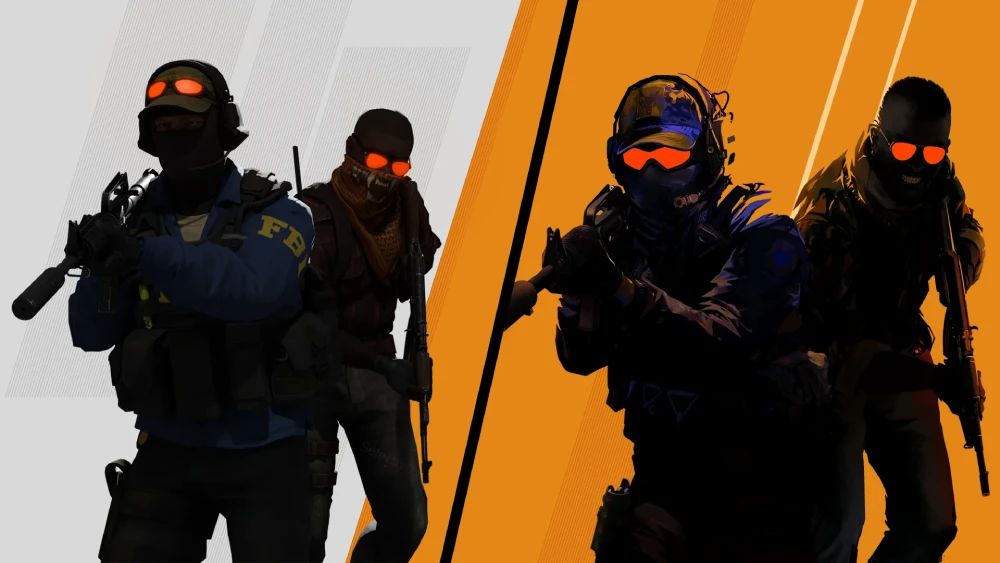
CS:GO no longer exists as the main official live version in the way it did before Counter-Strike 2. CS2 became the primary Steam product and competitive platform. However, some legacy access and community-server-related options have existed for players who want older content in limited form.
For most players, though, the answer is simple: if you want official matchmaking, active updates, current esports, skins moving forward, and the modern player base, you should play Counter-Strike 2.
Valve still keeps historical material online, and the official Counter-Strike: Global Offensive page remains useful as a legacy reference for the game that shaped the previous era. It is not the main place to follow modern CS2 competition, but it helps contextualize how Counter-Strike evolved from CSGO into Counter-Strike 2.
What happened to CS:GO skins?
CS:GO items carried forward into CS2. That was one of the most important parts of the transition because Counter-Strike has a massive skin economy. Players did not lose their inventories just because the game moved into Source 2.
However, some skins can look different under new lighting and rendering. That is expected because the engine changed. For collectors and traders, visual differences became part of the adjustment period.
Why the legacy still matters
CS:GO still matters because it defined a decade of competitive Counter-Strike. Many players built their aim, map knowledge, esports memories, and inventories in that era.
CSGO 2 exists as a search term because players still connect the new game with the old one. The name may not be official, but the emotional connection is real.
How ExitLag can help with CSGO 2
ExitLag can help CSGO 2 players by optimizing connection routes between their device and game servers. In a tactical shooter where milliseconds matter, stable routing can make matches feel more consistent, especially when your normal path to the server has ping spikes, packet loss, or unstable hops.
ExitLag does not guarantee wins, perfect ping, or a lag-free match every time. Counter-Strike performance depends on many factors, including your ISP, region, server, hardware, frame rate, and local network. However, ExitLag can help optimize routes and may reduce connection instability in some situations.
This is especially relevant in Counter-Strike 2 because small timing issues can affect peeks, duels, utility, and retakes. When your connection feels inconsistent, even correct decisions can become harder to execute.
When should you test ExitLag?
Test ExitLag if you notice:
- ping spikes;
- packet loss;
- rubberbanding;
- delayed shots;
- inconsistent server routing;
- worse performance during peak hours;
- instability when playing in other regions.
Do not judge the result from one round. Test several matches, compare routes, and pay attention to stability rather than only the lowest ping number.
Why stability matters more than one low ping number
A connection that stays stable is often better than one that looks low for a moment and then spikes during fights. Counter-Strike punishes inconsistency. A single stutter during a duel can decide a round.
ExitLag is most useful when the issue is route-related. If your FPS is low, your PC is overheating, or your local Wi-Fi is unstable, you should fix those problems too. Connection optimization works best as part of a complete setup.
Best tips to adapt from CS:GO to CS2
Adapting from CS:GO to CS2 requires patience. Do not expect every spray, smoke, movement habit, or angle to feel exactly the same. The fundamentals transfer, but the details changed enough to justify deliberate practice.
Start by revisiting your most played maps. Learn updated visuals, common smokes, and new angles. Then review your settings, crosshair, sensitivity, audio, and performance. Small comfort changes can make the new engine feel more natural.
Practice routine for returning players
Use this routine:
- warm up recoil control;
- practice movement and counter-strafing;
- review key utility on two maps;
- play Deathmatch for aim rhythm;
- queue Premier only after warm-up;
- review one mistake after each loss.
This is more useful than grinding matches without structure. CSGO 2 rewards players who practice intentionally.
Mistakes to avoid
Avoid these common mistakes:
- assuming every CS:GO smoke still works;
- blaming every death on the engine;
- ignoring Premier map pool depth;
- using outdated launch options blindly;
- chasing kills instead of round wins;
- playing with unstable FPS;
- refusing to relearn utility.
The players who adapt fastest are not always the ones with the most hours. They are the ones who update their habits.
FAQ
Yes. CSGO 2 is a common search term for Counter-Strike 2, but the official name is Counter-Strike 2. Many players use CSGO 2 because CS2 replaced CS:GO.
Yes. Counter-Strike 2 is free to play on Steam. Prime Status is a paid upgrade that affects matchmaking and item-related benefits.
Yes. CS2 replaced CS:GO as the main official Counter-Strike product on Steam. CS:GO inventories moved forward into Counter-Strike 2.
The biggest changes include Source 2, dynamic smokes, upgraded maps, redesigned visuals, updated audio, tick-rate-independent gameplay, Premier mode, CS Rating, and carried-forward CS:GO items.
Your PC needs at least Windows 10, 8 GB RAM, a CPU with 4 hardware threads such as an Intel Core i5 750 or higher, a DirectX 11-compatible GPU with Shader Model 5.0 support, and 85 GB of storage. Competitive performance may require stronger hardware.
CS:GO is no longer the main official live version for matchmaking. Counter-Strike 2 is now the main platform. Some legacy access may exist in limited forms, but current competition and updates are centered on CS2.
Yes. CS:GO items moved forward into Counter-Strike 2. Some skins may look different because of Source 2 lighting and rendering changes.
ExitLag can help optimize routing and may improve connection stability depending on your ISP, region, and server path. It does not guarantee perfect results, but it can help with route-related instability.
CSGO 2 is best understood as the community name for Counter-Strike 2, the modern version of the tactical shooter that carried the legacy of CS:GO into Source 2. Learn the updated mechanics, check official sources, practice smarter, and test ExitLag before your next session to help optimize your route and play CSGO 2 with more consistent connection stability.
All game images used in this article belong to their respective owners. They are used for informational and educational purposes only and do not imply endorsement or affiliation with the rights holders.
Got questions or want to connect with other players? Join the conversation at the ExitLag Forum!