Dead by Daylight characters are the heart of every Trial. Each survivor and killer changes how you move, hide, chase, rescue, pressure generators, and survive the Entity’s realm. Because the roster keeps growing, understanding the difference between characters is one of the best ways to improve.
Crossover chapters are a major reason the roster continues to attract players from different horror franchises. This guide to the Dead by Daylight Castlevania chapter covers its characters, abilities, and how the collaboration fits into the wider game.
The Dead by Daylight characters roster includes original creations, licensed horror icons, survivors with support perks, and killers with unique powers. Some are easy to learn. Others require map knowledge, timing, mechanical skill, and a deeper understanding of how each Trial flows.
Dead by Daylight characters are also tied to progression. Every survivor and killer brings three unique perks, which can later be unlocked for use across other characters. That means choosing who to level first affects your builds, your strategy, and your long-term account growth.
In this guide, you will learn how characters work in Dead by Daylight, how to choose beginner-friendly survivors, how DBD Killers differ from each other, what recent additions changed the roster, and how ExitLag can help optimize connection stability while you play.
What are Dead by Daylight characters?
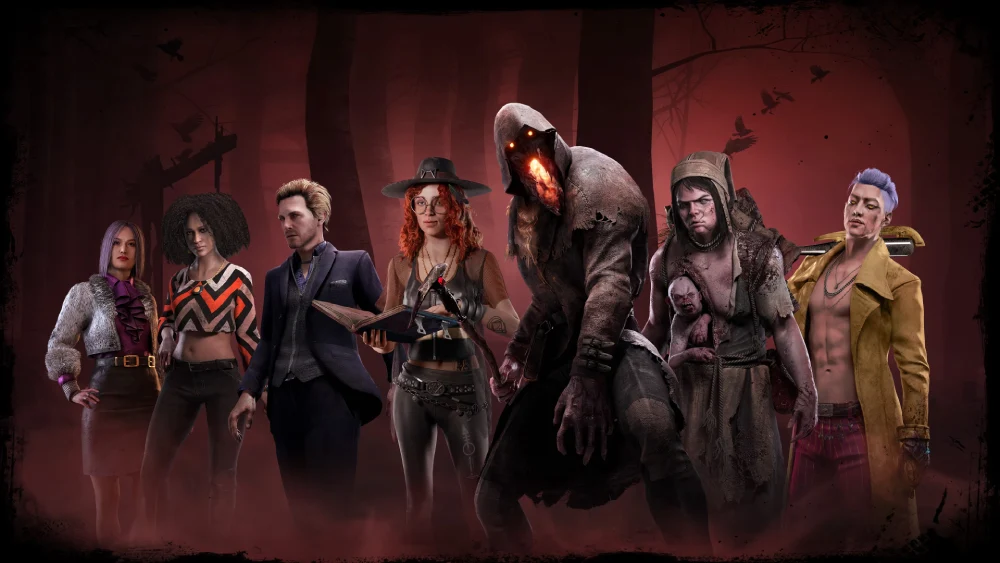
Dead by Daylight characters are divided into two main roles: survivors and killers. Survivors work together to repair generators, open exit gates, rescue teammates, heal, hide, loop, and escape. Killers hunt survivors, interrupt objectives, control the map, and sacrifice players to the Entity.
Every character in DBD has a theme, a backstory, and three personal perks. Survivors share the same basic gameplay rules, but their perks can support different styles. Killers are more distinct because each killer has a unique power that changes how chases, pressure, and map control work.
Survivors vs killers
Survivors do not have unique powers in the same way killers do. Instead, survivor identity mostly comes from perks, cosmetics, voice lines, licenses, and how players build them. For example, Meg Thomas is often associated with speed and chase value, while Dwight Fairfield is known for teamwork.
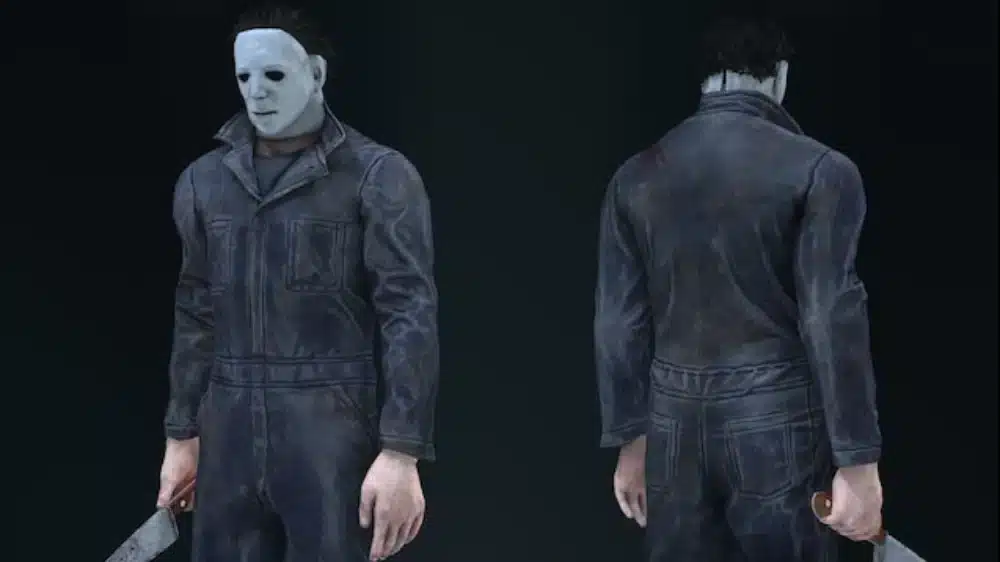
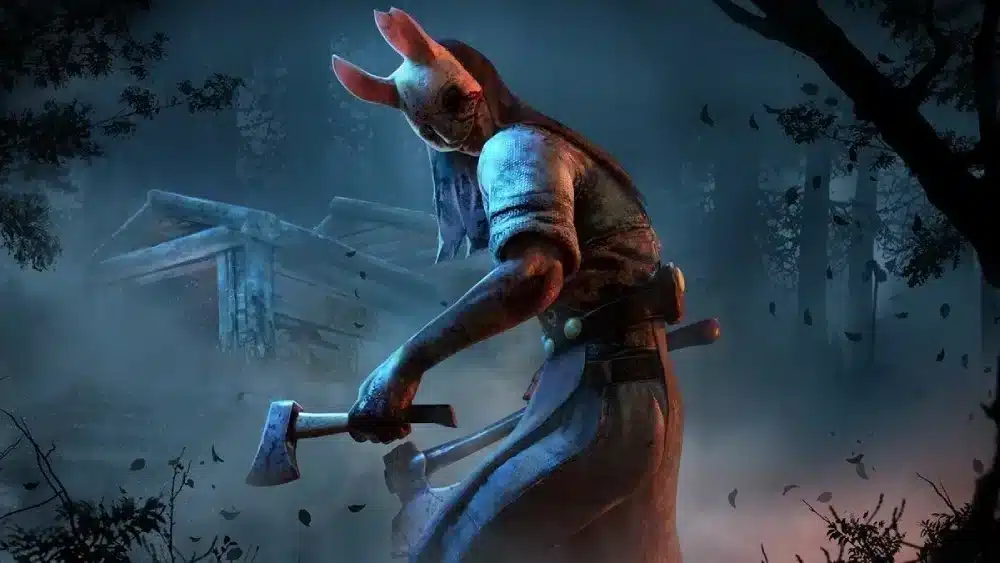
Killers are different. Dead by Daylight killers have unique powers that define how they play. The Nurse teleports. The Huntress throws hatchets. The Trapper places bear traps. The Xenomorph uses tunnels and tail attacks. The Slasher, Jason Voorhees, brings stealth, mobility, and brutal pressure.
Because of this, choosing a killer usually matters more mechanically than choosing a survivor. A survivor build can move between characters once perks are unlocked. A killer’s core gameplay stays tied to that killer.
Original and licensed characters
The roster includes both original characters and licensed horror crossovers. Original characters are created by Behaviour Interactive for the Dead by Daylight universe. Licensed characters come from movies, games, shows, and other horror franchises.
Common licensed examples include:
- Michael Myers from Halloween;
- The Pig from Saw;
- Nemesis, Leon, Jill, Ada, and Rebecca from Resident Evil;
- Pyramid Head and Cheryl Mason from Silent Hill;
- The Xenomorph and Ellen Ripley from Alien;
- The Good Guy, Chucky, from Child’s Play;
- The Animatronic from Five Nights at Freddy’s;
- The First, Dustin, and Eleven from Stranger Things;
- The Slasher, Jason Voorhees, from Friday the 13th.
This mix is one reason Dead by Daylight characters stay relevant. New chapters can bring original lore, nostalgic horror icons, or unexpected collaborations.
How many Dead by Daylight characters are there?
The number of Dead by Daylight characters changes as Behaviour Interactive releases new chapters, solo survivor updates, licensed crossovers, and anniversary content. Because of that, any fixed number can become outdated quickly.
As a practical rule, think of the roster as a constantly expanding collection of survivors and killers. There are dozens of playable characters, and the total grows several times a year. Players searching for Dead by Daylight dead usually land on character guides because they want to understand who dies, who survives, and how the Trial system works.
Recent character additions
Recent updates expanded the roster with major licensed and original additions. Stranger Things Chapter 2 introduced The First, also known as Vecna, as a killer, plus Dustin Henderson and Jane “Eleven” Hopper as survivors. The All-Kill: Comeback update added Kwon Tae-young as a survivor.
In 2026, Jason Voorhees entered the Fog as The Slasher, one of the most requested horror icons in the game’s history. Behaviour also announced Shane Wiigwaas, an original survivor tied to The Life Road chapter.
Licensed additions can also expand an existing character concept through distinctive cosmetic variants. This guide to the Xenomorph Queen in Dead by Daylight explains the outfit, its connection to the Alien franchise, and what changes when it is equipped.
These releases are important because they show how DBD continues to evolve. New survivors bring fresh perks. New killers bring new chase rules. New maps and realms can change movement, visibility, and pressure routes.
Why the roster keeps changing
Dead by Daylight is a live-service game. That means characters are not just added and forgotten. Balance patches, perk reworks, map changes, and meta shifts can make older characters stronger or weaker over time.
For example, a killer who feels powerful on one patch may become harder to use after perk changes. A survivor perk that was once common may become less popular after a nerf. Therefore, the “best” Dead by Daylight characters depend on the current version of the game, your skill level, and your preferred role.
Who are the best Dead by Daylight characters for beginners?
The best Dead by Daylight characters for beginners are the ones that teach core mechanics without forcing you into highly technical gameplay. New players should prioritize simple perks, clear objectives, and characters that reward good habits.
For survivors, that usually means learning how to repair generators, rescue safely, heal at the right time, and survive chases. For killers, it means learning basic movement, tracking, attack timing, hook pressure, and when to abandon a chase.
Best survivor characters for beginners
Beginner survivors should start with characters that offer practical perks and easy-to-understand value.
| Survivor | Why they help beginners |
| Dwight Fairfield | Teaches teamwork, generator efficiency, and aura-based support |
| Meg Thomas | Helps with speed, escape timing, and chase recovery |
| Claudette Morel | Teaches healing and survival basics |
| Feng Min | Offers useful perks for awareness and generator practice |
| David King | Helps players understand risk, protection, and endurance-based play |
Meg Thomas is one of the strongest beginner picks because her perks help with movement and escape timing. Dwight is also useful because he teaches cooperative play, which is essential in Dead by Daylight.
However, do not choose a survivor only because of tier lists. Since survivor powers are perk-based, your long-term goal should be to unlock useful perks and combine them into strong builds.
Best killer characters for beginners
Beginner killers should start with simple powers that teach chase fundamentals.
| Killer | Why they help beginners |
| The Wraith | Easy stealth, simple movement, and strong beginner pressure |
| The Trapper | Teaches map control and prediction |
| The Huntress | Introduces ranged attacks and aim practice |
| The Doctor | Helps with tracking and anti-stealth pressure |
| The Legion | Teaches movement, injury pressure, and quick decision-making |
The Wraith is one of the best starting DBD Killers because his power is easy to understand. You cloak, move around the map, find survivors, and uncloak to attack. This helps new players focus on fundamentals instead of complex ability management.
Tracking survivors becomes easier when a killer’s power actively disrupts their ability to hide. This complete Dead by Daylight Doctor guide explains how Madness, electrical attacks, and information pressure shape his beginner-friendly playstyle.
The Huntress is harder, but still useful if you want to practice ranged pressure. Missing hatchets can be punishing, but landing them teaches timing, prediction, and survivor movement patterns.
What makes Dead by Daylight killers different?
Dead by Daylight killers are more mechanically unique than survivors. Each killer has a specific power, and that power determines how they chase, defend generators, pressure survivors, and control the map.
Some killers are built for speed. Others are built for stealth, traps, ranged attacks, teleportation, or area denial. This is why Dead by Daylight killers can feel like completely different games within the same match structure.
Main killer playstyles
Most killers fall into a few broad categories:
| Playstyle | What it means | Examples |
| Mobility | Moves quickly around the map | The Blight, The Nurse, The Spirit |
| Ranged pressure | Attacks from distance | The Huntress, The Deathslinger, The Trickster |
| Stealth | Approaches with limited warning | The Wraith, Ghost Face, The Shape |
| Setup and traps | Prepares danger zones | The Trapper, The Hag |
| Area control | Limits survivor movement | The Artist, The Plague, The Dredge |
| Licensed horror power fantasy | Brings iconic franchise abilities | The Xenomorph, The Nemesis, The Slasher |
Mobility killers often become strong at high levels because they can pressure multiple generators quickly. However, they also tend to be harder. The Nurse and The Blight can be extremely powerful, but they require practice and map knowledge.
How to choose your main killer
To choose your main killer, start with your preferred pace.
Choose a mobility killer if you like fast decisions and constant pressure. Choose a stealth killer if you enjoy surprise attacks. Choose a ranged killer if you like prediction and aim. Choose a setup killer if you prefer planning ahead and controlling specific zones.
A simple way to decide is:
- Play The Wraith to learn basic killer flow.
- Try The Huntress to test ranged pressure.
- Try The Trapper to understand map control.
- Watch how survivors react to your power.
- Choose the killer whose mistakes feel fun to improve.
The best killer is not always the highest-tier option. The best killer is the one you can play consistently without losing focus under pressure.
What are the best Dead by Daylight survivor perks?
The best survivor perks depend on your playstyle. Some perks help in chase. Others improve healing, generator repair, rescue timing, information, or endgame survival. Since perks can be unlocked across characters, choosing which survivor to level matters.
Dead by Daylight characters are tied closely to perk progression. That is why beginners should think about unlock value, not only character appearance. A survivor with strong teachable perks can improve your account even if you later play a different character.
Best survivor perk categories
Survivor perks usually fit into these categories:
- Chase perks: help you extend loops or escape danger;
- Exhaustion perks: give speed or movement bursts;
- Healing perks: support recovery and team survival;
- Information perks: reveal generators, teammates, or killer actions;
- Rescue perks: improve unhooks and protection plays;
- Endgame perks: help during exit gate pressure.
For example, Meg Thomas is popular because speed and recovery perks are easy to understand. Dwight helps with teamwork. Feng Min gives awareness tools that are helpful for newer players.
Survivor build examples
Here are simple survivor build ideas:
| Build style | Perk focus | Best for |
| Beginner escape build | Speed, windows, awareness, healing | New players learning chase |
| Team support build | Healing, aura reading, safe rescues | Players who protect teammates |
| Generator build | Repair speed, skill check control, information | Objective-focused players |
| Endgame build | Gate pressure, protection, recovery | Players who plan late-match escapes |
As you learn DBD, avoid copying builds blindly. A high-level build may not help if you do not understand why each perk is included. Instead, choose perks that solve your current problems.
Are licensed Dead by Daylight characters stronger?
Licensed Dead by Daylight characters are not automatically stronger than original characters. Some licensed killers are powerful, some are average, and some require specific skills to perform well. The same applies to survivors.
Licensed characters are popular because they bring recognizable horror icons into the Fog. However, popularity does not always equal power. A fan-favorite character may have niche perks, while an original character may offer stronger gameplay tools.
Licensed killers and survivors
Licensed characters are attractive because they let players step into famous horror roles. Playing as The Xenomorph, The Nemesis, The Good Guy, The Animatronic, The First, or The Slasher feels different because each comes with strong franchise identity.
Licensed survivors also attract fans. Leon S. Kennedy, Jill Valentine, Ada Wong, Ellen Ripley, Alan Wake, Dustin Henderson, Eleven, and other crossover characters give players a reason to connect emotionally with the roster.
Still, if your goal is competitive improvement, study power and perks first. If your goal is fun, choose the character you like most.
Original characters and flexibility
Original Dead by Daylight characters often define the game’s own lore. Characters like Dwight, Meg, Claudette, The Trapper, The Huntress, The Nurse, The Blight, The Artist, and The Unknown are strongly tied to the identity of the game.
Original characters also tend to offer flexible perks and powers that are not limited by franchise expectations. That gives Behaviour more freedom to adjust them, expand their lore, and build events around them.
In practice, both licensed and original characters matter. The healthiest roster is the one that gives players variety.
New chapters, balance changes, and roster updates can make older character information inaccurate. The official Dead by Daylight website is the most direct place to verify current announcements and details about the game’s latest additions.
How do you unlock Dead by Daylight characters?
You can unlock Dead by Daylight characters through different methods depending on whether they are original or licensed. Original characters are often available through in-game progression or premium currency. Licensed characters usually require Auric Cells or DLC purchases because they are tied to external franchises.
Before buying a character, check their perks, difficulty, and role. A new player may get more value from unlocking a strong perk character than from buying a difficult killer too early.
Unlock methods
Common unlock methods include:
- Buying DLC chapters;
- Using Auric Cells;
- Using Iridescent Shards for eligible original characters;
- Purchasing character packs;
- Playing during special promotions or events;
- Checking platform store bundles.
Licensed characters are usually not available with Iridescent Shards. That means characters from franchises like Resident Evil, Silent Hill, Alien, Stranger Things, Five Nights at Freddy’s, or Friday the 13th often require paid purchase.
What to unlock first
If you are new, unlock based on usefulness.
For survivors, focus on perks that help you learn the game. For killers, pick a power that matches your preferred playstyle. Do not buy a high-skill killer only because a tier list says they are strong.
A smart unlock path looks like this:
- Learn the free or base roster.
- Identify your role: survivor, killer, or both.
- Choose perks that fix your weak points.
- Buy licensed characters only if you want their perks or franchise theme.
- Practice one character long enough to understand their strengths.
This approach saves resources and helps you avoid buyer’s remorse.
How does prestige work for Dead by Daylight characters?

Prestige is the main long-term progression system for Dead by Daylight characters. As you level a character through the Bloodweb, you spend Bloodpoints to unlock perks, items, add-ons, and offerings. When you reach certain prestige levels, you unlock that character’s perks for others.
Prestige is important because it makes your account stronger over time. The more characters you progress, the more build options you create.
How to get bloody cosmetics
Bloody cosmetics are classic prestige rewards. Players often ask how to make characters look “bloody” because these cosmetics show dedication to a specific character.
In general, the process is:
- Choose the character you want to prestige.
- Spend Bloodpoints in that character’s Bloodweb.
- Reach level 50.
- Prestige the character.
- Continue prestiging to unlock more cosmetic pieces and perk progression benefits.
Bloody cosmetics are not gameplay advantages. They are visual rewards for time investment.
Why prestige matters for builds
Prestige also matters because perks can become available across your roster. This is especially useful for survivor players, since survivor gameplay is not locked to unique powers. Once you unlock the right perks, you can use your favorite cosmetic character while still running a strong build.
For killers, prestige helps too, but killer powers remain unique. A perk build can support your strategy, but it will not make The Trapper play like The Nurse or The Huntress play like The Spirit.
How can ExitLag help Dead by Daylight players?
ExitLag can help Dead by Daylight players by optimizing connection routes between your device and the game servers. It does not guarantee wins, perfect hit registration, or lower ping for every player. However, it may reduce instability when your normal route is inefficient.
This matters because Dead by Daylight killers and survivors both depend on timing. A delayed hit, late vault, stutter during chase, or rubberband during movement can change the outcome of a Trial. Connection quality will not replace skill, but it can help make gameplay feel more consistent.
Why connection stability matters in DBD
Dead by Daylight is full of timing-sensitive moments. Survivors need clean vaults, safe unhooks, accurate flashlight saves, and fast reactions during chase. Killers need reliable movement, power timing, attack spacing, and map pressure.
A more stable route may help with:
- Fewer sudden lag spikes;
- More consistent chase movement;
- Better match loading stability;
- Reduced packet loss in some cases;
- Smoother routing during peak hours.
If your connection feels unstable only in certain matches or at certain times of day, routing may be part of the issue.
When to test ExitLag
You may want to test ExitLag if you notice repeated network problems while playing Dead by Daylight.
Common signs include:
- Your ping changes sharply between matches;
- You rubberband during chase;
- Skill checks feel inconsistent;
- Hits feel delayed;
- Match loading feels unstable;
- Your connection gets worse during peak hours.
ExitLag should be used as a connection optimization tool, not as a gameplay shortcut. It can help improve route stability, but it does not change character balance, perks, matchmaking, or player skill.
Some loading, account, platform, or connection problems require official troubleshooting rather than changes to a character build. The Dead by Daylight support center provides dedicated guidance for technical issues that continue outside normal gameplay.
FAQ
Dead by Daylight characters can feel overwhelming at first because there are many killers, survivors, perks, cosmetics, and licensed chapters. These quick answers cover the most common questions from new and returning players.
For survivors, Meg Thomas, Dwight Fairfield, Claudette Morel, and Feng Min are strong beginner options. For killers, The Wraith, The Trapper, The Doctor, and The Huntress can help teach important fundamentals.
DBD Killers can feel harder because each killer has a unique power and must pressure four survivors at once. Survivors have teamwork pressure, but their core controls are more consistent across characters.
Players searching for Dead by Daylight dead usually want to understand what happens when survivors die in Trials. In gameplay, survivors can be sacrificed, killed by certain powers, or escape through gates or hatch.
Licensed characters are worth buying if you like the franchise, want their perks, or enjoy their playstyle. However, they are not automatically stronger than original characters.
The strongest killer depends on the current patch and player skill. High-skill killers such as The Nurse and The Blight are often considered extremely strong, but they require practice and are not always beginner-friendly.
Survivors can use perks from other survivors once those perks are unlocked through progression. This is why prestige and Bloodweb investment are important for long-term build variety.
Yes. Balance patches, perk reworks, new chapters, and map updates can change how useful a character feels. A good guide should always consider the current state of the game.
Final thoughts on Dead by Daylight characters
Dead by Daylight characters make the game more than a simple horror chase. Survivors bring teamwork, perks, and personality. Killers bring unique powers, pressure styles, and fear. Together, they create the constant variety that keeps players returning to the Fog.
What to remember
The best Dead by Daylight characters are the ones that match your goals. New survivors should focus on useful perks and basic chase skills. New killers should choose simple powers before moving into harder options. Licensed characters are exciting, but original characters often offer just as much value.
Try ExitLag before your next Trial
If lag, routing issues, or unstable ping are affecting your matches, test ExitLag before your next session. It can help optimize your connection route and may improve stability while you learn survivors, practice killers, and build better strategies around Dead by Daylight characters. All game images used in this article belong to their respective owners. They are used for informational and educational purposes only and do not imply endorsement or affiliation with the rights holders.
Got questions or want to connect with other players? Join the conversation at the ExitLag Forum!