
The Diablo 4 map is one of the most important tools for progressing through Sanctuary efficiently. It is not only a visual overview of the world. It helps you find towns, waypoints, Strongholds, Helltides, world events, quest objectives, dungeons, PvP zones, and regional rewards that support your character throughout the campaign and endgame.
Some map routes eventually lead to targeted gear hunts, especially once your character reaches higher difficulties. Players building around a specific Unique can consult this guide to the Ugly Bastard Helm to understand the item’s role and decide which activities deserve priority.
For new players, the Diablo 4 map can feel overwhelming because the world is full of icons, activities, and unexplored paths. However, you do not need to clear every marker immediately. A better approach is to understand what each region offers, unlock the most useful travel points, and choose activities that match your current level, build, and available time.
The Diablo 4 map also changes in relevance as your character progresses. Early on, it helps you follow campaign objectives, discover towns, and find waypoints. Later, it becomes a route-planning tool for Helltides, Whispers, Strongholds, boss events, seasonal activities, and multiplayer sessions. Learning how to read it saves time and helps you avoid aimless travel.
Whether you are playing Diablo IV for the campaign, building an endgame character, or returning for a new season, this guide explains how the world map works today. It covers regions, Nahantu access, Altars of Lilith, fast travel, Helltide planning, boss preparation, PvP zones, and the best ways to keep your map sessions efficient.
What Does the Diablo 4 Map Include?
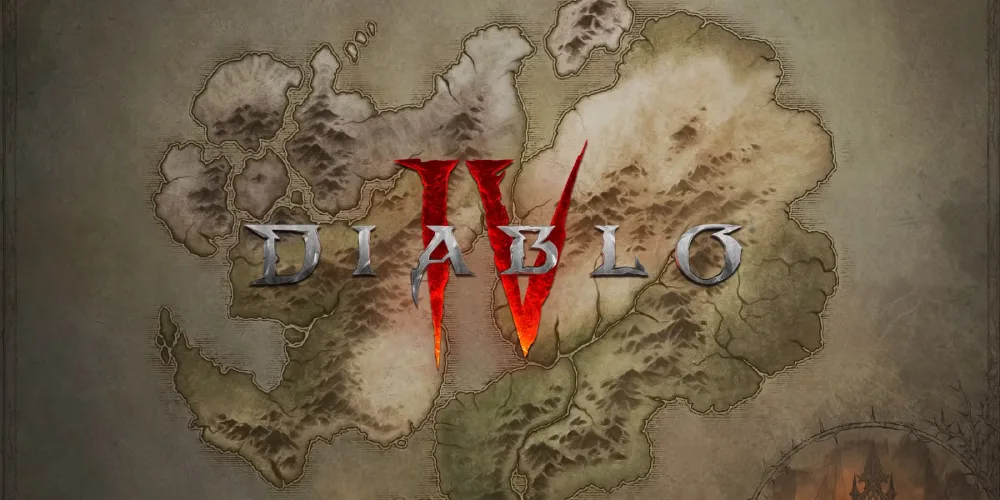
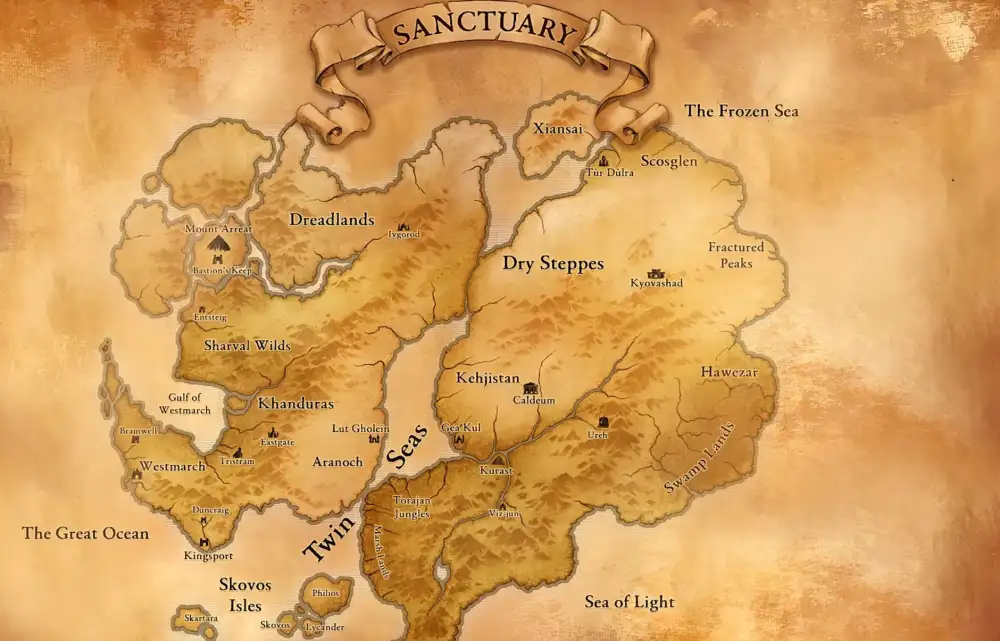
The Diablo 4 map covers Sanctuary through several interconnected regions, each with its own landscape, settlements, events, enemies, dungeons, Strongholds, and exploration goals. The base game contains five main regions, while the Vessel of Hatred expansion adds Nahantu.
The map is built around open-world travel. You can move between regions, use waypoints, ride mounts, join events, complete side quests, and travel with other players without following a completely linear route. Still, certain activities, quests, and expansion areas may require progression or ownership conditions.
What Are the Main Diablo 4 Regions?
The five base-game regions each have their own visual identity and gameplay atmosphere. You will visit all of them during a normal journey through Diablo 4, but their importance can change depending on your quest progression, active Whispers, Helltides, seasonal objectives, and preferred farming routes.
| Region | Environment | Main Appeal |
| Fractured Peaks | Snowy mountains and religious settlements | Early campaign areas, Kyovashad, Strongholds |
| Scosglen | Forests, coastline, moors, and druidic territory | Coastal exploration, dense wilderness, Druid lore |
| Dry Steppes | Canyons, grasslands, and harsh badlands | PvP access, open routes, tribal settlements |
| Kehjistan | Desert ruins, cities, and ancient Zakarum locations | Gea Kul, desert paths, Fields of Hatred access |
| Hawezar | Swamps, ruins, and dangerous wetlands | Dark atmosphere, dense routes, late-campaign areas |
| Nahantu | Jungle, ruins, and dense overgrowth | Expansion content, Kurast area, Strongholds, new activities |
Each region can support different route styles. A player focused on Whispers may prioritize whichever zone currently has several objectives nearby. Someone collecting map rewards may instead clear unexplored locations region by region.
The world of Diablo is designed to reward movement through these zones, but you should not mistake full exploration for a mandatory task at the start. Prioritize your campaign, key waypoints, and activities that improve your current character before trying to remove every patch of fog.
Is Nahantu Part of the Current Map?
Yes. Nahantu is no longer an upcoming area or a future map rumor. It is the jungle region added through the Vessel of Hatred expansion, and it includes its own towns, Strongholds, quests, enemies, dungeons, and exploration content.
Players without the expansion can still use the base-game regions normally. However, expansion-specific content, such as Nahantu locations and certain activities, requires the relevant access.
Nahantu changes how players think about the Diablo 4 map because it expands the world beyond the original five-region layout. Older guides that only show Fractured Peaks, Scosglen, Dry Steppes, Kehjistan, and Hawezar are still useful for base-game content, but they are incomplete for players with the expansion.
Map planning also becomes important when your goal shifts from general exploration to repeatable boss farming. This guide to obtaining Exquisite Blood explains how the material connects to Lord Zir and helps you decide when to include it in a dedicated farming session.
When planning your exploration, keep these access differences in mind:
- Base-game regions are available through the main Diablo IV experience.
- Nahantu requires Vessel of Hatred access.
- Some map objectives are tied to campaign or quest progress.
- Seasonal activities can add temporary markers or event zones.
- Endgame activity locations can change based on live rotations.
- Expansion content may introduce additional map systems and regional priorities.
Which Diablo 4 Map Region Should You Explore First?
Your first exploration priority should usually be whatever supports your current campaign or character progression. There is no need to clear every dungeon, side quest, and collectible before moving forward.
For most players, Fractured Peaks is the natural starting point because it introduces the world, early towns, key services, and the opening campaign path. From there, the best route depends on whether you are finishing the story, leveling an alternate character, farming open-world events, or preparing for endgame content.
How Should You Prioritize Early Exploration?
A practical early-game route focuses on convenience rather than full completion. Unlock travel options, complete useful Strongholds, and avoid long detours for low-value objectives while your build is still developing.
Use this order as a flexible starting point:
- Follow campaign objectives until you unlock important systems.
- Activate waypoints in towns you expect to revisit.
- Complete Strongholds that unlock useful towns or travel routes.
- Pick up nearby side quests only when they fit your route.
- Explore Altars and regional objectives gradually.
- Save distant dungeon clearing for later, unless it helps your build.
- Return to unfinished regions when you have a mount and more mobility.
This approach makes the Diablo 4 map feel less like a checklist and more like a useful progression tool.
Do not waste time riding across an entire region for one minor objective unless you have several nearby goals. Group activities together whenever possible: a waypoint, a Stronghold, a Whisper objective, a side quest, and an altar route can often be completed in one trip.
How Do Diablo 4 Classes Affect Route Planning?
Your build can influence how comfortable each region feels. Some Diablo 4 classes have strong mobility, ranged damage, or defensive tools that make open-world travel easier. Others may prefer more careful routes until their gear and skills improve.
For example, a fast-moving build may clear scattered events efficiently, while a slower setup may benefit more from staying in one dense area. A ranged character can often handle dangerous open zones from a safer distance, while a melee character may want stronger defenses before pushing through elite-heavy routes.
Think about your build when choosing map objectives:
| Build Style | Useful Map Focus |
| High mobility | Spread-out Whispers, world events, waypoint routes |
| Strong area damage | Helltides, dense enemy zones, event farming |
| Boss-focused build | World Bosses, dungeon objectives, elite encounters |
| Early leveling setup | Campaign routes, nearby quests, safe Strongholds |
| Defensive or Hardcore build | Predictable routes, lower-risk objectives, towns nearby |
| Multiplayer support build | Group events, Helltides, world activities |
Your Diablo 4 classes setup does not need to dictate every route. It simply helps you choose activities that feel efficient instead of forcing your character into content it is not ready to clear comfortably.
How Do You Use the Diablo 4 Map Efficiently?
The most useful map habit is filtering your attention. Do not chase every icon at once. Choose one purpose for a session, such as finishing campaign quests, collecting waypoints, clearing Whispers, running a Helltide, or completing regional exploration.
The map works best when you treat it as a planning screen before you leave town. Look at nearby objectives, estimate travel time, and decide which activities can be combined into one route.
Major encounters require a different type of preparation than routine exploration. The Diablo 4 Harbinger of Hatred guide covers the encounter in detail, giving expansion players a clearer objective when organizing a focused session.
Which Map Icons Matter Most?
Some icons are worth prioritizing almost every time you see them. Others are more situational and depend on whether you need experience, gear, progress, crafting resources, or event rewards.
| Map Icon or Activity | Why It Matters |
| Waypoint | Unlocks fast travel and reduces future travel time |
| Stronghold | Can unlock towns, vendors, routes, or content |
| Whisper objective | Contributes toward Tree of Whispers rewards |
| Helltide | Open-world farming, events, Cinders, and rewards |
| World Boss | Timed group event with valuable rewards |
| Dungeon | Useful for quests, rewards, and available activities |
| Side quest | Adds story, experience, and regional progress |
| Fields of Hatred | PvP-oriented zones and related activities |
| Seasonal marker | Changes with the current season and active features |
The Diablo 4 map becomes easier to manage once you stop seeing every icon as urgent. Your objective should determine what you ignore.
For example, if you have 20 minutes, focus on nearby Whispers or a Helltide route. If you have a longer session, combine a Stronghold, dungeon, waypoint, and side quest chain in the same region.
Why Are Waypoints and Strongholds So Important?
Waypoints are one of the best long-term investments you can make. They reduce travel time, improve access to nearby events, and make it easier to return to vendors, quests, or region-specific activities.
Strongholds are equally valuable because they often change the surrounding environment. Completing one can unlock a settlement, new services, a waypoint, or a more convenient route through the region.
A good waypoint plan includes:
- Unlocking major towns first.
- Activating waypoints near likely Helltide areas.
- Clearing Strongholds that open travel routes.
- Taking waypoints while completing campaign objectives.
- Returning to missed travel points when you have a mount.
- Keeping an eye on expansion-region waypoints if you own the content.
In D4, fast travel is not only about convenience. It is about reducing downtime between activities. The fewer minutes you spend riding across empty terrain, the more time you have for useful progression.
Are Altars of Lilith Still Worth Finding?
Altars of Lilith are still map objectives worth understanding, but older guides often describe their rewards incorrectly. They no longer provide permanent character-stat increases or Paragon Points in the way they once did.
Instead, first-time altar discoveries now provide smaller rewards such as gem fragments, Murmuring Obols, and gold. This makes them useful, but not something you need to prioritize above every other activity.
What Do Altars of Lilith Give You Now?
The value of Altars of Lilith has changed over time. Earlier versions of Diablo 4 rewarded players with permanent power gains, which made collecting every altar feel essential for competitive progression.
Now, they are better viewed as exploration rewards rather than mandatory build power. That does not mean they are worthless. They can still provide useful materials and contribute to the satisfaction of fully exploring Sanctuary.
When you find an altar, ask whether it is worth a detour. If it is nearby, collect it. If it requires crossing an entire region during a more urgent objective, mark it mentally and return later.
Altars remain useful for players who enjoy:
- Clearing map content completely.
- Collecting account-wide exploration rewards.
- Building efficient regional routes.
- Filling downtime between quests or events.
- Finding hidden parts of Sanctuary.
- Completing seasonal or Eternal-realm exploration goals.
A complete Diablo 4 map route does not need to be an altar-only route. The most efficient approach combines nearby altars with waypoints, side quests, Whispers, Strongholds, or dungeon objectives.
How Should You Plan Altar Routes?
The best altar route is based on clusters. Rather than opening a guide and running toward every marker in a random order, clear one section of a region at a time.
Use this route-planning method:
- Start at a waypoint near the edge of an unexplored area.
- Mark two to five nearby altar locations.
- Check for nearby Whispers, quests, or dungeons.
- Clear the route in a loop instead of backtracking.
- Return to town only when your inventory or objective requires it.
- Move to the next cluster after finishing the current section.
This method works especially well in regions with difficult terrain, such as Hawezar swamps or Kehjistan’s desert routes.
A Diablo player who collects map rewards naturally over time will usually have a better experience than someone trying to finish the entire world in one exhausting session.
Live systems, seasonal activities, and regional priorities can change as the game receives updates. The official Diablo 4 website is the most direct place to check current announcements before relying on an older farming route or event guide.
How Do Helltides Work on the Diablo 4 Map?
Helltides are open-world events that transform part of Sanctuary into a dangerous, reward-focused farming area. They are a major reason players check the map regularly during endgame sessions.
Unlike older versions of the game, Helltides are no longer restricted only to high World Tiers. They can appear across World Tiers, although the difficulty, rewards, and character readiness still matter.
How Do You Find an Active Helltide?
When a Helltide is active, the affected zone is visually marked on the map. You can use the in-game display to see where it is happening and choose the closest waypoint before entering the event area.
During Helltides, you can defeat enemies, complete events, collect Aberrant Cinders, fight elite enemies, and open Tortured Gifts. Depending on the current game systems and seasonal mechanics, you may also encounter additional activity markers, summon opportunities, or special event objectives.
A Helltide route should focus on movement and density. You want to stay in areas with enough enemies and events to keep your rewards flowing instead of riding long distances through empty terrain.
Useful Helltide habits include:
- Enter through the closest waypoint.
- Follow nearby events rather than wandering aimlessly.
- Prioritize dense enemy packs.
- Watch your Cinder total.
- Open rewards before the event ends.
- Avoid unnecessary town trips.
- Use a mount between distant objectives.
- Check current seasonal rules before assuming old chest costs or mechanics apply.
The Diablo 4 map makes Helltides much easier when you plan your route before entering. Spend a few seconds looking for nearby events, roads, and exit points instead of reacting only after you are already surrounded.
How Can You Farm Helltides More Efficiently?
The fastest Helltide farming strategy is not always the most aggressive one. A fragile character may lose more time dying than they gain by chasing every elite pack.
Build your route around your survivability. If your character can clear quickly, move between events and dense areas. If your build is still developing, stay near other players, use safer loops, and avoid overcommitting to dangerous elite groups.
| Player Goal | Better Helltide Focus |
| Leveling | Events, dense monster packs, safe loops |
| Gear farming | High enemy density and Tortured Gifts |
| Group play | Shared events and coordinated paths |
| Materials | Event completion and reward chests |
| Seasonal progress | Current seasonal objectives inside Helltides |
| Boss-related rewards | Watch for active summon or elite opportunities |
Many Diablo 4 classes become more effective in Helltides once they have reliable area damage and movement tools. Until then, treat Helltides as a flexible activity rather than a mandatory endgame grind.
Map priorities can also change depending on whether you are playing only the base game or using expansion content. The official Vessel of Hatred expansion page outlines the added region and features, making it easier to separate expansion objectives from activities available across the wider world.
Where Are World Bosses and PvP Zones on the Map?
World Bosses and Fields of Hatred add different types of map activity. World Bosses are timed cooperative encounters, while Fields of Hatred are PvP-focused zones where players can choose to take greater risks for different rewards and interactions.
Both are worth understanding, but neither should be your only route to progression.
How Do World Bosses Work?
World Bosses appear at designated arenas across Sanctuary. The three classic world bosses are Ashava, Avarice, and Wandering Death. They are designed as group encounters, so you will usually see other players gathering near the arena when one is about to begin.
World Boss schedules can change, and external timers may not always reflect current maintenance windows, patch changes, or regional conditions. The most reliable approach is to use in-game notifications and current official information.
Before joining a World Boss, check:
- Whether the event marker is visible on your map.
- Whether you have the nearest waypoint unlocked.
- Whether your build has enough survivability for the activity.
- Whether your inventory has space for rewards.
- Whether you need to repair or adjust your gear first.
- Whether you are joining alone or coordinating with friends.
A World Boss run is a good use of the Diablo 4 map because it rewards preparation. Arrive early, identify the nearest travel point, and avoid wasting the event window by organizing your gear after the boss has already appeared.
Where Are the Fields of Hatred?
Fields of Hatred are the primary PvP zones in Diablo IV. The traditional areas are located in Dry Steppes and Kehjistan, although seasonal content can add special rules, temporary events, or altered objectives within these zones.
PvP is optional. You do not need to visit Fields of Hatred to complete the campaign or enjoy most endgame activities. However, they can be interesting for players who want a more unpredictable experience than standard PvE content.
If you plan to enter, remember:
- Other players may attack you.
- Your build may need more mobility or defensive tools.
- You should bank or complete objectives when appropriate.
- Seasonal events may change the usual PvP flow.
- Group coordination can help, but does not remove risk.
- A PvP route should always include an exit plan.
In D4, Fields of Hatred are best approached as a separate activity, not as a normal questing area. Enter prepared, learn the map layout, and expect other players to use builds designed specifically for player-versus-player combat.
How Can ExitLag Help Diablo 4 Map Activities?
ExitLag is a connection optimization tool for PC players. It cannot reveal map markers, improve your item drops, speed up local storage, raise frame rate, or guarantee that a World Boss event will appear.
However, it may help when the problem is network-related. In an always-online game like Diablo 4, unstable routing, packet loss, ping spikes, or sudden disconnects can interfere with movement, skills, event participation, and group coordination.
When Can Connection Stability Matter?
Connection problems are especially noticeable in crowded or timing-sensitive map activities. A character may appear to move backward, attacks may feel delayed, enemies can seem to reposition suddenly, or an event can become difficult to follow.
You may want to test ExitLag if you experience:
- Rubberbanding during Helltides.
- Delayed skill activation in World Boss fights.
- Sudden disconnects in group sessions.
- Inconsistent movement near crowded events.
- Unstable responses while changing zones.
- Worse performance only when playing online.
- Packet-loss symptoms during PvP activities.
ExitLag cannot fix a server outage, an overloaded local device, or low frame rates caused by graphics settings. It is most relevant when your connection route is the issue.
How Should You Optimize Your Diablo 4 Setup?
Start with the basics. Close background downloads, pause streaming services, restart your router when multiple games are unstable, and confirm that your local hardware is not struggling.
Then test your connection through several sessions. Compare how movement, skill response, zone transitions, and group play feel during normal activities.
Use this checklist:
- Keep Diablo IV updated.
- Close bandwidth-heavy applications.
- Use a wired connection when possible.
- Check whether your graphics settings are causing frame-rate issues.
- Test different event times and regions.
- Compare solo and group sessions.
- Try ExitLag on PC when routing instability continues.
A more stable connection cannot replace build knowledge or map planning. However, it can help your actions register more consistently during Helltides, World Bosses, Fields of Hatred, and other live activities.
FAQ
The Diablo 4 map has changed since launch through expansions, seasonal systems, Helltide updates, and changes to Altars of Lilith. These answers cover the most important map questions for current players.
The base game includes five main regions: Fractured Peaks, Scosglen, Dry Steppes, Kehjistan, and Hawezar.
Players with Vessel of Hatred also have access to Nahantu, the jungle expansion region. Older map guides that list only five regions do not include expansion content.
Altars of Lilith are still useful exploration objectives, but they no longer grant permanent character stats or Paragon Points.
They now provide smaller first-discovery rewards, such as gem fragments, Murmuring Obols, and gold. Collect them when they fit naturally into your route instead of treating them as an urgent power requirement.
No. Helltides are available across World Tiers rather than being restricted only to the old high-tier requirement.
Their difficulty and rewards still depend on your character’s progression, build strength, and current game systems. Check the map before entering and choose a route that fits your character’s survivability.
Prioritize major towns, Strongholds that open useful routes, and travel points near activities you expect to repeat. Unlock waypoints while following campaign quests instead of making separate long trips whenever possible.
Waypoints become even more valuable once you start rotating through Helltides, Whispers, World Bosses, and seasonal objectives.
ExitLag may help if your issue is caused by routing instability, packet loss, or inconsistent online connectivity. It does not directly improve local loading times, graphics performance, or the game’s map interface.
For PC players who notice unstable movement, delayed skills, or disconnects during online activities, testing ExitLag across several sessions can help identify whether connection routing is part of the problem.
The Diablo 4 map becomes much easier to manage once you plan around your current goal instead of trying to complete every activity at once. Unlock convenient waypoints, combine nearby objectives, use Helltides and events when your build is ready, and treat Altars as part of a larger exploration route. With a clear plan and a stable online connection, the Diablo 4 map can turn Sanctuary from an overwhelming world into a reliable path for leveling, farming, events, and long-term progression. For PC players dealing with online instability during those routes, try ExitLag and test whether a more consistent connection helps your next session.
Got questions or want to connect with other players? Join the conversation at the ExitLag Forum!