
Learning Escape from Tarkov maps is one of the biggest differences between surviving a raid and losing your kit before you even understand where the shots came from. Every location has its own pacing, extracts, danger zones, loot paths, AI behavior, and player traffic, so map knowledge becomes a survival skill rather than a simple reference.
Before memorizing every extract, make sure your game setup is ready for long raids and repeated practice sessions. A clean installation, updated client, and stable routing can make the learning process less frustrating, especially when you are studying Escape from Tarkov maps and need every second to react. You can start with this complete Escape from Tarkov download guide if you want to prepare the game properly before diving into routes, extracts, and map tools.
Escape from Tarkov maps are difficult because the game gives you very little hand-holding. There is no simple minimap guiding you to safety, no bright path showing the correct extract, and no guarantee that the route you used last raid will be safe again. That is exactly why players rely on the Tarkov maps community, interactive tools, and repeated offline practice to build confidence.
The most important thing to understand is that each map teaches a different lesson. Customs teaches chokepoints and early PvP pressure. Woods teaches orientation, long sightlines, and terrain reading. Streets of Tarkov teaches verticality, interiors, and audio awareness. Ground Zero introduces newer players to basic routing, while The Lab and high-risk areas punish every mistake.
This guide reformulates the original overview into a more practical, updated, and publication-ready breakdown. You will learn what each location is best for, how to study extracts, when to use interactive maps, and how ExitLag can help optimize connection stability while you focus on survival.
What are Escape from Tarkov maps?
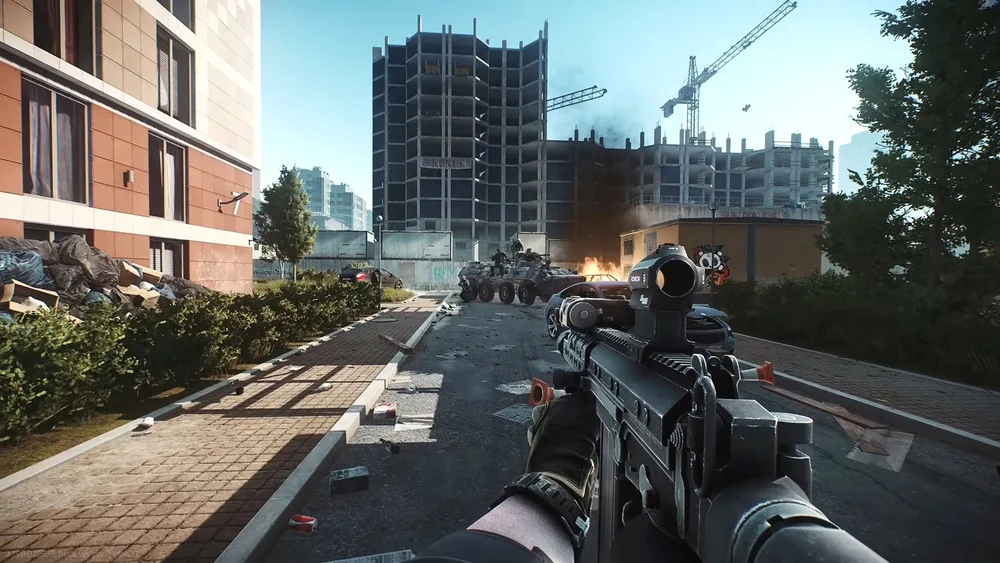
Escape from Tarkov maps are the playable raid locations where players enter, loot, fight, complete tasks, and extract. Unlike many shooters, Tarkov does not treat maps as simple arenas. Each one is a self-contained survival puzzle with hidden routes, locked rooms, AI patrols, boss spawns, minefields, sniper zones, transit options, and extracts that may depend on conditions.
In practice, map knowledge affects every part of a raid:
- where you spawn;
- where enemies are likely to rotate;
- which areas are worth looting;
- which extracts are available;
- when you should fight, hide, or leave;
- how much gear you should risk.
Because of that, the best players do not simply aim better. They move with purpose. They know when a spawn is dangerous, when an extract path is exposed, and when a noise cue probably means another player is cutting through a nearby building.
Why map knowledge matters in every raid
Tarkov is built around information. When you know the layout, you can predict danger before it appears. For example, a player who understands the Customs map knows that Dorms, Stronghold, New Gas Station, and construction routes can become dangerous quickly. A player using a Woods map Tarkov reference understands why crossing open terrain without cover is often a mistake.
This matters even more because death is expensive. You can lose armor, weapons, ammunition, healing items, quest progress, and loot in seconds. Therefore, studying Escape from Tarkov maps is not optional for consistent progress. It is one of the safest ways to reduce unnecessary losses.
Official map view vs. community map tools
The in-game map view can help you understand the general location concept, but most players need more detail than that. Community tools usually include extracts, loot containers, quest markers, Scav spawns, boss areas, locked doors, transit points, and danger zones. These resources are especially useful because Tarkov maps change across patches, wipes, events, and balancing updates.
A good workflow is simple. Keep one interactive map open on a second monitor or phone, choose one objective for the raid, and avoid trying to learn everything at once. Over time, you will stop checking every corner and start recognizing the route naturally.
What are the best Escape from Tarkov maps for beginners?
Escape from Tarkov maps are not equally friendly to new players. Some are compact and readable, while others are dense, vertical, and punishing. Beginners should avoid jumping straight into the most chaotic areas unless they are intentionally practicing PvP or following an experienced squad.
Ground Zero is usually the easiest starting point because it was designed as an early learning space. Customs is also important because many early tasks and common routes lead there. Woods can be confusing at first, but it is excellent for learning orientation, patience, and long-range movement.
A good learning order looks like this:
| Learning stage | Recommended map | Main reason |
| First raids | Ground Zero | Compact layout and early-game structure |
| Early quests | Customs | Many tasks, routes, and recognizable landmarks |
| Navigation practice | Woods | Teaches terrain reading and long sightlines |
| Loot and complexity | Interchange or Shoreline | Larger layouts with valuable areas |
| Advanced routing | Streets of Tarkov | Dense urban movement and vertical fights |
For a broader understanding of the game before choosing routes, it helps to read a full overview of how Escape from Tarkov works. Knowing the raid loop, risk system, factions, and progression makes every map decision more logical, especially when you are still learning why certain routes are more contested than others.
Is Ground Zero the easiest Tarkov map?
Ground Zero is one of the most beginner-oriented locations because it offers a more compact environment and introduces essential raid logic. You still need to learn extracts, building interiors, and enemy movement, but the scale is less overwhelming than maps like Shoreline, Lighthouse, or Streets.
However, easy does not mean safe. Ground Zero can still produce fast fights, ambushes, and confusing indoor movement. Use it to practice checking corners, identifying exits, and leaving before greed gets you killed.
Should beginners learn Customs early?
Yes, beginners should learn Customs early because the map appears frequently in early progression and teaches several core Tarkov skills. You will deal with chokepoints, traffic lanes, dangerous buildings, vehicle extracts, and PvP zones. The Customs map also has many recognizable landmarks, which makes it easier to build mental routes.
Start with simple goals. Learn one side of the map, then one extract route, then one loot path. After that, add Dorms, Stronghold, and gas station rotations. This approach is slower, but it prevents the common mistake of running everywhere without understanding why you died.
Main Tarkov maps and how to approach each one
Every location has its own rhythm. Some reward fast looting and early extraction. Others reward patience, long-range awareness, and route discipline. When studying Escape from Tarkov maps, focus less on memorizing every icon and more on understanding what the map is trying to punish.
Below is a practical overview of the most important raid locations and what you should prioritize on each one.
Customs
Customs is one of the most iconic Tarkov maps because it mixes industrial areas, dormitory buildings, gas stations, construction zones, and long outdoor lanes. It is also one of the most important maps for quest progression, which means traffic can be heavy throughout a wipe.
Key points to learn:
- Dorms and surrounding approaches;
- Stronghold and construction rotations;
- Old Gas Station and ZB extracts;
- river crossings and bridge exposure;
- common spawn pressure in the first minutes.
Customs is excellent for learning how players rotate. Many deaths happen not because the map is impossible, but because players sprint through obvious chokepoints without checking likely angles.
Woods
Woods is a large outdoor map centered on forests, hills, open fields, bunkers, camps, and long sightlines. A Woods map Tarkov reference is useful because the terrain can look repetitive when you are new. Trees, rocks, and slopes blend together, making it easy to lose direction.
To learn Woods faster, anchor your movement around major landmarks such as the sawmill, mountain, USEC camp, lakes, villages, and extraction borders. Avoid walking through open terrain without a plan, and remember that snipers often control routes before you ever see them.
Woods teaches three important lessons:
- sound travels differently in open areas;
- cover is not always close;
- greed can turn a clean loot run into a long, exposed walk.
Streets of Tarkov
Streets of Tarkov is one of the most complex urban locations in the game. The Streets of Tarkov map includes dense streets, apartments, shops, hotels, courtyards, vertical angles, and many interior routes. Because of that, fights can start from windows, staircases, alleys, rooftops, or rooms you never checked.
The best way to learn Streets is to break it into districts instead of trying to memorize the whole city at once. Focus on one block, one extract route, and one loot pattern. Then expand gradually.
The Streets of Tarkov map rewards players who understand audio, patience, and timing. It also punishes players who sprint blindly through intersections or stay too long in loud buildings after looting.
Interchange
Interchange is built around the ULTRA shopping mall and its surrounding exterior. It can feel confusing because many areas look similar, lighting can be difficult, and vertical audio can mislead new players. Still, it is a valuable map for loot routes, hidden stashes, and close-to-mid-range fights.
Learn the mall entrances first. Then study major store names, power station, parking areas, escalators, and common extraction routes. Interchange becomes much easier when you understand how players move between tech stores, medical areas, and exits.
Shoreline
Shoreline is a large map with villages, open terrain, a weather station, coastal routes, and the health resort. The resort is the main high-risk area because it attracts players looking for loot, keys, quests, and PvP. The rest of the map can be slower, but long sightlines and hidden movement still make it dangerous.
Use Shoreline to practice route planning. Decide whether your raid is a resort run, a stash run, a quest run, or a quiet extraction route. Mixing all of those goals in one raid often creates unnecessary risk.
As platform access, purchase options, and launcher questions can change over time, keep those topics separate from your map study. If you are checking whether the game is available through Valve’s platform or how that version may work, use this Escape from Tarkov Steam availability guide before planning your setup. That way, your route planning stays focused on extracts, spawns, and survival instead of installation confusion.
Lighthouse, Reserve, The Lab, Terminal, Icebreaker, and other advanced locations
Advanced locations usually demand more preparation. Lighthouse has dangerous AI zones and long-range exposure. Reserve includes underground routes, military loot, and complex extracts. The Lab is high-risk and often unforgiving. Newer or story-connected locations, such as Terminal and Icebreaker, may involve more specific access, enemy patterns, or progression context depending on the current version and game mode.
Because these areas can change with patches, avoid relying only on memory. Use current interactive tools before planning expensive raids, especially when running valuable gear.
Where can I find accurate Tarkov maps?
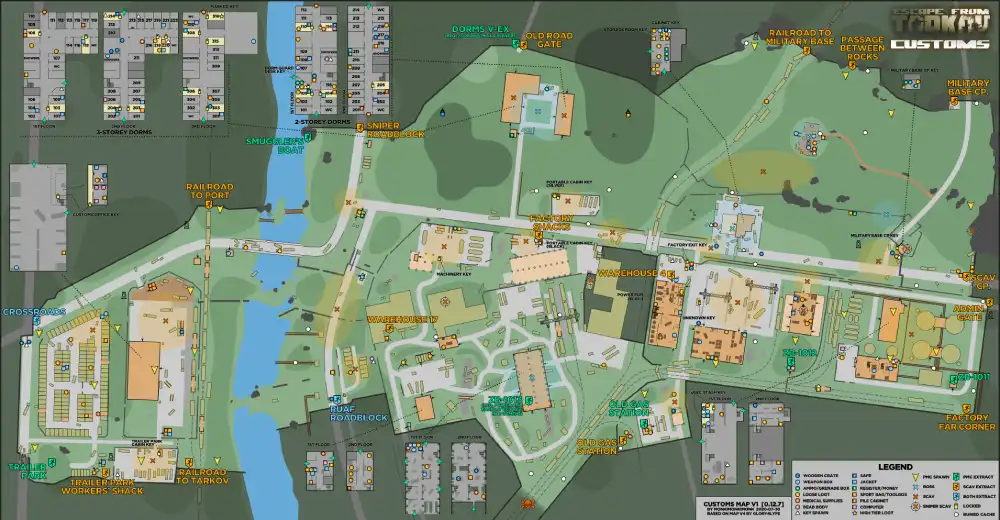
Accurate Escape from Tarkov maps usually come from community-maintained tools. These tools are popular because they are faster to consult than static images and easier to update when the game changes. They also let you toggle markers instead of staring at a crowded image with every possible point displayed at once.
The most useful resources usually show:
- PMC and Scav spawns;
- extraction points;
- loot containers;
- quest objectives;
- boss and AI areas;
- keys and locked rooms;
- hidden caches;
- transit routes;
- mines, snipers, and danger zones.
A reliable interactive tool can save hours of trial and error. For example, tarkov.dev maps are useful when you want a direct map reference alongside broader Tarkov data, such as items, quests, flea market information, and progression tools. This kind of resource works best when you already know your raid objective and need quick confirmation before loading in.
Are interactive Tarkov maps better than static images?
Interactive maps are usually better for active learning because they allow filters. You can hide everything except extracts, then add loot, then add quests, and then add danger areas. This prevents information overload.
Static images are still useful for memorization. A clean screenshot of a Customs map or a simplified Woods layout can help you build a mental model faster. However, for live planning, interactive tools are generally more flexible.
How should you use a map during a raid?
Do not stare at the map while standing in the open. Find cover first, check your surroundings, then confirm your route. Tarkov punishes distracted players quickly.
Use this habit:
- identify your spawn;
- choose your nearest safe landmark;
- confirm available extracts;
- pick one objective;
- move from cover to cover;
- leave once the objective is done.
This routine makes Escape from Tarkov maps easier to learn because every raid has a clear purpose. You are not wandering. You are testing one route, one extract, or one loot pattern.
How do you learn Escape from Tarkov maps faster?
The fastest way to learn Escape from Tarkov maps is repetition with structure. Many players fail because they try to learn every map, quest, extract, and loot spawn at once. Instead, choose one map and repeat it until your movement becomes automatic.
Start with extracts. Then learn spawns. After that, learn loot. Finally, study PvP hotspots. This order keeps you alive longer because extraction knowledge matters even when your raid goes badly.
A simple map-learning routine:
- run offline or low-risk raids;
- carry budget gear;
- learn one extract at a time;
- avoid unnecessary fights;
- write down confusing landmarks;
- review deaths after each raid;
- repeat the same route until it feels familiar.
You can also use Map Genie’s Tarkov map tool when you want a highly visual interface with many toggleable markers. It is especially helpful for players who prefer planning routes visually, comparing extracts, or slowly learning high-density maps without opening too many separate resources.
Should you practice in offline or PvE modes?
Offline and PvE practice can help you learn layouts with less pressure. You can walk routes, test extracts, identify landmarks, and understand building interiors without instantly losing expensive gear to another player. This is especially useful for Woods, Streets, Reserve, and Lighthouse.
However, do not rely only on low-pressure practice. Real raids teach timing, noise discipline, player rotations, and fear. Use practice modes to learn geography, then live raids to learn behavior.
What should you memorize first?
Memorize extracts first. A player who can leave survives more often, even with average aim. After extracts, memorize spawn areas because the first minutes of a raid are often the most dangerous.
Then focus on:
- safe landmarks;
- common chokepoints;
- boss areas;
- quest locations;
- loot routes;
- audio-heavy buildings;
- sniper and mine zones.
This order creates a practical foundation. You learn how to survive before learning how to optimize profit.
How can ExitLag help with Escape from Tarkov maps?
Studying Escape from Tarkov maps improves decision-making, but connection quality still matters. Tarkov raids can involve close peeks, sudden audio cues, fast reactions, and high-risk extractions. When your route is correct but your connection is unstable, the raid can still feel inconsistent.
ExitLag can help by optimizing connection routes between your device and game servers. It does not guarantee wins, lower ping in every situation, or remove every technical issue. However, it may reduce connection instability, help optimize routing, and improve the consistency of your online experience while you play.
This matters most on maps where timing is unforgiving. On Customs, a delayed reaction near Dorms can cost your kit. On Woods, a small stutter during a long-range fight can ruin your position. On Streets, unstable routing can make already chaotic urban fights feel even harder to read.
Why connection stability matters during raids
Tarkov rewards small timing advantages. A stable connection can help your inputs, peeks, and reactions feel more consistent. While map knowledge tells you where to move, connection stability helps you execute that decision when another player appears.
This is especially important when you are learning Tarkov maps because new players already spend mental energy on orientation. Reducing technical distractions lets you focus more on audio, extracts, landmarks, and enemy movement.
When should you use ExitLag with Tarkov?
Use ExitLag when you notice unstable routing, inconsistent ping, packet loss, or connection problems that affect your raids. It is also worth testing when you play on servers far from your region or when your connection behaves differently depending on the time of day.
The best approach is practical. Test your normal connection, then test with ExitLag, and compare stability across several raids. Results can vary depending on your ISP, region, server selection, and network conditions.
Common mistakes players make with Tarkov maps
Even experienced players die because of simple map mistakes. Tarkov is stressful, and pressure makes people forget basic routing discipline. Recognizing these habits can help you improve faster.
Common mistakes include:
- entering a raid without checking extracts;
- sprinting through known chokepoints;
- looting too long after making noise;
- crossing open ground without stamina;
- ignoring mines or sniper borders;
- assuming a route is safe because it worked once;
- learning loot before learning exits;
- relying on outdated map screenshots.
Another major mistake is treating Escape from Tarkov maps as static. Spawns, extracts, bosses, transit options, and loot priorities can change. Even when the layout stays the same, player behavior shifts across wipe stages, events, and updates.
Why outdated maps cause bad raids
Outdated maps can send you toward extracts, routes, or loot priorities that no longer match the current game. This is risky in Tarkov because a wrong turn can cost your gear, task items, or raid timer.
Check map tools after major patches, new events, progression changes, and location updates. Even if the physical layout looks familiar, player behavior may change when new loot, bosses, or transit options become more important.
How route discipline prevents avoidable deaths
Route discipline means choosing a path and understanding why you are taking it. Instead of reacting randomly to every sound, you move through cover, check likely angles, and avoid routes that do not serve your objective.
This does not mean playing slowly all the time. It means moving with a reason. Sometimes the correct decision is a fast rotation. Other times, the correct decision is leaving with a modest win before the raid turns against you.
Quick map strategy by playstyle
Different players need different routes. A solo beginner should not move like a geared squad. A quest runner should not rotate like a PvP hunter. Use your goal to choose your path.
| Playstyle | Best map focus | Strategy |
| Beginner | Ground Zero, Customs | Learn extracts and basic traffic |
| Solo survival | Woods, Shoreline | Avoid hotspots and use terrain |
| PvP practice | Customs, Factory, Streets | Learn chokepoints and audio cues |
| Loot runs | Interchange, Shoreline, Streets | Plan fast routes and early exits |
| Advanced progression | Reserve, Lighthouse, The Lab | Prepare keys, extracts, and AI knowledge |
Best maps for solo players
Solo players usually benefit from routes with flexible cover, multiple escape options, and clear landmarks. Woods, Shoreline, and parts of Customs can work well when you avoid obvious PvP hotspots and leave before the raid becomes too crowded.
The goal is not to avoid all fights. The goal is to choose fights you can control. A solo player who understands extracts and terrain can survive raids that would punish a careless squad.
Best maps for squads and PvP practice
Squads can control space more effectively on Customs, Streets, Factory, and Reserve, but they also need communication. Without clear callouts, larger groups become noisy, confused, and easy to punish.
For PvP practice, focus on a few repeatable zones. Learn Dorms on Customs, compact indoor routes on Factory, and selected blocks on Streets. Repetition builds confidence faster than constantly changing locations.
Final tips to master Escape from Tarkov maps
The best way to master Escape from Tarkov maps is to turn confusion into routine. Pick one location, study it, practice it, and repeat until you can spawn, orient yourself, choose an extract, and move without panic. Then move to the next map.
Keep your goals simple. One raid can be for extracts. Another can be for a quest. Another can be for learning a risky building. When you separate learning goals, every death gives you useful information instead of just frustration.
Pre-raid checklist
Before your next raid, remember this checklist:
- know your spawn;
- confirm your extracts;
- choose one objective;
- avoid unnecessary noise;
- move with cover;
- leave when the raid is already successful;
- review what went wrong.
The more you practice, the more Escape from Tarkov maps become readable. Streets stops feeling like chaos. Woods stops feeling endless. Customs stops feeling like random ambushes.
Post-raid review
After each raid, ask one question: what map decision helped or hurt you most? Maybe you crossed too openly on Woods, stayed too long near Dorms, or failed to recognize an extract on Streets.
This review habit turns every raid into progress. With the right tools, stable performance, and disciplined routing, you can make every map more intentional.
FAQ
Ground Zero is a strong starting point for new players because it is more beginner-oriented than larger locations. Customs should come next because it is important for early progression and teaches core route discipline.
Streets of Tarkov is one of the hardest maps to learn because of its dense urban layout, vertical interiors, confusing audio, and many possible angles. The Streets of Tarkov map becomes easier when you study it by districts instead of trying to memorize the whole location at once.
Yes, but most players use community tools because they provide more practical detail. Interactive resources can show extracts, loot, quests, spawns, bosses, and danger zones in a way that is easier to use while learning.
Use landmarks. The Woods map Tarkov layout becomes easier when you orient around the sawmill, mountain, lakes, USEC camp, villages, and extraction borders. Avoid using only trees as reference points because many areas look similar.
Yes, the Customs map is useful for beginners because it teaches chokepoints, quest routes, early PvP pressure, and extraction planning. It can be dangerous, but it is one of the most important maps to learn early.
Good interactive tools are updated regularly, but you should still verify information after major patches, wipes, events, or new location changes. Tarkov is a game where extracts, access rules, and routing priorities can shift over time.
ExitLag can help optimize your connection routes and may improve stability, depending on your network, region, and server conditions. It does not guarantee better performance in every situation, but it can be useful when instability affects your raids.
ExitLag can help optimize your connection routes and may improve stability, depending on your network, region, and server conditions. It does not guarantee better performance in every situation, but it can be useful when instability affects your raids.
All game images used in this article belong to their respective owners. They are used for informational and educational purposes only and do not imply endorsement or affiliation with the rights holders.
Got questions or want to connect with other players? Join the conversation at the ExitLag Forum!