

If you have played Fortnite even once, the Fortnite Battle Bus is the very first symbol of competition you encounter before every match begins. Floating high above the island, this modified blue school bus defines the Battle Royale start and sets the pace for everything that follows.
The Fortnite Battle Bus is not just a flying vehicle — it represents the beginning of every strategy, every island drop, and every elimination path. From casual players to competitive grinders, mastering the Fortnite Battle Bus phase can determine how strong your early game becomes and how efficient your overall Fortnite transportation planning will be.
What is the Fortnite Battle Bus?
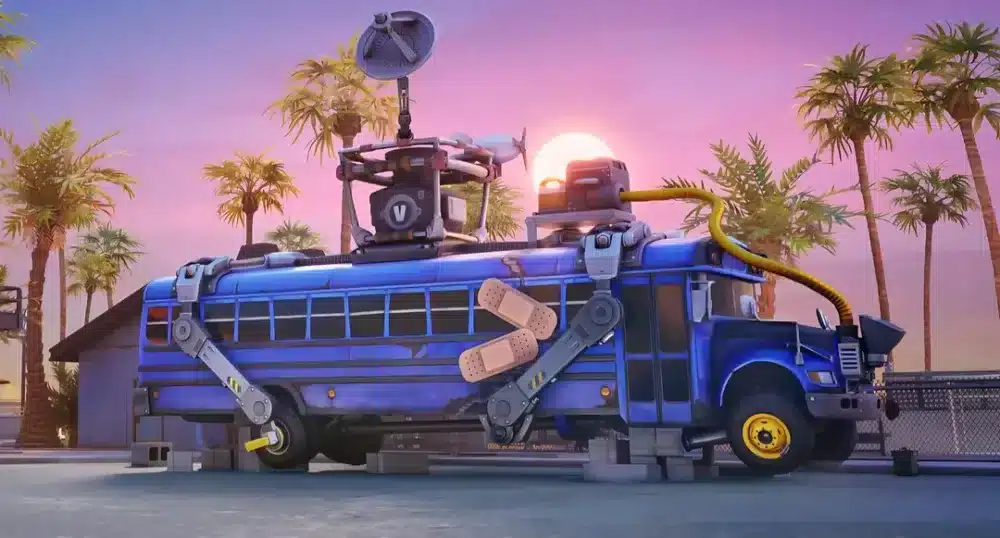
The Fortnite Battle Bus is the airborne vehicle that carries 100 players across the map at the beginning of each Battle Royale match, allowing them to choose when and where to jump before initiating glider deployment and starting their survival journey.
Over time, the Fortnite Battle Bus has evolved from a simple drop mechanic into a core pillar of the Fortnite experience. It reflects seasonal themes, adapts to narrative arcs, and influences how players approach Battle Bus mechanics in both casual and competitive modes. Understanding how it works gives you a measurable advantage.
Fortnite Battle Bus Mechanics Explained
The Fortnite Battle Bus operates on a structured system that determines spawn timing, path direction, jump availability, and glider deployment triggers. Although it may look simple, the internal Battle Bus mechanics create dynamic early-game scenarios every match.
Spawn and Flight Path Logic
At the beginning of each match, all players load into the Fortnite Battle Bus simultaneously. The vehicle follows a randomized linear path across the island. This variation prevents predictable landing patterns and forces adaptive decision-making.
The path is visible on the map before jumping. Skilled players immediately analyze:
- Distance from high-tier loot zones
- Potential hot drop areas
- Rotational pathways after landing
- Risk versus reward of contested island drop zones
Because the Battle Royale start happens in seconds, quick analysis is essential. The Fortnite Battle Bus creates a constantly shifting strategic environment.
Jump Timing and Island Drop Strategy
When you exit the Fortnite Battle Bus, gravity acceleration begins immediately. Your jump timing determines both horizontal distance and descent speed. Experienced players combine precise exit timing with angled descent to optimize landing efficiency.
Key factors affecting island drop include:
- Bus altitude and forward momentum
- Jump distance relative to map center
- Manual dive control before glider deployment
- Enemy drop density in surrounding zones
Mastering these Battle Bus mechanics reduces landing delays and ensures faster loot acquisition.
Glider Deployment Dynamics
Glider deployment automatically activates at a specific altitude. However, movement control before that trigger significantly affects landing precision.
Efficient glider deployment allows players to:
- Adjust final landing trajectory
- Scout enemy movement
- Change drop location mid-air
- Avoid congested rooftops
Because the Fortnite Battle Bus phase directly connects to glider deployment, optimizing both elements improves survival probability during early fights.
How Fortnite Transportation Starts With the Battle Bus
Fortnite transportation begins in the sky. Before vehicles, ziplines, or launch pads matter, the Fortnite Battle Bus defines your initial positioning and mobility options.
Early Map Control and Rotation Planning
Your island drop determines access to:
- Mobility items
- Vehicle spawns
- Natural cover structures
- High ground positions
A smart Battle Royale start sets up mid-game rotations. Landing near edge zones reduces early conflict but increases travel distance toward safe zones. Conversely, hot drops maximize elimination potential but increase early risk.
Below is a comparison table illustrating different drop approaches tied to Fortnite Battle Bus decisions:
| Drop Strategy | Risk Level | Loot Quality | Early Fights | Rotation Difficulty |
| Hot Drop (Named POI) | High | High | Immediate | Moderate |
| Edge Drop | Low | Medium | Rare | High |
| Mid-Path Drop | Medium | Medium-High | Likely | Low |
| Late Jump Drop | Low-Medium | Variable | Occasional | Moderate |
Each strategy begins with the Fortnite Battle Bus path alignment.
Competitive Versus Casual Battle Bus Usage
In competitive play, Battle Bus mechanics are studied extensively. Teams coordinate synchronized jumps, glide stacking, and zone prioritization.
Competitive players focus on:
- Consistent island drop points
- Minimal aerial drift
- Early material farming
- Safe glider deployment angles
Meanwhile, casual players may prioritize exploration or event-based drops. Still, the Fortnite Battle Bus remains the tactical foundation.
Visual Evolution of the Fortnite Battle Bus
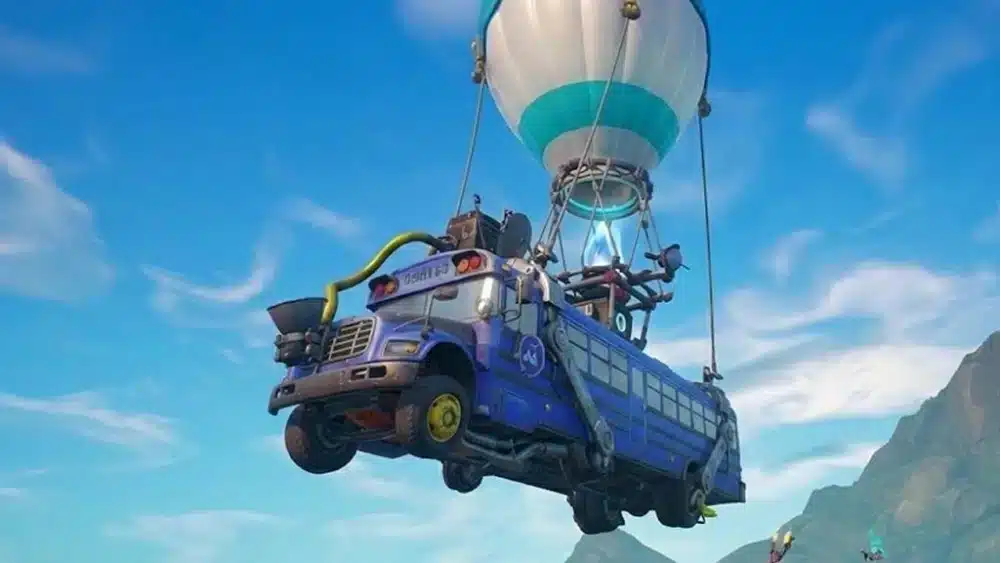
The Fortnite Battle Bus frequently changes appearance to reflect seasonal themes and collaborations. While Battle Bus mechanics remain stable, visual updates reinforce the game’s evolving identity.
Seasonal Variants and Event Themes
Across chapters, players have seen the Fortnite Battle Bus transformed through:
- Winter decorations
- Halloween aesthetics
- Neon festival lighting
- Narrative-driven redesigns
These variations do not alter core Fortnite transportation functionality, but they enhance immersion during the Battle Royale start.
Lore Connections and Narrative Integration
Within Fortnite lore, the Fortnite Battle Bus has been associated with advanced energy sources and island phenomena. Some story arcs imply that the vehicle operates using mysterious power systems connected to central narrative elements.
During major live events, altered versions of the Fortnite Battle Bus appeared equipped with defensive features or cinematic modifications. These moments expanded its symbolic relevance beyond standard Battle Bus mechanics.
Can You Control the Fortnite Battle Bus?
Many players wonder whether the Fortnite Battle Bus can be owned, driven, or customized. In core Battle Royale modes, direct control is not available.
Creative Mode and Custom Maps
In Creative environments, players can simulate Fortnite Battle Bus experiences by:
- Placing bus props in custom islands
- Creating sky-spawn systems
- Designing scripted Battle Royale start mechanics
These tools allow community-driven experimentation with Fortnite transportation concepts.
Cosmetic References and Themed Items
Although no character skin transforms a player into the Fortnite Battle Bus itself, themed cosmetics inspired by it have appeared, including:
- Bus-themed gliders
- Spray icons
- Emblems and banners
- Boarding-style emotes
These items allow players to represent the Fortnite Battle Bus legacy inside matches.
Optimizing Your Battle Royale Start
Improving your Battle Royale start requires a refined approach to Battle Bus mechanics, island drop timing, and glider deployment execution.
Practical Drop Optimization Tips
- Jump slightly before reaching your exact target for maximum glide efficiency
- Dive steeply for faster descent when contesting hot drops
- Monitor enemy trajectories mid-air
- Adjust landing based on chest spawn visibility
Because the Fortnite Battle Bus phase lasts only seconds, small refinements yield noticeable performance improvements.
Common Mistakes During Fortnite Battle Bus Phase
Players often lose early advantage due to avoidable errors:
- Jumping too late and overextending glide distance
- Deploying glide passively without directional correction
- Ignoring map path analysis
- Following crowded drop trails blindly
Avoiding these mistakes transforms your Fortnite Battle Bus decisions into consistent early-game control.
Why the Fortnite Battle Bus Remains Iconic
The Fortnite Battle Bus is instantly recognizable even outside the gaming community. Its design blends humor, creativity, and competitive tension.
Unlike standard Battle Royale aircraft in other titles, the Fortnite Battle Bus embraces stylization rather than realism. This reinforces Fortnite’s unique tone and creative direction.
More importantly, every match begins the same way: 100 players waiting, planning, and preparing to jump from the Fortnite Battle Bus. That shared experience builds anticipation and competitive excitement.
The Fortnite Battle Bus continues to symbolize the start of strategy, survival, and high-level decision-making. Whether you prioritize aggressive island drop routes or safer Fortnite transportation paths, mastering the Fortnite Battle Bus ensures your Battle Royale start is always intentional and optimized.
Advanced Fortnite Battle Bus Strategies for Consistent Wins
As the meta evolves, mastering Fortnite Battle Bus timing becomes even more important. High-level players treat the aerial phase as a calculated setup rather than a passive transition. Every second inside the Fortnite Battle Bus is preparation for positioning, resource control, and early eliminations.
Reading the Lobby Before You Jump
Before initiating your island drop, observe player movement inside the Fortnite Battle Bus. Watching when large groups jump gives you information about contested zones.
If multiple squads exit early, central POIs may be safer than expected. Conversely, a quiet early path could signal a stacked mid-map drop.
Smart players combine:
- Visual tracking of jump trails
- Audio cues during Battle Royale start
- Map marker coordination with teammates
- Backup landing routes in case of heavy contest
These adjustments elevate your Battle Bus mechanics beyond basic jump timing.
Optimizing Long-Distance Island Drops
Sometimes the Fortnite Battle Bus path does not favor your preferred location. In those scenarios, maximizing glide distance is essential.
To extend range effectively:
- Jump slightly before reaching the closest point to your target
- Dive diagonally to build forward momentum
- Level out before automatic glider deployment
- Adjust trajectory in short bursts rather than wide swings
This refined control improves Fortnite transportation efficiency from sky to surface.
Fortnite Battle Bus and Team Coordination
Squad modes amplify the importance of synchronized island drop decisions. A disorganized jump from the Fortnite Battle Bus often results in split landings and early eliminations.
Synchronized Drop Execution
Teams should designate:
- A primary shot-caller for jump timing
- A secondary landing fallback
- Pre-marked loot routes
- Immediate shield and weapon priority
Executing a unified Battle Royale start ensures all teammates benefit from coordinated glider deployment.
Split Drops Versus Stack Drops
Two dominant strategies define squad-based Battle Bus mechanics:
Stack Drop: Entire team lands in one structure or block.
Split Drop: Teammates cover multiple nearby buildings.
Stack drops reduce isolation risk. Split drops increase total loot acquisition. The Fortnite Battle Bus path often determines which approach is safer in a given match.
Comparing Fortnite Battle Bus to Other Battle Royale Drops
Unlike military aircraft in realistic shooters, the Fortnite Battle Bus embraces stylized Fortnite transportation. Its floating balloon system and colorful design reinforce Fortnite’s creative identity.
For comparison, traditional Battle Royale games emphasize realism and fixed jump arcs. Fortnite, developed by Epic Games, instead focuses on expressive visuals and fluid glider deployment systems that encourage mid-air adjustments.
You can explore official updates and seasonal changes directly on the `Fortnite website at https://www.Fortnite.com, where Epic Games regularly details map changes and gameplay adjustments.
This design philosophy makes the Fortnite Battle Bus both a mechanical tool and a branding pillar.
The Psychological Impact of the Battle Royale Start
Every match shares one identical moment: anticipation inside the Fortnite Battle Bus. That pause before jumping builds competitive tension.
Players experience:
- Adrenaline spikes before contested drops
- Strategic calculation under time pressure
- Immediate risk assessment during island drop
- Rapid adaptation after glider deployment
Because no weapons are available mid-air, the Fortnite Battle Bus phase becomes a pure decision-making challenge.
Fortnite Battle Bus in Events and Limited Modes
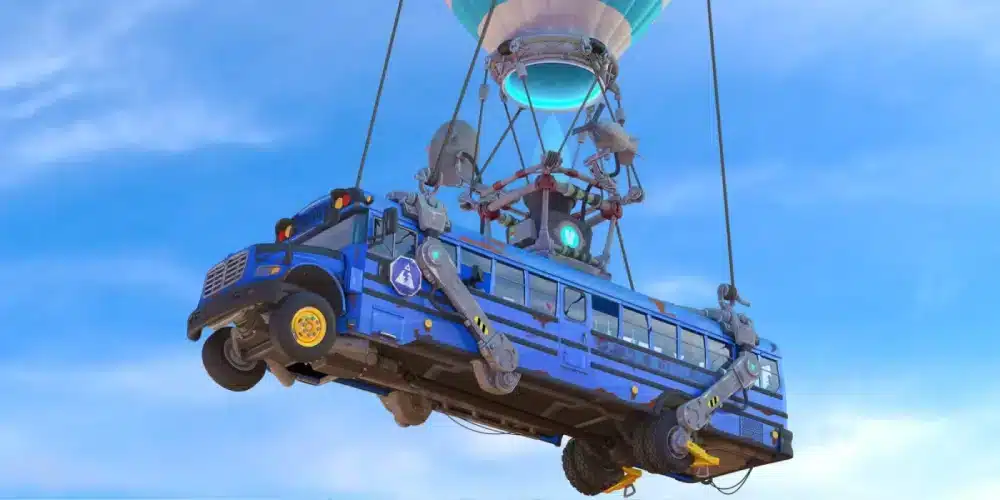
Special events have reimagined the Fortnite Battle Bus with dramatic visual and structural changes.
Live Event Modifications
During major chapter finales, altered versions of the Fortnite Battle Bus appeared armored or energy-infused. These cosmetic evolutions tied into overarching story arcs.
Themed Limited-Time Modes
Certain modes modified Battle Bus mechanics by:
- Altering altitude
- Changing jump speed
- Introducing special glider deployment rules
- Restricting drop zones
Even when mechanics shift slightly, the Fortnite Battle Bus remains the symbolic beginning of competition.
Master Checklist for Every Fortnite Battle Bus Phase
Before every jump, confirm the following:
- Map path analyzed
- Drop zone selected
- Backup location identified
- Team communication active
- Glider deployment path visualized
Turning this into a habit transforms your Fortnite Battle Bus usage into a repeatable advantage.
Conclusion About Fortnite Battle Bus
Because the Fortnite Battle Bus defines your first tactical decision, connection stability during this moment is critical. ExitLag enhances routing paths to Fortnite servers, reducing latency spikes during Battle Royale start moments, ensuring smooth glider deployment, and keeping your island drop consistent without packet loss.
FAQ – Fortnite Battle Bus
The Fortnite Battle Bus is the airborne vehicle that transports all players across the island at the beginning of each match, allowing them to choose their island drop location before glider deployment begins.
No, players cannot control or drive the Fortnite Battle Bus in standard Battle Royale modes. It only functions as the Battle Royale start transport system.
Improve timing, study the flight path, coordinate with teammates, and control your descent before automatic glider deployment. Mastering these Battle Bus mechanics ensures faster loot access.
Yes, the Fortnite Battle Bus often receives visual updates tied to seasonal themes, collaborations, or live events, although its core functionality remains consistent.
Got questions or want to connect with other players? Join the conversation at the ExitLag Forum!