
If you’ve ever asked yourself how to get good at Fortnite, you’re not alone. Many players struggle with improving aim, building quickly, or even just surviving the early game. With millions of competitors worldwide, it can feel overwhelming to stand out.
For a solid overview of the game and its evolution, this Fortnite Battle Royale guide highlights what makes the mode unique and how it set the foundation for competitive play.
But the good news is this: getting better at Fortnite doesn’t have to be guesswork. By following proven strategies, consistent training, and using the right tools, you can see noticeable improvement in just a few weeks. And with support from tools like ExitLag, which stabilizes your connection and reduces lag, your progress becomes even faster.
So, what does it mean to get good at Fortnite? At its core, it’s about mastering a balance of mechanical skill, decision-making, and adaptability. You’ll need to refine your aim, understand map rotations, manage your resources, and anticipate enemy behavior. Once these elements come together, you won’t just survive — you’ll thrive.
This guide will break down every step of the process so you know how to get good at Fortnite no matter your skill level, platform, or playstyle. Whether you’re a beginner or aiming for competitive consistency, the path forward is here.
Why mastering the basics is the first step
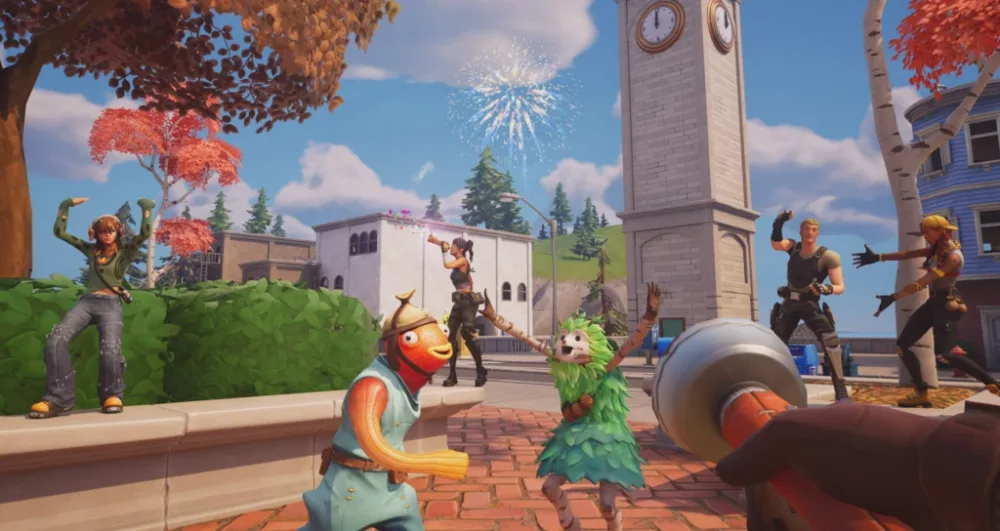
Even before thinking about advanced strategies, every Fortnite player needs a strong foundation. Many beginners overlook sensitivity settings, button layouts, or HUD adjustments — yet these are what define your comfort and speed during fights.
If you’re just starting out, the Fortnite beginners guide provides a simple roadmap to understand controls, weapons, and survival essentials.
If you’re playing on controller, for example, customizing sensitivity and button mapping can instantly make you more efficient. Players on Xbox, PS4, or Nintendo Switch often gain huge advantages simply by tweaking layouts to reduce wasted movement.
Controller optimization for beginners
If you’re wondering how to get good at Fortnite on controller, start here:
- Keep sensitivity consistent across modes (don’t change it between creative and battle royale).
- Use an optimized layout like Builder Pro for faster building.
- Experiment with deadzone adjustments for smoother analog stick control.
HUD and visual adjustments
The HUD should display only what you need. Cluttered visuals reduce reaction time, especially in close-range fights. Consider resizing or moving elements to keep critical information (health, materials, ammo) easy to see.
Recommended sensitivity and HUD adjustments by platform
| Platform | Suggested Build Sensitivity | Suggested Edit Sensitivity | HUD Recommendation |
| PC (Mouse) | 0.08 – 0.12 (x-axis) | 0.08 – 0.12 (y-axis) | Minimal clutter, crosshair focus |
| PS4/Xbox | 1.6 – 2.2 (build) | 1.8 – 2.4 (edit) | Resize HUD to 70–80% |
| Switch | 1.2 – 1.6 | 1.4 – 1.8 | Keep HUD elements small for screen size |
By locking down these fundamentals, you’ll react faster and avoid unnecessary mistakes — the first big leap in learning how to be good at Fortnite.
How to improve aim in Fortnite
Once your controls feel natural, the next priority is shooting accuracy. Many players ask, “How do you get better at Fortnite aim?” The answer lies in consistent practice and the right tools.
Training maps like RAIDER464 and Skavok provide daily aim practice, while techniques such as keeping your crosshair at head level and using aim trainers outside the game accelerate progress. Still, even perfect aim can fail if your connection isn’t reliable. For that, check this resource on how to fix lag and ping spikes in Fortnite to ensure every shot registers when it matters most.
Training maps for daily aim practice
Fortnite Creative mode offers dedicated maps designed to sharpen your aim. Two of the most popular:
- RAIDER464 Aim Trainer – great for flick shots and close-range duels.
- Skavok Aim Training – best for long-range tracking and shotgun drills.
Set aside at least 15 minutes per day in one of these maps before entering a match. Over time, your muscle memory will improve dramatically.
Techniques to refine aim
- Keep your crosshair at head level while moving.
- Train both tracking (following moving targets) and flicks (snapping quickly to enemies).
- Use aim training tools outside Fortnite, like Aim Lab or KovaaK’s, if on PC.
Why connection matters for accuracy
Even perfect aim struggles against lag. Delayed hit registration or packet loss can ruin fights you should win. This is where ExitLag gives you an edge. By optimizing routes to Fortnite servers, ExitLag ensures your shots register faster, so your improved aim translates directly into results.
How to get good at building in Fortnite
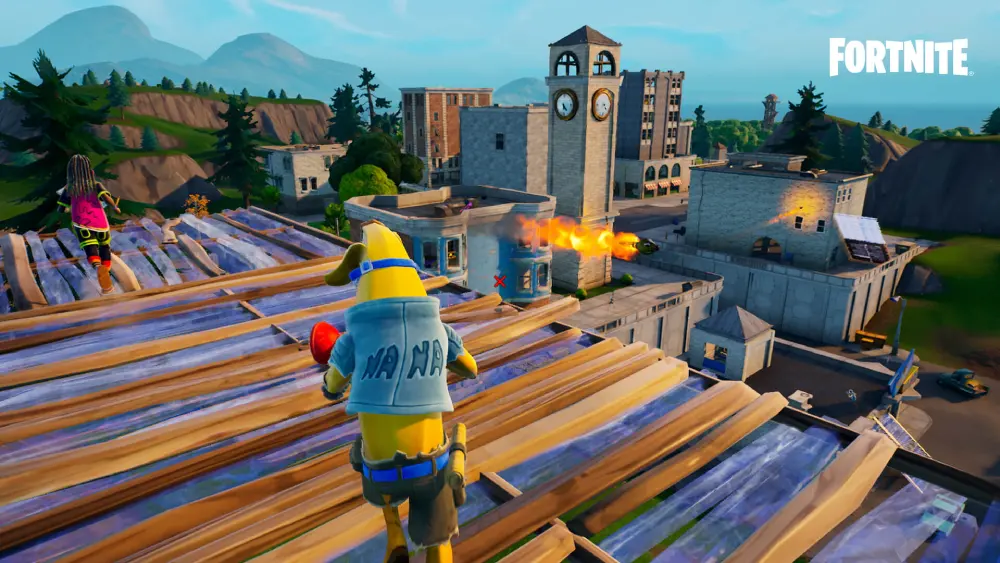
Building is what separates Fortnite from every other battle royale. Walls, ramps, box fights, and editing are crucial skills that determine success in close encounters. Zero Build mode offers an alternative for those who prefer pure aim and positioning.
Whether in Build or Zero Build, structured repetition and map-based drills turn mechanics into instinct. Combined with good decision-making, this balance will define your path to mastery. For official updates, modes, and seasonal changes, always check the Fortnite official site to stay aligned with new content.
Core building techniques
- Walls and ramps – The foundation of both defense and offense.
- Box fighting (turtling) – Protect yourself quickly with 4 walls, a floor, and a roof.
- 90s – Rapid ramps and walls to gain height advantage.
- High-ground retakes – Complex sequences to reclaim vertical control.
Editing practice
Building without editing is incomplete. Practice opening quick windows, doors, and peaks in Creative maps like Edit Pump Wars. Fast edits allow you to surprise opponents and maintain momentum.
Zero Build as an alternative
For players who don’t enjoy building, Fortnite’s Zero Build mode is a great option. Instead of relying on structures, focus on positioning, cover usage, and superior aim. Many beginners find Zero Build easier, as it reduces mechanical pressure while still rewarding strategy.
Bullet list: Focus areas in Zero Build
- Learn to use natural cover effectively.
- Prioritize movement abilities like Shockwave Grenades.
- Engage from mid-range to avoid getting outmaneuvered.
Whether you choose Build or Zero Build, consistent repetition is the secret to mastery. Over time, both your mechanics and decision-making will evolve — bringing you closer to being the best in Fortnite.
Thinking like a pro: macros and micro decisions
High-level players succeed not just because of mechanics, but because of smart choices. Landing zones, rotations, and loot management are examples of macro decisions, while timing edits, conserving materials, and controlling high ground fall into micro gameplay.
Improvement doesn’t happen overnight, but with consistent practice and smart review, results come faster than expected. If you’re curious about the cultural impact and history of the game, the Fortnite Wikipedia page offers detailed insights into its evolution, updates, and community milestones.
Macro decisions (big picture)
- Landing spots – Choose zones with enough loot but low player density.
- Rotations – Move early to avoid storm pressure and gatekeeping enemies.
- Loot priorities – Focus on shields, shotguns, and mobility items first.
Micro decisions (small scale)
- Position yourself for high ground before fights.
- Conserve materials until the final circles.
- Use edits and peeks to create safe shots.
By combining macro and micro awareness, you’ll not only survive longer but also control fights instead of reacting to them.
How long does it take to get good at Fortnite?
Improvement doesn’t happen overnight, but it also doesn’t take years. Most players see progress on a predictable timeline if they practice consistently.
Numbered timeline for realistic improvement:
- 1–2 weeks – Noticeable improvements in aim and confidence.
- 1–2 months – Consistency in building, editing, and decision-making.
- 3+ months – Competitive mindset with ability to challenge stronger players.
The exact pace depends on practice frequency and mindset. But with dedication, even casual players can go from struggling to competitive in under a season.
And remember: lag can slow this progress. Tools like ExitLag remove unnecessary barriers by ensuring your connection never holds you back.
Why connection optimization matters for Fortnite performance
Even the best skills can be wasted if your connection isn’t stable. Players often lose fights not because of poor aim or strategy, but because their shots don’t register in time. This is why reducing lag is one of the biggest hidden factors in how to get good at Fortnite.
A reliable connection ensures that every input — from building a wall to firing a shotgun — happens instantly. If your opponent sees you half a second later than you see them, they already have the advantage.
Common connection issues in Fortnite
- High ping – Slower response times in building and shooting.
- Packet loss – Missing data causes delays in movement and shot registration.
- Jitter – Inconsistent ping spikes that make aiming unpredictable.
How ExitLag solves these problems
ExitLag works by routing your traffic through the fastest, most stable path to Fortnite servers. Instead of relying on default routes (which may pass through slow or overloaded nodes), ExitLag dynamically adjusts paths to reduce ping and packet loss.
- Ping reduction – Find the fastest route automatically.
- Connection stability – Maintain consistent performance even during high load.
- Multi-path technology – If one route fails, another immediately takes over.
With ExitLag running in the background, your mechanical skills translate directly into results — no wasted effort due to connection problems.
Advanced strategies to become a Fortnite competitor
Once you’ve refined your aim, building, and decision-making, the next step is thinking like a competitor. If you want to know how to be the best in Fortnite, you’ll need a disciplined routine.
Training routine for consistent growth
- Warm-up (15 minutes) – Aim drills in Creative maps.
- Skill practice (20 minutes) – Build and edit courses.
- Arena matches (1–2 hours) – Apply mechanics under pressure.
- Review (10 minutes) – Watch replays to identify mistakes.
Analyzing pro players
Watching streamers or pro competitors gives you insight into movement patterns, item choices, and rotations. Don’t just copy — analyze why they make certain decisions, then apply those principles to your own playstyle.
Balancing practice and mental health
Burnout is real. Grinding endlessly can make you plateau. Instead, break sessions into focused blocks and maintain a positive mindset. Improvement in Fortnite is as much about mentality as mechanics.
Platform-specific tips: console and Switch players
Not every Fortnite player is on PC, and many wonder how to get good at Fortnite on PS4, Xbox, or Switch. While core strategies are universal, platform-specific tweaks can maximize performance.
Xbox and PS4
- Use wired controllers for reduced input delay.
- Enable performance mode (if available) for higher FPS.
- Customize button layouts for faster building.
Nintendo Switch
- Lower sensitivity slightly for smoother tracking.
- Focus on Zero Build mode, where frame drops affect gameplay less.
- Use lightweight controllers for more precise inputs.
Controller aim assist
Controller players benefit from aim assist — but only if they use it effectively. Combine aim assist with tracking drills to avoid over-reliance. Skilled controller players can outperform mouse-and-keyboard users when their fundamentals are strong.
How to train smarter, not longer
One of the biggest misconceptions is that you need endless hours to improve. In reality, training smart is far more effective than training long.
Smart training principles
- Always warm up before playing matches.
- Use focused practice (aim maps, build drills) before free play.
- Review gameplay after every session.
- Prioritize quality over quantity — one hour of focused training beats three hours of casual play.
By training with intention, you’ll see results much faster — answering the question many players ask: “How long does it take to get good at Fortnite?”
Conclusion: Mastering Fortnite with skill and stability
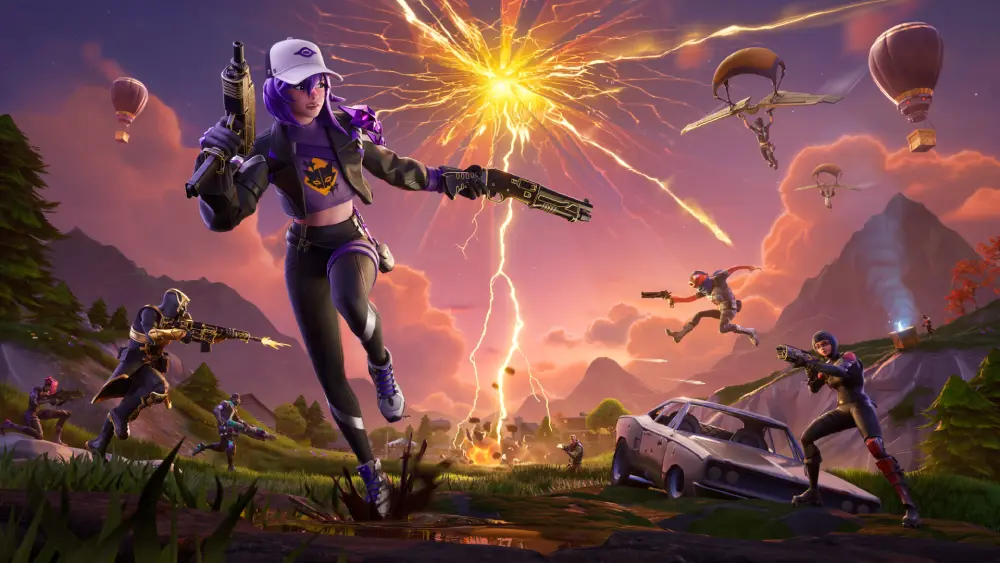
Getting better at Fortnite is not about luck — it’s about building the right habits, mastering mechanics, and keeping your connection stable. From sensitivity settings to aim drills, from macro strategies to Zero Build movement, every improvement stacks up.
But there’s one final piece to the puzzle: your connection. Without it, even perfect skills can fall apart. That’s where ExitLag comes in. With optimized routes, lower ping, and stable gameplay, you can finally play at the level you’ve been training for.
Your path to mastery is clear. Start practicing smarter, apply these strategies, and take control of your connection with ExitLag. Test it free today — and see how much faster you become the Fortnite player you’ve always wanted to be.
FAQ: How to get good at Fortnite
Start with the basics: sensitivity, HUD, and consistent aim training. Land in less crowded areas, focus on survival first, and build confidence gradually.
Use Creative maps like RAIDER464 or Aim Lab. Train both tracking and flick shots daily. A stable connection with ExitLag ensures your shots register.
Practice walls, ramps, and edits in Creative. Learn advanced moves like 90s and high-ground retakes. For Zero Build, focus on movement and positioning.
Warm up in Creative, then play Arena for pressure practice. Review replays to correct mistakes. Smart, structured training beats endless casual games.
With daily practice, expect noticeable improvement in 1–2 weeks, consistency in 1–2 months, and competitive readiness in 3+ months.
Customize sensitivity and button layouts. Use performance settings for smoother FPS. Train aim assist with proper tracking. Switch players should favor Zero Build.
Yes. Without building mechanics, Zero Build rewards aim and positioning. Beginners can focus on fundamentals without feeling overwhelmed.
Got questions or want to connect with other players? Join the conversation at the ExitLag Forum!