Hulk Marvel Rivals is one of the most unique Vanguard heroes in the game because he is not only a frontline tank. He is also a form-changing character who moves between Bruce Banner, Hero Hulk, and Monster Hulk depending on energy, survival, and ultimate timing.
Understanding Hulk Marvel Rivals gets easier when you compare him with other major Marvel team releases and hero archetypes. The game often builds team identity around families, rivalries, and comic history, which is why this Fantastic Four Marvel Rivals guide is useful for seeing how Marvel Rivals Hulk fits into a broader roster of iconic characters. Hulk is not part of the Fantastic Four, but his frontline role often overlaps with the same team-building questions: who creates space, who follows up, and who protects the backline?
Hulk Marvel Rivals is officially tied to Bruce Banner Marvel Rivals gameplay, which means players must understand both the scientist and the monster. When Hulk loses his main form, he can fall back into Bruce Banner, and when he builds enough gamma energy, he can transform again. This makes him more complex than a simple “big tank punches enemies” character.
Players also search for Marvel Rivals Hulk jump setting, Hulk and Marvel, and Hulk name because the character has several layers. His real name is Bruce Banner. His superhero identity is Hulk. In Marvel Rivals, those identities become part of the actual gameplay loop, not just lore.
This guide explains Hulk’s abilities, best settings, jump control, team role, counters, combos, and online performance tips. You will also learn how ExitLag can help optimize connection routes while playing Marvel Rivals.
Who is Hulk in Marvel Rivals?
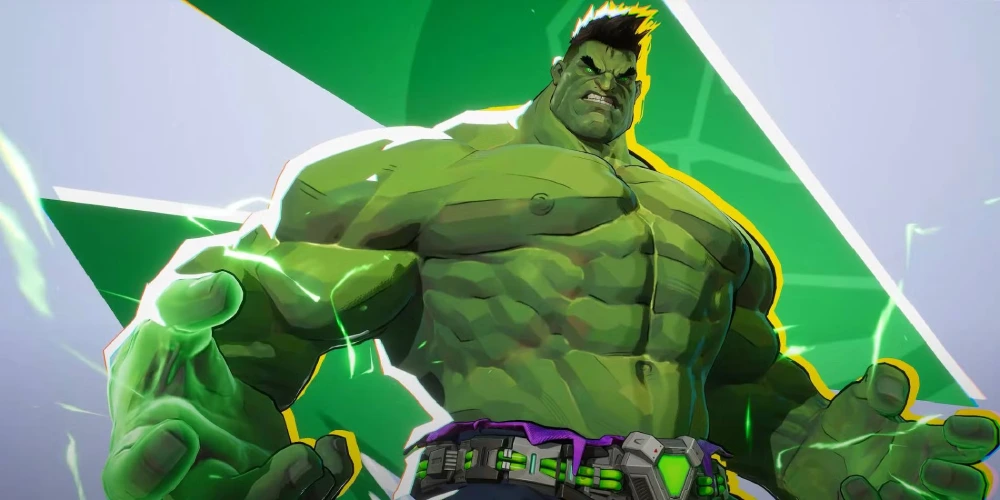
Hulk is a Vanguard hero in Marvel Rivals, designed to create space, absorb pressure, disrupt enemies, and start fights through mobility and durability. Unlike many tanks, Hulk does not simply stand in front of his team with a shield. He jumps into key positions, forces enemies to react, protects allies with gamma shields, and uses form changes to stay dangerous across long fights.
The most important thing to understand about Hulk Marvel Rivals is that he has multiple states. Bruce Banner is fragile but can fight back with ranged tools. Hero Hulk is the main frontline form, with punches, leaps, shields, and control. Monster Hulk is the empowered form that gives him stronger presence for a limited time.
Because of that, Marvel Rivals Hulk rewards players who can manage risk. If you dive too early, you may become isolated. If you stay too passive, your team may lose space. Hulk works best when you use mobility to pressure the right target while still staying close enough for your team to follow.
What is Hulk’s role?
Hulk’s role is Vanguard. In Marvel Rivals, Vanguards are tank-style heroes who help control space and protect teammates. Hulk does this through pressure rather than pure defense.
He is best at:
- starting fights;
- disturbing enemy backlines;
- absorbing attention;
- shielding allies;
- knocking down flying enemies with leap timing;
- forcing enemies out of strong positions;
- surviving long enough to build gamma value.
That makes Hulk useful for teams that want aggressive engagement. He can be difficult for passive teams because his dives need follow-up.
Is Hulk beginner-friendly?
Hulk is easy to understand but harder to master. New players understand the fantasy immediately: jump in, punch, shield, and smash. However, good Hulk gameplay requires timing, target selection, form management, and strong awareness.
Beginners often make two mistakes. First, they jump too far ahead without support. Second, they ignore Bruce Banner form and panic when they lose Hulk. Strong Hulk players know how to survive as Bruce, rebuild energy, and re-enter the fight at the right moment.
What are Hulk’s abilities in Marvel Rivals?
Hulk’s abilities change depending on his form. This is why many outdated guides can confuse players. The safest way to understand Hulk Marvel Rivals is to separate Bruce Banner, Hero Hulk, and Monster Hulk instead of treating them as one fixed kit.
The official fantasy is simple: Bruce Banner Marvel Rivals gameplay represents the scientist surviving long enough to unleash Hulk again, while Hero Hulk and Monster Hulk represent escalating gamma power. In practice, this creates a rhythm of pressure, survival, transformation, and re-engagement.
If you are comparing Hulk with the rest of the roster before deciding whether to main him, this best characters in Marvel Rivals guide can help you understand how Marvel Rivals Hulk fits into the current hero pool. Hulk may be strong in the right hands, but his value depends heavily on team support and how well you use his mobility.
Bruce Banner abilities
Bruce Banner is the weakest form defensively, but he is not useless. His job is to survive, deal chip damage, and build gamma energy so he can become Hulk again.
Bruce Banner usually relies on:
| Ability | Purpose |
| Gamma Ray Gun | Ranged damage and energy generation |
| Gamma Grenade | Damage and knockback pressure |
| Puny Banner | Transformation into Hulk |
When you are in Bruce Banner form, avoid pretending you are still a tank. Use cover, stay near allies, and play carefully until you can transform. Dying as Bruce wastes the entire recovery opportunity.
Hero Hulk and Monster Hulk abilities
Hero Hulk is the main form most players use during fights. Monster Hulk is the empowered form that gives Hulk a stronger presence for a limited duration.
Key Hulk tools include:
| Ability | Main use |
| Heavy Blow | Close-range melee pressure |
| Incredible Leap | Mobility, engage, chase, and anti-air pressure |
| Gamma Burst | Ranged gamma damage |
| Indestructible Guard | Shields Hulk and nearby allies |
| Radioactive Lockdown | Control and target lockdown |
| Hulk Smash! | Transform into Monster Hulk |
| World Breaker | Monster Hulk’s high-impact control tool |
The exact strength of each ability can change through balance patches, so current players should always check official patch notes after major updates.
How does Hulk’s jump setting work?
The Marvel Rivals Hulk jump setting question usually refers to how players control Incredible Leap. Hulk’s leap is not a normal jump. It is a charged movement tool that lets him cross distance, reach high ground, dive backlines, chase weak enemies, and knock down flying targets when used well.
For many players, Marvel Rivals Hulk jump setting becomes one of the first mechanical issues to solve. If the jump feels clunky, Hulk feels slow. If you learn charge timing, wall interaction, and landing control, he becomes much more fluid.
The key is to treat Incredible Leap as both movement and combat utility. You do not always need a maximum charge. Sometimes a short leap is better for repositioning. Other times, a longer leap helps you reach high ground or punish a flying enemy.
Best jump habits for Hulk
Use these habits when practicing Marvel Rivals Hulk jump setting control:
- practice minimum-charge jumps for short movement;
- use longer charges for high ground or backline dives;
- avoid jumping alone into six enemies;
- land near cover or near your team;
- track enemy mobility before committing;
- aim leaps at escape routes, not only current positions;
- use walls and vertical spaces to surprise opponents.
Hulk’s leap is one of his strongest tools because it changes where the fight happens. A good leap forces the enemy team to turn around. A bad leap gives them a free target.
Common Hulk jump mistakes
The most common mistake is overcharging every jump. Full charge can be useful, but it is not always required. Overcharging can make your timing predictable and give enemies more time to react.
Another mistake is using leap only to engage. You also need it to retreat, peel, chase, reposition, contest high ground, and interrupt flying heroes. Hulk becomes much more dangerous when enemies cannot predict whether he is diving forward or pulling back to protect his team.
How to play Hulk Marvel Rivals well
To play Hulk Marvel Rivals well, focus on space creation rather than random damage. Hulk does not need to eliminate everyone alone. His job is to make enemies uncomfortable, force cooldowns, break formations, and create openings for Duelists and Strategists.
A good Hulk player knows when to dive, when to hold space, and when to protect supports. If your team has strong follow-up, you can play aggressively. If your backline is under pressure, you may need to peel instead of chasing kills.
Hulk also benefits from understanding other frontline heroes. If you enjoy comparing powerful melee Vanguards, this Thor Marvel Rivals guide can help you see how Hulk and Marvel frontline fantasy differs between two heavy hitters. Thor often brings a different style of pressure, while Hulk relies heavily on leap timing, gamma shields, and form management.
Basic Hulk game plan
Use this simple structure:
- Start near your team.
- Look for enemy positioning mistakes.
- Use Incredible Leap to take space.
- Shield allies with Indestructible Guard.
- Lock down priority targets.
- Avoid staying too deep after cooldowns are gone.
- Build toward Monster Hulk.
- Use Monster Hulk to win key fights.
The best Hulk Marvel Rivals players do not dive every time an ability is available. They wait for the right moment, then commit with purpose.
Best targets for Hulk
Hulk is strong against enemies who rely on positioning and struggle when pressured up close. He can disrupt backline heroes, punish isolated Duelists, and force flying or high-ground characters to reposition.
Good targets include:
- supports without escape tools;
- snipers on high ground;
- flying heroes within leap threat range;
- enemies separated from their team;
- low-health targets trying to retreat;
- Duelists who already used mobility.
Avoid wasting too much time on enemies who can kite, stun, or survive your pressure without help from your team.
Is Hulk good in Marvel Rivals?
Hulk is good in Marvel Rivals when played as a disruptive space-maker instead of a pure damage hero. He can be powerful in coordinated teams because his dives and shields create openings that teammates can capitalize on. However, he can feel weak when played without follow-up or when the enemy team focuses him correctly.
The strength of Marvel Rivals Hulk also changes with balance patches. A buff to Incredible Leap, Gamma Burst, or Monster Hulk can make him more threatening. A meta filled with strong anti-dive heroes can make his job harder. That is why any ranking should be treated as temporary.
Hulk’s biggest value is pressure. Even when he does not secure eliminations directly, he can force enemies to turn, split, retreat, or waste cooldowns. That opens space for your team.
Hulk strengths
Hulk’s main strengths include:
- strong mobility for a Vanguard;
- multiple forms;
- good disruption;
- frontline durability;
- team shielding;
- backline pressure;
- high impact during Monster Hulk;
- strong vertical engagement.
These strengths make him valuable on maps with vertical routes, cover, and objectives where space control matters.
Hulk weaknesses
Hulk’s weaknesses include:
- reliance on team follow-up;
- vulnerability after poor dives;
- awkward Bruce Banner recovery moments;
- limited value if enemies kite well;
- need for strong cooldown timing;
- predictable engages if overused;
- difficulty against coordinated focus fire.
The best way to reduce these weaknesses is to stop playing Hulk like an immortal solo carry. He is strong, but he still needs timing and support.
Best team comps for Hulk
Hulk works best with teammates who can follow his engages, protect him during dives, or benefit from the space he creates. He is especially effective when paired with Duelists who can burst enemies after he disrupts them and Strategists who can keep him alive during extended fights.
A team built around Hulk Marvel Rivals should answer three questions. Who follows Hulk when he dives? Who heals or protects him? Who controls the enemy team after he forces movement?
Good team support can turn Hulk from a chaotic bruiser into a match-defining Vanguard.
Good teammates for Hulk
Hulk often works well with:
| Teammate type | Why it helps |
| Burst Duelists | They finish targets Hulk disrupts |
| Mobile Duelists | They can follow his dive quickly |
| Strong Strategists | They keep Hulk alive through pressure |
| Crowd-control heroes | They stack disruption with Hulk’s engage |
| Anti-air allies | They punish enemies Hulk forces down |
The exact best teammates change by meta, but the principle stays the same. Hulk needs allies who act when he creates chaos.
Team-up ability context
Hulk also has important team-up interactions depending on the current version of the game. Team-up abilities can change over time, so players should check official sources instead of relying only on old guides.
When team-ups are active, they can influence draft value. A hero may be picked not only because of their individual kit, but also because of what they unlock for another teammate.
How to counter Hulk in Marvel Rivals
To counter Hulk, punish his cooldowns and avoid letting him isolate your backline. Hulk becomes much weaker when he jumps in without support, misses value with his control tools, or gets forced back into Bruce Banner form in a bad position.
The best counterplay is coordination. A single player may panic when Hulk lands nearby. A team that turns together can punish him quickly. Focus fire, slows, stuns, displacement, and smart positioning all reduce his impact.
Do not waste every cooldown before Hulk commits. Save key defensive abilities for his leap or Monster Hulk window.
Best counter strategies
Use these habits:
- track Incredible Leap cooldown;
- spread enough to avoid easy disruption;
- protect Strategists when Hulk dives;
- focus Hulk after he overcommits;
- force Bruce Banner form in unsafe spots;
- punish predictable jump routes;
- stay near cover, not isolated high ground;
- avoid wasting mobility too early.
Hulk wants chaos. Counters should create structure.
Common mistakes against Hulk
Many players make Hulk stronger by panicking. They split randomly, chase him too far, or ignore the rest of his team. That gives Hulk exactly what he wants: broken formations.
Another mistake is ignoring Bruce Banner. When Hulk returns to Bruce form, he is vulnerable. If your team lets Bruce escape for free, Hulk can return and restart the pressure cycle.
Where to check official Hulk updates
The best place to check Hulk updates is the official Marvel Rivals website, patch notes, and hero pages. Marvel Rivals is a live-service game, so hero numbers, cooldowns, team-ups, and role balance can change.
Use the official Marvel Rivals website when checking current game news, downloads, seasonal updates, and official announcements. This matters for Hulk Marvel Rivals because a balance patch can change how Incredible Leap, Gamma Burst, Monster Hulk, or team-up abilities function.
Community guides are still useful, but they should be treated as strategy snapshots. A guide from a previous season may describe a real version of Hulk that no longer reflects the current live game.
What should you verify?
Before following any Marvel Rivals Hulk guide, verify:
- the guide date;
- the current patch;
- whether Hulk was buffed or nerfed;
- whether team-up abilities changed;
- whether jump timing changed;
- whether Gamma Burst numbers changed;
- whether Monster Hulk received adjustments.
This prevents old advice from turning into bad habits.
Why official data matters
Official hero pages and hero data help players separate confirmed information from community interpretation. If a player claims Hulk has a new ability, new team-up, or changed role, check official sources first.
The Marvel Rivals heroes data page is useful for checking current hero information and broader roster context. When writing about Bruce Banner Marvel Rivals or Hulk name details, official hero data should be the first reference point.
Best settings for Hulk Marvel Rivals
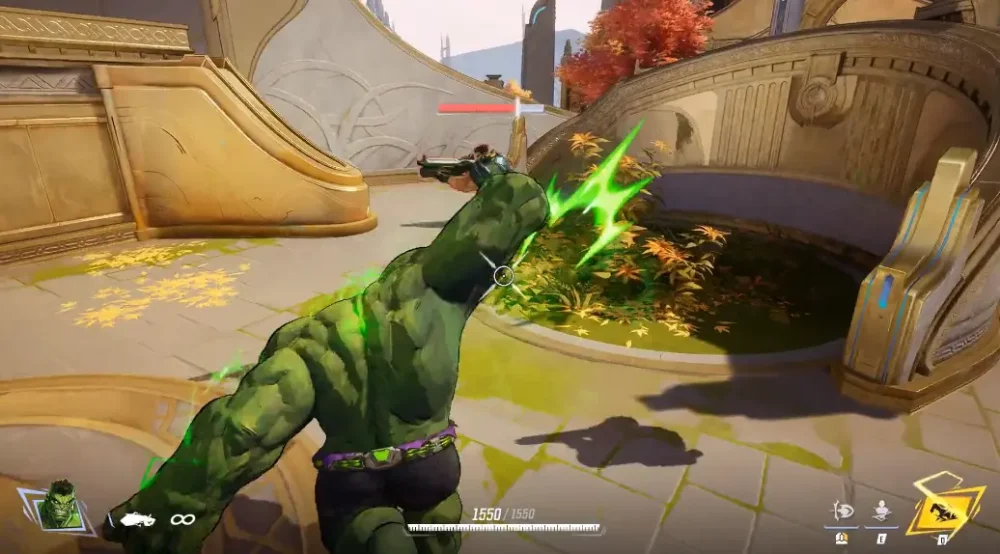
The best settings for Hulk Marvel Rivals are the ones that make movement, camera control, and leap timing feel consistent. Hulk is large, mobile, and often fights in chaotic close-range spaces, so poor sensitivity or unstable performance can make him feel clunky.
There is no universal perfect sensitivity. Still, Hulk players should prioritize settings that help them turn quickly after landing, track nearby enemies, and aim Gamma Burst or Radioactive Lockdown without overcorrecting.
The Marvel Rivals Hulk jump setting question also belongs here because jump control affects everything Hulk does. If your leap feels awkward, spend time in practice mode before changing too many settings at once.
Recommended setting priorities
Focus on:
- comfortable mouse or stick sensitivity;
- stable frame rate;
- clear keybinds for leap and shield;
- easy access to melee and ability inputs;
- camera speed that supports quick turns;
- graphics settings that reduce clutter;
- low input delay;
- reliable network performance.
Hulk players need to react quickly after landing. If your sensitivity is too slow, enemies will escape behind you. If it is too high, you may lose control in close fights.
Practice mode routine
Use practice mode to test:
- short jumps;
- full-charge jumps;
- wall-based movement;
- high-ground access;
- turning after landing;
- Gamma Burst aim;
- shield timing near allies;
- Monster Hulk engage timing.
This is the fastest way to make Hulk feel less clunky.
How ExitLag can help with Hulk Marvel Rivals
Hulk Marvel Rivals gameplay depends on timing, movement, and stable reactions. You need to charge leaps, land near the right target, shield allies, use control at the correct moment, and survive long enough to transform. If your connection is unstable, those decisions can feel delayed or inconsistent.
ExitLag can help optimize connection routes between your device and Marvel Rivals servers. It does not guarantee wins, perfect ping, or a lag-free experience in every match. However, it can help reduce route instability, packet loss issues, and connection spikes in some situations.
This matters for Hulk because he commits hard. A delayed leap, late shield, or missed control ability can turn a strong engage into a failed dive.
Why connection stability matters for Hulk
Connection stability matters because Hulk’s kit has timing-sensitive moments:
- charging Incredible Leap;
- landing on a backline target;
- shielding allies before burst damage;
- using Radioactive Lockdown at the right time;
- transforming into Monster Hulk;
- chasing after a knocked-down enemy;
- escaping before being forced into Bruce Banner.
A stable connection will not replace good judgment, but it can make your inputs more consistent.
When should you test ExitLag?
Test ExitLag when you notice ping spikes, rubberbanding, delayed abilities, unstable routing, packet loss, or worse performance during peak hours. Compare several matches with and without optimized routing.
Look for consistency, not only the lowest ping number. A slightly higher but stable route can feel better than a low-ping route that spikes during team fights.
Common Hulk Marvel Rivals mistakes
Many Hulk players lose value because they think being a Vanguard means never backing down. Hulk is durable, but he is not invincible. Good enemies will punish reckless dives, especially if you jump behind them without support.
Another common mistake is ignoring the team. Hulk can create space, but space only matters if teammates can use it. If your Duelists are not ready, your dive may become a solo death.
Finally, players often forget that Bruce Banner Marvel Rivals form is part of the kit. Surviving as Bruce is not embarrassing. It is part of Hulk’s design.
Mistakes to avoid
Avoid these habits:
- diving without checking ally position;
- overcharging every leap;
- ignoring high ground;
- using Monster Hulk too late;
- wasting shield away from allies;
- chasing one support too deep;
- panicking in Bruce Banner form;
- ignoring enemy anti-dive cooldowns.
Every Hulk mistake is usually a timing mistake. Fix timing, and the character becomes much stronger.
Signs you are improving
You are improving with Hulk when enemies move because of your presence, not only because you hit them. Strong Vanguard play is about pressure.
Signs of improvement include:
- fewer wasted leaps;
- better survival after dives;
- more useful shields;
- cleaner target selection;
- safer Bruce Banner recovery;
- stronger Monster Hulk timing;
- better backline disruption.
When Hulk feels controlled instead of chaotic, you are on the right path.
FAQ
What is Hulk’s real name in Marvel Rivals?
Hulk’s real name is Bruce Banner. In Marvel Rivals, Bruce Banner is not only lore; he is also part of Hulk’s form-changing gameplay.
What role is Hulk in Marvel Rivals?
Hulk is a Vanguard hero. His job is to create space, absorb pressure, disrupt enemies, and protect allies through frontline presence and gamma-based tools.
Is Hulk good in Marvel Rivals?
Yes, Hulk can be strong when played with good timing and team follow-up. He is especially effective at disrupting backlines, contesting high ground, and forcing enemies out of position.
What is the best Marvel Rivals Hulk jump setting?
There is no single best Marvel Rivals Hulk jump setting for everyone. Focus on comfortable keybinds, stable sensitivity, and practice with both short and charged Incredible Leap movement.
How does Bruce Banner Marvel Rivals gameplay work?
Bruce Banner is Hulk’s fragile human form. He uses ranged tools to survive and build energy, then transforms back into Hulk when possible.
What is Monster Hulk?
Monster Hulk is Hulk’s empowered form after using Hulk Smash. It gives him a stronger fight presence for a limited time and can help turn major engagements.
What does Hulk name mean?
Hulk is the superhero identity of Bruce Banner. In Marvel Rivals, the Hulk name refers to the powerful gamma form, while Bruce Banner refers to the scientist behind that form.
Can ExitLag help with Marvel Rivals Hulk gameplay?
ExitLag can help optimize routes and may improve connection stability depending on your network conditions. It does not guarantee perfect results, but it can reduce some route-related issues.
Hulk Marvel Rivals is strongest when you combine smart Vanguard positioning, controlled leap timing, safe Bruce Banner recovery, and coordinated team follow-up. Practice your jump setting, check official patch notes, build around your team, and test ExitLag before your next session to help optimize your route and play Hulk with more stable performance.
All game images used in this article belong to their respective owners. They are used for informational and educational purposes only and do not imply endorsement or affiliation with the rights holders.