MODOK is one of Marvel’s most unusual villains, combining extraordinary intelligence with a distinctive mechanical chair and powerful psychic abilities. His connection to A.I.M. and his unique appearance make him a character that could bring a very different identity to Marvel Rivals. While MODOK is not currently listed as an official playable hero, MODOK remains an interesting concept for players following potential future additions to the roster. If connection problems are affecting your matches, you can also explore our Marvel Rivals lag guide.
The potential of Marvel Rivals hero MODOK comes from his unusual combination of ranged attacks, psychic powers, battlefield control, and technological equipment. Rather than functioning like a traditional melee character, a hypothetical MODOK could focus on controlling space, supporting teammates, and punishing enemies that move into unfavorable positions. Consequently, his gameplay could reward patience and awareness.
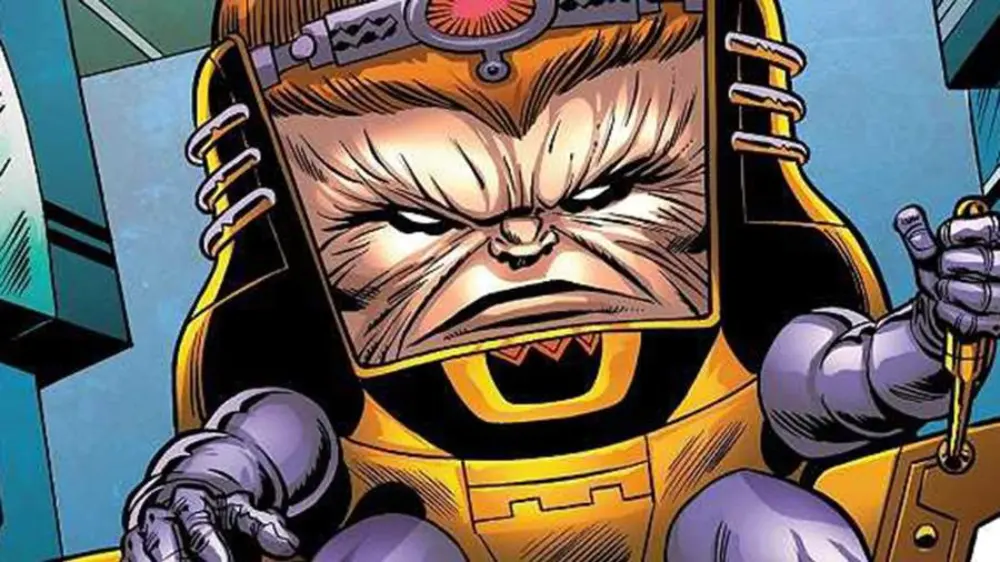
So, what is Marvel Rivals hero: MODOK? In this article, the term refers to a potential playable version of MODOK in Marvel Rivals, not an officially confirmed character. In Marvel Comics, M.O.D.O.K. stands for Mental Organism Designed Only for Killing. Marvel describes him as a highly intelligent villain with abilities including telepathy, telekinesis, mind blasts, force-field generation, and advanced problem-solving skills. His Doomsday Chair also provides mobility and additional technological capabilities.
Why MODOK could fit Marvel Rivals
Marvel Rivals features characters with very different combat identities, which means MODOK could theoretically introduce another specialized gameplay style. His oversized head and hovering chair would also make him instantly recognizable during a match.
Furthermore, his comic abilities provide several possible mechanics. Psychic attacks could become ranged abilities, telekinesis could influence enemy movement, and force fields could provide defensive utility.
These ideas are speculative, however. No official MODOK moveset should be treated as confirmed until the developers announce one.
A different type of Marvel character
MODOK could potentially appeal to players who prefer strategic characters. Instead of constantly chasing opponents, his theoretical gameplay could revolve around controlling important areas and forcing enemies to change their approach.
That would make positioning particularly important. A player who understands sightlines, objectives, cover, and enemy movement could potentially get more value from MODOK than someone who simply focuses on dealing damage.
Abilities in Marvel Rivals: potential MODOK mechanics
The Abilities in Marvel Rivals concept for MODOK can be explored through his established Marvel powers. His comics history gives developers several recognizable elements to work with, although the final implementation would depend entirely on the official game design.
Psychic attacks and ranged pressure
Marvel identifies mind blasts, telekinesis, telepathy, and force-field generation among MODOK’s established powers. These abilities could theoretically translate into ranged damage, crowd control, defensive utility, or temporary battlefield manipulation.
For example, a mind blast could function as a precision ranged attack, while telekinesis could potentially disrupt enemy movement. A force field could also become a temporary defensive tool for MODOK or nearby allies.
However, these are gameplay concepts rather than confirmed abilities.
A potential kit could include:
- A long-range psychic projectile.
- A temporary force-field barrier.
- A telekinetic disruption ability.
- A hovering movement system connected to the Doomsday Chair.
The Doomsday Chair
The Doomsday Chair is one of MODOK’s defining pieces of technology. Marvel describes it as a weaponized hovering chair that supports his body while enhancing his mental abilities and providing additional technological functions.
Consequently, the chair could become an important part of his movement system.
Instead of running like most characters, MODOK could theoretically hover around the battlefield. This could create a distinctive movement pattern while also giving opponents a clear visual target.
| Potential mechanic | Possible gameplay function | Main consideration |
| Psychic blast | Long-range damage | Accuracy and cooldown |
| Telekinesis | Enemy disruption | Crowd-control balance |
| Force field | Defensive protection | Duration and positioning |
| Doomsday Chair | Hovering mobility | Large character silhouette |
| Mental abilities | Utility and control | Counterplay opportunities |
This table represents possible design concepts based on MODOK’s established Marvel identity, not confirmed Marvel Rivals mechanics.
How to play a potential MODOK
If MODOK eventually becomes playable, understanding his possible identity would be more useful than immediately memorizing abilities. His established powers suggest a character that could reward positioning, prediction, and careful ability management.
Positioning would be essential
A large character with ranged abilities would need to think carefully about where each engagement begins. Staying in the open could make MODOK easier to target, while staying too far away from the objective could reduce his overall impact.
Therefore, a hypothetical MODOK player could focus on three priorities:
- Maintain useful sightlines.
- Stay close enough to influence objectives.
- Keep an escape or defensive option available.
These fundamentals could help reduce unnecessary deaths while keeping MODOK involved in team fights.
Timing abilities during team fights
Timing could also become a major part of his gameplay. If MODOK had abilities that affected multiple enemies, using them before opponents fully commit could reduce their impact.
Instead, players could wait for enemies to group together or use mobility tools before activating control abilities.
A simple hypothetical approach would be:
- Identify where the enemy team is moving.
- Establish a safe position near the objective.
- Wait for opponents to commit to an engagement.
- Use control abilities to disrupt their formation.
- Reposition before the enemy can focus you.
This style would make awareness particularly important. Strong abilities still require good timing to produce consistent value.
Best Team Compositions for a hypothetical MODOK
Team composition could significantly influence how a character like MODOK performs. Since there is no official playable MODOK kit, there is currently no confirmed Best Team Compositions setup for him.
Defensive team concepts
A hypothetical MODOK could benefit from teammates capable of protecting ranged or control-focused characters. A frontline hero could create space, while a support could help MODOK survive focused attacks.
The basic idea would be to give MODOK enough room to use his abilities without constantly being forced into close-range combat.
A potential team structure could emphasize:
- Frontline protection.
- Reliable healing.
- Area control.
- Long-range pressure.
This type of composition would theoretically allow MODOK to concentrate on controlling important areas.
Aggressive team concepts
Another possibility would involve highly mobile teammates. Fast characters could force enemies into predictable positions, potentially creating opportunities for MODOK’s hypothetical control abilities.
For example, mobile allies could initiate an engagement while MODOK attacks from a safer position.
However, these are theoretical combinations. The actual value of any team composition would depend on MODOK’s final abilities, role, statistics, cooldowns, and interactions with other heroes.
MODOK abilities and possible counterplay
A character with strong ranged control would also need clear weaknesses. Otherwise, his ability to influence fights from a distance could become difficult to balance.
Size and visibility
MODOK’s large physical design could naturally create a disadvantage. His silhouette would likely be easier for opponents to identify, especially in open areas.
Therefore, cover and positioning could become important defensive tools. A hypothetical MODOK player might need to avoid unnecessary exposure and rotate between safe positions.
Interrupting his setup
If MODOK’s potential strength came from battlefield control, opponents could try to disrupt him before he establishes a favorable position.
Players facing a hypothetical MODOK could theoretically:
- Identify his location.
- Avoid predictable approaches.
- Pressure him before his setup is complete.
- Force him away from important objectives.
- Attack during ability cooldowns.
This creates an important competitive principle: powerful control tools need meaningful counterplay.
Why connection stability matters for MODOK
Regardless of which hero you play, network stability can affect your experience in Marvel Rivals. High or unstable latency may cause delayed responses, rubberbanding, inconsistent hit registration, and other connection-related issues.
This becomes particularly relevant for characters that depend on precise timing. If an ability needs to be activated during a short window, inconsistent latency can make execution feel less predictable.
Ping and FPS are different problems
It is important to separate network performance from graphical performance.
Ping measures the time required for information to travel between your device and the game server. FPS, meanwhile, describes how frequently your system renders frames.
Therefore, lowering graphical settings will not necessarily fix high ping. Likewise, improving your connection will not automatically resolve hardware-related FPS drops.
For more information about connection issues, see our Marvel Rivals high ping guide.
How ExitLag can support a stable connection
ExitLag is designed to optimize gaming traffic by using alternative network routes. Its Marvel Rivals content discusses how routing issues can contribute to latency spikes and packet loss even when a player’s internet connection has strong bandwidth.
This distinction matters because internet speed and connection quality are not exactly the same thing.
ExitLag is not a VPN. Instead, its gaming-focused approach is designed around network route optimization.
For a hypothetical MODOK player, stable routing could be especially useful during intense team fights, where delayed inputs or sudden connection fluctuations may interfere with ability timing.
Preparing for a potential MODOK release
Until an official announcement provides a playable MODOK kit, players can focus on fundamentals that would remain useful across different characters.
Improve positioning fundamentals
Good positioning is more than simply staying far away from opponents. It means understanding objectives, sightlines, cover, teammate locations, and potential enemy approaches.
First, learn how different maps create predictable engagement points. Then, practice moving between safe positions instead of staying in one location for too long.
Finally, pay attention to your connection before entering competitive matches. Consistency can make it easier to distinguish gameplay mistakes from technical problems.
Build a stable gaming setup
A reliable setup can reduce distractions during matches.
Consider these fundamentals:
- Use a stable network connection whenever possible.
- Close unnecessary applications that consume bandwidth.
- Keep the game and network-related drivers updated.
- Monitor latency and packet loss when problems occur.
- Adjust graphics settings separately from network troubleshooting.
These steps can help create a more consistent environment regardless of which Marvel Rivals hero you choose.
MODOK’s Marvel identity and potential design
MODOK has decades of Marvel history behind him, giving developers plenty of material to explore. His association with A.I.M., psychic powers, advanced intelligence, and the Doomsday Chair creates a recognizable foundation for a potential adaptation.
Intelligence as a gameplay identity
One of the most interesting possibilities would be making MODOK’s intelligence part of his gameplay identity.
Rather than giving him generic attacks, a future kit could theoretically emphasize prediction, positioning, battlefield manipulation, and calculated decisions.
This could make him feel different from characters whose identities revolve primarily around mobility or direct close-range combat.
A recognizable visual design
His appearance would also make him one of the easiest characters to recognize.
The enormous head, hovering chair, and mechanical equipment could translate well into the game’s visual style. However, competitive readability would remain important.
Players need to understand where a character is, what ability is being used, and when that character is vulnerable. Therefore, any future MODOK design would need to balance visual comedy with clear gameplay communication.
Final thoughts on Marvel Rivals hero: MODOK
MODOK has several characteristics that could support an unusual Marvel Rivals playstyle. His psychic abilities, technological equipment, intelligence, and Doomsday Chair provide multiple potential foundations for ranged combat and battlefield control. For now, however, Marvel Rivals hero: MODOK should be understood as a potential future concept rather than an officially confirmed playable hero. If MODOK eventually joins the roster, learning positioning, ability timing, team coordination, and connection stability could all help players adapt to his gameplay.
Got questions or want to connect with other players? Join the conversation at the ExitLag Forum!