Marvel Rivals continues to expand its roster with characters from across the Marvel universe, creating constant speculation about which heroes could eventually join the game. Among the characters frequently discussed by fans is Beast, the brilliant mutant scientist and longtime X-Men member. His combination of intelligence, agility, and physical strength could translate into an interesting gameplay identity if he becomes playable.
For players following potential additions to the roster, understanding how a character could function is part of the excitement. You can also explore our Marvel Rivals hero guides to learn more about characters, gameplay mechanics, and performance-related topics. In addition, connection stability remains important whenever fast reactions and precise abilities matter.
So, what is Marvel Rivals hero Beast? Beast, also known as Hank McCoy, is an X-Men character recognized for his blue appearance, exceptional intelligence, acrobatic movement, and enhanced physical abilities. If introduced into Marvel Rivals, these traits could support a highly mobile character focused on close-range combat, disruption, and team utility.
Because Beast’s playable kit has not been officially established, any discussion of his abilities or role should be treated as speculation rather than confirmed information. Still, his comic-book history provides several possibilities for how developers could adapt him while maintaining the fast-paced team-based structure of Marvel Rivals.
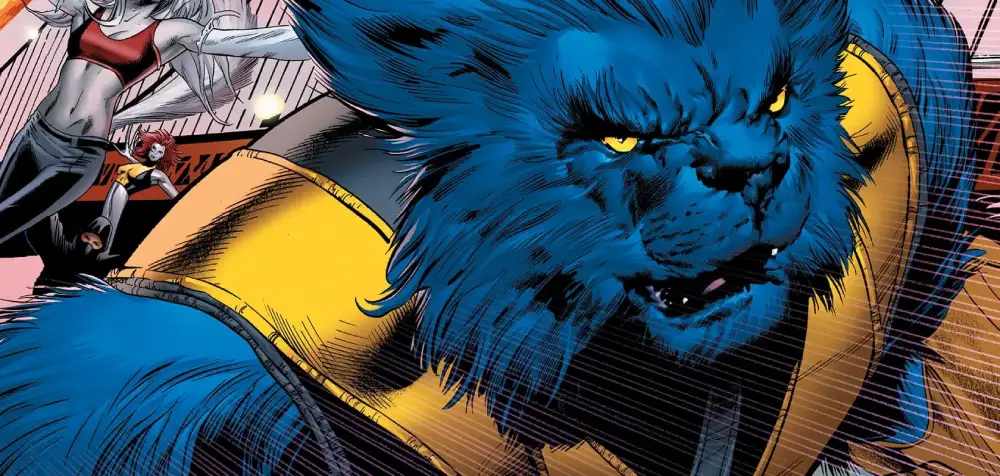
Marvel Rivals hero: Beast and his potential gameplay role
Beast has several characteristics that could make him different from traditional bruisers. Instead of relying exclusively on raw durability, he could combine mobility, physical attacks, and utility to create openings for teammates.
A possible mobility-focused playstyle
One of Beast’s defining characteristics is his agility. Hank McCoy is frequently portrayed as capable of jumping, climbing, and moving quickly despite his size. Therefore, mobility could become one of the most important aspects of his potential gameplay.
A movement-focused kit could allow Beast to quickly enter a fight, pressure an isolated opponent, and reposition before the enemy team can react. This would also make positioning especially important.
Players would potentially need to manage movement carefully rather than simply charging into every encounter. After all, mobility is most effective when it creates an advantage for the entire team.
How his physical strength could translate
Beast is also physically powerful. His enhanced strength could make melee attacks an important part of his identity if he enters Marvel Rivals.
For example, his basic attacks could emphasize powerful strikes, while abilities could use his agility to increase the impact of those attacks. This combination would give him a distinct relationship between movement and damage.
A potential Beast kit could therefore revolve around:
- Fast movement and aerial positioning.
- Powerful close-range attacks.
- Crowd-control or disruption tools that create opportunities for allies.
However, these are possible design directions rather than confirmed abilities.
Beast Abilities in Marvel Rivals and possible mechanics
The Abilities in Marvel Rivals are generally designed around each character’s identity, which means Beast could have several mechanics inspired by his comic appearances. Since there is no confirmed playable kit to reference, it is useful to separate established character traits from possible gameplay concepts.
Potential abilities inspired by Beast
Beast’s physical characteristics provide plenty of material for a hypothetical kit. His jumping ability, strength, intelligence, and acrobatics could all influence his abilities.
One possible approach would be to give him a leap that allows him to rapidly close the distance. Another could involve a powerful strike that knocks enemies backward or briefly disrupts their positioning.
His intelligence could also influence his utility. Rather than turning him into a conventional damage character, developers could incorporate abilities that reward tactical positioning and coordination.
How mobility could affect combat
Mobility would likely be particularly valuable in a game where fights can change within seconds. A character capable of quickly moving between elevated and ground positions could create pressure from unexpected angles.
At the same time, mobility needs to have clear counterplay. If movement abilities were too frequent or difficult to punish, they could become frustrating for opponents.
Therefore, cooldown management would probably be important. Players could need to decide whether to use a movement ability aggressively or save it as an escape option.
How to play Beast if he joins Marvel Rivals
Although there is currently no confirmed playable Beast kit to provide an official How to Play guide, his established character traits suggest several gameplay principles that could apply if he eventually becomes available.
Positioning should come before aggression
A highly mobile character can be tempting to play aggressively. However, entering a fight without considering enemy positioning could quickly turn mobility into a disadvantage.
Instead, players could look for isolated opponents or moments when key enemy abilities are already on cooldown.
A potential approach would be:
- Observe the enemy formation before committing.
- Use mobility to approach from an advantageous angle.
- Apply pressure without becoming isolated.
- Reposition when enemy attention turns toward you.
- Return when your team is ready to follow up.
This type of rhythm would fit a character who combines athletic movement with tactical intelligence.
Managing cooldowns and escape options
Movement abilities can serve two purposes: engaging and escaping. Using every mobility tool to initiate a fight could leave Beast vulnerable afterward.
Consequently, players would need to consider the next few seconds rather than only the current attack.
Good cooldown management could allow Beast to remain active throughout an extended team fight. Instead of constantly committing forward, he could alternate between pressure and repositioning.
Best Team Compositions for a potential Beast
Team synergy would likely be another major factor. The Best Team Compositions for Beast would depend entirely on his final abilities, role, and balance values, so there is no confirmed composition at this stage.
Still, several types of teammates could logically complement a mobile melee-oriented character.
Heroes who can support aggressive movement
A support character capable of sustaining Beast during extended engagements could potentially increase his effectiveness. Healing, defensive buffs, or other forms of utility could allow him to remain near the frontline.
Likewise, characters with crowd-control abilities could create opportunities for Beast to approach vulnerable targets.
Potential synergy could come from:
- Supports that help him survive after entering combat.
- Heroes capable of controlling enemy movement.
- Damage dealers who can capitalize on targets Beast disrupts.
The exact combinations would ultimately depend on his official kit.
Creating space for the team
Beast could potentially contribute by forcing enemies to react to his movement. Even without eliminating an opponent, threatening an important target could create space for teammates.
For example, a Beast player could pressure an enemy support while the rest of the team attacks from another direction. Alternatively, he could help protect vulnerable allies by intercepting enemies attempting to dive.
This would make communication especially valuable. Team-based pressure is usually more effective when players understand the objective behind each engagement.
Beast gameplay strategy for different situations
A flexible approach would probably be necessary if Beast became playable. His potential combination of mobility and close-range pressure could give him different responsibilities depending on the match.
Playing Beast during team fights
During a team fight, timing would matter more than simply dealing damage. Entering too early could expose Beast before allies are ready to help.
Instead, players could wait for an important enemy ability to be used. Once the opposing team loses a defensive resource, Beast could potentially move in and apply pressure.
A simple team-fight sequence might look like this:
- Stay near the edge of the engagement.
- Wait for the enemy team to commit important abilities.
- Identify an exposed target.
- Enter quickly and apply pressure.
- Reposition before becoming surrounded.
This approach would make his mobility a tactical resource rather than simply a movement advantage.
Playing around objectives
Objectives create predictable areas of conflict, which could potentially benefit a mobile character.
Beast could use his movement to approach objectives from unusual angles or pressure opponents trying to maintain control.
However, objective play would still require discipline. Chasing an enemy too far from the objective could give the opposing team an opportunity to recover.
Therefore, the objective should remain the priority rather than individual eliminations.
Beast versus other potential melee heroes
If Beast were introduced as a close-range character, his identity would need to distinguish him from other melee-focused heroes.
His defining difference could come from movement and versatility rather than simply having the highest damage output.
| Gameplay aspect | Potential Beast identity | Possible benefit |
| Mobility | High | Rapid repositioning |
| Close-range pressure | High | Strong threat against isolated targets |
| Durability | Moderate | Allows controlled frontline presence |
| Utility | Moderate | Helps disrupt enemy formations |
| Team dependence | Moderate to high | Benefits from coordinated engagements |
This hypothetical profile would make Beast potentially appealing to players who enjoy active positioning and fast decision-making.
Nevertheless, the actual balance could be completely different if Marvel Rivals developers officially introduce him.
Improving Marvel Rivals performance with ExitLag
Fast characters depend heavily on responsive controls. Even when a player understands positioning and timing, unstable connectivity can interfere with the experience.
In Marvel Rivals, issues such as packet loss, latency spikes, and inconsistent routing can make actions feel delayed or unreliable. This becomes particularly noticeable when a character relies on quick movement and precise ability timing.
ExitLag is designed to optimize network routing for online games. Rather than functioning as a traditional VPN, it focuses on connection optimization and route management.
You can also learn more through the ExitLag technology guide to understand how network optimization works.
Why stable routing matters for mobile heroes
Suppose Beast has a movement ability that requires precise timing. A sudden latency spike could cause the action to register later than expected.
Likewise, packet loss can contribute to inconsistent gameplay experiences. These problems are not necessarily caused by the game itself, but network conditions can affect how smoothly information travels between the player’s system and the game server.
ExitLag can help optimize the route used for supported games, potentially providing a more consistent connection depending on the player’s network and location.
What ExitLag can and cannot change
It is important to understand the distinction between network optimization and game performance.
ExitLag does not magically increase a computer’s processing power or guarantee lower ping in every situation. Results can vary depending on the player’s ISP, physical location, server location, routing conditions, and other factors.
For that reason, players should evaluate their own connection rather than assuming that every network issue will have the same solution.
Tips for mastering a potential Beast playstyle
If Beast eventually becomes playable, learning his movement and engagement timing would likely be central to improving with him.
Practice movement before chasing eliminations
Players often focus on damage numbers when learning a new character. However, movement mechanics can be just as important.
A player who understands when to engage, when to retreat, and where to reposition can potentially create more value than someone who constantly searches for eliminations.
A useful practice routine could include:
- Learn every movement interaction.
- Practice approaching targets from multiple directions.
- Test escape routes around common objectives.
- Learn how far abilities can safely reach.
- Practice disengaging after short engagements.
Learn enemy cooldowns
Beast’s potential mobility could become more effective when combined with knowledge of enemy abilities.
For example, attacking after an opponent uses a defensive ability could create a safer opportunity. Similarly, recognizing when an enemy has access to crowd control could prevent unnecessary engagements.
Consequently, matchup knowledge could become one of the biggest differences between beginners and experienced Beast players.
Marvel Rivals hero: Beast and the future of the roster
The possibility of Marvel Rivals hero: Beast joining the roster is interesting because the character could bring a combination of scientific intelligence, physical strength, and acrobatic movement to the game.
His potential gameplay identity could revolve around mobility, close-range pressure, disruption, and tactical positioning. However, without an official playable announcement and confirmed ability list, these concepts should remain clearly separated from established Marvel Rivals information.
For now, players interested in Beast can follow official Marvel Rivals announcements and community discussions while continuing to explore the game’s existing roster. If Beast eventually receives an official kit, his abilities, role, team synergies, and balance can then be evaluated based on confirmed gameplay rather than speculation.
Finally, whether you are experimenting with existing heroes or preparing for possible future additions, connection stability remains an important part of competitive gameplay. If Marvel Rivals hero Beast eventually arrives with a fast and mobility-heavy kit, reliable routing could become particularly useful when every movement and ability timing matters.
Got questions or want to connect with other players? Join the conversation at the ExitLag Forum!