

Kit Brawl Stars is one of the game’s most unusual support characters because he can change his role in the middle of a fight. On his own, Kit is a close-range fighter who looks for safe openings. Attached to an ally, however, he becomes a support-focused artillery threat that can pressure enemies from behind a teammate.
Kit’s hybrid role becomes clearer when you compare him with more direct damage-focused Brawlers. A guide to dominating with Colt in Brawl Stars can help show how aim, spacing, and pressure change when a character relies less on attachment timing and more on consistent ranged damage.
That flexibility is what makes Kit Brawl Stars rewarding, but it also makes him easy to misuse. A rushed Super can leave Kit exposed, while attaching to the wrong teammate can remove an important frontline presence at the worst possible moment. To use him well, you need to decide whether the next fight calls for damage, healing, control, or survival.
A strong Kit Brawl Stars strategy is not about diving into every enemy you see. It is about reading the map, protecting your Super, and choosing targets carefully. Players looking for a Brawl Stars kit guide should think of him as a conditional support: powerful when his timing is right, fragile when he commits without a plan.
This guide covers Kit’s real abilities, best builds for Showdown and 3v3 modes, useful team synergies, difficult matchups, unlock methods, and connection tips. Whether you are searching for a kit Brawl Star overview or trying to find the best kit build Brawl Stars players can use in competitive matches, the key is understanding the difference between attaching to allies and attacking enemies.
Who Is Kit in Brawl Stars?
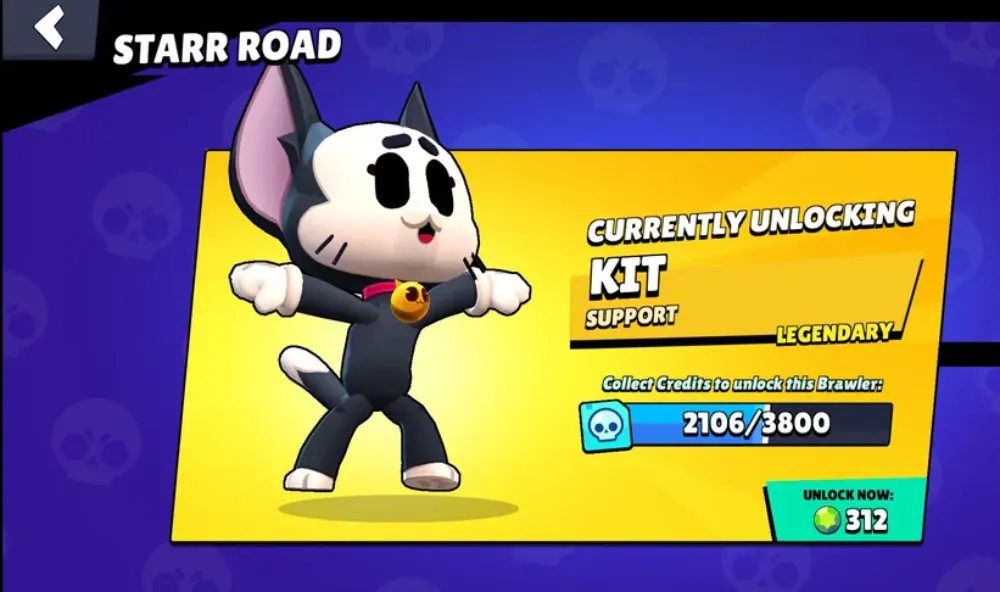
Kit is a Legendary Support Brawler with a high-skill kit built around his Super. He was introduced during the Starr Toon and Brawlidays period and quickly stood out because he could attach himself to another Brawler instead of relying on a traditional projectile-only Super.
The main appeal of Kit Brawl Stars is his flexibility. He can support a tank during a push, help a vulnerable ally survive, pressure enemies with area damage, or use an enemy attachment to disrupt a dangerous target. However, every option comes with risk.
Kit’s Role: Support First, Assassin Second
Kit is officially categorized as a Support Brawler, and that classification matters. His strongest value often comes from making an ally harder to remove or helping them create pressure from a safer position.
When attached to a teammate, Kit can contribute damage while staying connected to the ally. This changes the rhythm of the fight. Instead of standing in front and absorbing damage, Kit can help a tank, bruiser, or aggressive teammate advance through a contested lane.
A good Brawl Stars kit mindset is to avoid treating Kit like a pure assassin. He can punish isolated targets, but he is not designed to win every direct duel against high-damage Brawlers.
His main strengths include:
- Flexible Super with ally and enemy interactions.
- Strong support potential in coordinated modes.
- Good value from Power Cubes in Showdown.
- Useful pressure when paired with durable teammates.
- High impact when his Hypercharge is available.
- Strong ability to turn a small advantage into a team push.
His main weaknesses include:
- Short-range base attack when unattached.
- Risky commitment when jumping onto enemies.
- Limited value when teammates are poorly positioned.
- Vulnerability to long-range pressure on open maps.
- Heavy dependence on timing and target selection.
A build kit plan should therefore match the game mode. Showdown and 3v3 do not ask Kit to do exactly the same job.
How Kit’s Two Attack Modes Work
Kit has two main attack states. When he is not attached to an ally, he attacks with Claws. This is a short-range cone attack that works best when enemies are close or when Kit can use cover to approach safely.
When Kit attaches to a friendly Brawler, his attack changes to Yarn Balls. Instead of slashing nearby enemies, he throws yarn balls that deal area damage from a safer position. This is where Kit’s support identity becomes more obvious.
The difference is important:
| Kit State | Main Attack | Best Use |
| Unattached | Claws | Finishing weak enemies, defending close range, charging pressure |
| Attached to an ally | Yarn Balls | Supporting pushes, poking grouped enemies, adding area pressure |
| Using Super on enemy | Enemy-control interaction | Punishing isolated targets or disrupting an important threat |
| Using Super on ally | Healing and support | Keeping a teammate alive during a push |
Players often search kit Brawl Star because they expect a fast assassin. In reality, Kit is strongest when he uses both forms. His claws create close-range threat, while Yarn Balls let him contribute safely after attaching to the right ally.
What Are Kit Brawl Stars’ Abilities?
Kit Brawl Stars has a passive Super-charging trait, a short-range base attack, a Super called Carry Me, two Gadgets, two Star Powers, and a Hypercharge. The most important thing to understand is that his Super changes depending on whether he lands on an ally or an enemy.
That creates more decision-making than a standard dash. You must consider target health, enemy cooldowns, the map layout, and whether your team can follow your engage.
Main Attack and Super: Carry Me
Kit’s unattached Main Attack is Claws. It hits enemies in front of him in a cone, so it is most useful at close range. Do not try to out-poke long-range Brawlers in open space. Instead, use walls, bushes, teammate pressure, and enemy mistakes to close the gap.
His Super, Carry Me, lets Kit jump onto another Brawler. When he connects with a friendly target, he attaches to that ally and supports them through healing and Yarn Ball attacks. When he connects with an enemy, the interaction becomes aggressive and can interrupt or damage the target.
The enemy version is powerful, but it is not a free elimination tool. Kit can be punished after committing, especially if nearby opponents can burst him down or control the area.
Use the Super on an ally when:
- A teammate is starting a strong push.
- Your team needs extra sustain.
- A tank is moving toward the objective.
- You need a safer angle to pressure enemies.
- The enemy team has limited ways to separate you.
Use the Super on an enemy when:
- The target is isolated.
- Your team can follow up immediately.
- You need to interrupt a dangerous Brawler.
- The enemy has already spent key defensive tools.
- You can avoid landing into multiple opponents.
For a best kit build Brawl Stars setup, the Super is the real center of the character. Everything else should help you gain, protect, and use it with purpose.
Gadgets, Star Powers, and Hypercharge
Kit’s Gadgets serve very different jobs. Cardboard Box makes Kit invisible and helps charge his Super faster while he remains still. It is especially useful in Showdown, where bushes, patience, and Power Cube control matter.
Cheeseburger heals Kit and the friendly Brawler he is attached to. This is usually more valuable in coordinated 3v3 modes, where an extra burst of healing can keep an ally alive long enough to win an objective fight.
Kit’s Star Powers are also mode-dependent:
| Upgrade | Effect | Best Situation |
| Cardboard Box | Invisibility and faster Super charge while stationary | Showdown, ambushes, safer Super setup |
| Cheeseburger | Heals Kit and attached ally | Gem Grab, Brawl Ball, coordinated 3v3 |
| Power Hungry | Doubles the power gained from Power Cubes | Solo and Duo Showdown |
| Overly Attached | Extends attachment duration on allies | Team modes and prolonged pushes |
For a Brawl Stars kit loadout in Showdown, Power Hungry is usually the most natural choice because every Power Cube becomes more valuable. In 3v3, Overly Attached can create more reliable support windows.
Kit’s Hypercharge, Making Biscuits, adds different effects depending on the Super target. Against an enemy, it changes the interaction so Kit can stun the enemy while continuing to move and attack instead of attaching. Against an ally, it improves healing and gives Yarn Balls more range.
That makes the Hypercharge especially dangerous in coordinated fights. It gives Kit more control over whether he wants to disrupt an enemy or enable a teammate.
How Do You Play Kit Brawl Stars Effectively?
To play Kit Brawl Stars effectively, focus on patience, positioning, and target priority. Kit is not built to run through the center of the map and force every fight. He is strongest when he uses cover, waits for a mistake, and turns a teammate’s opening into a winning exchange.
The biggest skill check is knowing when not to use the Super. A wasted jump can remove your escape option and leave your team without support for the next objective fight.
Use Enemy Attachments Selectively
Kit can punish enemies, but he should not dive automatically. Before jumping onto an opponent, ask whether your team can capitalize on the move.
A strong enemy attachment happens when the target is separated from teammates, low on health, or unable to escape. It can also work when a dangerous enemy needs to be interrupted before they reach your team.
Avoid jumping when:
- Two or three enemies are grouped near the target.
- Your allies are too far away to help.
- You have no safe route after the engagement.
- The enemy has strong burst damage ready.
- A knockback, stun, or slow can punish your landing.
- You are carrying a major objective and should stay alive.
This is where build kit decisions matter. Cardboard Box can help you create a safer angle before committing, while Cheeseburger gives more value when you expect to remain attached to a friendly teammate.
A reliable Kit player waits for the fight to become uneven. Let the enemy spend ammo, force them to retreat behind cover, then use the Super when their options are limited.
Attach to Allies at the Right Time
The ally version of Kit’s Super is often more valuable than the enemy version in 3v3. Attaching to a teammate can transform one strong Brawler into a much more dangerous push.
However, do not attach to every ally just because they are nearby. A low-health teammate who is retreating may not be the right target. A teammate about to dive into three enemies may not give you a safe position either.
The best allies for Kit usually have one or more of these qualities:
- Good health or defensive tools.
- Strong close-range presence.
- Ability to hold the objective.
- Reliable movement or shielding.
- A playstyle that benefits from sustained pressure.
A kit Brawl Star player should communicate whenever possible. In Brawl Ball, tell your teammate when you have Super ready. In Gem Grab, attach to the player who can safely hold the center. In Knockout, avoid attaching too early if your team still needs map control.
Kit becomes much more consistent when the team understands what he is trying to do.
Other unusual Brawlers can also teach useful lessons about attack timing and positioning. For example, understanding the Shade Brawl Stars attack style can help players think more carefully about when to engage, when to hold pressure, and when a risky move is actually worth taking.
What Is the Best Kit Build Brawl Stars Players Can Use?
The best Kit build Brawl Stars players should use depends on the mode. There is no single loadout that dominates every map, because Kit’s Star Powers and Gadgets are designed for different environments.
The basic rule is simple: choose Power Hungry and Cardboard Box when Power Cubes and stealth matter. Choose Overly Attached and Cheeseburger when teamwork, sustain, and objective pressure matter more.
Best Kit Build for Showdown
For Solo Showdown and many Duo Showdown maps, this is the most practical setup:
- Gadget: Cardboard Box
- Star Power: Power Hungry
- Gear 1: Damage Gear
- Gear 2: Shield Gear or Speed Gear, depending on bushes
Cardboard Box helps Kit hide, wait, and build Super charge more safely. Power Hungry doubles the benefit of Power Cubes, which can make Kit much more threatening as the match progresses.
Damage Gear is useful because Kit often looks for finishing opportunities. Shield Gear can provide extra safety when you need to survive long enough to retreat or recharge. On maps with dense grass, Speed Gear can be a better choice.
A Showdown Brawl Stars kit strategy should focus on survival first. Do not take unnecessary early duels against Brawlers who outrange you. Collect cubes safely, preserve your Super, and use bushes to force enemies into uncomfortable positions.
Best Kit Build for 3v3 Modes
For Gem Grab, Brawl Ball, Hot Zone, and certain Knockout maps, this setup is usually more reliable:
- Gadget: Cheeseburger
- Star Power: Overly Attached
- Gear 1: Damage Gear
- Gear 2: Shield Gear or Speed Gear, depending on map layout
Cheeseburger gives Kit and his attached ally a valuable healing burst. Overly Attached extends the support window, which is especially useful when your team is trying to hold a zone, protect Gems, or push toward the Brawl Ball goal.
This best kit build Brawl Stars option is strongest with teammates who can stay alive in the middle of a fight. Tanks, bruisers, and durable control Brawlers often give Kit a safer platform than fragile long-range allies.
Do not force this build in Solo Showdown. It is designed around teammates. If you cannot reliably attach to a friendly Brawler, you are giving up much of the value from Cheeseburger and Overly Attached.
Which Modes, Teammates, and Counters Work Best With Kit?
Kit can be useful in several modes, but his value changes with map geometry and team composition. He generally prefers maps with cover, bushes, and objectives that create repeated team fights.
Wide-open maps are more difficult because long-range Brawlers can pressure Kit before he gets close enough to threaten with Claws or Super.
Best Modes and Map Conditions for Kit
Kit performs best when there are opportunities to support an ally during repeated objective fights. Gem Grab and Brawl Ball are natural choices because both modes reward sustained pressure and coordinated movement.
| Mode | Kit’s Role | General Value |
| Gem Grab | Support the Gem carrier or control teammate | Strong on maps with cover |
| Brawl Ball | Attach during pushes and defend near goal | Strong with durable allies |
| Hot Zone | Help a teammate hold space and survive | Situational but useful |
| Knockout | Punish isolated targets carefully | Strong on closed maps |
| Solo Showdown | Scale with Power Hungry and cubes | Map dependent |
| Duo Showdown | Support a durable partner | Strong with communication |
| Heist | Less consistent Safe pressure | More situational |
A build kit choice should always match the map. Cardboard Box gains value in bushes. Cheeseburger gains value in long team fights. Speed Gear becomes more attractive when grass gives you a real movement advantage.
Best Teammates and Difficult Matchups
Kit works well with Brawlers who can hold space, survive pressure, or create a clear path toward the objective. Durable teammates are often the easiest partners because they give Kit time to heal, throw Yarn Balls, and stay useful.
Good teammate traits include:
- High health.
- Shields or damage reduction.
- Area control.
- Reliable crowd control.
- Strong close-range presence.
- Ability to force enemies behind cover.
Examples of useful partner styles include tanks, control Brawlers, and frontline fighters. Rather than memorizing a fixed list, focus on whether the teammate can create a safe attachment window.
Kit struggles more against long-range pressure and strong anti-dive tools. Brawlers with high burst, knockback, stuns, slows, or consistent long-range damage can punish predictable jumps.
To play around counters:
- Stay behind cover until the enemy spends ammo.
- Do not reveal your Super plan too early.
- Force long-range enemies to move toward the objective.
- Use your ally attachment to avoid standing alone.
- Save your Gadget for a meaningful timing window.
- Avoid jumping into a full enemy team.
The strongest kit Brawl Star players do not try to win every matchup alone. They use teammates, terrain, and timing to reduce the enemy’s advantage.
Kit’s value also depends on how he fits into the wider roster at any given time. A current Brawl Stars tier list ranking can help players compare his role with other Brawlers before investing resources or choosing him for ranked matches.
How Do You Unlock Kit in Brawl Stars?
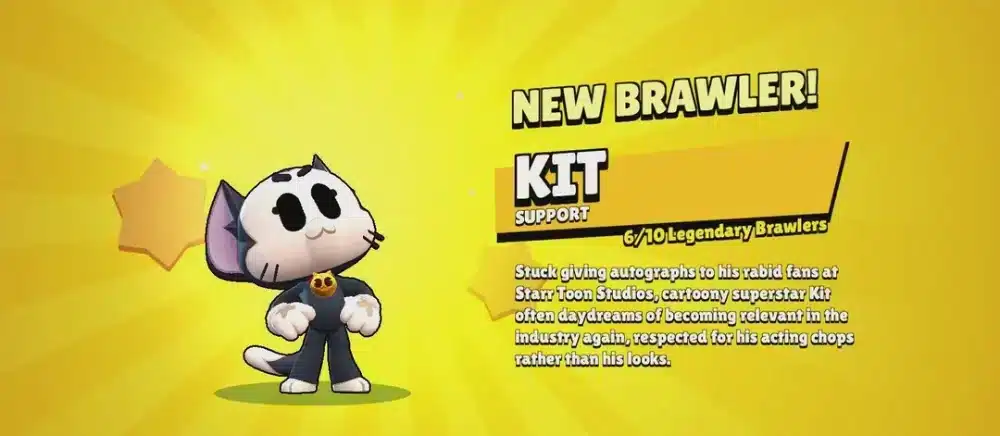
Kit is a Legendary Brawler, so unlocking him takes more time than unlocking a Rare, Super Rare, or Epic Brawler. The main free path is progressing through the Starr Road with Credits.
You can earn Credits through progression systems, rewards, Starr Drops, events, and other official in-game sources. The exact reward mix can change with updates, so check your current progression screen instead of depending on an old guide.
Unlock Kit Through the Starr Road
The Starr Road lets players progress toward Brawlers by collecting Credits. Once Kit is available as your current target, earned Credits move you toward unlocking him.
A free-to-play plan should prioritize consistency:
- Complete daily and event-related progression.
- Claim Credits from reward tracks.
- Finish quests when they align with Brawlers you enjoy.
- Avoid wasting resources on upgrades for Brawlers you do not play.
- Check the Starr Road before collecting large Credit rewards.
- Keep progressing even if Kit is not your immediate target.
The Brawl Stars kit unlock process may take time, but it does not require a direct purchase. Patience is especially important with Legendary Brawlers because the Credit requirement is higher.
For official game details, updates, and platform information, it is always safer to check the source directly. The official Brawl Stars page can help players confirm the game’s current features before relying on older guides or community posts.
Upgrade Kit in the Right Order
After unlocking Kit, focus first on the upgrades that support the modes you actually play. Gadgets unlock before Star Powers, while Gear slots and higher-level upgrades expand your available options as Kit gains Power Levels.
A practical upgrade order is:
- Raise Kit to a level where you can access Gadgets.
- Choose Cardboard Box for Showdown or Cheeseburger for 3v3.
- Upgrade further for Star Power access.
- Choose Power Hungry for Showdown or Overly Attached for team modes.
- Add Damage Gear and a defensive or map-specific second Gear.
- Work toward Hypercharge if Kit is one of your main Brawlers.
Do not feel pressured to buy every option immediately. A smart best kit build Brawl Stars approach begins with one complete loadout for your favorite mode, then expands later.
How Can ExitLag Help Kit Brawl Stars Players?
ExitLag is a connection optimization solution that can help when the issue is network instability. It does not improve Kit’s damage, unlock Hypercharge, change your matchmaking, or make a bad Super jump successful.
However, connection consistency matters in a fast game like Brawl Stars. Kit depends on close timing. A delayed Super, late Gadget activation, or sudden movement correction can ruin a play that would otherwise be safe.
Signs That Lag Is Affecting Kit Gameplay
Connection problems can look like a mechanical mistake. You may think your Super missed because of timing, when the real issue is a delayed response or unstable movement.
Possible network-related signs include:
- Your attack fires later than expected.
- Kit moves back to an earlier position.
- Your Super activates after the enemy has already escaped.
- Teammates appear to jump or teleport slightly.
- Damage seems to register inconsistently.
- Matches feel worse at certain times of day.
- You disconnect during Ranked or event matches.
For a Brawl Stars kit player, these issues are particularly frustrating because Kit’s value often depends on reacting quickly to a teammate’s push or an enemy mistake.
Build a More Stable Setup
Start with basic fixes. Close background downloads, avoid streaming on the same connection during competitive sessions, and use a stable Wi-Fi signal or wired option where your setup allows it.
Then test ExitLag across several real matches. Focus on consistency rather than expecting one dramatic number to change immediately.
Use this practical checklist:
- Close apps using heavy bandwidth.
- Restart the router if multiple games feel unstable.
- Test your connection in different Brawl Stars modes.
- Compare busy and quiet play times.
- Lower background device activity before ranked sessions.
- Test ExitLag if routing instability continues.
- Judge results across multiple matches, not one game.
Watching official gameplay clips can also help players understand timing, updates, and how Brawlers are presented around new events. The Brawl Stars YouTube channel is a useful place to follow official videos, trailers, and community-facing content while refining your own playstyle.
A stable connection will not replace game sense. Still, it can help your Super, Gadget, and movement decisions register more consistently when Kit Brawl Stars fights depend on split-second timing.
FAQ
Kit can feel complicated at first because his role changes depending on whether he is unattached, attached to an ally, or using his Super aggressively against an enemy. These answers address the same core questions players usually ask before investing resources into him.
Yes, Kit can be very good when played with patience and purpose. He is not a simple damage-first Brawler, though. His value comes from supporting teammates, controlling key moments with his Super, and using the correct build for the mode.
Kit is usually stronger in coordinated 3v3 games and Showdown than in wide-open maps where long-range Brawlers can keep him away.
Play Kit by using cover, preserving your Super, and choosing attachments carefully. Attach to allies when a teammate can safely pressure the objective. Use enemy attachments only when the target is isolated or your team can follow up immediately.
Avoid diving into multiple opponents. Kit becomes much more consistent when he waits for enemies to spend ammo or lose their position first.
For Showdown, Cardboard Box and Power Hungry are usually the strongest combination because stealth and Power Cubes are central to the mode.
For 3v3 modes, Cheeseburger and Overly Attached are often better because they improve Kit’s ability to support a durable teammate during longer objective fights.
Kit received important balance adjustments after his release, including changes to his ally-attached damage and enemy-attachment behavior. As of the latest official balance notes reviewed for this guide in April 2026, no new Kit-specific balance change was listed.
Balance can change quickly, so always check the latest official patch notes before treating any build as permanent.
You can unlock Kit without paying by earning Credits and progressing through the Starr Road. Credits come from official reward systems, progression tracks, events, and eligible drops.
It takes time because Kit is Legendary, but no direct purchase is required. Focus on consistent progression and make sure Kit is selected as your current Starr Road target when possible.
Kit Brawl Stars is at his best when you stop treating him like a simple assassin and start using him as a flexible support threat. Build around the mode, attach to allies with a real plan, save enemy jumps for safe openings, and adapt your Gadget and Star Power to the map. Once you understand that rhythm, Kit Brawl Stars can turn close fights into controlled pushes and give your team a powerful advantage. For more consistent reactions when lag affects your timing, try ExitLag and test whether a more stable route improves your next Brawl Stars session.
Got questions or want to connect with other players? Join the conversation at the ExitLag Forum!