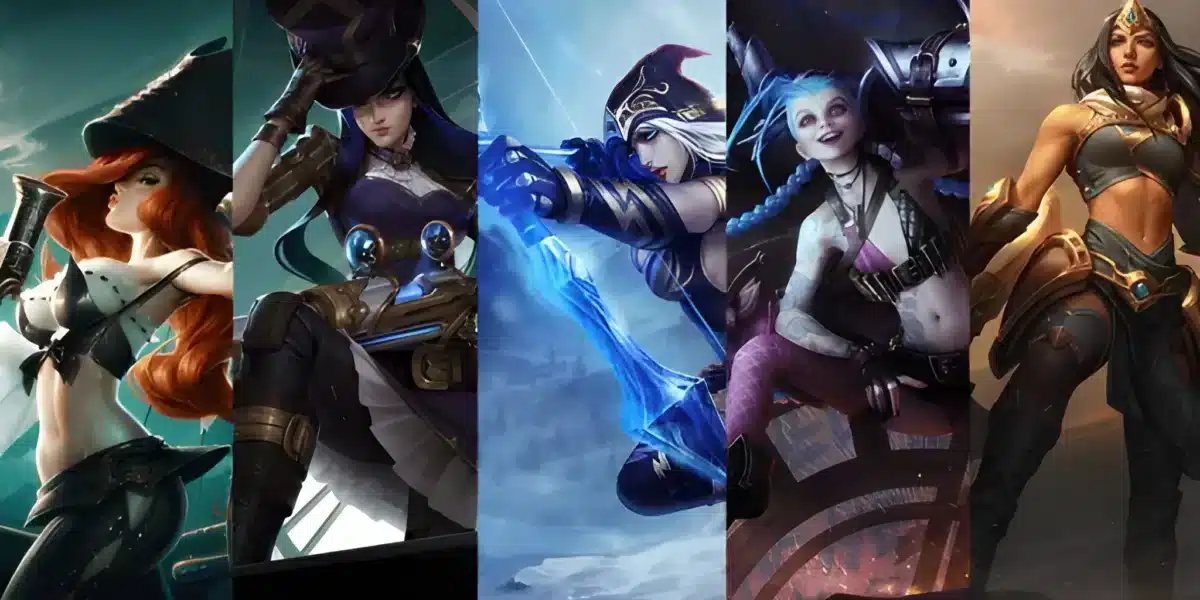
League of Legends champions define the identity of Riot’s iconic MOBA. From mechanical assassins to unkillable tanks, every match is shaped by the diversity and depth of its ever-expanding roster. Whether you are a beginner or a ranked grinder, understanding the full scope of the champions available is the first step toward real improvement.
League of Legends champions are the playable characters in Riot Games’ competitive 5v5 strategy game, each designed with unique abilities, strengths, weaknesses, and roles. With more than 170 characters currently available, the game offers one of the most diverse lineups in esports history.
So, how many champions are in League of Legends right now? The answer is over 170 playable characters, with new releases introduced almost every season. This constant evolution keeps the meta fresh and ensures that both casual players and professionals must continuously adapt.

League of Legends champions: how many are there today?
The question “how many champions are in League of Legends” is one of the most searched by new and returning players. Currently, the roster surpasses 170 characters, and that number continues to grow every year.
When players search for how many champs in League of Legends, they are usually trying to understand the game’s scale. The size of the roster impacts draft strategy, counter-picking, and overall competitive balance.
Why the roster keeps expanding
Riot consistently introduces a league of legends new champion to:
- Refresh the competitive meta
- Add representation across regions and lore
- Expand gameplay diversity
- Reinforce underrepresented roles
Each new release shifts balance across lanes and forces players to reconsider tier lists and counters.
Why champion count matters for ranked
The size of the league of legends roster directly influences ranked progression. A larger champion pool means:
- More counter-pick opportunities
- Greater draft complexity
- Increased mastery potential
- Deeper strategic diversity
However, it also means players must specialize rather than attempt to learn every champion at once.
League of Legends all champions: complete A–Z overview
If you are searching for league of legends all champions, you usually want a single, accurate reference you can scan fast. Below is an updated league of legends champions list (A–Z), including newer additions like Ambessa, Mel, Yunara, and Zaahen.
League of Legends champions list (A–Z)
- Aatrox
- Ahri
- Akali
- Akshan
- Alistar
- Ambessa
- Amumu
- Anivia
- Annie
- Aphelios
- Ashe
- Aurelion Sol
- Aurora
- Azir
- Bard
- Bel’Veth
- Blitzcrank
- Brand
- Braum
- Briar
- Caitlyn
- Camille
- Cassiopeia
- Cho’Gath
- Corki
- Darius
- Diana
- Dr. Mundo
- Draven
- Ekko
- Elise
- Evelynn
- Ezreal
- Fiddlesticks
- Fiora
- Fizz
- Galio
- Gangplank
- Garen
- Gnar
- Gragas
- Graves
- Gwen
- Hecarim
- Heimerdinger
- Hwei
- Illaoi
- Irelia
- Ivern
- Janna
- Jarvan IV
- Jax
- Jayce
- Jhin
- Jinx
- Kai’Sa
- Kalista
- Karma
- Karthus
- Kassadin
- Katarina
- Kayle
- Kayn
- Kennen
- Kha’Zix
- Kindred
- Kled
- Kog’Maw
- K’Sante
- LeBlanc
- Lee Sin
- Leona
- Lillia
- Lissandra
- Lucian
- Lulu
- Lux
- Malphite
- Malzahar
- Maokai
- Master Yi
- Mel
- Milio
- Miss Fortune
- Mordekaiser
- Morgana
- Naafiri
- Nami
- Nasus
- Nautilus
- Neeko
- Nidalee
- Nilah
- Nocturne
- Nunu & Willump
- Olaf
- Orianna
- Ornn
- Pantheon
- Poppy
- Pyke
- Qiyana
- Quinn
- Rakan
- Rammus
- Rek’Sai
- Rell
- Renata Glasc
- Renekton
- Rengar
- Riven
- Rumble
- Ryze
- Samira
- Sejuani
- Senna
- Seraphine
- Sett
- Shaco
- Shen
- Shyvana
- Singed
- Sion
- Sivir
- Skarner
- Smolder
- Sona
- Soraka
- Swain
- Sylas
- Syndra
- Tahm Kench
- Taliyah
- Talon
- Taric
- Teemo
- Thresh
- Tristana
- Trundle
- Tryndamere
- Twisted Fate
- Twitch
- Udyr
- Urgot
- Varus
- Vayne
- Veigar
- Vel’Koz
- Vex
- Vi
- Viego
- Viktor
- Vladimir
- Volibear
- Warwick
- Wukong
- Xayah
- Xerath
- Xin Zhao
- Yasuo
- Yone
- Yorick
- Yuumi
- Yunara
- Zac
- Zaahen
- Zed
- Zeri
- Ziggs
- Zilean
- Zoe
- Zyra
When players look for the best league of legends champions, they usually want consistency rather than flashy mechanics. Climbing efficiently depends on reliability and impact.
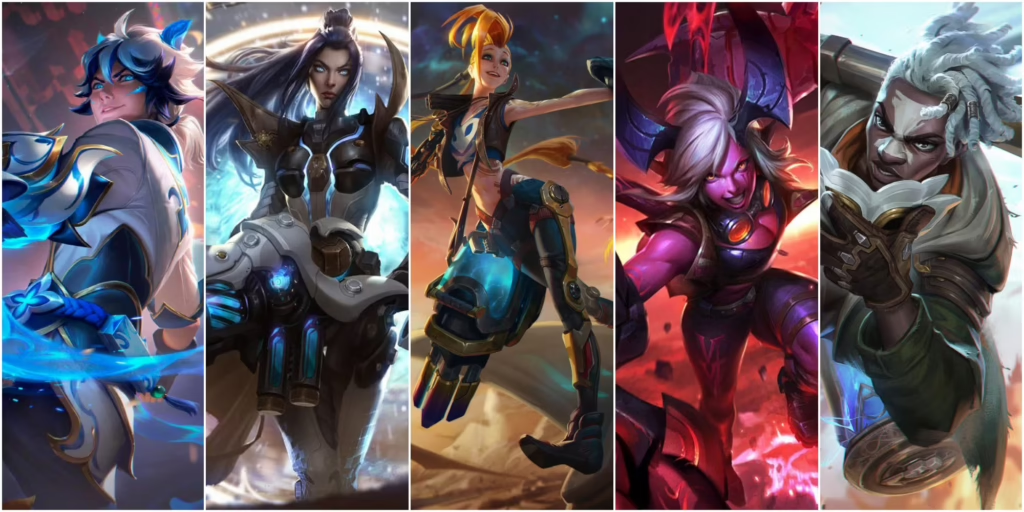
What makes a champion strong for ranked?
Strong ranked picks usually offer:
- Reliable crowd control
- Objective control presence
- Scaling potential
- Clear win conditions
Champions that can influence teamfights and secure dragons or Baron consistently tend to perform better over time.
Recommended champions by role
Top Lane:
- Darius
- Malphite
- Sett
Jungle:
- Amumu
- Warwick
- Hecarim
Mid Lane:
- Annie
- Veigar
- Viktor
ADC:
- Jinx
- Miss Fortune
- Ashe
Support:
- Leona
- Nautilus
- Lulu
These selections remain stable across patches and reduce volatility in solo queue.
How to build your champion pool effectively
Trying to master the entire champions league of legends ecosystem is unrealistic. Instead, competitive improvement comes from narrowing focus.
The 3-champion method
Many high-ELO players recommend a simple system:
- Choose one main champion
- Select one backup for difficult matchups
- Pick one counter or comfort alternative
This approach improves muscle memory and matchup familiarity much faster than constantly swapping champions.
Balancing comfort and meta
While meta picks are important, comfort matters more. A player who masters one champion deeply will outperform someone who chases patch notes every week.
Consistency in your personal pool reduces stress and increases win rate stability over dozens of matches.
Why performance matters as much as champion choice
No matter which league of legends champs you select, performance depends heavily on responsiveness and stability. Even the strongest champion loses value if you experience ping spikes during teamfights.
League is a real-time strategy game where milliseconds matter. Delayed skillshots, input lag, and packet loss can ruin engages or cause missed last-hits.
That is why many competitive players use ExitLag. Its real-time optimization technology improves routing stability, reduces latency spikes, and maintains consistent packet delivery. For a game built on precision mechanics and fast reactions, stable connection quality directly supports better gameplay.
Choosing the right League of Legends champions is only part of climbing. Ensuring your connection performs at the same level as your mechanics allows you to execute combos, secure objectives, and outplay opponents without technical interruptions.
Champion Roles, Playstyles, and Strategic Identity
Understanding the depth of the League roster goes beyond reading a list of league of legends champions. To truly improve, you must understand how champions function inside structured roles and how those roles shape win conditions.
Champion Roles Explained
Every match is divided into five primary roles:
- Top Lane – Durable fighters or tanks that control side pressure
- Jungle – Map controllers who secure objectives and influence lanes
- Mid Lane – Burst mages or assassins with roaming impact
- ADC (Bot Carry) – Primary late-game damage dealers
- Support – Utility, engage, or protection specialists
When players search for champ league of legends by role, they are often trying to determine where a champion fits in team composition. A well-balanced draft includes frontline durability, sustained damage, crowd control, and scaling potential.
Matchups and Counterplay
Each matchup matters. Even within the massive league of legends all champions pool, some champions are naturally strong against others.
For example:
- Tanks often counter assassins in extended fights
- Poke mages can pressure short-range champions
- Hard engage supports punish immobile ADCs
Learning counters gives you an edge before the game even starts.
Champion Difficulty and Learning Curve
With more than 170 characters in the all the champions in league of legends ecosystem, not every pick has the same mechanical demand.
Champion Difficulty Categories
Champions are generally perceived in three difficulty tiers:
- Easy – Straightforward kits (Garen, Annie, Ashe)
- Medium – Require positioning and timing (Orianna, Jinx, Jarvan IV)
- Hard – High mechanical ceiling (Azir, Lee Sin, Yasuo)
Mastering an easier champion often accelerates macro understanding before transitioning to complex mechanics.
Difficulty by Role Table
| Role | Easy | Medium | Hard |
| Top | Garen | Darius | Fiora |
| Jungle | Amumu | Hecarim | Lee Sin |
| Mid | Annie | Viktor | Azir |
| ADC | Ashe | Jinx | Aphelios |
| Support | Leona | Thresh | Bard |
This structured view helps narrow your focus instead of trying to master the entire league of legends champion list at once.
Building an Effective Champion Pool
Many players attempt to explore the full all league of legends champions roster. However, improvement comes from specialization.
The 3-Champion Pool System
A proven improvement method:
- Select one primary champion
- Choose one backup option
- Add one situational counter pick
This strategy increases consistency and familiarity in ranked play.
Flex Picks and Draft Adaptation
Some champions can be played in multiple roles (for example, Sett or Seraphine). These flexible picks provide draft advantages and make you less predictable.
Balancing comfort and adaptability is key to long-term ranked success.

Champion Builds, Runes, and Patch Awareness
Understanding how to build champions correctly is just as important as selecting them.
Core Build Awareness
Strong players regularly adjust:
- Item builds based on matchup
- Rune pages based on lane difficulty
- Skill order depending on early or scaling focus
Patch updates frequently shift the power level of different champions in the league of legends champions list, so staying informed prevents falling behind the meta.
Win Rate vs. Mastery
A champion with a high win rate does not guarantee success. Comfort and familiarity often outperform meta chasing.
Players who deeply understand their main champion typically perform better than those who switch every patch.
Champion Select Strategy in Ranked
Draft phase decisions heavily influence outcomes.
Ban Strategy
Banning high-impact or frustrating champions can simplify the game plan. Consider banning:
- Strong meta junglers
- Hard lane counters
- Snowball-heavy assassins
This reduces volatility in ranked matches.
Team Composition Balance
A good composition generally includes:
- At least one frontline
- Reliable crowd control
- Consistent damage source
- Scaling option for late game
Ignoring composition synergy can undermine even mechanically strong players.
Champion Mastery and Performance Optimization
True improvement comes from repetition, review, and execution precision.
How to Improve on a Champion
- Review replays after losses
- Identify power spike timings
- Practice combos in training mode
- Track matchup weaknesses
Deep mastery converts knowledge into instinct.
Common Learning Mistakes
- Switching champions too frequently
- Ignoring wave management
- Fighting without item advantage
- Overcommitting during cooldown windows
Correcting these errors produces faster progress than expanding your pool too early.
Champion Performance and Connection Stability
Even the strongest picks in the league of legends champions list require precise execution. League of Legends is a real-time strategy game where milliseconds decide fights.
Missed skillshots, delayed flashes, or input lag during teamfights can completely change outcomes.
ExitLag improves connection stability through real-time optimization, traffic shaping, and multi-route packet delivery. By reducing latency spikes and maintaining consistent routing, players can execute combos, secure objectives, and respond instantly during high-pressure moments.
Choosing the right champion from the massive League roster is only half the climb. Stable performance ensures your mechanics and decision-making translate into real victories on the Rift.
All game images used in this blog belong to Riot Games. They are used for informational/educational purposes only and do not imply endorsement or affiliation with the rights holders.
Got questions or want to connect with other players? Join the conversation at the ExitLag Forum!