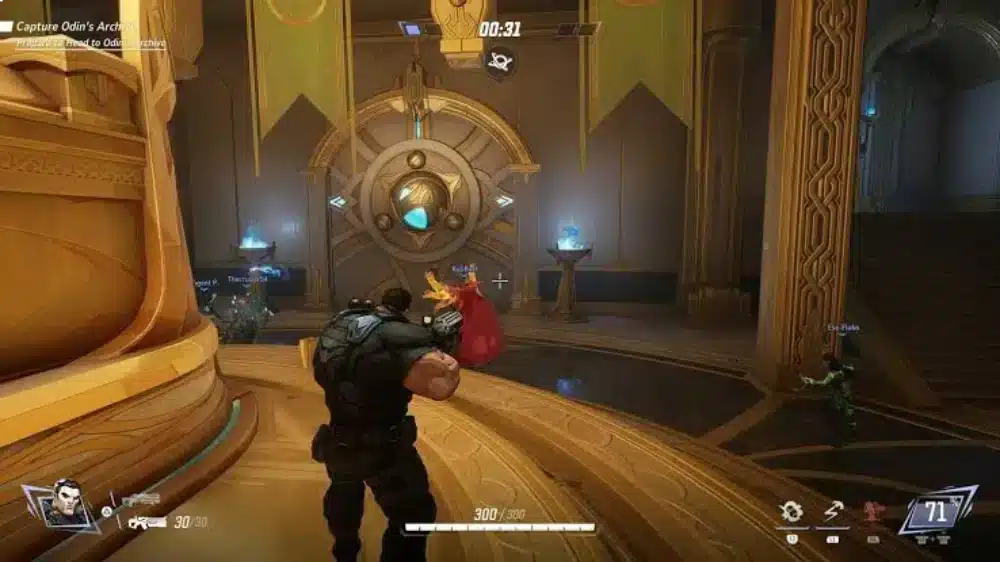
The arrival of new X-Men characters can completely change the way players approach team fights in Marvel Rivals. Among the names connected to future content, Marvel Rivals hero: Forge has attracted attention because of his unusual combination of technology, mutant abilities, and battlefield utility. Rather than relying only on raw damage, Forge is expected to bring a more tactical identity to matches.
For players who enjoy heroes that influence a fight through positioning and utility, Marvel Rivals hero: Forge is particularly interesting. His comic-book background already gives him a strong connection to advanced inventions and mutant technology. If you are also struggling with unstable matches while testing new heroes, the Marvel Rivals ping spiking guide can help explain why sudden latency increases can interfere with ability timing.
At the same time, Marvel Rivals hero: Forge should currently be approached with some caution. Available information about his potential inclusion comes from leaks and datamined material rather than a complete official hero reveal. Therefore, names, numbers, cooldowns, animations, and even some mechanics may change before any official release.

Who is Forge in Marvel?
Forge is one of the X-Men’s most recognizable inventors. In Marvel Comics, his mutant ability is closely connected to technological understanding and creation. Marvel describes him as a mutant inventor whose powers allow him to build and develop advanced technology. He has also worked extensively with the X-Men and X-Force.
That background makes Forge a natural fit for a game where every hero needs a recognizable combat identity. Instead of simply translating a traditional superpower into attacks, Marvel Rivals can use his engineering expertise as the foundation for gameplay mechanics.
Moreover, Forge has a connection to both technology and mysticism. Marvel has previously highlighted that he studied magic under the shaman Naze, creating an unusual combination that separates him from conventional technology-focused characters.
What makes Forge different?
The main attraction of Forge is his potential versatility. A character capable of analyzing structures, modifying technology, and interacting with unusual dimensions could potentially provide utility that changes depending on the situation.
That means players should not necessarily expect a traditional damage-focused character. Instead, Forge could reward players who understand positioning, timing, cooldown management, and team coordination.
Some of the concepts associated with his leaked kit include:
- Structural analysis and battlefield interaction.
- Creative technological modification.
- Spirit Realm-related mechanics.
- A powerful modification ability connected to his mutant potential.
Because these details originate from unofficial information, however, they should not be treated as final statistics.
Forge Abilities, How to Play, Best Team Compositions and Abilities in Marvel Rivals
Understanding the rumored kit is important before thinking about advanced strategies and learning how to play Forge effectively. However, players should separate confirmed character information from leaked gameplay details. The latter can change significantly during development or before an official release.
Forge abilities and their possible role
The leaked information surrounding Forge suggests a Strategist-style design. That would place him in a category where supporting teammates and controlling combat flow are just as important as dealing damage.
Abilities reportedly associated with Forge include Structural Analysis, Creative Modification, Spirit Realm Walking, and Limitation-Breaking Modification. The exact functions of these skills have not been officially detailed in a complete playable kit.
Abilities in Marvel Rivals could make Forge particularly interesting because Structural Analysis suggests an interaction with objects, defenses, or environmental elements. In a hero shooter, such a mechanic could potentially help Forge identify weaknesses or interact with battlefield structures.
Creative Modification sounds more directly connected to his inventor identity. Depending on its final implementation, it could involve modifying an existing object, creating a temporary effect, or improving an ally’s combat potential.
Spirit Realm Walking introduces another layer. Since Forge has a history involving mysticism in Marvel Comics, this concept could connect his technological gameplay with his spiritual background.
Finally, Limitation-Breaking Modification sounds like it could function as a high-impact ability or ultimate. However, without an official ability demonstration, any detailed description would remain speculation.
How Forge could influence a match
If his leaked concept remains close to the final version, Forge could influence fights without always being the character at the center of the screen.
This distinction matters. A Strategist does not necessarily need to secure the most eliminations to have an impact. Instead, the character can create opportunities that allow teammates to deal damage more safely.
For example, a well-positioned Forge could potentially:
- Analyze the battlefield before a team engages.
- Use utility to create an advantage for an ally.
- Modify or interact with technology during a fight.
- Help teammates maintain pressure.
- Use his strongest ability to change the conditions of a team fight.
This type of gameplay would reward awareness more than mechanical aggression.
How to play Forge effectively in Marvel Rivals
If Forge eventually enters the playable roster with a utility-heavy kit, players will need to approach him differently from straightforward Duelists. His value would likely come from making smart decisions before and during engagements.
Positioning and timing matter
First, positioning should be one of the most important considerations. A utility-oriented hero generally benefits from staying close enough to support teammates while remaining far enough from danger to continue contributing.
Therefore, rushing into the enemy team simply because an opportunity appears may not always be the correct approach. Forge’s potential value could come from observing the fight and responding to what happens next.
For example, if an enemy commits several cooldowns, Forge could potentially capitalize on the opening created by that commitment. Similarly, if an ally is preparing an important ultimate, his utility could become more valuable when timed around that play.
Connection quality also matters here. Delayed abilities, packet loss, or sudden ping spikes can make precise timing much harder. Players experiencing these problems can also check the Marvel Rivals packet loss guide before assuming that the issue comes from the hero or their mechanical execution.
Managing utility during team fights
Another important factor would be cooldown management. Support-oriented characters often become significantly less effective when their important abilities are used without a clear purpose.
Instead, players should think about what the team is trying to accomplish.
A simple decision process could look like this:
- Identify which teammate is creating the next engagement.
- Check whether the enemy has already used important defensive tools.
- Save major utility for moments where it can change the fight.
- Avoid using every ability simultaneously unless the situation requires it.
- Reposition after the engagement instead of remaining in the same vulnerable location.
Consequently, Forge could become a character who rewards patience. Players who constantly search for the next opportunity instead of forcing one may get more value from his toolkit.
Best team compositions for Forge
Team composition would probably be another important part of Forge’s identity. Understanding Best Team Compositions can help players identify which allies may benefit most from his utility and technological manipulation. If his final kit focuses on support and controlled engagements, he could fit naturally into compositions that benefit from additional utility and coordinated team fights.
X-Men-focused compositions
One obvious direction would be an X-Men-oriented lineup. Forge already has strong comic-book connections to the X-Men, making characters such as Wolverine and Storm natural thematic partners.
A composition built around durable frontline pressure could allow Forge to focus on utility while other heroes create space.
The potential structure could include:
| Team role | Example hero | Purpose |
| Vanguard | Magneto | Frontline pressure and protection |
| Duelist | Wolverine | Close-range aggression |
| Duelist | Storm | Ranged pressure and mobility |
| Strategist | Forge | Utility and support |
| Strategist | Luna Snow | Healing and sustained team support |
| Flex | Emma Frost | Additional control and frontline presence |
However, this should be viewed as a conceptual composition rather than a confirmed meta recommendation. Forge’s final abilities could dramatically change which characters complement him.
Pairing Forge with aggressive heroes
Forge could also work well alongside heroes who frequently create opportunities for their teammates.
Aggressive Duelists can benefit from utility because their success often depends on entering fights at the correct moment. If Forge can provide support or modify the battlefield, those heroes may have more opportunities to commit without immediately losing momentum.
For example, a fast-moving character could engage while Forge remains behind the frontline. The goal would not necessarily be to make Forge the star of the fight, but rather to help the aggressive hero maintain pressure.
This type of synergy would make communication especially valuable.
Marvel Rivals hero: Forge and connection performance
Fast-paced hero shooters depend on more than character knowledge. Even when a player understands a hero’s abilities perfectly, unstable network performance can interfere with the timing of those abilities.
That is particularly relevant for a potential Strategist like Forge. Utility skills often require accurate timing, positioning, and communication. A delayed input can mean that an ability activates after the opportunity has already disappeared.
Why ping and packet loss matter
Ping represents the time required for information to travel between your device and the game server and return. Higher latency can make actions feel delayed.
Packet loss is different. It occurs when some data fails to reach its destination. In Marvel Rivals, this can appear through inconsistent movement, delayed abilities, rubberbanding, or other connection problems.
Jitter can create another issue because it represents variation in latency. A stable connection with moderately higher latency can sometimes feel more predictable than a connection that constantly jumps between different values.
For Forge, consistency could be especially important if his eventual kit requires precise utility timing.
How ExitLag can fit into Forge gameplay
ExitLag is designed to optimize network routing for supported games. Instead of changing the game’s mechanics, it focuses on how gaming data travels between the player’s device and the server.
For Marvel Rivals players, this can be relevant when poor routing contributes to latency, packet loss, or unstable connections. ExitLag’s technology uses route optimization and Multipath Technology to help maintain a more stable path for game traffic.
The practical setup is straightforward:
- Open ExitLag and search for Marvel Rivals.
- Select the game and allow the software to analyze available routes.
- Choose the automatic optimization option or review available routes manually.
- Start Marvel Rivals while the optimization is active.
- Compare connection stability before and after optimization.
Importantly, ExitLag is not a VPN. It is designed specifically around gaming traffic and route optimization.
Tips for getting ready to play Forge
Because Forge’s final kit has not been fully confirmed, preparation should focus on transferable skills rather than memorizing leaked statistics.
Learn the fundamentals first
Players waiting for Forge can already improve several skills that would remain useful regardless of his final design.
Practice reading team fights instead of focusing exclusively on eliminations. Learn when teammates are likely to engage, identify enemy cooldowns, and pay attention to the safest locations from which to support your team.
Additionally, learn the maps. Understanding corners, high ground, escape routes, and common engagement areas can make a major difference for a character whose effectiveness may depend on positioning.
Build a stable gameplay environment
Before testing a new hero, eliminate avoidable technical problems.
Check these areas first:
- Use a stable connection whenever possible.
- Close unnecessary applications that consume network bandwidth.
- Monitor ping and packet loss during matches.
- Keep graphics settings appropriate for your hardware.
- Test different server or routing options when connection quality changes.
This is particularly useful when distinguishing network problems from performance problems. FPS drops and connection instability can sometimes feel similar during chaotic team fights, but they require different solutions.
Marvel Rivals hero: Forge release expectations and what comes next
At the moment, players should distinguish between Forge’s established Marvel identity and his unconfirmed Marvel Rivals implementation. Marvel’s official material clearly establishes Forge as a mutant inventor connected to the X-Men, while current Marvel Rivals information about his playable abilities comes from leaked or datamined material.
That distinction is important because leaked information can change before release. Ability names may remain, but mechanics, cooldowns, damage values, health, animations, role classification, and team interactions can all be adjusted.
Therefore, players should avoid building a complete competitive strategy around unofficial numbers. Instead, the safest approach is to use the available information as an indication of the character’s possible direction.
What players should watch for
When an official Forge reveal eventually arrives, several details will be particularly important:
- His confirmed role.
- The exact functionality of Structural Analysis.
- How Creative Modification interacts with allies or the environment.
- Whether Spirit Realm Walking provides mobility, utility, or another effect.
- The purpose and power level of Limitation-Breaking Modification.
- His Team-Up interactions with other X-Men characters.
- His final cooldowns, range, health, and resource requirements.
These details will determine whether Forge becomes primarily a support specialist, utility controller, hybrid Strategist, or another type of hero entirely.

Why Forge could be an interesting addition
Forge brings something distinctive to the Marvel universe. His identity is not built around simply being stronger than everyone else. Instead, his defining trait is the ability to understand problems and create solutions.
That concept translates naturally into a tactical multiplayer game. A successful Forge player could potentially be rewarded for planning ahead, adapting to the battlefield, and helping teammates make better plays.
At the same time, the character’s connection to technology and mysticism gives the developers plenty of room to create visual and mechanical effects that feel different from existing heroes.
Ultimately, Marvel Rivals hero: Forge remains a character to watch rather than a fully confirmed competitive option. His comic history makes him a natural fit for the X-Men side of the roster, while the leaked kit points toward a Strategist built around technology, utility, and battlefield manipulation. Until an official reveal provides the definitive abilities and numbers, players should treat leaked details as provisional and focus on the fundamentals that will matter regardless: positioning, timing, team coordination, and a stable connection.
Got questions or want to connect with other players? Join the conversation at the ExitLag Forum!