
Marvel Rivals pick rates are one of the easiest ways to understand which heroes players currently prefer across Quickplay and Competitive matches. However, popularity alone does not tell the full story, especially in a game where Team-Ups, balance changes, ranks, and player skill can dramatically affect results.
Tracking marvel rivals pick rates can still provide valuable information about the evolving meta. A hero appearing frequently may be easy to use, extremely flexible, recently buffed, or simply one of the most popular characters in the Marvel universe.
So, what are marvel rivals pick rates? They measure how frequently a particular hero is selected within a specific set of matches. The percentage can change depending on platform, game mode, rank, role, season, and update, which means there is no single universal number that represents every Marvel Rivals player.
NetEase Games provides an official Hero Hot List that separates pick rate from win rate while allowing players to filter results by PC or console, Quickplay or Competitive, role, and rank. This distinction is essential when evaluating the current hero landscape.
Season 9.5 also makes these statistics especially interesting. The update launched on August 7, 2026 and added The Hood to the roster, while subsequent patches continued adjusting and fixing heroes.
As a result, marvel rivals character pick rate data can move quickly. New heroes attract experimentation, balance updates change priorities, and different competitive ranks often develop their own preferred compositions.
Marvel Rivals Pick Rates: How Do They Work?
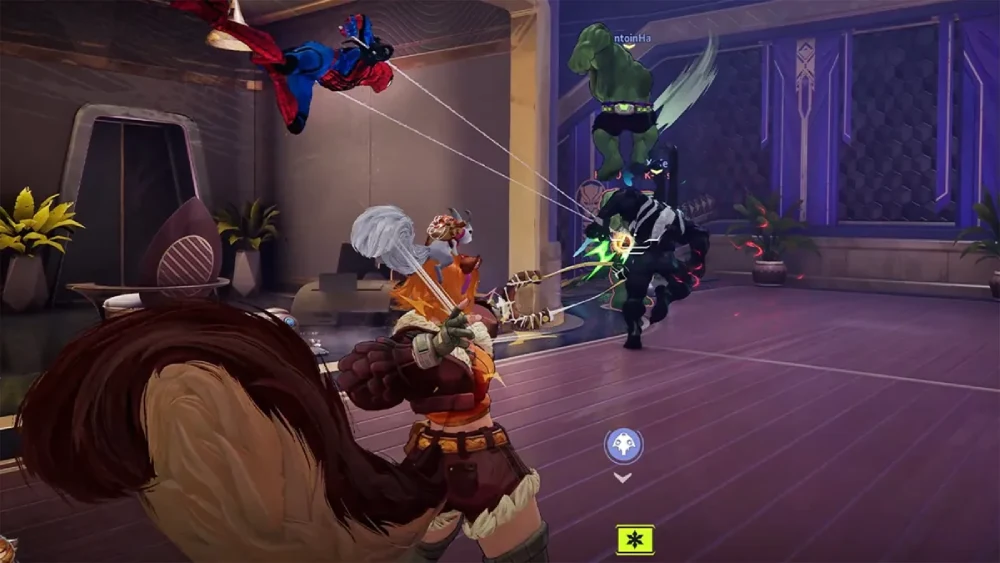
Understanding marvel rivals pick rates starts with knowing exactly what the statistic measures.
What does pick rate mean in Marvel Rivals?
A hero’s pick rate represents how often that character appears within the matches included in a data set.
For example, imagine a hero is selected far more frequently than another character during Competitive matches. That tells you the hero is popular within that particular environment, but it does not automatically explain why.
Several factors can influence the result:
- Current hero balance.
- Difficulty and mechanical requirements.
- Team-Up compatibility.
- Map design.
- Rank.
- Role demand.
- Recent buffs or nerfs.
- New-character curiosity.
- General popularity of the Marvel character.
This is why the official Hero Hot List includes several filters rather than treating every match as identical. Players can separate PC from console and Quickplay from Competitive while also narrowing results by rank and role.
That makes marvel rivals pick rate much more useful when it is viewed in context.
A hero dominating Quickplay statistics, for example, may not appear nearly as frequently in high-level Competitive matches.
Pick rate vs. win rate
Pick rate and win rate measure different things.
Pick rate measures popularity. Win rate measures how frequently a hero wins within the matches represented by the statistic.
That difference sounds simple, but it prevents one of the most common mistakes when reading Marvel Rivals statistics.
A hero can have:
- High pick rate and high win rate.
- High pick rate and low win rate.
- Low pick rate and high win rate.
- Low pick rate and low win rate.
Each combination can suggest something different about the hero.
A very popular character with a mediocre win rate could simply attract inexperienced players. Meanwhile, a difficult specialist may have a low pick rate but perform exceptionally well when experienced players choose them.
Therefore, looking at pick rate marvel rivals data without checking win rate can create a misleading picture of the meta.
Marvel Rivals Pick Rate by Role
Marvel Rivals divides heroes into Vanguard, Duelist, and Strategist roles. Each role has different responsibilities, so their selection patterns should not always be compared directly.
Vanguard popularity and team composition
Vanguards generally operate at the front of a fight.
They create space, absorb pressure, protect teammates, and force opponents to respond to their positioning. Because of those responsibilities, Vanguard popularity often depends heavily on team composition.
A Vanguard who works in many different compositions may attract a higher marvel rivals pick rate than a more specialized alternative.
Team-Ups can also influence that decision.
If a Vanguard enables an especially useful Team-Up or pairs naturally with a popular Duelist or Strategist, players may choose that hero more frequently even without a direct buff.
Map design matters as well.
Open spaces, narrow objectives, elevated positions, and destructible environments can all change which frontline abilities feel most useful.
Duelist and Strategist pick-rate trends
Duelists often receive enormous attention because they are designed around dealing damage and securing eliminations.
They can also appeal strongly to players who enjoy mechanically demanding heroes.
However, high Duelist popularity does not always translate into superior match outcomes.
A character can dominate marvel rivals character pick rate charts because they are exciting to play while still requiring strong aim, positioning, or ability management to generate consistent value.
Strategists follow another pattern.
Healing, utility, crowd control, mobility, and defensive tools can make certain Strategists extremely valuable regardless of their raw damage.
Their pick rates may also increase when a particular Vanguard or Duelist becomes popular because players want complementary support.
For that reason, role context is essential when comparing:
- marvel rivals pick rate
- marvel rivals character pick rate
- pick rate marvel rivals
Raw popularity does not always reveal why a hero is being selected.
Marvel Rivals Character Pick Rate: What Makes a Hero Popular?
The most popular hero does not necessarily need to be the most powerful one.
Many factors can increase a character’s selection frequency.
Accessibility can drive high pick rates
Some heroes are easier to understand immediately.
A straightforward primary attack, recognizable mobility ability, and clear Ultimate can make a character attractive to both new and experienced players.
That accessibility can significantly influence marvel rivals pick rates.
Characters with flexible kits also have an advantage. If a hero performs reasonably well across multiple maps and team compositions, players have fewer reasons to switch away from them.
Meanwhile, extremely specialized characters may be powerful only when the right conditions appear.
This helps explain why marvel rivals character pick rate should never be interpreted purely as a tier list.
Popularity can reflect convenience as much as power.
Marvel popularity matters too
Marvel Rivals does not feature anonymous competitive characters.
Its roster includes heroes and villains that players may already know from comics, movies, television series, and other Marvel games.
That familiarity matters.
Players may choose a favorite superhero regardless of whether that character is currently considered optimal.
A recognizable character can therefore maintain strong pick rate marvel rivals numbers even after balance changes.
This creates an unusual dynamic compared with competitive shooters built around completely original casts.
The character fantasy itself becomes part of hero selection.
New heroes temporarily change the numbers
Season 9.5 provides a clear example.
The Hood joined Marvel Rivals when Season 9.5 launched on August 7, 2026. NetEase officially introduced him as the update’s new hero alongside additional lore, events, and cosmetics.
New releases naturally generate experimentation.
Players want to understand:
- How the abilities work.
- Which heroes counter the newcomer.
- Which Team-Ups are strongest.
- How the hero performs on different maps.
- Whether the character fits Competitive play.
Consequently, early marvel rivals pick rates after a hero launch can be inflated by curiosity.
Longer-term data often gives a clearer indication of whether the character has become a permanent part of the meta.
Pick Rate Marvel Rivals: Why Some Heroes Are Less Popular
Low pick rate can look negative at first.
However, there are several reasons a character may appear less frequently without necessarily being weak.
Difficult heroes attract fewer players
Mechanical difficulty is one of the clearest reasons.
Some characters demand precise aim, complicated movement, strong cooldown management, or detailed map knowledge.
Others require players to understand exactly when to enter or leave a fight.
Those requirements can reduce marvel rivals pick rate even when skilled players achieve excellent results.
A mechanically challenging character may therefore become much more common at higher ranks than in casual matches.
The opposite can happen with accessible heroes.
Easy-to-understand abilities can increase selection frequency throughout the player base, even if the character becomes less effective against coordinated high-rank opponents.
Situational heroes still have value
Some heroes are designed to excel under particular conditions.
They may work especially well on specific maps, alongside specific teammates, or against certain enemy compositions.
That can produce a lower marvel rivals character pick rate across all matches while leaving the hero extremely effective in the correct situation.
This is where win-rate context becomes particularly important.
A specialist with a relatively small but experienced player population can post strong results without becoming a universal pick.
Low popularity should therefore lead to another question:
Why is the hero unpopular?
That answer is often more useful than the percentage itself.
How Season 9.5 Changes Marvel Rivals Pick Rates
Season 9.5 arrived on August 7 and introduced several changes that can influence hero selection.
The Hood enters the roster
The Hood was the headline hero addition.
NetEase described his arrival as part of Season 9.5 alongside new lore and seasonal content.
Every new hero creates pressure on the existing roster.
Players experimenting with The Hood may temporarily stop using another character. Opponents may switch heroes to test potential counters, while teammates may select characters that complement his abilities.
This means marvel rivals pick rates after August 7 need to be interpreted with the new-hero effect in mind.
An apparent decline for another hero does not always mean that character suddenly became weaker.
They may simply be losing temporary attention to the latest addition.
Balance adjustments reshape the meta
Season updates can alter pick rates even more dramatically when they change hero power.
The Season 9.5 balance update targeted several heroes, with NetEase highlighting adjustments involving characters such as Wolverine, Moon Knight, and Peni Parker. The official news feed described the update as another shift in the tactical landscape.
Even relatively small adjustments can change player behavior.
A buff can make an overlooked hero worth reconsidering. A nerf can reduce confidence in a popular choice. Meanwhile, adjustments to Team-Ups can affect multiple heroes at once.
Because of this, marvel rivals pick rate data is best treated as a snapshot rather than a permanent ranking.
Marvel Rivals Pick Rates by Rank
Rank is one of the most important filters when analyzing hero popularity.
A character that dominates lower ranks may become less common as players improve.
Why lower and higher ranks can look different
Lower-ranked matches often reward straightforward abilities and independent impact.
Players may have less coordinated positioning, fewer planned Team-Ups, and weaker communication.
At higher levels, those conditions change.
Teams become better at:
- Punishing poor positioning.
- Focusing priority targets.
- Combining Ultimate abilities.
- Managing cooldowns.
- Using Team-Ups efficiently.
- Counter-picking specific threats.
That can dramatically alter marvel rivals character pick rate patterns.
A hero who easily punishes inexperienced players may struggle against coordinated teams.
Meanwhile, a character requiring strong teamwork can become more valuable as rank increases.
Competitive vs. Quickplay matters
Quickplay and Competitive should also be treated separately.
The official Hero Hot List recognizes this distinction by allowing users to filter between the two modes.
Quickplay players may experiment with unfamiliar characters, complete challenges, test newly released heroes, or simply choose favorites.
Competitive players usually have stronger incentives to select heroes they believe will improve the team’s chances of winning.
As a result, a pick rate marvel rivals statistic from Quickplay should not automatically be used to describe the Competitive meta.
Always check the mode before interpreting the number.
Marvel Rivals Pick Rate vs. Win Rate: Which Matters More?
Neither metric should be viewed alone.
The most useful analysis combines both statistics.
How to read pick rate and win rate together
Here is a simple framework:
| Pick Rate | Win Rate | Possible Interpretation |
| High | High | Popular hero delivering strong results |
| High | Low | Frequently selected but difficult, overused, or struggling |
| Low | High | Specialist pick or strong hero with a smaller player base |
| Low | Low | Hero may be difficult, situational, or currently underperforming |
These categories are not automatic judgments.
They simply provide a starting point for understanding marvel rivals pick rates.
For example, high pick rate plus high win rate could indicate a genuinely dominant hero. However, rank, sample size, and recent patches still matter before calling that character overpowered.
Likewise, low pick rate plus high win rate might indicate a hidden gem.
It could also mean the hero is primarily being played by dedicated specialists.
Sample size changes the interpretation
Statistics become more reliable when enough matches are included.
A small number of games can produce dramatic percentages that do not represent the wider player base.
New heroes are especially vulnerable to this effect.
During their first days, both pick rate and win rate can fluctuate as players learn abilities and opponents discover counters.
For that reason, marvel rivals pick rate should be viewed alongside:
- Update date.
- Number of matches represented.
- Platform.
- Rank.
- Game mode.
- Hero role.
- Recent balance changes.
The more context available, the more useful the statistic becomes.
How Team-Ups Affect Marvel Rivals Character Pick Rate
Marvel Rivals’ Team-Up system gives hero popularity another layer.
A character does not exist in isolation.
Strong synergies can increase two pick rates at once
Suppose one hero becomes extremely popular after a balance update.
If another character unlocks an especially useful Team-Up with that hero, both characters may appear more frequently.
This can create a chain reaction throughout marvel rivals pick rates.
Players may start selecting a partner because the Team-Up is strong, causing opponents to choose counters. Those counters may then encourage another support or frontline choice.
The result is a shifting network of hero relationships rather than a simple ranking from strongest to weakest.
That is why marvel rivals character pick rate analysis needs to consider compositions.
One hero’s popularity can indirectly increase another’s.
Balance changes can disrupt established combinations
NetEase regularly adjusts heroes and Team-Up interactions as the game evolves.
Season 9.5 itself included hero changes, while later August patches continued fixing hero-related issues. The August 20 patch, for example, addressed problems involving Loki and Hela.
Bug fixes can matter too.
If a hero or Team-Up is behaving incorrectly, resolving that issue can affect how reliably players use the character.
Therefore, watching official patch notes is one of the best ways to anticipate shifts in pick rate marvel rivals statistics.
How to Use Marvel Rivals Pick Rates to Choose a Main

Pick-rate data can help you choose a hero, but copying the most popular character is rarely the best strategy.
Start with your preferred role
First, decide which role matches your strengths.
Vanguard players need to be comfortable controlling space and absorbing pressure.
Duelists usually need strong damage execution and target selection.
Strategists must track allies, enemies, cooldowns, and positioning while providing support.
Once you know your role, use marvel rivals pick rates as supporting information rather than the final decision.
High popularity can indicate flexibility, but a less common character may fit your skills better.
Use a simple selection process
Follow this approach:
- Choose the role you enjoy most.
- Identify three heroes whose playstyles appeal to you.
- Check their pick rate and win rate within your rank and mode.
- Review recent balance notes for changes.
- Learn their strongest maps and Team-Ups.
- Practice each hero across multiple matches.
- Keep the character that produces your most consistent performance.
Personal results matter.
A statistically popular hero provides no advantage if you cannot use the kit effectively.
Similarly, a lower marvel rivals character pick rate should not stop you from mastering a hero that matches your mechanics and decision-making.
How ExitLag Can Help in Marvel Rivals Matches
Hero selection matters, but network performance can affect whether you execute your strategy correctly.
Connection stability during competitive games
Marvel Rivals is a fast team-based PvP shooter where timing can determine whether an ability connects, an escape succeeds, or an Ultimate changes a team fight.
ExitLag is designed to optimize connections for supported games on PC and Mobile.
Its Real-Time Optimization technology evaluates network routes while Multipath Connection can use multiple routes to improve connection stability.
For Marvel Rivals players on PC, this can help reduce network-related problems such as unstable routing, packet loss, and sudden latency variation.
That allows you to focus more on positioning, aim, cooldown management, and teamwork.
Performance matters beyond statistics
Following marvel rivals pick rates can help identify current trends, but statistics cannot compensate for an unstable connection.
A meta Duelist still needs responsive ability activation.
A Vanguard must react quickly when an opponent pushes.
A Strategist cannot afford severe delays during a crucial healing or defensive ability.
ExitLag’s route optimization is designed to create a more stable path between supported PC games and their servers, helping players maintain a more consistent online experience.
For competitive players, that consistency can be just as important as choosing the right hero.
Marvel Rivals Pick Rates: What Players Should Watch Next
Season 9.5 shows exactly why pick-rate rankings never stay fixed forever.
New patches can change hero popularity quickly
NetEase launched Season 9.5 on August 7, 2026, followed by another patch on August 13 and the August 20 update.
The August 20 patch did not introduce broad balance changes, but it continued correcting hero-specific problems involving Loki and Hela.
Future balance updates may produce larger shifts.
When buffs or nerfs arrive, players often react immediately, which means pick-rate movement can begin before enough matches exist to reveal whether the change actually improved win rates.
That is why marvel rivals pick rate trends are often most valuable when observed over time.
Where to check updated Marvel Rivals statistics
The official Marvel Rivals Hero Hot List is the most appropriate starting point.
It includes filters for:
- PC and console.
- Quickplay and Competitive.
- Hero role.
- Rank.
- Pick rate.
- Win rate.
Those filters make it possible to answer more useful questions than simply asking which hero has the highest overall pick rate marvel rivals players can find.
Instead, you can check which heroes are popular in the exact environment that matters to you.
A Competitive PC player at one rank may see a completely different picture from a console Quickplay player.
That context is what turns raw numbers into useful information.
Ultimately, marvel rivals pick rates are best used as a guide to the current meta rather than a rulebook. Pick rate reveals popularity, win rate adds performance context, and filters such as rank, platform, and mode explain why those numbers can differ so dramatically.
Season 9.5, The Hood’s arrival, ongoing patches, and changing Team-Ups ensure that marvel rivals character pick rate statistics will continue evolving. Players who combine those numbers with their own performance, team composition, and recent balance information will get far more value from the data.
And while choosing the right hero can improve your chances, smooth online performance still matters in every fight. ExitLag can help supported PC players optimize routing and connection stability, so the decisions inspired by marvel rivals pick rates can translate more consistently into actual gameplay.
All game images used in this blog belong to NetEase Games and Marvel Games. They are used for informational/educational purposes only and do not imply endorsement or affiliation with the rights holders.
Got questions or want to connect with other players? Join the conversation at the ExitLag Forum!