Midgar is one of the most recognizable locations in Final Fantasy history, a massive industrial metropolis powered by Mako energy and controlled by the Shinra Electric Power Company. Its enormous steel plate, glowing reactors, crowded slums, and towering corporate headquarters establish the atmosphere of Final Fantasy VII from the opening minutes.
In Midgar, technology and prosperity exist alongside extreme inequality. Shinra extracts Mako, described as the lifeblood of the planet, to power the city and strengthen its influence, while Avalanche fights against the corporation and its reactors. This conflict brings Cloud Strife into a struggle that quickly becomes much larger than a mercenary job.
So, what exactly is Midgar? It is the central city at the beginning of Final Fantasy VII and the primary setting of Final Fantasy VII Remake, divided into eight sectors surrounding Shinra Headquarters. Understanding its plates, slums, reactors, districts, and social structure helps explain not only FF7’s opening, but also many of the game’s environmental and political themes.
What Is Midgar in Final Fantasy VII?
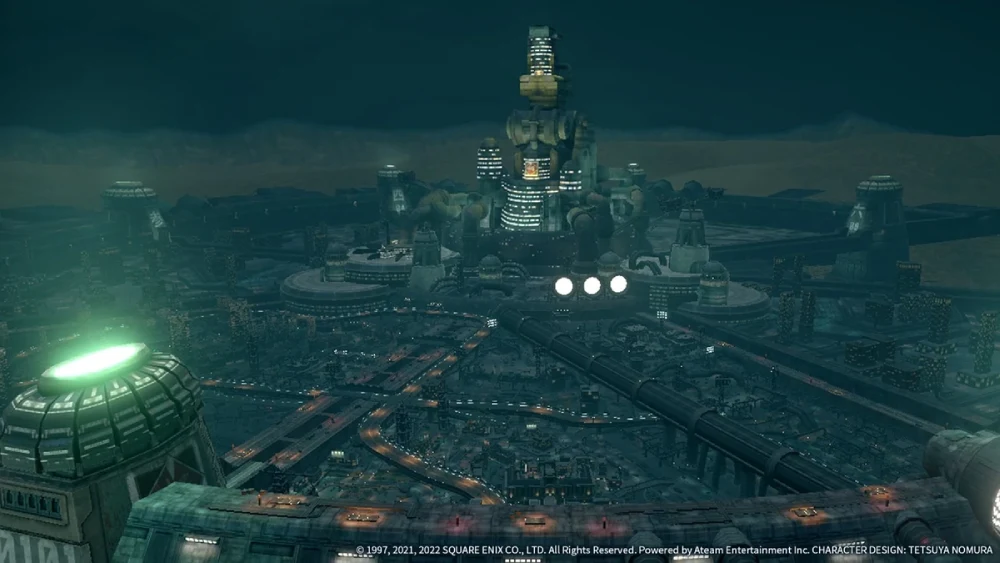
Midgar ff7 is essentially a city built around Mako energy. Shinra uses enormous reactors to extract this resource from the planet, turning the metropolis into a symbol of technological progress while simultaneously creating one of Final Fantasy VII’s central conflicts.
Square Enix describes Shinra as a corporation that has gained control over much of the world by exploiting Mako through its reactors. Avalanche opposes that system, and Cloud becomes involved when he joins the group’s operation against Mako Reactor 1.
The city can broadly be understood through four major elements:
- The upper plate;
- The slums below;
- Eight numbered sectors;
- Shinra Headquarters at the center.
Around the city’s perimeter are massive Mako Reactors, creating the distinctive circular industrial skyline immediately associated with FF7.
How Is Midgar Structured?
The structure of Midgar visually communicates the social hierarchy of Final Fantasy VII. Wealthier residents and Shinra infrastructure occupy areas above the plate, while large communities live underneath it, where sunlight is limited and living conditions are considerably harsher.
This vertical division makes Midgar much more than a futuristic backdrop. The physical city reinforces FF7’s themes of inequality, corporate control, environmental exploitation, and the enormous difference between those who benefit from Shinra’s power and those who live beneath it.
| Area | Main role |
| Upper Plate | Residential and industrial areas above the slums |
| Undercity/Slums | Communities beneath the plate |
| Eight Sectors | Divide the circular city |
| Mako Reactors | Extract Mako energy |
| Shinra Building | Corporate headquarters |
| Rail system | Connects different areas |
| Central pillar system | Supports major sections of the city |
This layered structure becomes especially important during several major story events, when the city’s architecture itself is used as a weapon.
Why Does Midgar Have Eight Sectors?
Final Fantasy VII Midgar is divided into eight numbered sectors arranged around the city’s central structure. Each sector can contain plate-level areas, undercity neighborhoods, infrastructure, and connections to the Mako energy system.
Not every sector receives the same amount of attention during the story. Sector 5, Sector 6, Sector 7, and Sector 8 are particularly memorable because major characters, locations, and events are associated with them.
Midgar sectors at a glance
| Sector | Important association |
| Sector 1 | Mako Reactor 1 and opening mission |
| Sector 2 | Part of the wider city structure |
| Sector 3 | Limited direct exploration |
| Sector 4 | Plate infrastructure and route toward Reactor 5 |
| Sector 5 | Aerith, church and Sector 5 Slums |
| Sector 6 | Wall Market |
| Sector 7 | Seventh Heaven and Avalanche |
| Sector 8 | Urban area encountered early in the story |
The sectors help give an enormous city a recognizable geography, even though players do not explore every portion equally.
Mako Reactors and the Power of Midgar
Mako is fundamental to ff7 Midgar. Shinra extracts it through massive reactors and converts it into energy, allowing the corporation to power the city while expanding its economic, technological, and military dominance.
The problem is what Mako actually represents. It is tied to the planet’s life force, meaning Shinra’s industrial system is consuming a resource that Avalanche believes should never be exploited this way. Square Enix explicitly frames Mako as the planet’s lifeblood and the fuel powering Midgar.
Why does Avalanche attack the reactors?
Avalanche believes Shinra’s extraction of Mako is damaging the planet, so the organization targets the infrastructure that makes this exploitation possible. This environmental conflict drives the very beginning of Final Fantasy VII.
The opening mission immediately establishes the stakes:
- Cloud joins Avalanche as a mercenary;
- The group infiltrates Mako Reactor 1;
- They plant a bomb;
- The reactor is destroyed;
- Shinra begins responding to Avalanche as a serious threat;
- Cloud becomes increasingly involved with the group.
The player therefore learns about the central conflict through action rather than a long explanation, beginning FF7 inside the industrial system that Avalanche wants to destroy.
Who Controls Midgar?
The Shinra Electric Power Company controls Midgar, but calling Shinra simply an energy company dramatically understates its influence. The corporation combines economic, technological, political, and military power, effectively functioning as the governing authority over the city.
Its enormous headquarters dominates the center of Midgar, visually reinforcing this control. Shinra’s power also extends far beyond the metropolis, with Mako technology and corporate influence shaping other regions of the Final Fantasy VII world.
What is the Shinra Electric Power Company?
Shinra built its influence around the exploitation of Mako energy. The technology brought extraordinary development, but the company’s willingness to consume the planet’s life force establishes it as one of the principal antagonistic forces in the story.
Its operations include:
- Mako energy production;
- Scientific research;
- Military forces;
- SOLDIER;
- Weapons development;
- Urban infrastructure;
- Political control;
- Public security.
This makes Shinra much more dangerous than a conventional corporation, because opposing the company means confronting the institution controlling almost every aspect of life in Midgar.
Shinra Headquarters
The Shinra Building stands at the center of final fantasy 7 Midgar, towering above the surrounding city and serving as the corporation’s headquarters. It becomes one of the most important locations during the Midgar portion of the story.
Its visual position is symbolic: Shinra literally occupies the center and highest levels of the city it controls, while much of the population lives beneath an enormous metal plate.
What happens at Shinra Headquarters?
Without going deeply into every spoiler, Cloud and his allies eventually infiltrate Shinra Headquarters after events involving Aerith. What begins as an operation against a corporation gradually reveals threats and mysteries extending far beyond the original conflict between Avalanche and Shinra.
The building introduces or develops several important elements involving:
- President Shinra;
- Rufus Shinra;
- SOLDIER;
- Aerith;
- Professor Hojo;
- Red XIII;
- Sephiroth;
- Shinra’s scientific experiments.
By the time the party leaves the building, the scope of Final Fantasy VII has changed dramatically.
Sector 7 and Avalanche
Sector 7 is one of the most important areas in Midgar because it becomes the player’s first real home base. Its undercity contains Seventh Heaven, the bar operated by Tifa Lockhart and used as a hideout by Barret’s Avalanche cell.
This location gives players an opportunity to see ordinary life underneath the plate. People work, raise families, operate businesses, and build communities despite living beneath an industrial structure controlled by Shinra.
Seventh Heaven
Seventh Heaven is closely associated with:
- Tifa Lockhart;
- Barret Wallace;
- Marlene Wallace;
- Avalanche;
- Cloud’s early mercenary work.
The location provides an important contrast to the Mako Reactor opening. After beginning with explosions and industrial machinery, the player sees the people whose lives are directly affected by the conflict.
What Happens to Sector 7?
One of the darkest events in Final Fantasy VII involves Shinra’s decision to drop the Sector 7 plate. The company destroys an enormous part of its own city while attempting to eliminate Avalanche and manipulate public perception of the organization.
The consequences are catastrophic, destroying the undercity and causing enormous loss of life. It also demonstrates how far Shinra is willing to go to preserve its authority.
Why is the Sector 7 plate important?
The event reinforces several major themes:
- Shinra’s disregard for civilian life;
- The vulnerability of people living below the plate;
- The consequences of Avalanche’s conflict with Shinra;
- The extreme concentration of corporate power;
- The physical inequality built into Midgar itself.
The city’s architecture stops being merely environmental design and becomes directly involved in the story.
Sector 5 Slums
Sector 5 is strongly connected with Aerith Gainsborough. One of its most recognizable locations is the church where Cloud encounters Aerith again, surrounded by flowers growing despite Midgar’s heavily industrialized environment.
The flowers create an intentional visual contrast with the rest of the city. While Shinra extracts the planet’s life energy to support industrial growth, Aerith is associated with natural life surviving underneath that machinery.
Sector 5 Church
The church becomes one of the most iconic locations in final fantasy vii Midgar, particularly because of its relationship with Aerith.
Its importance comes from:
- Cloud and Aerith’s relationship;
- The flower bed;
- Aerith’s connection with nature;
- Encounters involving the Turks;
- Its contrast with industrial Midgar.
The location also gains additional meaning when viewed alongside later revelations about Aerith and her connection to the planet.
Sector 6 and Wall Market
Wall Market is one of the most colorful and unusual areas of Midgar, located in the Sector 6 Slums. Its bright signs, entertainment venues, shops, and eccentric characters provide a dramatic contrast with many of the city’s darker industrial environments.
In both the original Final Fantasy VII and Remake, Wall Market becomes central to Cloud and Aerith’s attempt to reach Don Corneo.
Important Wall Market locations
Depending on which version of FF7 you are playing, important locations include:
- Corneo’s Mansion;
- Honeybee Inn;
- Restaurants;
- Shops;
- Gym;
- Entertainment venues;
- Colosseum in Remake.
Final Fantasy VII Remake substantially expands Wall Market, turning an already memorable section of the original into a much larger district with additional characters and activities.
Sector 8
Sector 8 appears early in Final Fantasy VII following the Mako Reactor 1 mission. It provides one of the player’s first opportunities to experience the urban environment above the slums and is also closely associated with Cloud’s early encounter with Aerith.
The Remake dramatically expands this sequence. Rather than moving quickly through a small number of screens, players spend considerably more time experiencing the destruction and confusion caused by the reactor bombing.
This is one example of how Remake changes the scale of Midgar ff7 without abandoning the fundamental identity of the original location.
The Upper Plate vs. the Slums
Perhaps the most important visual feature of Midgar is the enormous plate separating different social classes. The structure creates two very different experiences of the same city.
| Upper Midgar | Midgar Slums |
| Greater access to sunlight | Located beneath the plate |
| Shinra infrastructure | Improvised communities |
| More affluent districts | Generally poorer population |
| Corporate influence | Strong local communities |
| Modern development | Industrial and recycled environments |
The contrast is intentionally extreme. Residents below can look upward and literally see the structure separating them from the people living above.
Does the Sun Reach the Midgar Slums?
The enormous plate blocks much of the natural sky above the undercity, contributing to Midgar’s distinctive dark atmosphere. Artificial lighting and industrial infrastructure dominate areas where sunlight would otherwise reach.
This makes natural spaces particularly meaningful. Aerith’s flowers stand out precisely because vibrant plant life seems so unusual beneath the plate, reinforcing the environmental themes surrounding Mako and the planet.
Important Midgar Locations
Although the city is divided into sectors, players often remember Midgar through individual landmarks rather than sector numbers.
Some of the most recognizable locations include:
| Location | Importance |
| Mako Reactor 1 | Opening bombing mission |
| Sector 7 Slums | Avalanche’s home base |
| Seventh Heaven | Tifa’s bar and Avalanche hideout |
| Sector 5 Church | Closely connected to Aerith |
| Wall Market | Major Sector 6 entertainment district |
| Corneo’s Mansion | Important story location |
| Train Graveyard | Route near Sector 7 |
| Shinra Building | Corporate headquarters |
| Highway | Major escape sequence |
Together, these locations create a city that feels surprisingly diverse despite its industrial appearance.
Main Characters Connected to Midgar
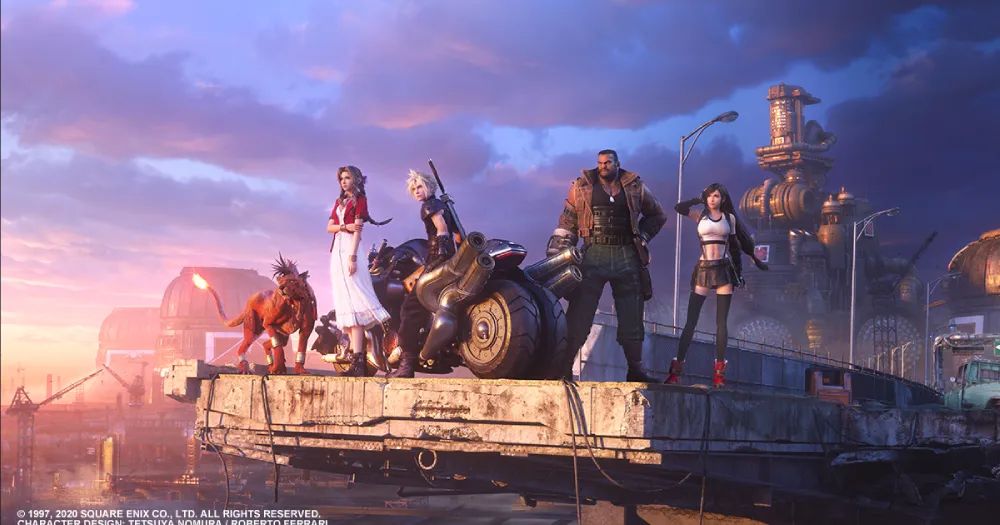
The Midgar portion of Final Fantasy VII introduces much of the game’s central cast. Their relationships with Shinra, Avalanche, SOLDIER, and the city help establish motivations that continue long after the party leaves.
Cloud Strife
Cloud arrives as a mercenary hired by Avalanche, claiming to be a former SOLDIER. Initially, he treats the reactor operation as a job rather than an ideological cause, but his relationships with Tifa, Barret, Aerith, and others gradually pull him deeper into the conflict.
His time in Midgar also begins revealing that his past may be more complicated than it first appears.
Barret Wallace
Barret leads the Avalanche cell responsible for the Mako Reactor bombing operations. He views Shinra’s exploitation of Mako as a direct threat to the planet and is willing to use extreme measures to fight the corporation.
His passionate opposition to Shinra makes him one of the clearest voices explaining the environmental stakes during the early game.
Tifa Lockhart
Tifa runs Seventh Heaven and works alongside Avalanche while maintaining a personal connection with Cloud from their childhood in Nibelheim.
Within ff7 Midgar, she serves as both an Avalanche member and an emotional link to Cloud’s past, becoming increasingly important as questions surrounding his memories develop.
Aerith Gainsborough
Aerith lives in the Sector 5 Slums and sells flowers, an unusual occupation in a city where natural plant life is scarce. Shinra’s interest in her gradually reveals that she has a much greater connection to the planet and the larger story.
Her relationship with Midgar is particularly interesting because she represents natural life inside a city built around extracting that life for energy.
Avalanche vs. Shinra
The early conflict of Midgar centers on Avalanche attempting to stop Shinra’s Mako exploitation. This initially creates what appears to be a relatively straightforward confrontation between environmental resistance and corporate power.
However, Final Fantasy VII gradually complicates that conflict. Avalanche’s actions have consequences, Shinra manipulates events for its own purposes, and larger threats eventually make the original conflict only one part of a much broader story.
Is Avalanche good or bad?
Final Fantasy VII intentionally avoids making every action easy to categorize. Avalanche fights to protect the planet, but bombing industrial infrastructure creates serious consequences and raises questions about the methods used to pursue that goal.
Remake develops this ambiguity further by spending considerably more time with Avalanche members and the civilians affected by the conflict.
Midgar in Final Fantasy VII Original vs. Remake
One of the biggest differences between the 1997 Final Fantasy VII and Final Fantasy VII Remake is the amount of time spent in Midgar.
In the original, Midgar forms the opening section of a much larger adventure. Final Fantasy VII Remake takes that portion and expands it into an entire standalone game, ending around the point where the party escapes the city.
Square Enix explicitly states that Remake goes deeper into the events occurring in Midgar than the original FFVII.
| Final Fantasy VII (1997) | Final Fantasy VII Remake |
| Midgar is the opening portion | Midgar forms the main setting |
| Faster progression | Significantly expanded story |
| Smaller environments | Larger explorable districts |
| Fewer side characters | Expanded supporting cast |
| Limited side activities | More quests and activities |
| Original turn-based/ATB system | Hybrid real-time and command combat |
| Wall Market is relatively compact | Wall Market greatly expanded |
The basic story remains recognizable, but the additional space allows Remake to develop locations and characters that originally received much less screen time.
How Final Fantasy VII Remake Expanded Midgar
The goal was not simply to recreate old environments with modern graphics. Remake adds new areas, expands existing neighborhoods, develops Avalanche members, introduces side quests, and spends more time showing how ordinary people live under Shinra’s control.
Square Enix describes Remake as a standalone entry covering the story through the party’s escape from Midgar while exploring its events more deeply.
Major expansions include:
- Larger Sector 7 Slums;
- More detailed Sector 5;
- Expanded Wall Market;
- Additional Shinra Building content;
- More Avalanche character development;
- New side quests;
- Additional bosses;
- Expanded story sequences;
- More interaction with Midgar residents.
As a result, players familiar with the original can recognize the city while still discovering locations and stories they never experienced in 1997.
Why Midgar Is So Important to Final Fantasy VII
Final fantasy 7 Midgar establishes almost every major theme that Final Fantasy VII develops later. Environmental destruction, inequality, identity, corporate power, memory, loss, and resistance are all introduced before the party escapes the city.
Even the physical design communicates these themes without dialogue. Shinra rises above the population, the wealthy live above the poor, Mako Reactors surround the city, and natural life struggles to survive underneath an enormous industrial plate.
Midgar as environmental storytelling
Good environmental design communicates information through the world itself, and Midgar is an excellent example.
Consider what players see:
- Giant reactors extracting energy;
- A corporate tower dominating the skyline;
- Poor communities beneath the plate;
- Artificial lighting replacing sunlight;
- Industrial waste and machinery;
- Aerith growing flowers despite the environment.
The city effectively explains Final Fantasy VII’s conflict before the player understands the full mythology behind Mako.
Why Is Midgar Called the City of Mako?
The association between Midgar and Mako is so strong that “City of Mako” has become one of its defining descriptions. Even the official Final Fantasy VII Remake soundtrack includes a track titled “Midgar, City of Mako.”
The name reflects both the city’s greatest technological achievement and its fundamental problem. Midgar could not exist in its current form without Mako, yet the extraction of that energy represents the environmental exploitation Avalanche is fighting against.
What Is Mako?
Mako is essentially energy derived from the planet’s life force. Shinra discovers how to exploit this energy at an industrial scale, using Mako Reactors to transform it into a resource that powers modern civilization.
This discovery makes Shinra extraordinarily powerful, but Final Fantasy VII repeatedly asks what happens when technological advancement depends on consuming the planet itself.
Why is Mako dangerous?
The problem is not simply that Mako is a powerful energy source. Its connection to the planet means extracting it has consequences that extend beyond conventional pollution.
This creates the environmental foundation of the story:
Planetary life → Mako extraction → industrial energy → Shinra power → environmental damage → Avalanche resistance.
That cycle begins in Midgar but affects the entire world.
Is Midgar the Whole World of Final Fantasy VII?
No. New players who begin with Final Fantasy VII Remake can easily assume Midgar represents most of FF7’s world because the entire first Remake game focuses on the city.
In the original Final Fantasy VII, however, leaving Midgar marks the beginning of a much larger journey. Cloud and the party travel through towns, mountains, deserts, forests, oceans, and other major regions while pursuing Sephiroth.
Final Fantasy VII Rebirth demonstrates this scale directly, moving the party beyond Midgar into a much broader world. Square Enix’s official Rebirth material even describes nearby Kalm as receiving Mako piped from the metropolis, which remains visible from the town.
Midgar and Final Fantasy VII Rebirth
Although Midgar dominates Remake, Final Fantasy VII Rebirth shifts attention toward the world outside the city. This contrast is intentional, replacing the enclosed industrial environments of the first game with much larger regions and settlements.
Midgar nevertheless remains important because the characters’ experiences there shape their motivations. Shinra continues pursuing them, Sephiroth becomes the central threat, and the consequences of events in the city follow the party into the wider world.
Midgar, City of Mako MTG
The keyword Midgar city of mako mtg refers to the Magic: The Gathering — FINAL FANTASY crossover, where Midgar appears as an actual Magic card rather than merely artwork or flavor text.
Wizards of the Coast’s official card list confirms Midgar, City of Mako as part of Magic: The Gathering — FINAL FANTASY. The set includes both a regular version and a Borderless Lands version, with the borderless card listed as collector number 314.
What does Midgar, City of Mako do in MTG?
Midgar, City of Mako is a rare Land — Town that enters the battlefield tapped and can tap to produce black mana. It is also connected to Reactor Raid, using Magic’s Adventure-related card design.
| MTG detail | Midgar, City of Mako |
| Set | Magic: The Gathering — FINAL FANTASY |
| Card type | Land — Town |
| Rarity | Rare |
| Mana | Black |
| Enters | Tapped |
| Related Adventure | Reactor Raid |
| Original set release | June 13, 2025 |
The card is a particularly fitting adaptation because it translates one of Final Fantasy VII’s most recognizable locations into a resource-producing land.
Why Midgar Works So Well as an MTG Land
Turning Midgar into a Land card makes thematic sense. In Final Fantasy VII, the city is fundamentally defined by energy production, resource extraction, and Shinra’s ability to transform the planet’s life force into power.
The black mana identity also fits many of the darker themes surrounding the metropolis: ambition, exploitation, sacrifice, and the pursuit of power regardless of cost. The card therefore works as both a recognizable Final Fantasy reference and a thematic Magic adaptation.
Midgar vs. Midgard: Are They the Same?
No. Midgar and Midgard are different terms, although their similar spelling causes frequent confusion.
| Midgar | Midgard |
| Fictional city in Final Fantasy VII | Realm in Norse mythology |
| Controlled by Shinra | Associated with humanity |
| Powered by Mako | Part of Norse cosmology |
| Major FF7 location | Appears across mythology and modern fiction |
Final Fantasy frequently draws inspiration from mythology, religion, literature, and folklore, but players searching for Midgar ff7 are generally looking for the industrial city from Final Fantasy VII rather than the Norse realm Midgard.
Best Things to Remember About Midgar
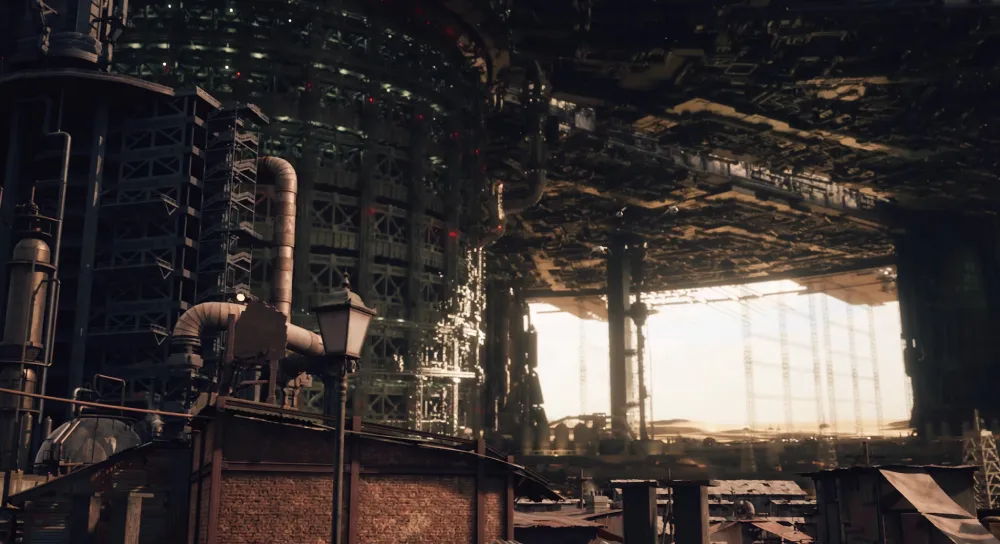
There is a lot of lore surrounding Midgar, but understanding a few fundamental concepts makes the opening of Final Fantasy VII considerably easier to follow.
Remember these key points:
- Shinra controls the city;
- Mako powers Midgar;
- Mako comes from the planet’s life force;
- Avalanche wants to stop Shinra’s exploitation;
- The city contains eight sectors;
- The plate separates very different social environments;
- Cloud begins as a mercenary working with Avalanche;
- Sector 7 is closely associated with Tifa and Barret;
- Sector 5 is strongly associated with Aerith;
- Leaving Midgar opens the much larger world of Final Fantasy VII.
With these concepts established, the relationships between Shinra, Avalanche, Cloud, Aerith, and the planet become much easier to understand.
Midgar and Connection Quality in Final Fantasy VII Remake
Exploring Midgar in Final Fantasy VII Remake is primarily a single-player experience, so network latency does not affect normal combat in the same way it would in a competitive online game.
Performance issues during gameplay are more likely to involve hardware, graphics settings, storage, drivers, or system configuration.
This distinction is important when troubleshooting games. ExitLag is designed around optimizing network routes for supported online connections, so it should not be presented as a solution for low FPS or other purely local performance problems in a single-player experience.
Where can ExitLag matter for Final Fantasy players?
Final Fantasy as a franchise also includes online titles and services where network quality becomes much more relevant. In those situations, players may encounter:
- High latency;
- Packet loss;
- Routing instability;
- Connection fluctuations;
- Unexpected disconnections.
When playing a supported online title, ExitLag can analyze network routes and work to select more efficient paths between the player’s connection and supported game infrastructure.
FAQ
Midgar contains enough history, locations, characters, and terminology to be confusing for players experiencing Final Fantasy VII for the first time. These five questions cover some of the most important points about the city.
Midgar is the enormous Mako-powered city where Final Fantasy VII begins. It is controlled by the Shinra Electric Power Company and divided into eight sectors, with upper plate areas above large undercity communities.
Avalanche believes Shinra’s extraction of Mako is destroying the planet because Mako is connected to its life force. Cloud’s first mission with the group involves destroying Mako Reactor 1.
Midgar is divided into eight numbered sectors arranged around the central city structure. Several sectors contain both plate-level and undercity areas, although the games do not explore every sector equally.
The main story of Final Fantasy VII Remake covers the Midgar portion of FF7 and ends around the party’s escape from the city. Square Enix specifically expanded this section considerably compared with the original 1997 game.
Midgar, City of Mako is a rare Land, Town from Magic: The Gathering, FINAL FANTASY. It enters tapped, produces black mana, and is associated with the Reactor Raid Adventure. Wizards’ official card list also includes a borderless version of Midgar.
Explore Midgar and the World Beyond
Midgar is much more than the location where Final Fantasy VII begins. Its Mako Reactors, enormous plate, crowded slums, Shinra Headquarters, and sharply divided population establish the environmental and social conflicts that shape Cloud’s journey, while locations such as Sector 7, Sector 5, and Wall Market give the industrial metropolis a surprisingly human identity.
From the original final fantasy vii Midgar to its enormous expansion in Final Fantasy VII Remake and even Midgar, City of Mako MTG, the city has become one of the defining locations of the franchise.
Explore its sectors, understand the struggle between Shinra and Avalanche, and discover why escaping Midgar is only the beginning of Final Fantasy VII.
Got questions or want to connect with other players? Join the conversation at the ExitLag Forum!