Minecraft floor designs play a huge role in how polished and immersive a build feels. While walls and roofs often get most of the attention, the floor is what players interact with constantly. A well-designed floor can instantly elevate a house, base, or large structure from basic to visually impressive.
When players search for minecraft floor designs, they are usually looking for inspiration that is easy to replicate but still looks creative. The right combination of blocks, patterns, and colors helps define the mood of a room and ties the entire build together. Even small changes in floor layout can completely change how a space feels.
So what are floor designs in Minecraft, where should you use them, and when do they matter most? Simply put, floor designs determine the visual flow of interiors and outdoor spaces. From survival bases to creative megabuilds, thoughtful flooring improves realism, depth, and overall aesthetics.

Minecraft Floor Designs: Why Flooring Matters in Builds
In Minecraft, floors are more than just a surface to walk on. They help guide the player’s eye, create contrast, and reinforce the theme of a structure. Choosing the right floor design for Minecraft ensures that rooms do not feel empty or repetitive.
Visual balance and block contrast
Strong floor designs rely on contrast. Using two or more complementary blocks prevents large flat areas from looking dull. For example, mixing wood tones or combining stone variants adds texture without overwhelming the build.
Well-balanced floors:
- Break up large spaces visually
- Add depth without clutter
- Highlight furniture and decorations
Matching floors to build themes
Different builds call for different flooring styles. A medieval castle benefits from stone-heavy designs, while a modern house looks better with clean lines and smooth blocks. Choosing the right floor design minecraft style helps maintain consistency throughout the build.
Simple Minecraft Floor Designs for Survival Mode
Not every build needs complex patterns. In survival mode, efficiency and resource availability matter. Simple floor designs minecraft can still look great when executed correctly.
Wooden plank floor variations
Wooden floors are among the most popular choices due to accessibility and warmth. Instead of using a single plank type, try alternating between two similar woods to create subtle patterns.
Common combinations include:
- Oak and spruce planks
- Spruce and dark oak planks
- Planks mixed with stripped logs for borders
These designs are cheap, effective, and work well for houses, farms, and starter bases.
Stone-based floor layouts
Stone floors are ideal for basements, caves, and strongholds. Mixing stone bricks, polished andesite, and cracked variants creates a natural, worn look.
Stone floors are especially useful because:
- They resist visual repetition
- They fit multiple build styles
- They are easy to expand in large areas
Minecraft Floor Designs with Patterns and Shapes
Once basic materials are covered, patterned floors add personality to your builds. Patterned floors work best in medium to large rooms where repetition can be fully appreciated.
Checkerboard and grid patterns
Checkerboard designs use two contrasting blocks arranged in a repeating grid. This style is simple but visually striking and works well in halls, kitchens, and courtyards.
Popular block pairings include:
- Polished diorite and polished andesite
- Blackstone and quartz
- Concrete blocks for colorful interiors
Border and framed floor designs
Bordered floors use one block type around the edges and a different pattern in the center. This creates a framed look that works especially well in rooms meant to feel important, such as throne rooms or storage halls.
Borders help:
- Define room boundaries
- Guide interior decoration placement
- Add structure to open spaces
Minecraft Floor Design Ideas for Different Builds
Choosing the right floor design depends heavily on the type of structure you are building. Each build style benefits from specific materials and layouts.
Rustic and medieval builds
Rustic builds look best with imperfect patterns. Mixing slabs, stairs, and full blocks creates uneven textures that feel natural. Stone, wood, and brick combinations work especially well here.
Modern and minimalist builds
Modern builds rely on clean lines and smooth blocks. Quartz, concrete, and polished stone create sleek floors with minimal texture. Repeating patterns should be subtle and consistent.
Fantasy and decorative builds
Fantasy builds allow more creativity. Using terracotta, glazed terracotta, and vibrant colors can produce bold designs perfect for temples, wizard towers, or palaces.
ExitLag and Smooth Minecraft Building Sessions
While Minecraft floor designs focus on creativity, performance still matters-especially in multiplayer servers. Lag and connection instability can disrupt building flow and make precise placement frustrating.
ExitLag helps stabilize your connection by optimizing routing and reducing packet loss. This ensures smoother multiplayer sessions, faster chunk loading, and a more reliable building experience.
Whether you are designing complex floors on a creative server or expanding a survival base with friends, ExitLag helps keep your focus on building instead of connectivity issues.
Advanced Minecraft Floor Designs for Large and Detailed Builds
Advanced Minecraft floor designs focus on scale, depth, and visual rhythm. Once you move beyond small houses and starter bases, simple flat floors often feel repetitive. Large rooms, halls, and open interiors demand patterns that hold visual interest without overwhelming the space.
At this stage, floor designs are not just decorative-they become structural elements that guide movement, define zones, and reinforce the identity of a build. Understanding how to scale patterns correctly is the key difference between an average floor and a professional-looking one.
Floor Design Minecraft: Scaling Patterns for Large Rooms
Large interiors highlight every design decision. Repeating a small pattern across a wide area can quickly look noisy, while oversized designs may feel empty if not balanced properly.
Designing floors for wide halls and open spaces
In large rooms, modular patterns work best. Instead of repeating a single block arrangement endlessly, builders often use larger pattern units such as 5×5 or 7×7 sections. These modules repeat cleanly while still giving the eye something recognizable to follow.
This approach helps:
- Maintain consistency across large surfaces
- Prevent visual fatigue
- Make rooms feel intentional rather than random
Breaking repetition without clutter
To avoid monotony, advanced Minecraft floor designs introduce subtle variation. This can be done by:
- Swapping accent blocks every few modules
- Using borders to segment space
- Adding central focal patterns in key areas
These techniques preserve structure while keeping the floor visually dynamic.
Minecraft Floor Designs: Block Combinations That Add Depth
The best floor designs Minecraft builders use rely heavily on smart block combinations. Texture contrast is often more important than color contrast.
Wood combinations that work naturally
Wood floors feel richer when more than one wood type is used. Mixing similar tones avoids harsh contrast while still adding detail.
Effective combinations include:
- Oak planks with stripped oak logs
- Spruce planks with dark oak borders
- Slabs combined with full blocks to vary height visually
These designs are especially useful in survival mode, where resources are limited but variety is still achievable.
Stone and polished block mixes
Stone-based floors benefit from texture layering. Instead of using a single block, mixing variants creates a natural, aged look.
Common stone mixes:
- Stone bricks, cracked stone bricks, and mossy variants
- Polished andesite with stone slabs
- Deepslate tiles for darker, more dramatic interiors
These combinations are ideal for castles, underground bases, and industrial builds.
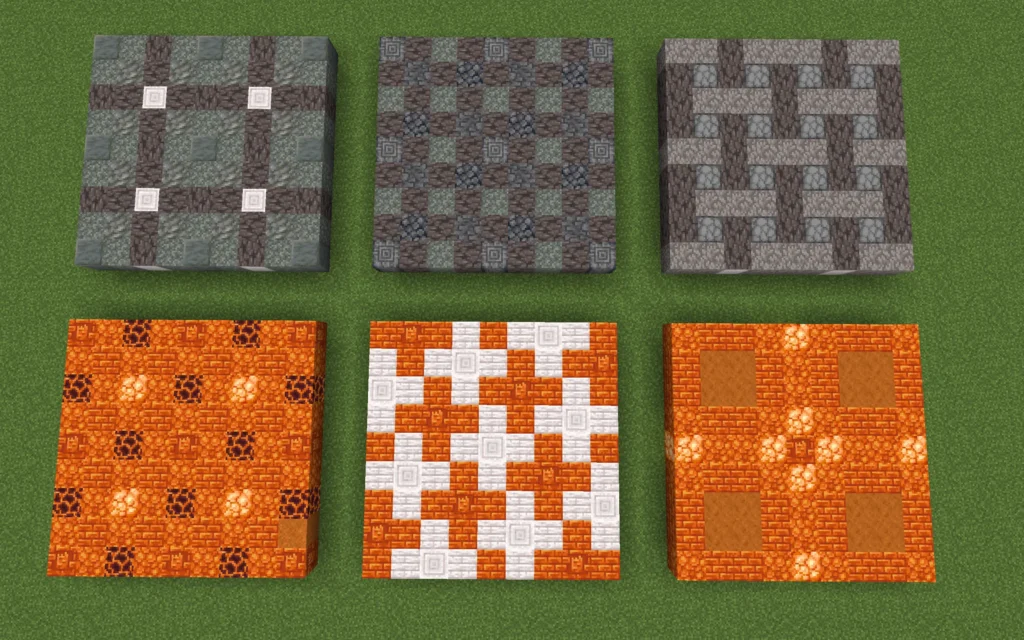
Minecraft Floor Design Ideas Using Color and Texture
Color-based floor designs Minecraft players create are most effective when used with restraint. Color should enhance the build, not dominate it.
Terracotta and glazed terracotta patterns
Terracotta offers subtle texture, while glazed terracotta introduces bold patterns. Advanced builders often use glazed terracotta sparingly, reserving it for:
- Throne rooms
- Temples
- Central chambers or landmarks
Correct rotation is essential. Misaligned glazed terracotta quickly breaks immersion, so always test patterns before committing.
Concrete and modern color blocking
Concrete blocks are perfect for modern builds due to their smooth texture. Using two or three neutral colors creates clean, minimalist floors.
Good practices include:
- Light gray with white for interiors
- Black with white for contrast-heavy designs
- Single accent colors used sparingly
These floor designs work best in modern houses, labs, and futuristic builds.
Functional Floor Designs Minecraft Players Should Know
Great floor design for Minecraft is not only about looks. Functional elements often separate good builds from great ones.
Mob-proof and survival-friendly floors
In survival mode, floors can help control mob spawning. Builders often use:
- Slabs or stairs
- Carpet placed over solid blocks
- Glass floors in farms or technical builds
These options improve safety without sacrificing aesthetics.
Hidden lighting and redstone compatibility
Advanced Minecraft floor designs often hide lighting within the floor. Sea lanterns, glowstone, and shroomlights can be concealed using carpets or trapdoors.
This approach:
- Keeps floors clean and uncluttered
- Improves lighting consistency
- Supports redstone builds beneath floors
Minecraft Floor Designs by Build Type
Different builds benefit from different flooring philosophies. Matching floor design to build purpose improves immersion.
Survival base floor designs
Survival floors prioritize efficiency. Designs should be:
- Easy to expand
- Cheap to repair
- Simple to replicate
Wood and stone combinations dominate survival builds for this reason.
Creative and showcase builds
Creative mode allows for more experimental designs. Builders can use rare blocks, complex patterns, and layered textures without resource limits.
These floors often serve as visual centerpieces rather than purely functional surfaces.
Minecraft Floor Designs Comparison Table
| Floor Style | Best Blocks | Difficulty | Best For |
| Mixed Wood | Planks + Logs | Easy | Survival houses |
| Stone Pattern | Stone variants | Medium | Castles and halls |
| Checkerboard | Two contrasting blocks | Easy | Kitchens and corridors |
| Terracotta Art | Glazed terracotta | Hard | Palaces and temples |
| Modern Clean | Quartz, concrete | Medium | Modern builds |
This table helps builders quickly choose the right floor design based on project goals.
Common Mistakes in Minecraft Floor Designs
Even experienced builders make flooring mistakes. Avoiding these issues dramatically improves build quality.
Overusing a single block
Using one block type across an entire floor creates flat visuals. Adding even one secondary block can significantly improve depth.
Ignoring room scale
Small patterns in large rooms feel busy, while large patterns in small rooms feel cramped. Always design floors with room size in mind.
ExitLag and Smooth Multiplayer Building
Many Minecraft builders work on multiplayer servers where connection stability matters. Lag can make precise block placement difficult, especially when working with detailed floor patterns.
ExitLag optimizes routing and stabilizes connections, reducing delays and packet loss. This results in smoother building sessions, faster chunk loading, and more reliable multiplayer performance.
For players creating advanced Minecraft floor designs with friends or on public servers, ExitLag helps ensure that performance issues never interrupt creativity.
All game images used in this blog belong to Mojang Studios. They are used for informational/educational purposes only and do not imply endorsement or affiliation with the rights holders.
Got questions or want to connect with other players? Join the conversation at the ExitLag Forum!