
The Minecraft frog is one of the most unique passive mobs introduced to Minecraft in recent updates. It brings new ecological behavior, visual diversity, and interactive mechanics that make swamp and mangrove biomes more dynamic and engaging to explore.
Understanding how the Minecraft frog works is important for players who want to improve exploration efficiency and take advantage of its interaction with other mobs. Although it is a passive creature, it plays a functional role in the environment, especially when it comes to resource generation.
In this guide, you will learn everything about the Minecraft frog, including where to find it, how it behaves, how breeding works, and what it eats in the game.
What is Minecraft frog and how it behaves in the game
General behavior of Minecraft frog
The Minecraft frog is a passive mob that naturally spawns in swamp-related biomes. It is non-hostile and moves slowly through land and water environments, usually staying near aquatic areas.
Its behavior is designed to simulate a calm and environmental presence rather than a combat or survival threat.
Unlike aggressive mobs, the Minecraft frog interacts with the world in a selective way, primarily focusing on small prey such as slimes and magma cubes. This makes it a useful entity in certain farming setups and automated systems.
Variants and environmental adaptation
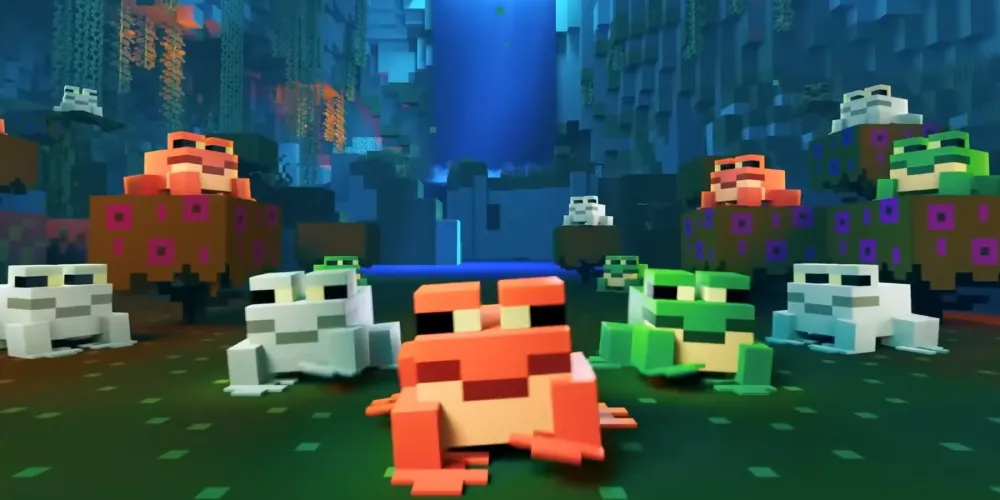
The Minecraft frog has different variants that depend on biome temperature conditions. These variants do not affect gameplay mechanics significantly but change visual appearance and immersion.
- Temperate frogs appear in swamp biomes;
- Warm frogs appear in mangrove swamp environments;
- Cold frogs can be obtained through breeding mechanics in specific conditions.
Each variant contributes to the environmental diversity of Minecraft, making exploration more visually engaging.
Where to find frog Minecraft in the game world
Biome-based spawning locations
Frog Minecraft mobs can primarily be found in swamp and mangrove swamp biomes. These environments provide the necessary water coverage and terrain conditions for natural spawning.
When exploring for frogs, it is important to focus on areas with shallow water and vegetation. These zones increase the likelihood of encountering frogs naturally.
Exploration strategy for better results
To improve efficiency when searching for frog Minecraft, players should follow structured exploration behavior. This reduces time spent searching randomly across the map.
Key exploration strategies include:
- Prioritizing swamp biome clusters during world generation;
- Exploring river-connected swamp regions for higher spawn density;
- Checking areas with lily pads and shallow water blocks.
These approaches increase the probability of finding frogs while reducing unnecessary exploration time.
Environmental conditions checklist
Before assuming frogs will spawn in a specific area, ensure the following conditions are met:
- Presence of swamp or mangrove swamp biome;
- Availability of water blocks for movement and spawning;
- Absence of terrain that restricts natural mob spawning.
These conditions directly influence whether frog Minecraft mobs will appear naturally.
How to breed frogs in Minecraft
Understanding breeding mechanics
Breeding frogs in Minecraft requires specific items and conditions. The process is centered around slimeballs, which act as the breeding trigger item. When two adult frogs are fed slimeballs, they enter breeding mode and produce frogspawn.
This mechanic is simple but requires preparation, especially if players want to scale frog populations for farming purposes.
Step-by-step breeding process
The breeding process follows a structured sequence that ensures successful reproduction:
- Locate two adult frogs in a suitable environment;
- Obtain slimeballs from slimes or other sources;
- Feed both frogs slimeballs individually;
- Wait for the love state animation to activate;
- Frogspawn appears in nearby water blocks;
- Tadpoles hatch and grow into adult frogs over time.
Each step is essential, and skipping environmental requirements may result in failed breeding attempts.
Important considerations for breeding
Before breeding frogs, players should ensure environmental safety and resource availability. This helps avoid interruptions during the process.
- Ensure there is enough water space for frogspawn;
- Protect frogs from hostile mobs during breeding;
- Avoid overcrowding the breeding area.
Proper setup increases breeding efficiency and ensures stable frog population growth.
What do frogs eat in Minecraft
Primary food sources
The Minecraft frog feeds on specific small mobs in the game environment. These include slimes and small magma cubes. This behavior is automatic and does not require player intervention once conditions are met.
This feeding mechanic is important because it connects frogs to resource generation systems.
Functional impact of feeding behavior
When Minecraft frogs consume their targets, they contribute to item generation and farming systems. This interaction can be used to create automated farms that generate slime-related resources.
The feeding behavior also influences world dynamics, as frogs actively reduce small hostile mob populations in certain environments.
Practical applications in gameplay
Players often use frog behavior for structured farming systems. Common applications include:
- Slime farming setups using frog mechanics;
- Magma cube resource collection in Nether-based systems;
- Passive automated resource generation designs.
These systems allow frogs to become part of efficient in-game farming strategies.
Comparison of frog types in Minecraft
Understanding the different frog variants in Minecraft helps players recognize how these mobs adapt visually to different environments.
Although all frogs share the same core behavior mechanics, their appearance changes depending on the biome or breeding conditions in which they are generated.
This variation is mainly visual, but it adds depth to exploration and makes each biome feel more unique. Players who pay attention to frog types can quickly identify where they are in the world and how the environment influences mob generation.
How frog variants differ visually and environmentally
Each Minecraft frog type is linked to a specific environmental condition. These conditions do not change gameplay mechanics, but they influence how frogs look and where they are naturally found or created.
In practice, this means that players exploring swamp regions will notice different frog colors depending on temperature and biome type. This visual variation helps reinforce immersion without affecting survival mechanics or difficulty.
Below is a structured comparison of all frog types currently available in the game:
| Frog Type | Biome | Appearance | Function |
| Temperate | Swamp | Green tones | Standard behavior |
| Warm | Mangrove swamp | Orange tones | Standard behavior |
| Cold | Breeding variant | Light tones | Standard behavior |
What this classification means for gameplay
This classification is important because it helps players understand that frog types are not tied to power or performance differences. Instead, they are tied to environmental identity and breeding outcomes.
In other words, whether you find a green, orange, or light-toned frog, the gameplay function remains the same. All variants interact with slimes, move through water and land, and behave as passive mobs.
This means players should focus less on “which frog is better” and more on how frogs can be used strategically in farming systems, exploration, and biome-based builds.
Why frog variants matter for immersion and exploration
Even though frog mechanics remain consistent, the existence of different variants improves the overall immersion of Minecraft worlds.
It encourages players to explore different biomes and observe how environmental factors influence mob appearance.
This small detail becomes especially noticeable when building themed bases or designing farms that match biome aesthetics.
Players can intentionally choose frog variants to match visual themes, making builds feel more cohesive and alive.
Advanced tips for frog usage
Optimization strategies
To maximize frog efficiency in gameplay systems, players should focus on environmental control and resource optimization. Frogs perform better when placed in structured environments.
Recommended approaches include:
- Creating controlled swamp-based enclosures;
- Integrating frogs into automated farming systems;
- Using water channels to guide movement and interaction.
These methods improve consistency in frog behavior.
Common mistakes to avoid
Many players fail to use frogs effectively due to simple setup errors.
- Lack of proper water access in breeding areas;
- Placing frogs in unsafe environments with hostile mobs;
- Ignoring biome requirements for spawning.
Avoiding these mistakes significantly improves performance.
FAQ
What is a Minecraft frog?
The Minecraft frog is a passive mob found in swamp-related biomes that interacts with small mobs and contributes to environmental mechanics.
How to breed frogs in Minecraft?
To breed frogs in Minecraft, feed two adult frogs slimeballs until they enter breeding mode and produce frogspawn.
What do frogs eat in Minecraft?
Minecraft frogs eat slimes and small magma cubes found in different environments.
Where do frogs spawn in Minecraft?
Frog Minecraft mobs spawn naturally in swamp and mangrove swamp biomes.
Can frogs be used in farms?
Yes, frogs can be used in automated farming systems that generate slime or magma cube resources.
Improve your Minecraft experience with ExitLag
The Minecraft frog adds depth and functionality to Minecraft gameplay, especially for players interested in exploration, farming, and biome interaction systems. Understanding how frogs behave, where they spawn, and how they interact with the environment allows for more efficient and strategic gameplay.
However, performance stability plays a key role when exploring large worlds or running complex farming systems online.
With ExitLag, players can reduce connection instability, minimize lag spikes, and enjoy smoother gameplay across different Minecraft servers and environments.
Try ExitLag today and experience a more stable and optimized connection while playing Minecraft.