
A Minecraft japanese house is one of the most satisfying builds you can make because it combines elegance, structure, and atmosphere. Instead of focusing on oversized walls or complicated redstone, this style works through shape, spacing, and material harmony. If you want a build that feels calm, detailed, and timeless, this is one of the best directions you can take.
Even simple structure details can make a peaceful build feel more complete, especially when you start adding gardens, paths, and outdoor boundaries. A guide on how to make a fence in Minecraft can help you frame courtyards, walkways, and village edges without making the design feel too crowded.
A Minecraft japanese house works best when you think in layers: raised foundations, clean wooden framing, soft wall panels, deep roof overhangs, and landscaping that feels intentional rather than crowded. Modern Minecraft makes this style even easier to achieve because the game now includes the Bamboo Wood Set plus the Cherry Grove biome and Cherry Wood Set, giving builders more natural materials that fit Japanese-inspired architecture beautifully.
If you have been searching for how to build a japanese house in Minecraft, the good news is that you do not need a massive palace to make it look authentic. A small footprint can already feel amazing if the roofline is strong, the palette is balanced, and the exterior connects naturally with paths, lanterns, water, and greenery. That is the real secret behind a strong Minecraft japanese style build.
More importantly, a great Minecraft japanese house is not just about copying a roof shape. It is about restraint. Too many block types will make the house noisy. Too many decorations will break the serene mood. The goal is to create a structure that feels peaceful at first glance, then rewards closer attention with subtle detail.
What blocks work best for a Minecraft Japanese house?
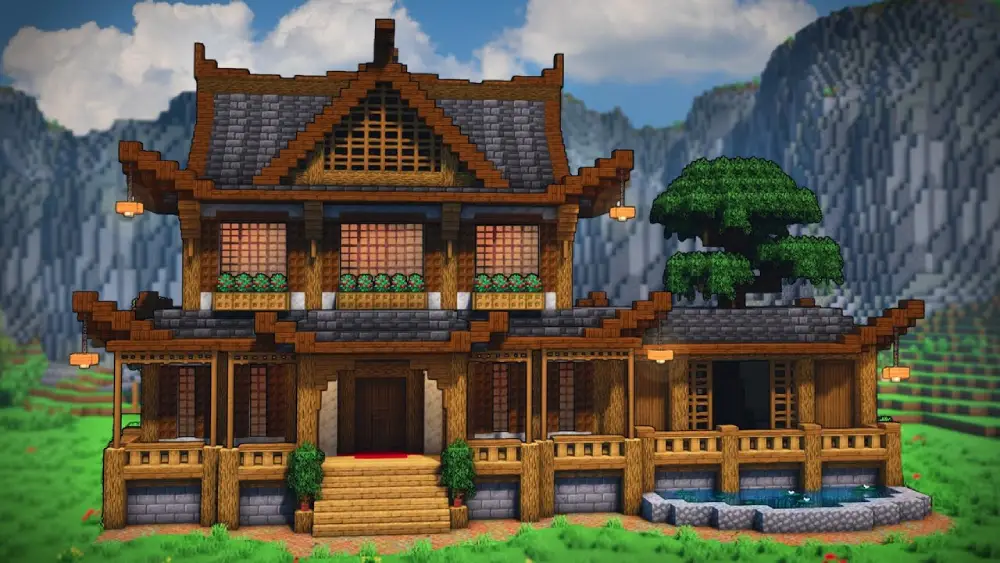
Before placing your first wall, choose a small and disciplined palette. This style looks strongest when the build uses a few materials with clear roles. Wood handles the structure. Stone anchors the base. Accent blocks create contrast. Decorative greenery softens the edges.
Minecraft’s current block selection makes this easier than it used to be. The Bamboo Wood Set and Cherry Wood Set were added officially with the 1.20 update, and both are excellent for Japanese-inspired builds. Bamboo gives you a light, refined look, while cherry adds warmth and pairs beautifully with pink landscaping around a japanese house design Minecraft project.
Start with this palette logic:
| Build part | Recommended blocks |
| Foundation | stone bricks, smooth stone, deepslate tiles |
| Main frame | dark oak, spruce, or stripped dark wood |
| Walls | white concrete, white terracotta, birch, or light planks |
| Roof | deepslate tiles, blackstone, dark oak stairs, or nether brick |
| Garden details | bamboo, moss, lanterns, leaves, cherry details |
This is where Minecraft japanese style build planning matters most. The foundation should feel grounded. The frame should be darker than the walls. The roof should feel heavier than the rest of the build. That contrast is what gives the structure presence.
Best wood combinations
Wood choice changes the mood of the house immediately. If you want a classic and dramatic build, combine dark oak or spruce framing with white wall panels. If you want something softer, use bamboo and cherry together in smaller doses.
Strong combinations include:
- dark oak + white concrete + deepslate tiles
- spruce + stripped birch + stone bricks
- bamboo planks + cherry accents + smooth stone
- dark oak + bamboo mosaic + lantern lighting
The Bamboo Wood Set is especially useful because it gives you planks, stairs, slabs, doors, trapdoors, fences, and even bamboo mosaic variants, which are great for floors, awnings, or interior trim.
Best decorative blocks
Decorative blocks should support the build, not overpower it. Good picks include:
- lanterns for warm lighting
- moss blocks and moss carpet for gardens
- bamboo for fencing and visual rhythm
- pink petals or cherry trees for atmosphere
- trapdoors for shutters or trim
Lanterns are especially effective because they create warm pools of light without looking bulky. Official Minecraft information notes that regular lanterns emit a light level of 15, making them both practical and visually strong for detailed builds.
Light wall panels and window details are a big part of making the structure feel open, calm, and balanced. This guide on how to make glass in Minecraft can help you plan cleaner shoji-inspired sections, garden-facing windows, and softer interior lighting.
How to build a Japanese house in Minecraft?
If you want a reliable Minecraft japanese house tutorial, build from the ground up in this order: location, foundation, frame, walls, roof, then landscaping. Most messy builds happen because players start with walls first and treat the roof like an afterthought. In this style, the roof is one of the main visual anchors.
A strong Minecraft japanese house should usually sit on a slightly raised base. That alone makes it feel more deliberate. Then add a visible wooden frame, keep the wall sections clean, and extend the roof beyond the walls so the house looks sheltered and elegant.
Step 1: Pick the right location
This style looks best when the terrain helps the mood. Good options include:
- near a river or pond
- inside or near a bamboo jungle
- near a cherry grove
- beside a hillside
- on the edge of a custom garden
Minecraft officially added the Cherry Grove biome with the 1.20 update, and it is one of the best natural settings for this type of build because it already carries a calm, ornamental atmosphere.
Try to avoid harsh desert flatlands or cluttered swamp placement unless you are intentionally making a hybrid build. For a pure japanese house design Minecraft concept, soft terrain helps a lot.
Step 2: Build the foundation
Make the base first. Raise it 1 to 3 blocks above the terrain. This creates separation from the ground and makes the house feel more refined.
A good starter footprint is:
- 11×13 for a medium house
- 9×11 for a compact house
- 15×19 for a larger estate
Use stone bricks, smooth stone, or deepslate tiles. Add stairs around the edges if you want a tapered, more polished transition into the terrain.
The raised platform matters because a Minecraft japanese house often looks strongest when the home feels intentionally placed rather than merged directly into dirt or grass.
Step 3: Add the wooden frame
Now place vertical logs or stripped logs at the corners and every few blocks along the walls. Connect them with horizontal beams.
This frame should be visible. Do not hide it. It is one of the most important parts of a Minecraft japanese style build.
Keep the frame symmetrical where possible:
- corner posts
- doorway beams
- support pillars for porches
- extra posts under roof overhangs
If the frame is strong, even a simple house will look much better.
Step 4: Fill the walls
For the wall panels, use lighter blocks so the dark frame stands out. Good choices are white concrete, white terracotta, birch planks, or smooth sandstone if you want a warmer tone.
You can also create shoji-inspired wall sections with:
- birch trapdoors
- white stained glass panes
- stripped birch + glass combinations
These will not be literal shoji doors, but they create the right visual rhythm for a Minecraft japanese house tutorial without becoming too busy.
How do you make the roof look authentic?
The roof is what makes or breaks the build. If the roof is flat, tiny, or too thin, the house will lose the Japanese-inspired silhouette immediately. For most builds, the roof should be taller, wider, and more layered than you first expect.
A proper Minecraft japanese house roof should:
- extend beyond the walls
- use stairs and slabs for a curved feel
- have slightly lifted corners if possible
- feel heavier than the walls beneath it
Best roof materials
For the most convincing results, use:
- deepslate tile stairs and slabs
- blackstone stairs and slabs
- dark oak stairs for a wood-roof variation
- nether brick for a bold contrast build
Deepslate is one of the easiest modern choices because it gives you that dark tiled look without requiring mods. It also contrasts beautifully with bamboo, birch, and cherry wood.
Easy roof shape formula
Use this simple layered approach:
- Start one block outside the walls.
- Build upward with stairs.
- Add slabs near the peak for softer shaping.
- Extend the corners slightly.
- Add support beams underneath the overhang.
This creates the classic silhouette players usually want when searching how to build a japanese house in Minecraft.
For larger builds, split the roof into multiple levels. A main hall with side roofs and a small entrance roof instantly adds depth.
How do you decorate the interior without ruining the style?
A common mistake is overfilling the inside. A Minecraft japanese house interior should feel intentional and breathable. Leave walking space. Keep furniture low. Use texture sparingly.
Focus on a few strong features:
- low tables with trapdoors and slabs
- floor seating using stairs or carpets
- bamboo or cherry shelving
- lantern lighting
- simple bedroom layouts
- indoor plants
A shelf block can also work well now that Minecraft has decorative shelf variants in multiple woods, including cherry and bamboo. That makes it easier to add subtle storage or display detail without breaking the aesthetic.
Good interior zones
A balanced interior can include:
- entrance hall
- tea room or sitting room
- bedroom
- storage corner
- indoor garden nook
Tatami-inspired flooring can be suggested using pale carpets or light plank grids. Do not try to make every room dense. Negative space is part of the beauty.
Lighting tips
Lighting should be warm and soft. Use:
- lanterns
- hidden light blocks if needed
- candles in selected areas
- indirect lighting behind trapdoors or slabs
Avoid overusing torches. They work for survival, but they usually weaken the look of a japanese house design Minecraft build.
How do you make a Minecraft Japanese village?
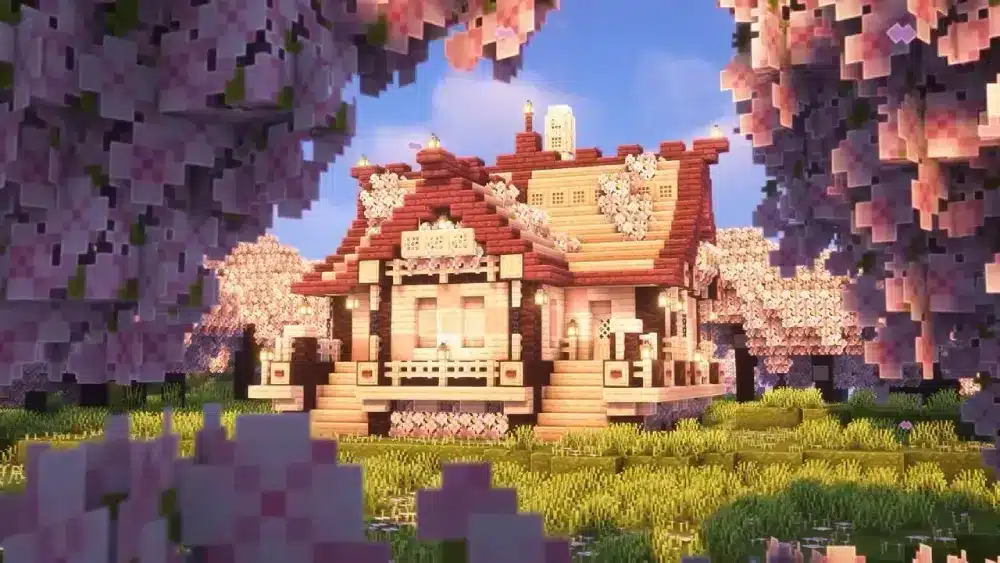
Once you build one house, it becomes very tempting to expand. That is where a Minecraft japanese village can become one of the most beautiful projects in your world. Instead of placing random copies of the same structure, think like a planner.
A strong Minecraft japanese village includes:
- different house sizes
- one central road or path
- a bridge or water feature
- gardens between homes
- a shrine or gate
- one taller landmark, like a Minecraft japanese pagoda
This is where the whole project starts feeling alive.
Village layout ideas
Use one of these layouts:
- linear village: houses along a river or road
- courtyard village: homes facing a shared garden
- hillside village: layered terraces with stairs and bridges
- temple district: main pagoda with smaller surrounding homes
Paths matter a lot. Use gravel, path blocks, stone, and lantern posts to connect the structures. Add bamboo and cherry trees to soften the routes.
A village also feels more alive when the land around each house has a clear purpose, from gardens to small food plots or decorative fields. Learning how Minecraft farmland works can help you blend functional farming into a Japanese-inspired village without breaking the calm visual style.
Add a pagoda as a landmark
A Minecraft japanese pagoda is perfect as the centerpiece of a village. It gives the skyline a strong focal point and helps the surrounding homes feel smaller and more believable.
For a simple pagoda:
- build a square stone base
- create 3 to 5 stacked roof levels
- reduce the size slightly on each upper floor
- use dark roofs and light walls
- add lanterns between levels
This turns your build from “nice house” into a full Minecraft japanese village concept.
Why ExitLag still matters for Minecraft builders
A Minecraft japanese house is mostly a creative project, so it is worth being honest here: ExitLag is not something you need for single-player building. If you are designing quietly in your own world, your architecture will not depend on ping.
But if you build on multiplayer servers, co-op worlds, or shared creative servers, stability matters more than many players expect. Rubberbanding, block placement delay, chunk-loading issues, and lag spikes can make precise building work much more frustrating than it should be.
When ExitLag can help
ExitLag makes the most sense when you are:
- building on multiplayer survival servers
- collaborating on a Minecraft japanese village with friends
- working on large detailed projects online
- flying and placing blocks quickly in Creative on a server
- dealing with unstable routes that interrupt chunk loading or placement timing
Why stable connection helps builders too
For detailed projects like a Minecraft japanese house tutorial build, online instability can hurt:
- precise block placement
- scaffold movement
- Elytra travel between build zones
- redstone timing for decorative doors or gates
- teamwork when multiple players are shaping one site
So no, ExitLag is not part of the design itself. But for multiplayer builders, it can help keep the process smoother, especially during large collaborative projects.
Minecraft’s official site is still the best place to confirm current updates, blocks, editions, and feature changes before planning a detailed build around newer materials. The official Minecraft website helps keep your design choices grounded in the latest version of the game.
FAQ
Start with a raised stone foundation, then build a visible dark wooden frame, fill the walls with lighter blocks, and finish with a large layered roof using stairs and slabs. The most important features are symmetry, overhangs, and restrained decoration.
Cherry groves, bamboo jungles, forests, and gentle hills work best. Cherry Grove is especially strong because Minecraft officially added it with the Cherry Wood Set, which fits the aesthetic naturally.
Use dark oak or spruce for the frame, white concrete or terracotta for the walls, and deepslate or blackstone for the roof. Bamboo and cherry are also great modern options thanks to the Bamboo Wood Set and Cherry Wood Set.
Build a tall square tower with multiple stacked roof tiers. Each higher floor should be slightly smaller than the one below. Use dark roofing, light wall panels, and lanterns to define each level.
Add multiple homes with different sizes, connect them using paths and bridges, include gardens and lantern posts, and place a pagoda or shrine as a landmark. The village should feel planned, not randomly scattered.
The biggest factors are roof shape, material balance, and landscaping. A beautiful build usually has a strong roof silhouette, a limited palette, clean framing, and natural surroundings like bamboo, water, stone, and trees.
Final thoughts
A Minecraft japanese house is one of the best projects for players who want something elegant without needing a gigantic scale. If you focus on a strong roof, a clean block palette, and quiet landscaping, even a medium-sized build can look incredible. And once you understand how to build a japanese house in Minecraft, it becomes much easier to expand into a full Minecraft japanese village with bridges, gardens, and even a Minecraft japanese pagoda as a centerpiece.
Most importantly, do not rush the design. A good Minecraft japanese house is not about stuffing in more details. It is about making every detail feel calm, deliberate, and balanced.
Looking back at Minecraft’s earliest version can also make modern building tools feel more impressive, especially after working with bamboo, cherry, lanterns, and detailed roof shapes. The official Minecraft Classic browser version is a simple way to revisit the game’s roots before returning to more complex builds.
And if you are building that vision online with friends, ExitLag can help keep your session stable so your project feels as smooth to build as it looks when finished.
Got questions or want to connect with other players? Join the conversation at the ExitLag Forum!