Lapis lazuli is one of the most recognizable resources in Minecraft. Its deep blue color stands out immediately, and its importance goes far beyond aesthetics. From enchanting gear to crafting dyes and decorative blocks, lapis lazuli plays a key role in progression for both casual players and hardcore survival fans.
If you have ever reached the enchanting stage and suddenly realized you were missing this resource, you are not alone. Understanding minecraft lapis lazuli, where it spawns, and how to mine it efficiently can save hours of wasted digging and help you progress faster.
In this guide, you will learn what lapis lazuli is, where to find lapis lazuli in Minecraft, the best mining levels, and why this ore remains essential from early-game survival to late-game optimization.
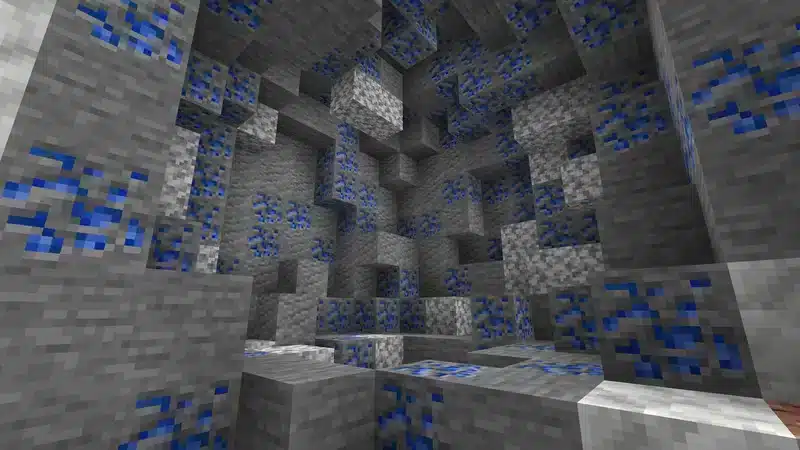
What Is Lapis Lazuli in Minecraft?
Lapis lazuli is a mineral resource found naturally in the Overworld. Unlike iron or diamond, it does not drop an ingot or gem that is directly used for tools or armor. Instead, its value lies in utility systems that support long-term gameplay.
When mined, lapis lazuli ore drops multiple pieces of lapis lazuli, making it one of the more generous ores in terms of yield. This makes each vein especially valuable when you are preparing for enchanting sessions or large-scale building projects that require blue dye.
From a progression standpoint, lapis lazuli becomes critical the moment you unlock enchantment tables. Without it, you simply cannot enchant items, no matter how much experience you have.
Why Lapis Lazuli Is Important in Minecraft
Lapis lazuli has several important uses that make it a must-have resource in nearly every survival world.
Enchanting Items
The most important use of lapis lazuli is enchanting. Every enchantment requires lapis lazuli in addition to experience levels. Since enchanting is essential for upgrading tools, weapons, and armor, a steady supply of lapis lazuli directly impacts your combat efficiency and mining speed.
Without lapis lazuli, even the most advanced enchantment table setup becomes useless.
Crafting Blue Dye
Lapis lazuli can be crafted into blue dye, which is used for:
- Coloring wool and concrete
- Dyeing glass and terracotta
- Customizing banners and beds
- Decorative builds and pixel art
Because blue is one of the most popular colors in Minecraft builds, lapis lazuli is frequently used by builders and creative players.
Lapis Lazuli Blocks
By combining nine pieces of lapis lazuli, you can craft a block of lapis lazuli. These blocks are commonly used for:
- Storage efficiency
- Decorative flooring and accents
- Beacon base construction (as an alternative material)
Where to Find Lapis Lazuli in Minecraft
Understanding where to find lapis lazuli minecraft is the key to efficient mining. Unlike some ores that have narrow spawn ranges, lapis lazuli has a wider distribution—but that does not mean it is evenly spread.
Minecraft Lapis Lazuli Level Range
In modern Minecraft versions, lapis lazuli ore generates between Y-level -64 and Y-level +64 in the Overworld. However, the distribution is not equal across this range.
The highest concentration of lapis lazuli is found around Y-level 0, making this the most efficient depth for targeted mining.
This means that players who dig too high or too deep may still find lapis lazuli, but at significantly lower rates.
Best Level to Mine Lapis Lazuli
If your goal is efficiency, the ideal approach is to mine between Y-level -2 and Y-level 0. At this depth, lapis lazuli veins are more common, and you are also positioned to encounter other valuable ores.
This overlap makes lapis lazuli mining especially efficient when combined with general resource gathering.
Biomes and Structures
Lapis lazuli can appear in all Overworld biomes. It is not biome-specific, which means your mining strategy matters far more than your location.
You may also find lapis lazuli exposed in:
- Large cave systems
- Ravines
- Underground lakes
- Structure chests, such as villages and mineshafts
How to Mine Lapis Lazuli Efficiently
Finding lapis lazuli is only part of the process. Mining it efficiently ensures you get the maximum return for your time.
Required Tools
To mine lapis lazuli ore, you need at least a stone pickaxe. Wooden pickaxes cannot mine it.
Using iron or diamond pickaxes does not increase the base drop amount, but it allows you to apply enchantments that significantly boost efficiency.
Fortune Enchantment
Applying the Fortune enchantment to your pickaxe dramatically increases the amount of lapis lazuli dropped per ore block. Fortune III, in particular, can turn a small vein into a massive resource gain.
For players focused on enchanting and trading, Fortune is one of the best upgrades you can apply before mining lapis lazuli seriously.
Strip Mining vs Cave Mining
There are two effective strategies for lapis lazuli mining:
- Strip mining at Y-level 0 for controlled, consistent results
- Cave exploration near that depth for faster discovery but higher risk
Strip mining is safer and more predictable, while cave mining can expose multiple veins quickly if you are comfortable navigating hostile mobs and lava pools.
Common Mistakes When Searching for Lapis Lazuli
Many players struggle to find lapis lazuli due to a few common mistakes:
- Mining too high above Y-level 20
- Digging too deep near bedrock
- Ignoring caves near Y-level 0
- Forgetting to bring a proper pickaxe
Avoiding these errors alone can drastically improve your lapis lazuli collection rate.
How Lapis Lazuli Supports Long-Term Progression
Lapis lazuli is not just an early-game resource. It remains valuable throughout the entire game lifecycle. From enchanting netherite gear to building large-scale projects, demand for lapis lazuli never truly disappears.
Players who understand minecraft lapis lazuli level distribution and mining efficiency gain a clear advantage in both survival and competitive environments.
Advanced Uses of Lapis Lazuli in Minecraft
Lapis lazuli is far more than a basic mining resource. Once players move past the early survival phase, its true value becomes evident through enchanting systems, villager trading, and long-term progression strategies. Mastering how lapis lazuli functions at this stage can dramatically accelerate efficiency and reduce wasted resources.
Understanding advanced applications of lapis lazuli allows players to enchant smarter, trade more effectively, and build sustainable systems that eliminate the need for constant mining.
How Lapis Lazuli Powers the Enchanting System
Enchanting is one of the most important progression mechanics in Minecraft, and lapis lazuli sits at its core. Every enchantment requires lapis lazuli, regardless of the item or enchantment level chosen.
The amount of lapis lazuli consumed depends on the enchantment tier selected:
- Low-level enchantments consume minimal lapis
- High-level enchantments require more lapis per attempt
This means inefficient enchanting can quickly drain your supply, especially when rerolling enchantments repeatedly.
Efficient Enchanting Setups to Save Lapis Lazuli
Proper setup makes a significant difference in lapis consumption over time. An enchantment table surrounded by exactly 15 bookshelves unlocks the highest-level enchantments, reducing the need to reroll multiple times.
Additional strategies include:
- Enchanting books instead of gear to stockpile options
- Using grindstones to remove bad enchantments and recover experience
- Delaying high-cost enchants until you have a stable lapis reserve
These methods ensure lapis lazuli is spent only on valuable upgrades rather than wasted attempts.
Minecraft Lapis Lazuli and Villager Trading
Villager trading transforms lapis lazuli from a finite resource into a renewable one. Cleric villagers, in particular, play a central role in this system.
Cleric Villagers and Lapis Lazuli Trades
Cleric villagers offer lapis lazuli trades at early profession levels. Typically, players can exchange emeralds for lapis lazuli, creating a steady supply without returning underground.
Key advantages of cleric trading include:
- Unlimited restocks per day
- Safe acquisition without mining risks
- Scales efficiently in multiplayer environments
Once multiple clerics are established, lapis lazuli becomes effectively infinite.
Building a Sustainable Lapis Lazuli Economy
The most efficient long-term approach combines villager trading with emerald generation. Iron farms, crop trading halls, and raid farms provide emeralds that can be converted directly into lapis lazuli.
At this stage, mining lapis lazuli becomes optional rather than mandatory, freeing players to focus on building, combat, and exploration.
Best Mining Strategies for Lapis Lazuli Optimization
While trading dominates late-game supply, mining remains useful during early and mid-game progression.
Strip Mining vs Cave Mining at Optimal Levels
Mining around Y-level 0 continues to offer the best balance of safety and efficiency. Strip mining provides controlled exploration with minimal risk, while cave mining exposes multiple veins faster but introduces hazards such as lava and hostile mobs.
Players focused on efficiency often combine both methods, using caves for discovery and strip mining for consistency.
Fortune Enchantment and Drop Scaling
The Fortune enchantment dramatically increases lapis lazuli yields. With Fortune III, a single ore block can drop several times more lapis than normal.
For players planning large enchanting sessions, applying Fortune before serious lapis mining is one of the most impactful upgrades available.

Lapis Lazuli Acquisition Methods Compared
| Method | Efficiency | Risk Level | Best Use Case |
| Strip Mining (Y≈0) | Medium | Low | Early–mid game |
| Cave Mining | High | High | Fast discovery |
| Fortune III Mining | Very High | Medium | Bulk enchanting |
| Cleric Trading | Infinite | Very Low | Late-game |
| Loot Chests | Low | None | Supplemental |
This comparison highlights why many advanced players transition away from mining as their worlds mature.
Common Mistakes When Farming Lapis Lazuli
Even experienced players often reduce their efficiency through avoidable mistakes:
- Spending lapis on low-value enchantments
- Ignoring villager trading systems
- Mining without Fortune enchantments
- Digging far above or below optimal Y-levels
Avoiding these errors significantly improves progression speed.
How Lapis Lazuli Fits Into Long-Term Progression
From early iron tools to fully enchanted netherite gear, lapis lazuli remains relevant throughout the entire game. It supports efficiency, survivability, and competitive readiness.
Players who understand lapis lazuli systems gain faster access to powerful gear, dominate PvE encounters, and maintain an advantage in multiplayer environments.
Performance and Stability Considerations
Large-scale enchanting sessions, villager trading halls, and multiplayer servers all demand stable connections. Lag can interrupt trades, desync villagers, or cause costly mistakes during gear upgrades.
ExitLag helps maintain stable routes and lower latency, ensuring smooth interactions when enchanting, trading, or playing on competitive servers. Even the best preparation loses value if connection issues disrupt critical moments.
All game images used in this blog belong to Mojang Studios. They are used for informational/educational purposes only and do not imply endorsement or affiliation with the rights holders.
Got questions or want to connect with other players? Join the conversation at the ExitLag Forum!