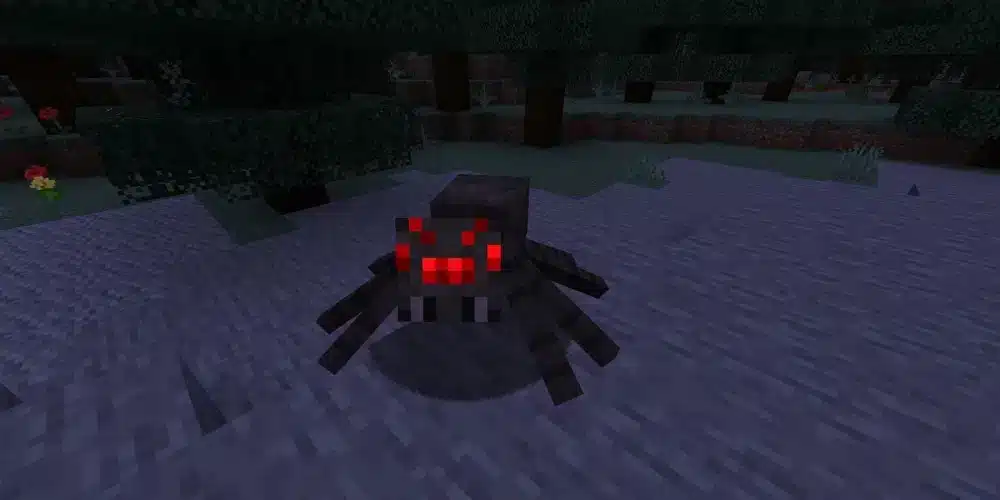
Minecraft spider is one of the first hostile creatures most players learn to fear. From the moment night falls or a cave opens below your feet, this agile mob can turn a calm exploration into a dangerous fight. Even experienced players must respect how unpredictable spiders can be.
At first, many players underestimate the Minecraft spider because of its low health compared to other Minecraft mobs. However, that confidence often disappears the moment a spider climbs a wall or jumps directly onto the player. Their movement breaks the rules that most hostile creatures follow. And before we continue, know that to know more about all the relevant content about gaming, you just have to check our blog.
From now on, this guide explains what makes spiders dangerous, how their behavior works, and how players can adapt their combat approach to stay alive and progress safely.
What is a Minecraft spider and why is it dangerous?
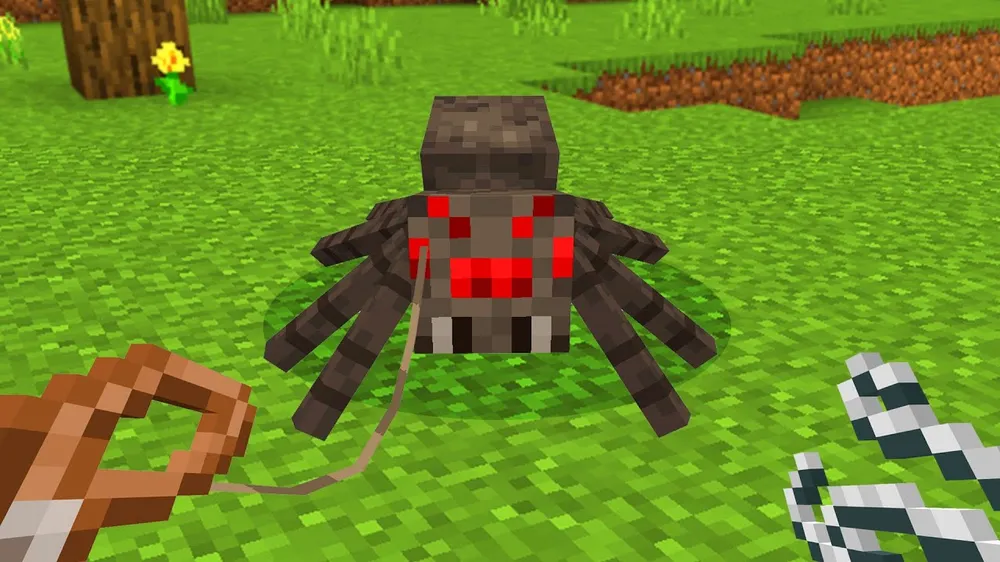
A Minecraft spider is a neutral mob during daylight and a hostile mob in darkness. This dual behavior makes spiders unique compared to most hostile creatures that attack on sight.
First of all, spiders spawn in low-light conditions such as caves, abandoned mineshafts, and nighttime surface areas. When light levels drop, they become aggressive and actively hunt the player.
What makes spiders especially dangerous is their mobility. Unlike zombies or skeletons, spiders can climb vertical surfaces and leap forward during attacks, making traditional defensive strategies less effective.
Understanding spider mechanics in Minecraft
Spider mechanics define how these mobs interact with the world and the player. Learning these mechanics helps players avoid unnecessary damage.
Spiders have the ability to:
- Climb walls and cliffs without slowing down
- Leap forward to close distance quickly
- Track players efficiently in low-light environments
Because of these mechanics, building tall walls alone is not enough to stop them. Spiders can scale surfaces that other hostile creatures cannot.
Another important mechanic is their hitbox. Spiders have a wide, low profile, which allows them to reach players even when blocked by partial cover.
You may also like: Minecraft House Tutorial: Step-by-Step Guide for Beginners
When do Minecraft spiders become hostile?
Minecraft spider behavior changes based on light levels. During the day, spiders are usually neutral and will not attack unless provoked.
However, once light levels drop below the required threshold, spiders instantly switch to hostile mode. This commonly happens:
- At night on the surface
- Inside caves and ravines
- In abandoned mineshafts
- During storms or eclipsed lighting
Understanding when spiders become hostile allows players to prepare before combat starts.
How spiders compare to other Minecraft mobs
Compared to other Minecraft mobs, spiders rely on speed and positioning rather than raw damage.
Zombies overwhelm players with numbers. Skeletons rely on ranged pressure. Spiders, on the other hand, force players into reactive combat.
Their climbing ability removes the safety of high ground, while their leap attack punishes players who try to keep distance without planning.
This makes spiders one of the most dangerous hostile creatures during early survival gameplay.
Basic combat tips for surviving spider encounters
Surviving spider encounters requires preparation and awareness. These combat tips focus on reducing risk rather than chasing kills.
Players should:
- Keep light sources ready to control spawn areas
- Avoid fighting spiders in tight spaces
- Use terrain to limit climbing angles
Even basic gear can be effective when used correctly. An iron sword, shield, and minimal armor already increase survival chances significantly.
Positioning and movement during spider fights
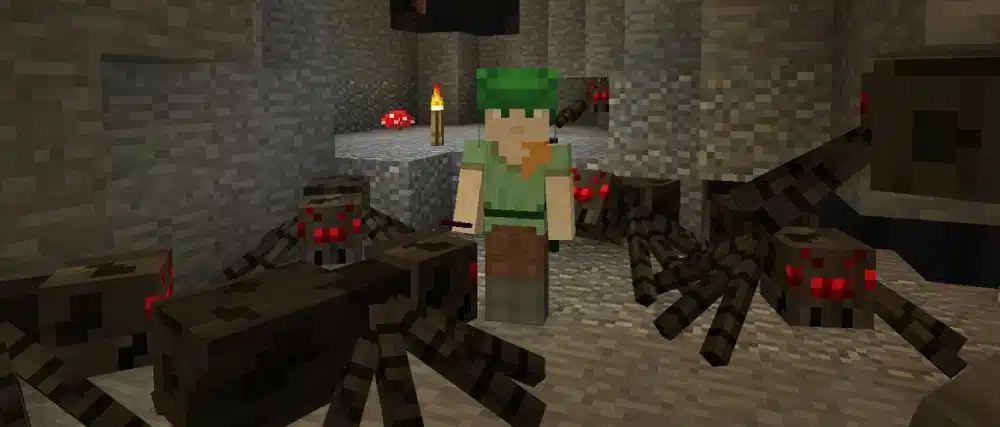
Positioning is more important than damage output when fighting spiders.
Spiders struggle to attack players standing on two-block-high platforms. This height difference prevents their leap from connecting.
At the same time, fighting in open areas gives players room to react. Tight corridors allow spiders to corner players quickly.
Movement should focus on:
- Strafing instead of backing straight up
- Avoiding corners and walls
- Keeping spiders in front at all times
These small adjustments reduce the risk of sudden damage.
Check also: Minecraft Horse Stable: How to Build one, Designs and Tips
Why early-game players struggle with spiders
Early-game players often lack armor, shields, and lighting, which makes spider encounters more dangerous.
In addition, new players may not understand spider mechanics, leading to panic or poor positioning.
Learning how spiders move early prevents unnecessary deaths and resource loss, especially when exploring caves for the first time.
Preparing for spider encounters before nightfall
Preparation is the most effective survival strategy.
Before nightfall, players should:
- Craft torches and place them generously
- Build simple two-block-high safety platforms
- Carry food to recover health quickly
These steps reduce the chances of being surprised by hostile creatures.
Why mastering Minecraft spider behavior matters
Minecraft spider encounters teach players core survival skills: positioning, awareness, and timing.
Unlike slower mobs, spiders punish hesitation and poor planning. Learning how to handle them improves overall combat performance against many hostile creatures.
In conclusion, Minecraft spider survival is not about overpowering the mob, but about understanding its mechanics and adapting your strategy. Players who master spider behavior gain a significant advantage throughout the entire survival experience.
Advanced combat tips for fighting a Minecraft spider
Minecraft spider encounters become more dangerous as difficulty increases and environments become more complex. While basic preparation helps, advanced combat tips allow players to handle spiders consistently without panic.
At first, players should focus on controlling the fight instead of chasing damage. Spiders rely on momentum and positioning, so disrupting their movement is the fastest way to reduce risk.
Using shields effectively is one of the best upgrades. Blocking a spider’s leap attack creates a short opening, allowing safe counterattacks. This approach is especially useful when facing multiple hostile creatures at once.
Read also: Minecraft fish: complete guide to all fish types and farming tips
Using terrain to your advantage against spiders
Terrain plays a major role in spider survival. Unlike many Minecraft mobs, spiders lose effectiveness when terrain limits their climbing paths.
Players should look for:
- Two-block-high ledges that stop leap attacks
- Overhangs that prevent wall climbing
- Flat, open areas that allow clear visibility
In the same way, avoiding corners and narrow tunnels reduces surprise attacks. Spiders excel in enclosed spaces where reaction time is limited.
Dealing with spiders in caves and mineshafts
Caves and abandoned mineshafts are where Minecraft spider encounters become truly dangerous. Low light, tight spaces, and multiple spawn points create constant pressure.
Before engaging, players should light the area thoroughly. Torches reduce spawn chances and improve visibility, which is critical for tracking spider movement.
In mineshafts, cobwebs often slow players while spiders move freely. Clearing cobwebs before combat prevents being trapped during an attack.
Fighting spiders on higher difficulty settings
On higher difficulties, spiders deal more damage and may spawn with additional effects. This increases the importance of preparation.
Players should prioritize:
- Better armor before night exploration
- Shields to block leap damage
- Controlled engagement instead of rushing
In hard difficulty, some spiders may spawn with potion effects, making them faster or more dangerous. Recognizing these variants early helps avoid fatal mistakes.Check also: Minecraft error code 1: complete guide to fix exit code issues
Farming spider mob drops efficiently
Beyond combat, spiders are valuable for their mob drops. Farming them safely turns danger into long-term advantage.
Spiders drop:
- String, used for bows, fishing rods, and wool
- Spider eyes, used in potion brewing
Building a simple mob farm near spawn areas provides a steady supply of these resources without constant risk.
Best practices for early survival progression
Early survival is where Minecraft spider encounters cause the most frustration. Players lack gear, lighting, and experience.
To reduce early deaths:
- Avoid surface exploration at night
- Secure a shelter before sunset
- Craft torches as early as possible
These steps prevent unnecessary encounters and protect early resources.
Minecraft spider survival checklist
Before exploring dangerous areas, players should confirm:
- Adequate lighting supplies
- Food for health regeneration
- Basic armor and a shield
- An escape path if overwhelmed
Preparation remains the most reliable survival strategy.
Check this: Minecraft Dock: Build the Perfect Waterfront Structure in Your World
Minecraft spider combat and loot overview
| Aspect | Details |
| Mob type | Hostile creature (neutral during daylight, hostile in low light) |
| Common spawn locations | Caves, nighttime surface, abandoned mineshafts |
| Core spider mechanics | Wall climbing, leap attacks, fast movement |
| Combat difficulty | Medium (high for early-game players) |
| Main strengths | Mobility, surprise attacks, ability to ignore vertical barriers |
| Main weaknesses | Two-block-high platforms, open terrain, shields |
| Recommended gear | Sword, shield, basic armor, torches |
| Primary mob drops | String |
| Secondary mob drops | Spider eyes |
| Loot usage | Bows, fishing rods, wool, potion brewing |
Frequently asked questions (FAQ)
No. Minecraft spiders are neutral during daylight unless attacked. They become hostile in low-light conditions such as nighttime, caves, or underground structures.
The safest approach is using terrain advantage, shields, and controlled movement. Two-block-high platforms and open spaces significantly reduce risk.
You should read: Minecraft Bases: The Ultimate Guide for Every Player
Minecraft spiders drop string and spider eyes. These items are valuable for crafting bows, fishing rods, wool, and brewing potions.
Early-game players lack armor, shields, and lighting. Combined with spider mechanics like climbing and jumping, this makes encounters more punishing.
In conclusion
Minecraft spider encounters can feel overwhelming, but they are manageable with preparation, positioning, and understanding spider mechanics.
As players progress, mastering spider behavior improves overall combat skills against many hostile creatures. Consistency matters more than aggression.
And now that you know everything about Minecraft spider, for smoother gameplay during exploration and combat, ExitLag can help stabilize connections and reduce lag spikes, especially in multiplayer sessions. A stable connection allows players to react faster and focus on survival rather than technical issues. Download ExitLag now!
Got questions or want to connect with other players? Join the conversation at the ExitLag Forum!